Artwork
Hendrik Casimir II, Count of Nassau-Dietz
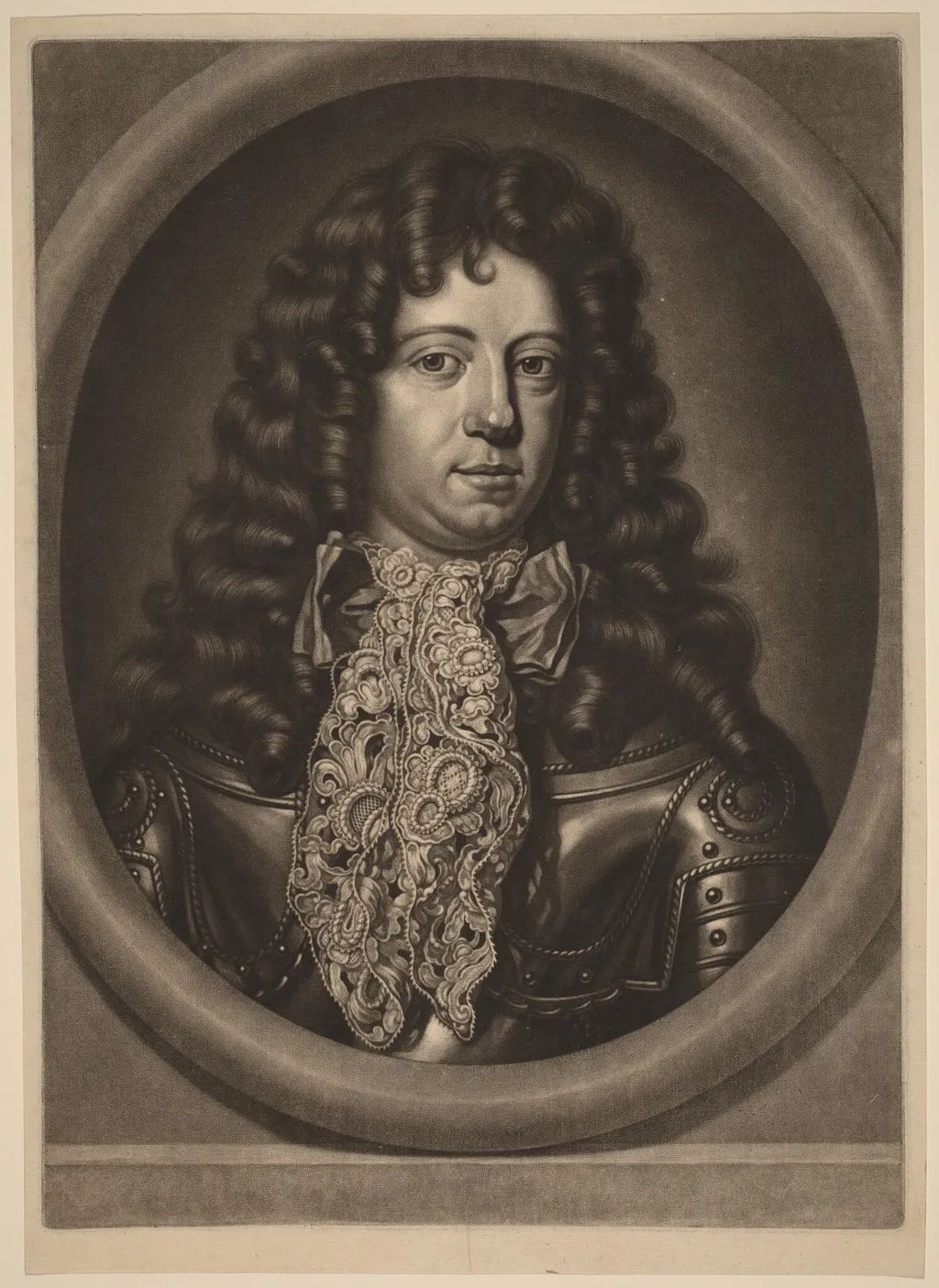
Hendrik Casimir II, Count of Nassau-Dietz is an ink print by the Baroque artist Abraham Blooteling. It dates from 1665 and is held in the collection of the National Gallery of Art.
About this work
Overview
Abraham Blooteling’s 1665 mezzotint depicts Hendrik Casimir II, Count of Nassau‑Dietz, in a formal half‑length portrait. Rendered in black and white on laid paper, the image presents the nobleman with curled hair, a solemn expression, a lace cravat, and a dark jacket fastened with metal buttons, his right hand resting on a modestly decorated helmet.
Subject & Meaning
The portrait serves as a visual assertion of the count’s status and martial affiliation. By including the helmet, Blooteling links the sitter to his military role, while the refined attire underscores his aristocratic rank, reflecting the 17th‑century practice of using portraiture to convey authority and lineage.
Technique & Style
Executed in mezzotint, the print relies on a rich tonal range achieved through careful scraping and burnishing of a copper plate. Blooteling’s manipulation of light and shadow creates a three‑dimensional illusion of flesh and fabric, a hallmark of Baroque portraiture that emphasizes depth and dramatic contrast.
History & Provenance
Created in 1665, the work originates from the Dutch Republic, where Blooteling was active as an engraver and printmaker. The print likely circulated among the count’s family and court, serving both as a personal likeness and as a means of disseminating his image within the region’s noble networks.
Context
Mezzotint was a relatively new print technique in the mid‑17th century, prized for its ability to render subtle gradations of tone. Blooteling’s use of the medium places the portrait within a broader European trend of producing affordable yet detailed likenesses of high‑ranking individuals during the Baroque period.
Artist & collection

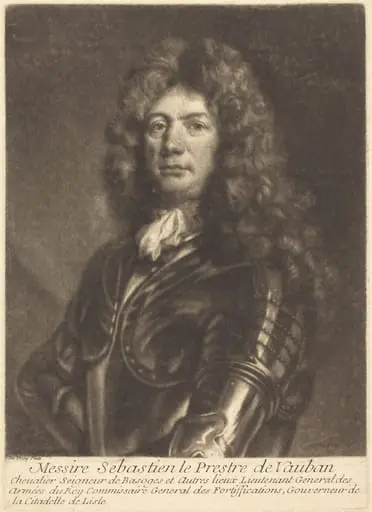 Portrait of M. Sebastien Le Prestre de Vauban
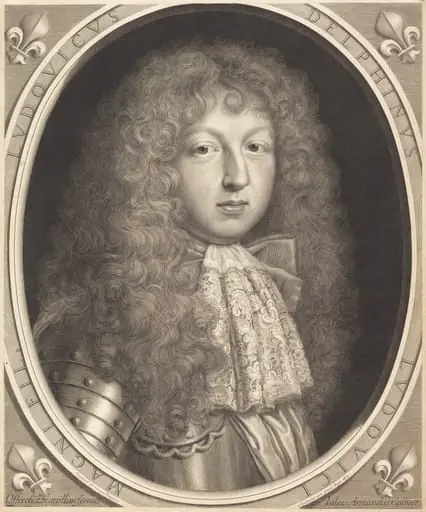 Louis, Dauphin de France
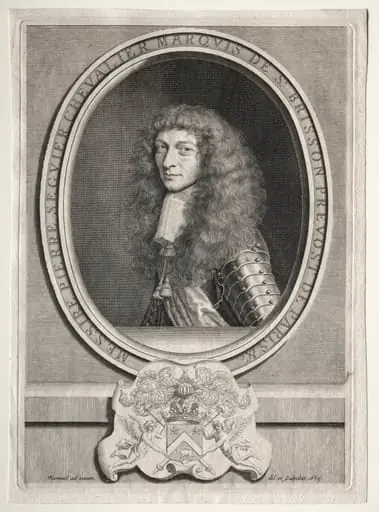 Pierre Seguier Chevalier, Marquis de St. Brisson
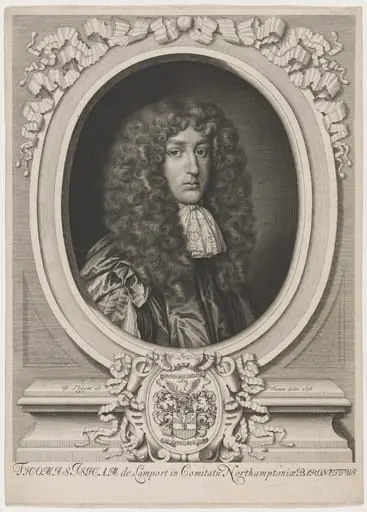 Sir Thomas Isham
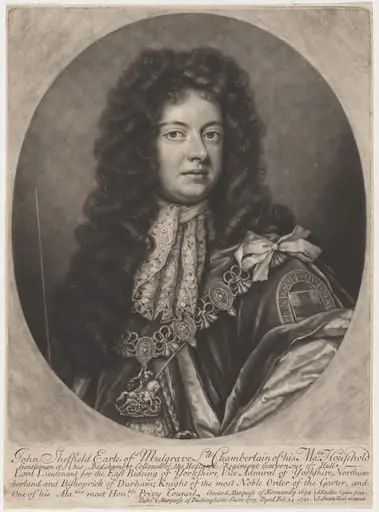 John Sheffield, Third Earl of Mulgrave, FirstDuke of Buckinghamshire
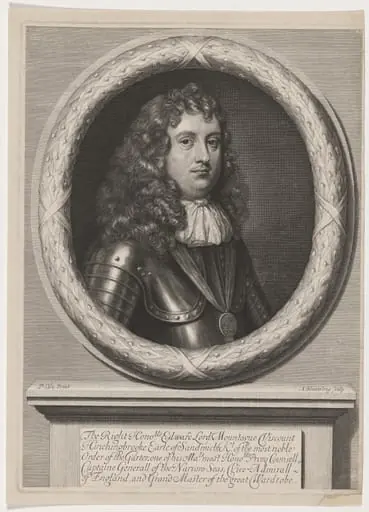 Edward Montagu, First Earl of Sandwich
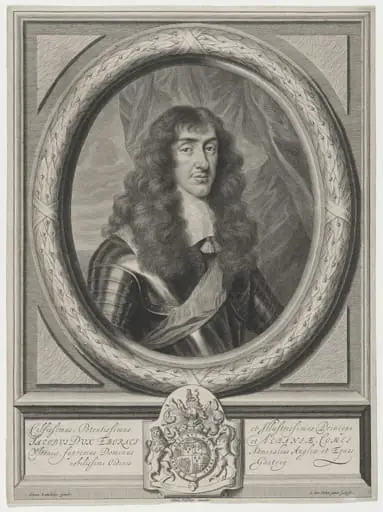 James II, Duke of York
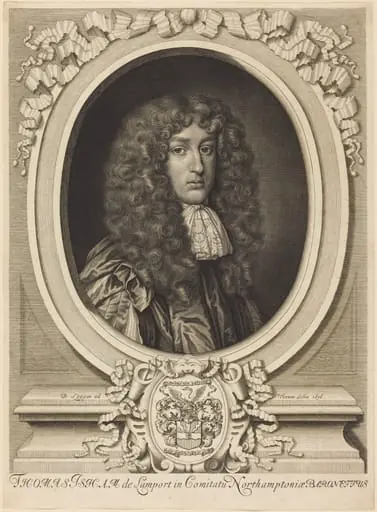 Sir Thomas Isham
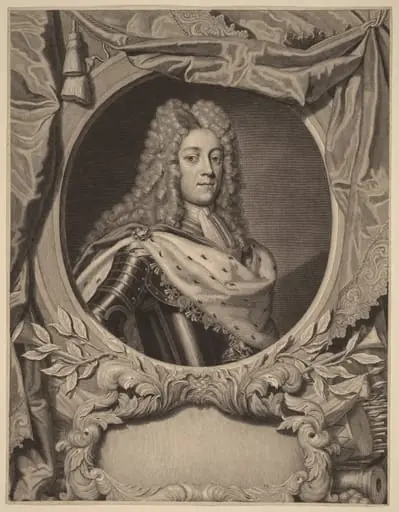 King George II
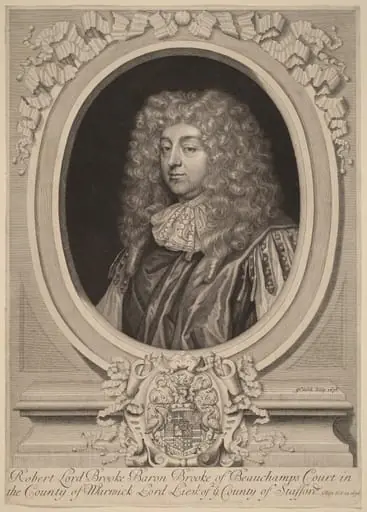 Robert Greville, Lord Brooke
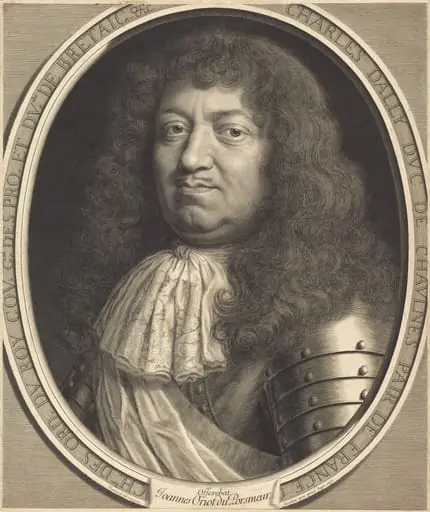 Charles, Duc de Chaulnes
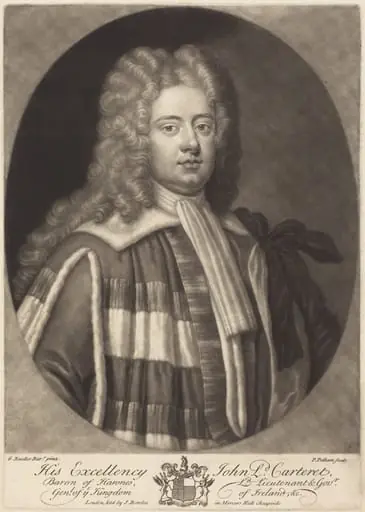 John, Lord Carteret