Artwork
Peasant and Egg Woman
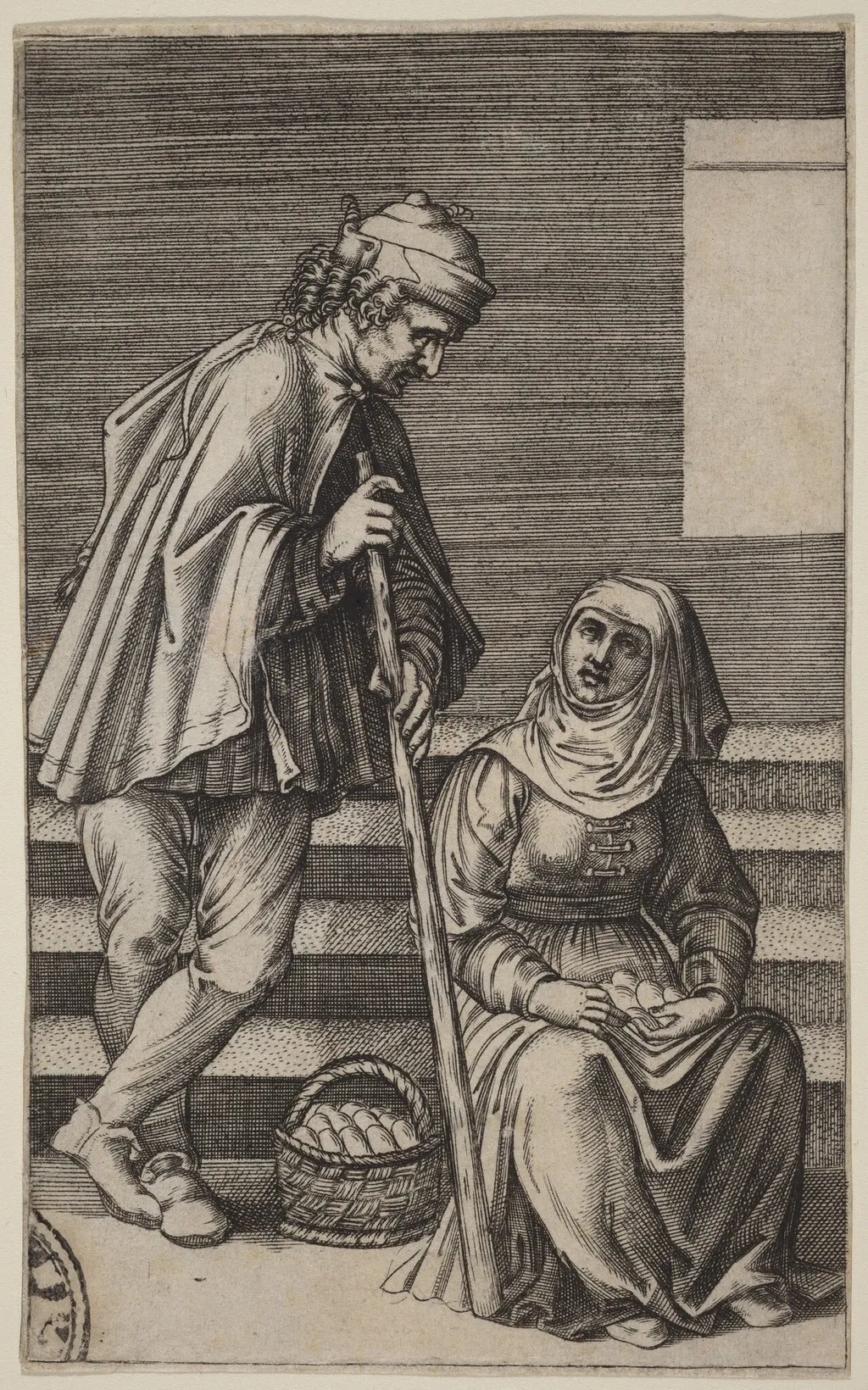
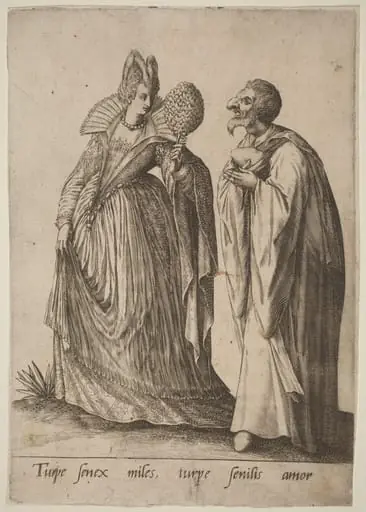
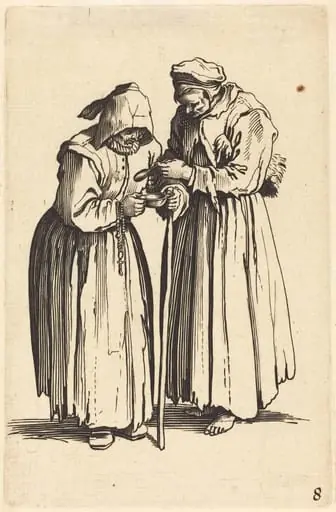
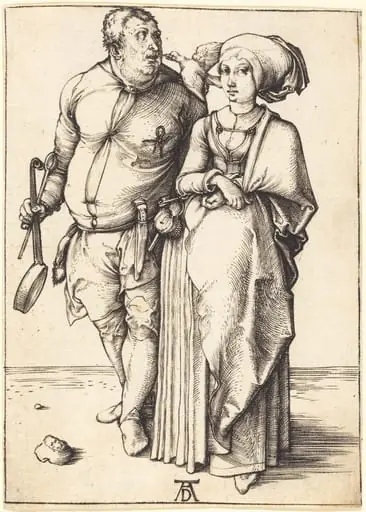
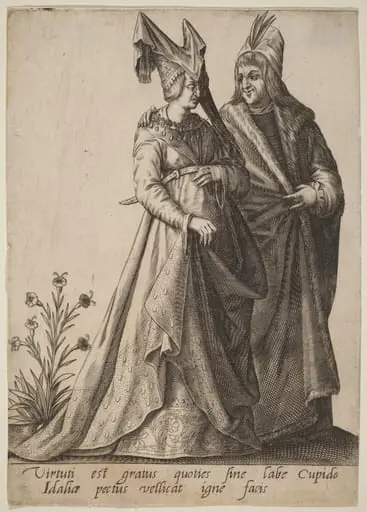
Peasant and Egg Woman is an ink print by the Renaissance artist Agostino dei Musi. It dates from 1525 and is held in the collection of the National Gallery of Art.
About this work
Overview
Peasant and Egg Woman is an engraving on laid paper created by Agostino dei Musi, known as Agostino Veneziano, circa 1525. This work exemplifies the flourishing printmaking of the Italian Renaissance, which facilitated the widespread dissemination of artistic designs.
Subject & Meaning
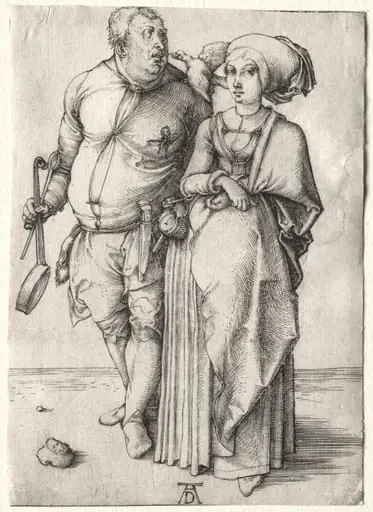
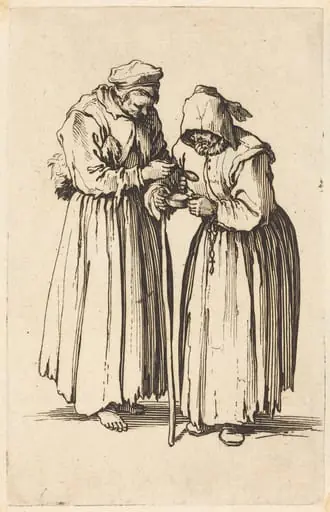
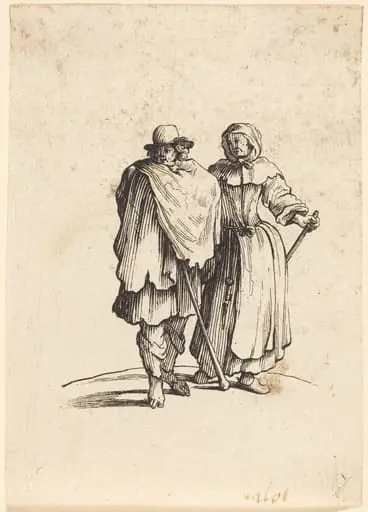
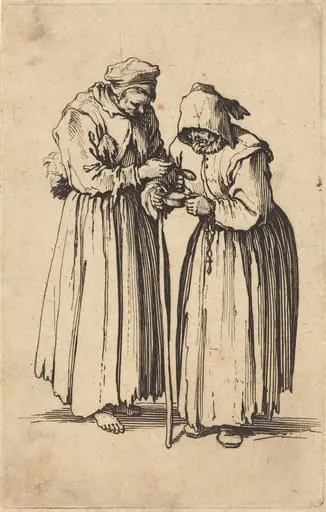
The engraving portrays two humble figures: a peasant leaning on a stick, gazing downward, and a kneeling egg seller with a basket, her hands at rest. Their simple, textured attire and the interaction's subdued tone convey a sense of everyday life.
Technique & Style
Agostino Veneziano demonstrated his mastery of engraving through meticulous cross-hatching—tiny parallel lines that construct shadows and forms. This technique imbues the two-dimensional ink-on-paper scene with a detailed, near-three-dimensional depth and richness.
History & Provenance
Created in the early 16th century, this piece reflects the era's burgeoning print culture. As a leading engraver, Agostino Veneziano's work contributed to the period's artistic proliferation. Specific provenance details are not provided.
Context
Produced during the Italian Renaissance, *Peasant and Egg Woman* sits within a broader movement where printmaking revolutionized art distribution. It also highlights the artist's focus on capturing the mundane lives of common people amidst a period often associated with grandeur.
Legacy
While specific legacy details of *Peasant and Egg Woman* are not outlined, Agostino Veneziano's contributions to Renaissance engraving, as seen in this work, have influenced subsequent generations of printmakers in their technique and subject matter exploration.
Artist & collection
Artist
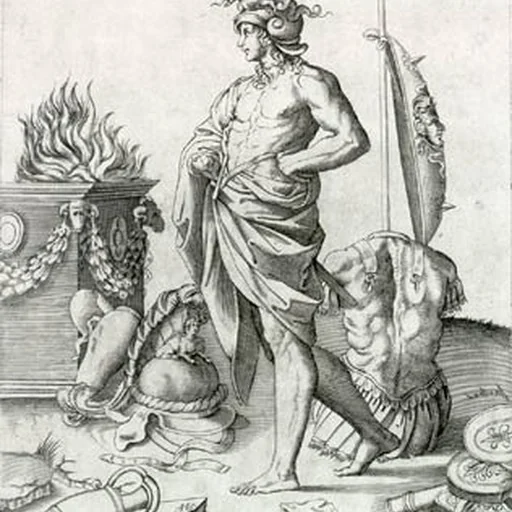
Agostino Veneziano ("Venetian Agostino"), whose real name was Agostino de' Musi (c. 1490 – c. 1540), was an important and prolific Italian engraver of the Renaissance.