Artwork
Thomas Cavendish
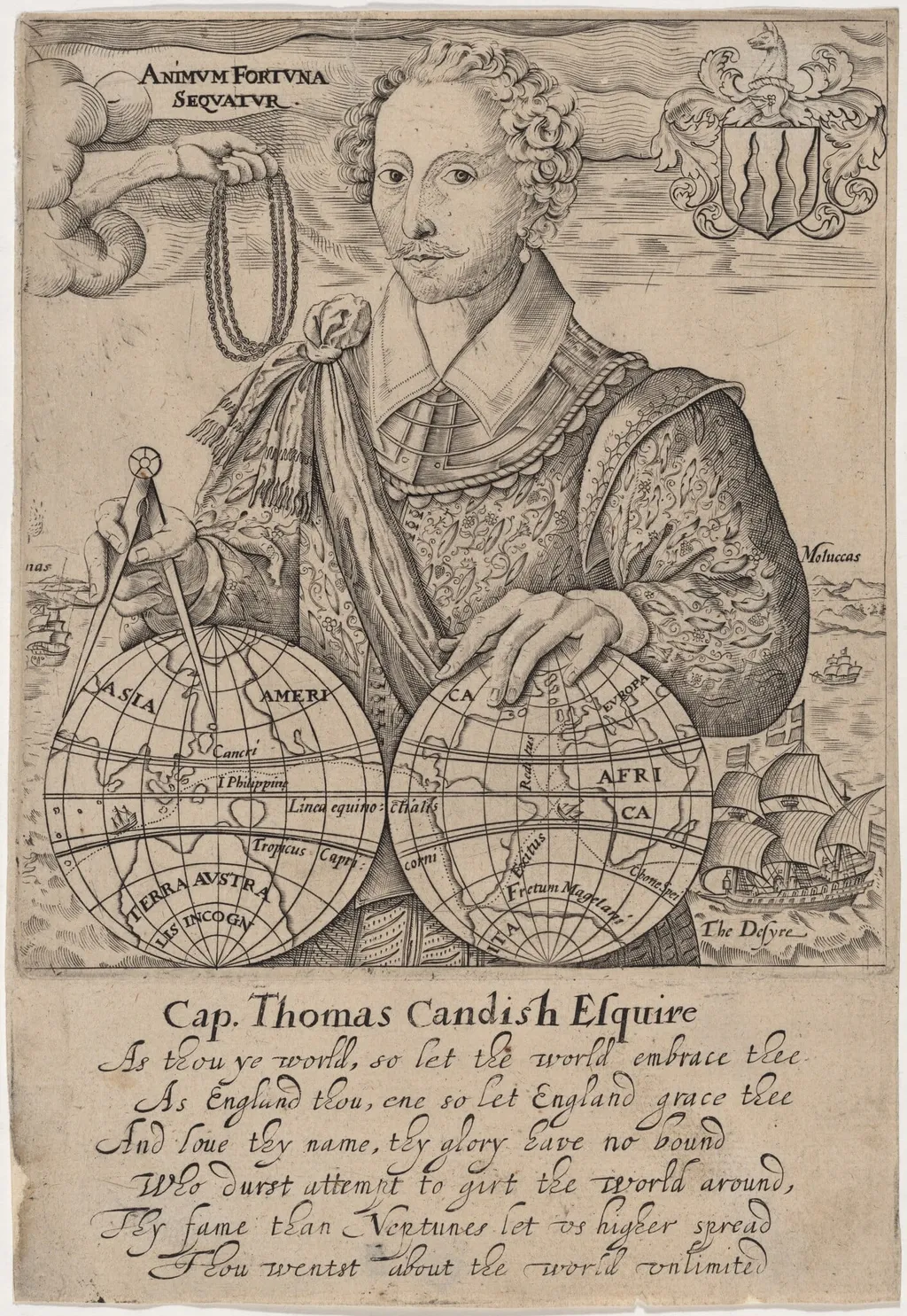
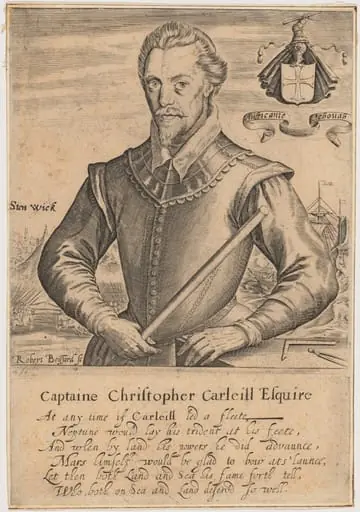
Thomas Cavendish is an ink print by the Renaissance artist Robert Boissard. It is held in the collection of the National Gallery of Art.
About this work
Overview
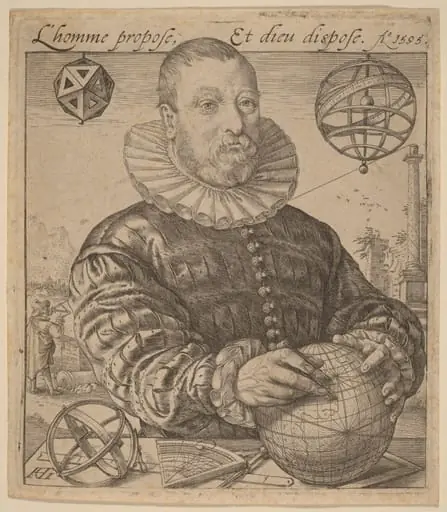
This 1610 engraving by Robert Boissard depicts Thomas Cavendish, an English navigator known for his circumnavigation of the globe.
This 1610 engraving by Robert Boissard depicts Thomas Cavendish, an English navigator known for his circumnavigation of the globe. Rendered in fine line work on metal, the portrait combines portraiture with symbolic elements of maritime exploration. The composition centers Cavendish in elaborate attire, surrounded by navigational tools and geographic references, reflecting his achievements in overseas voyages during the late 16th century.
Subject & Meaning
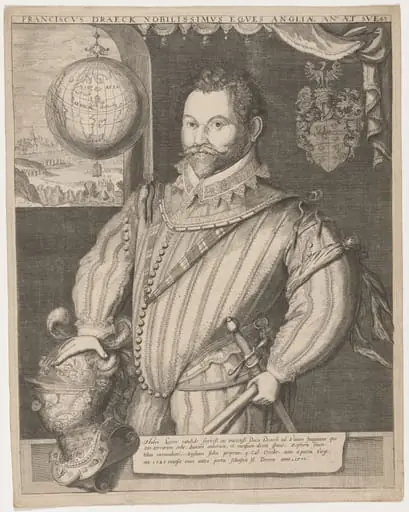
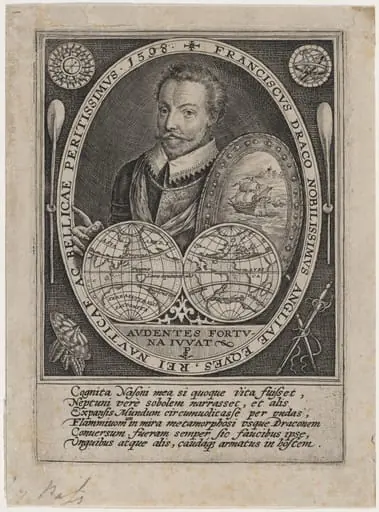
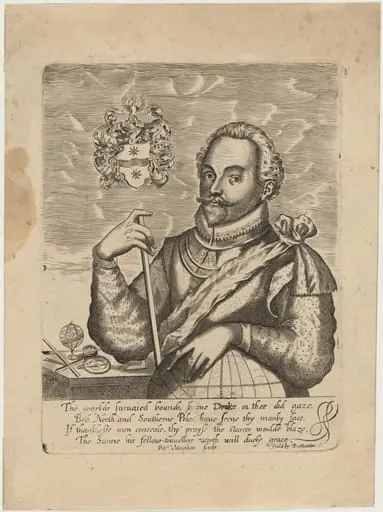
Cavendish is portrayed as a gentleman-adventurer, clad in fashionable 16th-century dress with a ruffled collar and a pendant chain, suggesting status and wealth earned through exploration. The globe he holds, along with ships, a compass, and labeled continents, underscores his role in global navigation. The Latin inscription identifies him formally, reinforcing his public recognition as a figure of English maritime ambition.
Technique & Style
Boissard employed precise engraving techniques to render fine details in metal, using incised lines to define texture in fabric, the curvature of the globe, and the delicate contours of ships. Background swirls and a heraldic emblem add decorative depth, typical of early 17th-century portraiture. The composition balances realism with allegory, using objects to convey identity and achievement beyond mere likeness.
History & Provenance
Created in 1610, the engraving was likely produced to commemorate Cavendish’s 1586–1588 voyage, which made him the second Englishman to circumnavigate the globe. It circulated among scholarly and maritime circles in Europe, serving both as a tribute and a promotional image of English naval prowess. Its survival reflects the enduring interest in explorers during the Age of Discovery.
Context
In the early 1600s, England was expanding its maritime influence, and figures like Cavendish were celebrated as national heroes. Engravings such as this one helped disseminate images of explorers to a broader public, blending fact with symbolic representation. The inclusion of global geography and navigational instruments aligns with contemporary efforts to map and claim new territories.
Legacy
The engraving remains a visual record of how exploration was mythologized in its time. It exemplifies the fusion of personal portraiture with cartographic symbolism, a convention used to elevate navigators to the status of cultural icons. Though Cavendish’s fame faded compared to contemporaries like Drake, this image preserves his place in the visual history of global exploration.
Artist & collection