Artwork
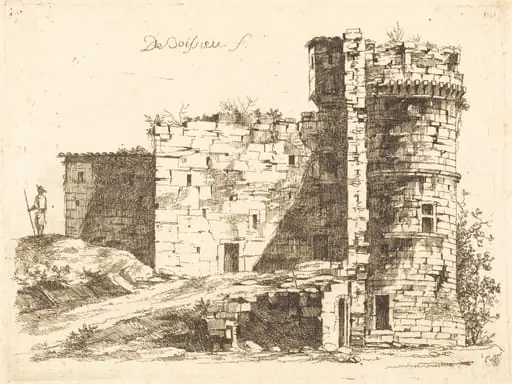
Ruins of an Old Castle at Saint-Chamond, Loire
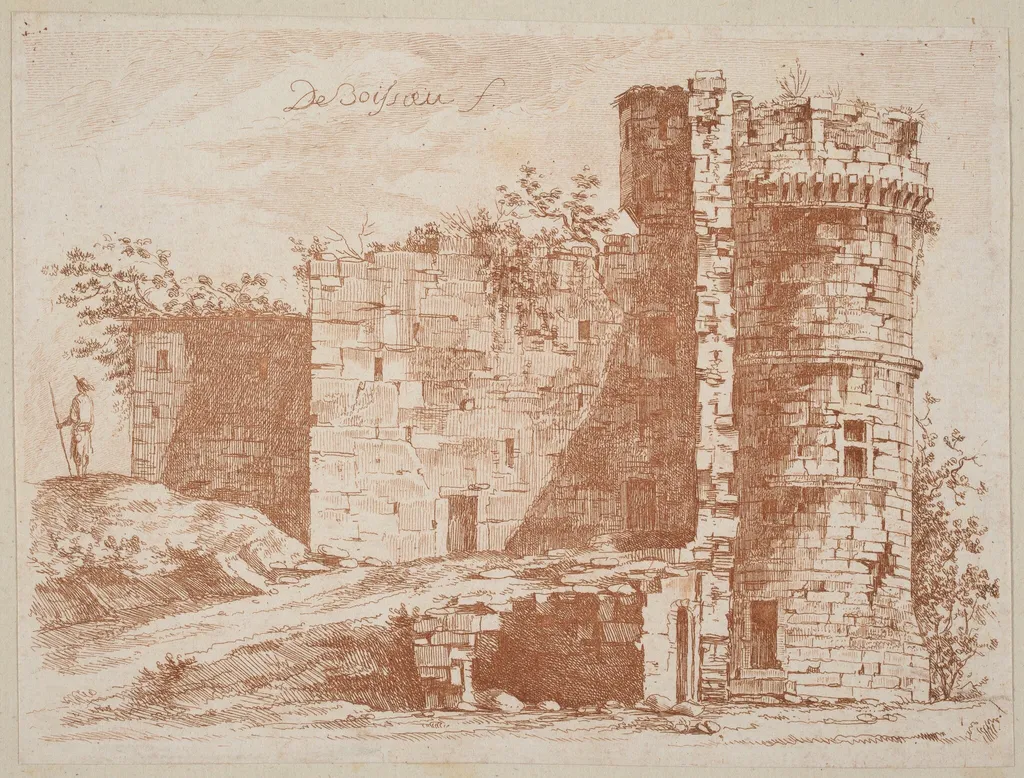
Ruins of an Old Castle at Saint-Chamond, Loire is an ink print by the Romanticist artist Jean-Jacques de Boissieu. It dates from 1759 and is held in the collection of the National Gallery of Art.
About this work
Overview
Created in 1759 by Jean-Jacques de Boissieu, this print depicts the remnants of a medieval structure near Saint-Chamond in the Loire region. Executed in sepia-toned etching and drypoint, the work captures the quiet erosion of stone architecture by time and nature. The composition avoids narrative or human presence, centering instead on the physical degradation of the ruins.
Subject & Meaning
The subject is a fragmentary castle, its walls fractured and partially collapsed, with vegetation emerging from crevices. The absence of figures or activity emphasizes the passage of time as the sole agent of change. The title anchors the scene to a real location, yet the focus remains on the universal process of decay—how built environments surrender to natural forces over centuries.
Technique & Style
De Boissieu employed etching and drypoint to achieve fine, textured lines in sepia ink, creating a muted, atmospheric tone. The uneven contours of the stonework and the sparse, gnarled trees are rendered with deliberate irregularity, mimicking the organic wear of the ruins. The soft brown palette enhances the sense of age, lending the scene a somber, introspective quality.
History & Provenance
The print was produced during the mid-18th century, a period when antiquarian interest in ruins was growing across Europe. While its early ownership is undocumented, it is now held in the collection of the National Gallery of Art in Washington, D.C., where it is preserved as part of a broader corpus of French topographical prints from the period.
Context
This work aligns with a rising 18th-century fascination with ruins as symbols of transience, influenced by Enlightenment thought and early archaeological study. Unlike romanticized depictions of grandeur, de Boissieu’s approach is restrained and observational, reflecting a shift toward documenting decay with scientific detachment rather than emotional embellishment.
Legacy
The print contributes to a tradition of French topographical etching that valued precision and quiet contemplation over dramatic effect. Though not widely exhibited, it remains a quiet example of how artists of the period used printmaking to explore the relationship between human construction and the inevitability of natural decay.
Own this work as a print
Artist & collection
Artist
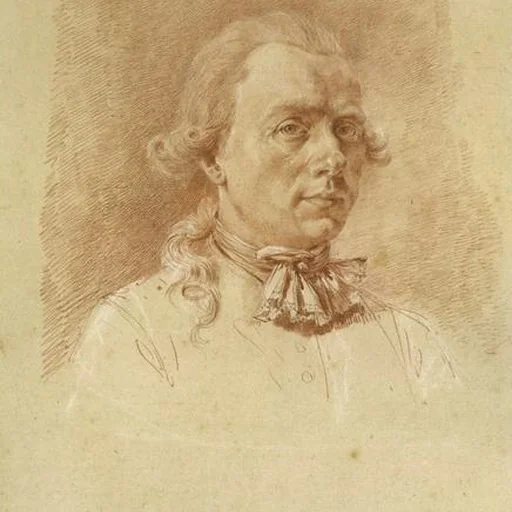
Jean-Jacques de Boissieu (1736–1810) was a French artist, born in Lyon.

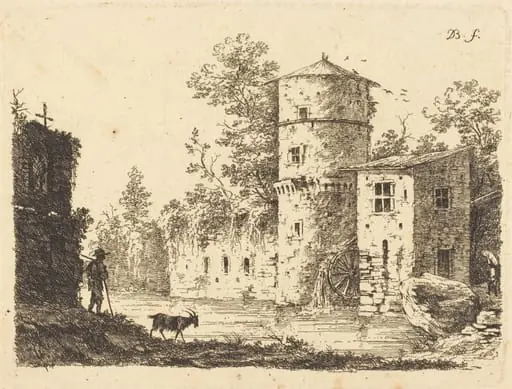 Ancient Tower with a Water Mill
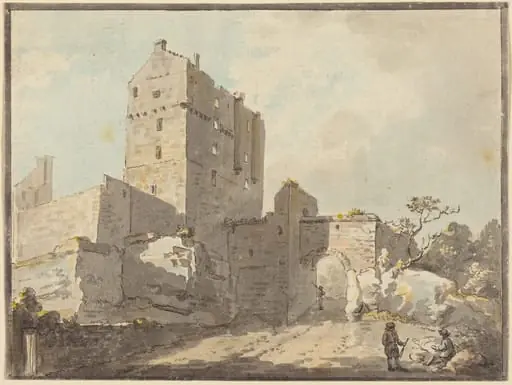 Roslin Castle
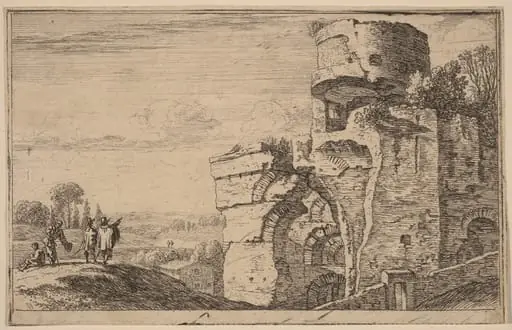 Ruins on the Palatine Hill
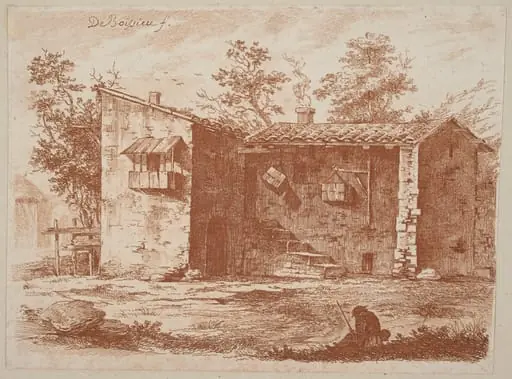 Two Houses with Tile Roofs
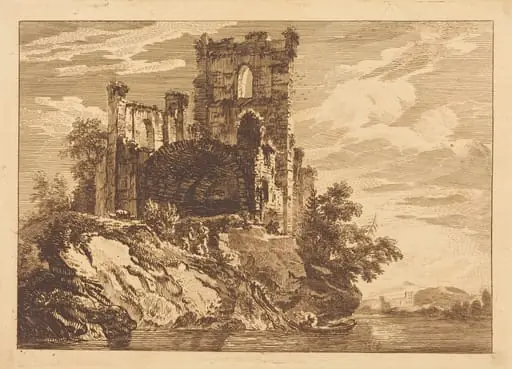 Ruins by a River with a Man in a Boat
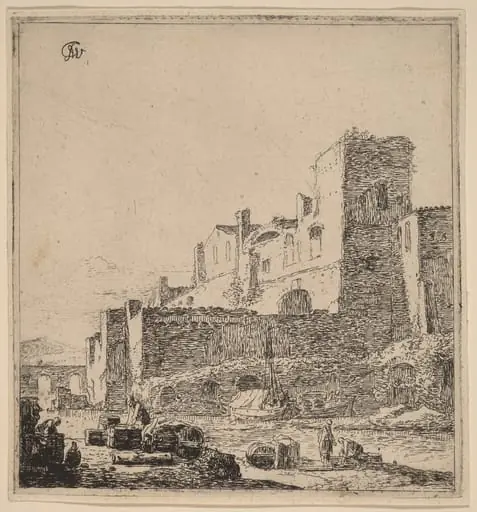 Sailors at the Waterside
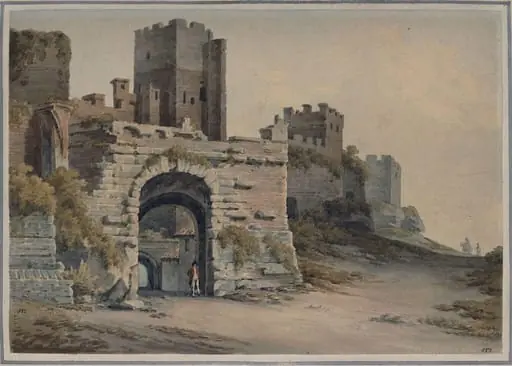 Porta Tiburtina, Rome, seen from the inside
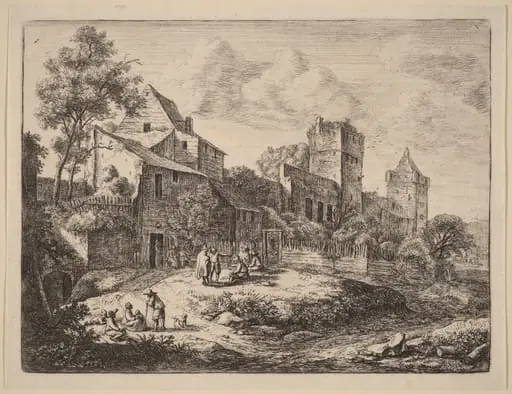 Square in Front of an Inn
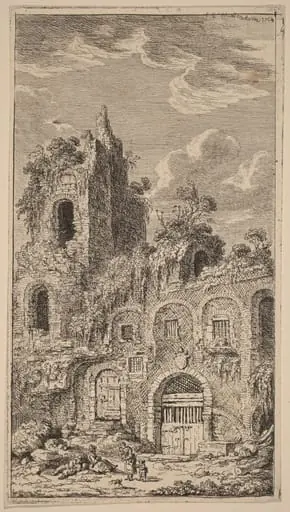 Fragment of the Old City Wall at San Giovanni Laterano
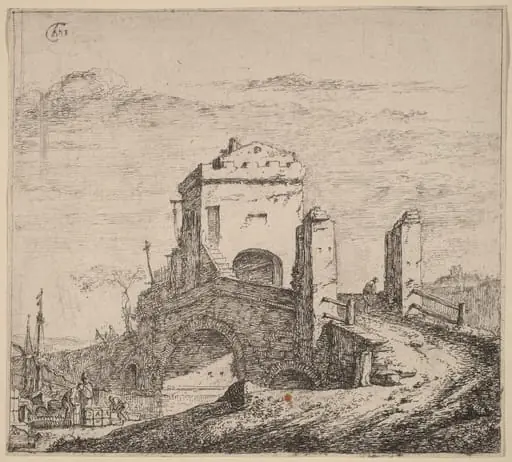 Bridge
 Ruins of the Château Saint-Chamond, Loire
 Ancient Tower at a Water Mill