Artwork
Ornament for Knife Handle
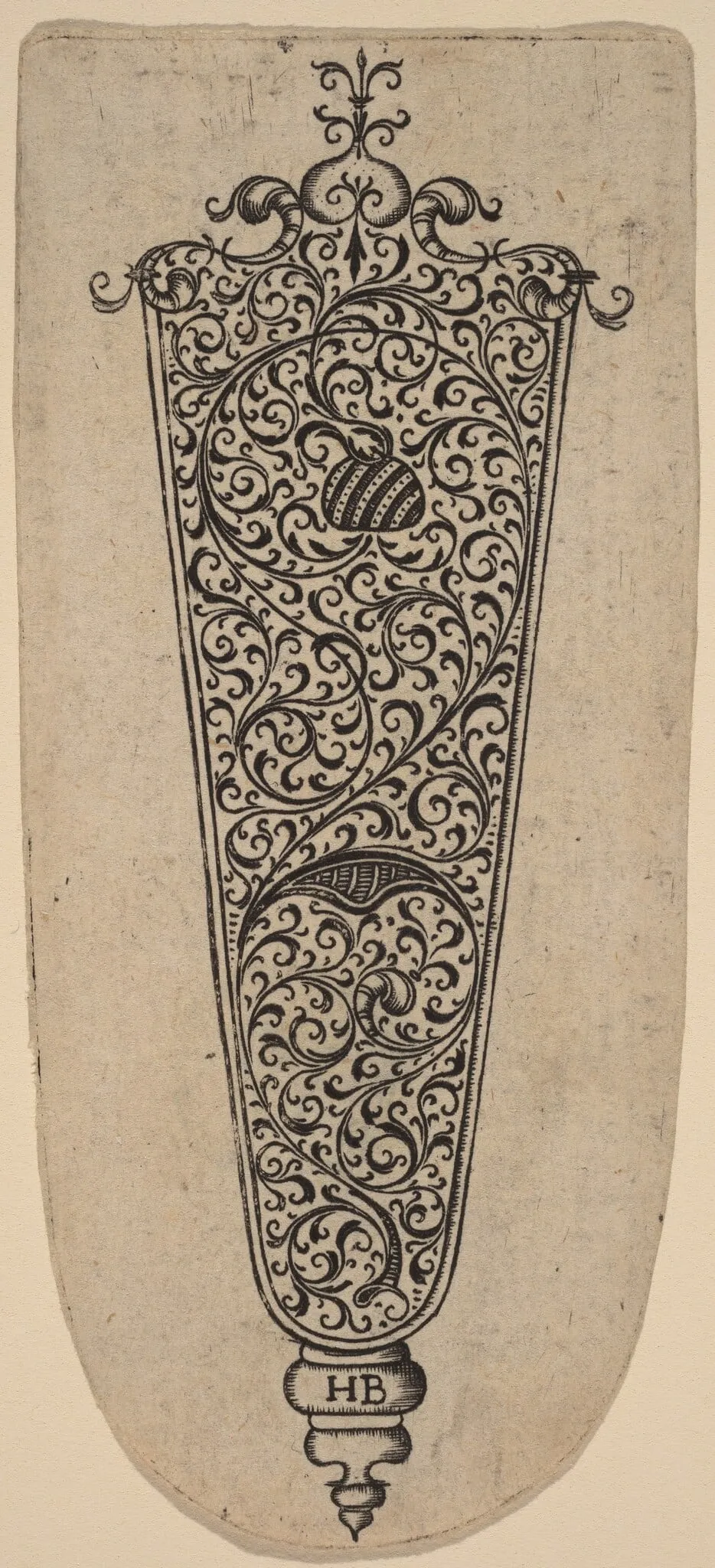
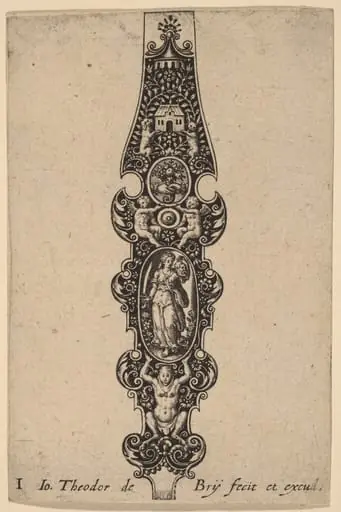
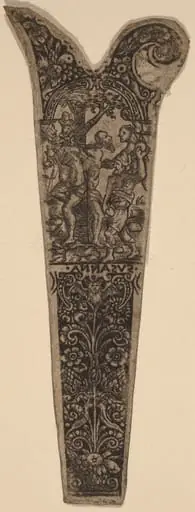
Ornament for Knife Handle is an ink print by the Renaissance artist Theodor de Bry. It dates from 1563 and is held in the collection of the National Gallery of Art.
About this work
Overview
Though de Bry is better known for his illustrations of transatlantic voyages, this piece belongs to his lesser-known body of ornamental work.
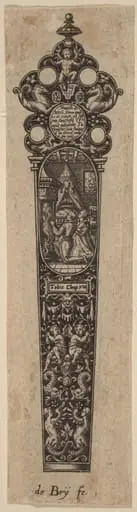
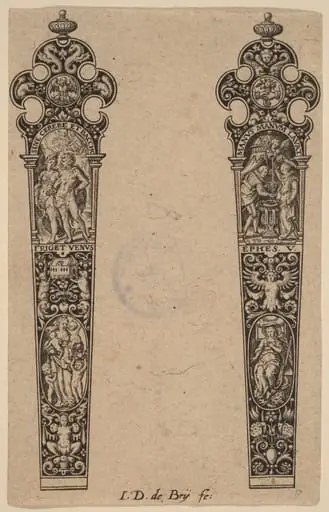
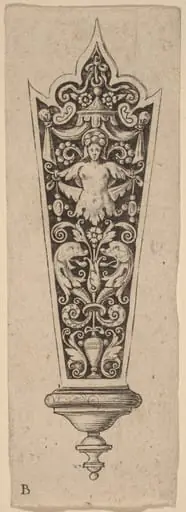
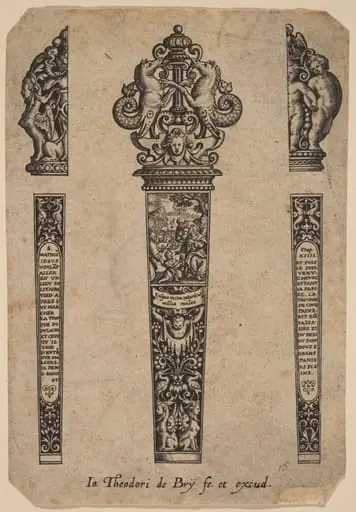
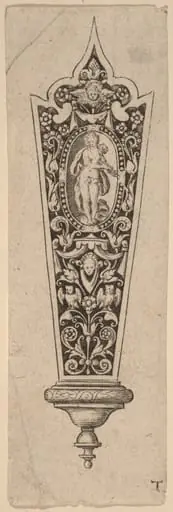
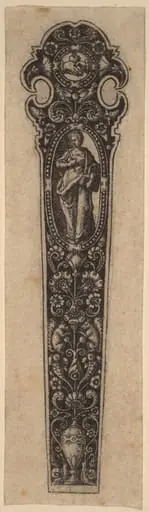
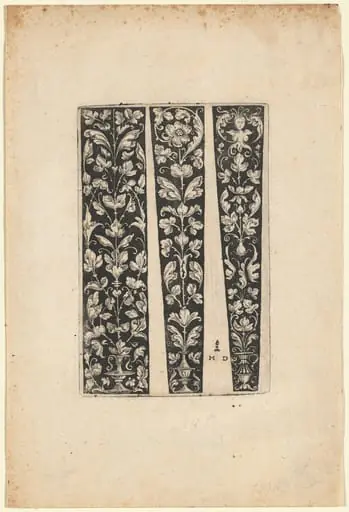
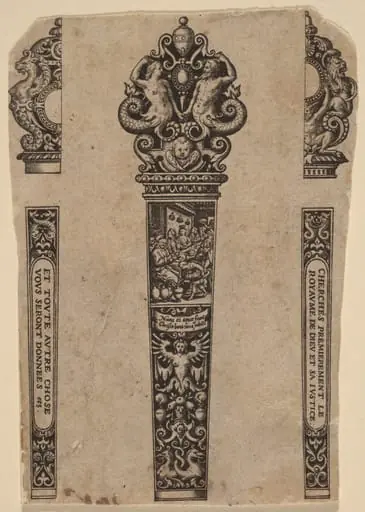
Created in 1563 by Theodor de Bry, this engraving serves as a decorative design for a knife handle. Though de Bry is better known for his illustrations of transatlantic voyages, this piece belongs to his lesser-known body of ornamental work. Executed in fine linear detail, it exemplifies the precision expected in metalwork designs of the mid-16th century, reflecting both artistic skill and functional craftsmanship.
Subject & Meaning
The design features an elongated, vertical composition resembling a knife handle, adorned with interlaced foliage, floral motifs, and scrolling forms. At its apex, the pattern expands into a crown-like termination, while a small loop at the base bears the initials 'HB,' possibly indicating a maker or owner. The ornamentation follows Renaissance conventions of naturalistic yet stylized decoration, emphasizing elegance over narrative content.
Technique & Style
Rendered through engraving, the piece uses fine incised lines to build texture and depth on a metal plate, later transferred to paper. The dense, overlapping strokes create subtle tonal variations, mimicking shadow and volume without color. De Bry’s handling reflects the meticulous standards of Northern European printmakers, where clarity and control were paramount, even in small-scale decorative work.
History & Provenance
Theodor de Bry, a Protestant artisan from Liège, relocated frequently due to religious persecution, eventually settling in Frankfurt. There, he produced a wide range of engravings, including both documentary and ornamental subjects. While the specific provenance of this print is undocumented, its style aligns with other designs from his Frankfurt period, suggesting it was likely made for local artisans or metalworkers seeking decorative templates.
Context
In the mid-1500s, engraved ornament patterns were widely circulated among craftsmen as models for metalwork, jewelry, and weapon decoration. De Bry’s designs contributed to this visual vocabulary, blending classical motifs with contemporary Mannerist tendencies. Though not tied to a specific commission, this piece reflects the demand for refined, repeatable designs in a growing market for luxury goods.
Legacy
Though overshadowed by his ethnographic engravings, de Bry’s ornamental prints influenced decorative arts across Europe. His ability to translate intricate metalwork into print form helped standardize design elements used by artisans beyond his immediate circle. This piece remains a quiet testament to the role of print culture in disseminating aesthetic standards during the Renaissance.
Artist & collection
Artist
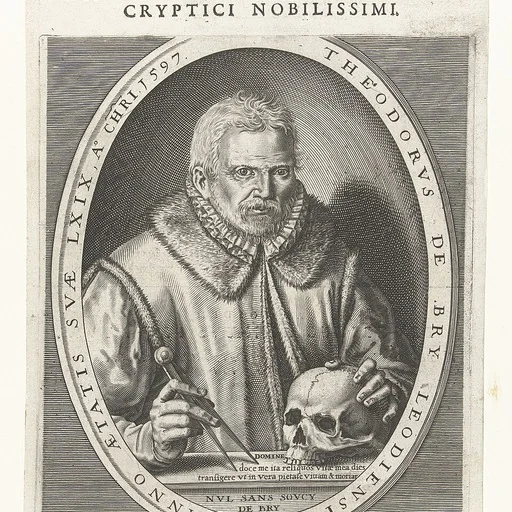
Theodor de Bry (also Theodorus de Bry; 1528 – 27 March 1598) was a Walloon engraver, goldsmith, editor and publisher, famous for his depictions of early European expeditions to the Americas.