Artwork
Studies of Clouds and an Old Woman
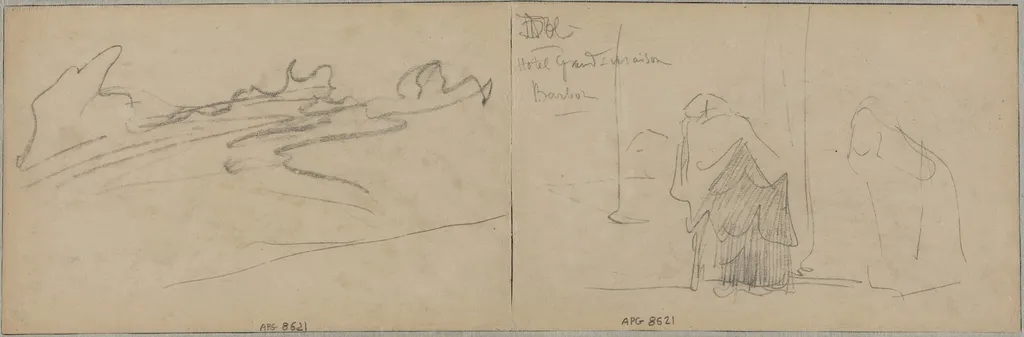
Studies of Clouds and an Old Woman is a chalk drawing by the Romanticist artist Félix-Hilaire Buhot. It dates from 1872 and is held in the collection of the National Gallery of Art.
About this work
Overview
Created in 1872, this drawing by Félix-Hilaire Buhot consists of two unrelated studies on separate pages from a sketchbook.
Created in 1872, this drawing by Félix-Hilaire Buhot consists of two unrelated studies on separate pages from a sketchbook. Executed in black chalk and graphite on wove paper, the work captures fleeting observations—cloud formations and a solitary figure—rendered with rapid, unrefined strokes. The informal layout suggests spontaneous outdoor sketching, typical of Buhot’s practice during his travels in rural France.
Subject & Meaning
The left panel depicts amorphous, swirling forms that evoke drifting clouds or atmospheric motion, while the right shows a seated and a standing figure, their postures suggesting weariness or stillness. No narrative is explicit; instead, the focus lies in capturing transient moments of light, posture, and environment. The inclusion of the location—Hotel Grand-Maison, Barillon—anchors the sketches in a specific, unremarkable place, emphasizing observation over idealization.
Technique & Style
Buhot employed loose, gestural marks in chalk and graphite, allowing the paper’s texture to show through. Forms are suggested rather than defined, with minimal shading and no outlines. The clouds are rendered in fluid, overlapping strokes; the figures are reduced to silhouettes with only hints of facial features. This economy of line reflects a commitment to immediacy, prioritizing perceptual truth over polished finish.
History & Provenance
The drawing originates from Buhot’s personal sketchbook, likely compiled during his travels in the French countryside in the early 1870s. Its two non-consecutive pages indicate it was part of a larger, ongoing record of visual notes. The inscription of the hotel’s name suggests the artist was documenting his surroundings during a stopover, a common practice among 19th-century draftsmen seeking authenticity in everyday scenes.
Context
Buhot’s work aligns with the broader 19th-century shift toward direct observation and informal sketching, influenced by Realism and early Impressionism. Unlike Romantic idealization, his approach valued the ordinary and ephemeral. His sketches, often made en plein air, reflect a growing interest in capturing transient natural phenomena and unposed human presence, anticipating later modernist tendencies in drawing.
Legacy
Though not widely exhibited during his lifetime, Buhot’s sketchbook pages like this one have since been recognized for their quiet precision and emotional restraint. They exemplify how artists used drawing not as preparation for larger works, but as an end in itself—a means of recording perception with honesty. Today, they inform understandings of 19th-century draftsmanship beyond academic traditions.
Artist & collection

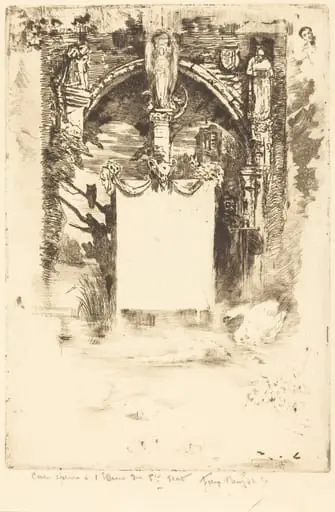 Ex-Libris pour "L'Ensorcelée" (Bookplate for "L'Ensorcelée")
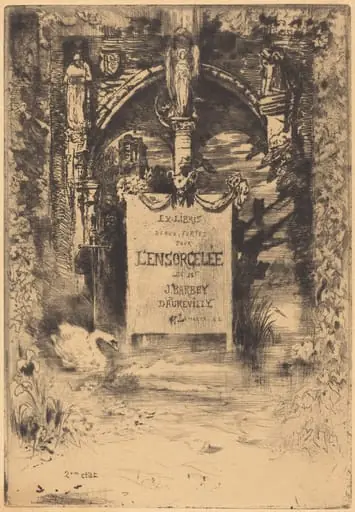 Ex-Libris pour "L'Ensorcelée" (Bookplate for "L'Ensorcelée")
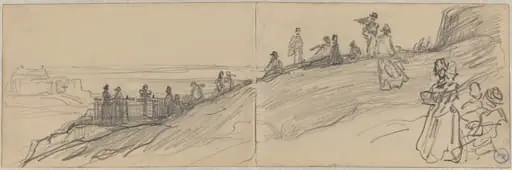 Figures on Top of a Hill, Overlooking the Sea
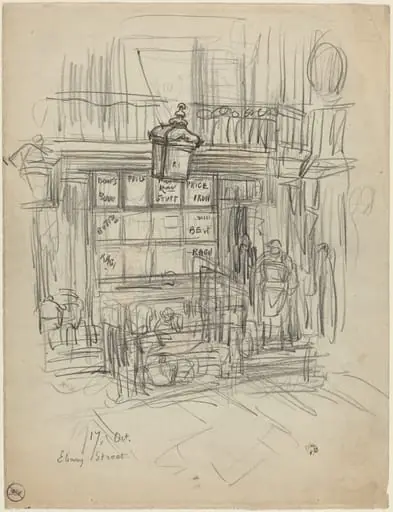 Ebury Street
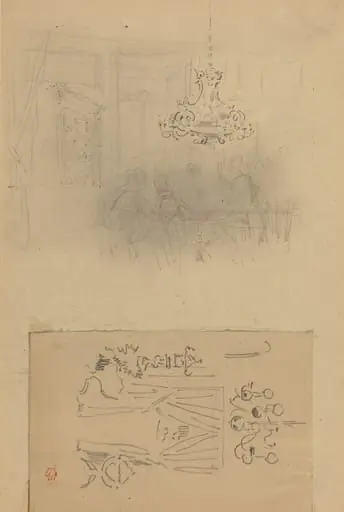 A Gathering in an Interior; A Curtained Doorway
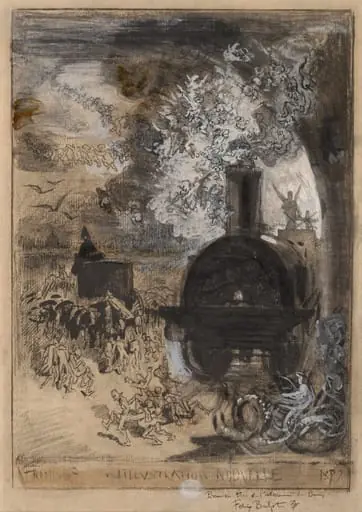 Frontispiece for L'Illustration Nouvelle: The Burial of the Burin
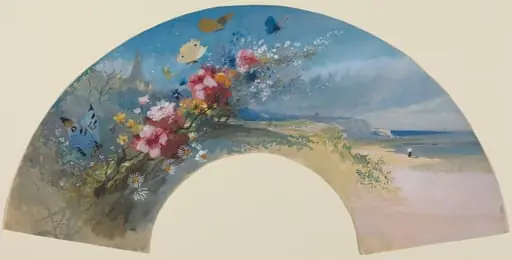 Fan with Wildflowers and Butterflies against the Norman Coast
![Gillingham Pier, London [verso], by Félix-Hilaire Buhot](https://artifactworldgallery.com/img/felix-hilaire-buhot--gillingham-pier-london-verso--641e03dd7de8217b-w320.webp) Gillingham Pier, London [verso]
Gillingham Pier, London [verso]
![Head of a Monkey; Inventory of Bottles and Beverages [verso], by Paul Gauguin](https://artifactworldgallery.com/img/paul-gauguin--head-of-a-monkey-inventory-of-bottles-and-beverages-verso--0d4bb62a8bd056d4-w320.webp) Head of a Monkey; Inventory of Bottles and Beverages [verso]
Head of a Monkey; Inventory of Bottles and Beverages [verso] Pelicans
 Untitled
 Untitled
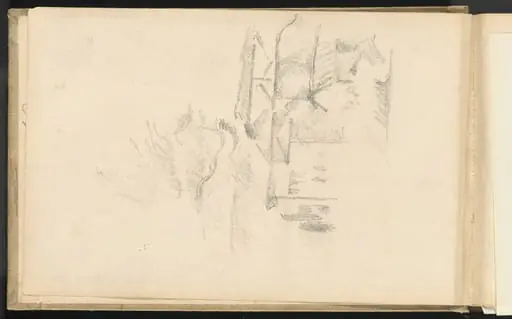 The Plaster Mill (La Moulin à plâtre)
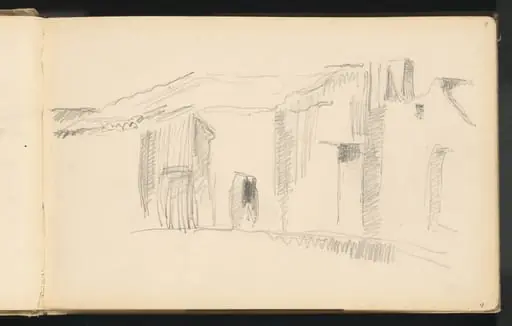 Study of Houses
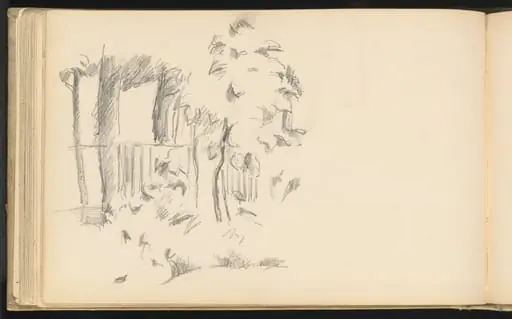 Near the Pool at Jas de Bouffan
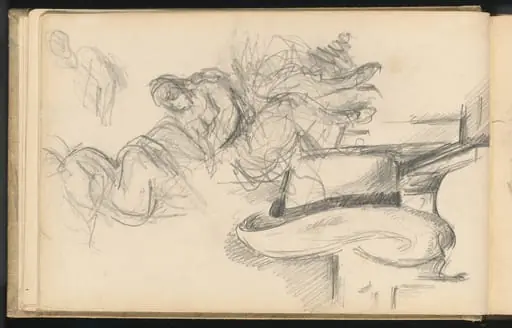 Studies Including a Straw Hat
![Study for "Shoeing Calvary Horses at the Front" [verso], by John Singer Sargent](https://artifactworldgallery.com/img/john-singer-sargent--study-for-shoeing-calvary-horses-at-the-front-verso--6f6d1a163e84e9ab-w320.webp) Study for "Shoeing Calvary Horses at the Front" [verso]
Study for "Shoeing Calvary Horses at the Front" [verso]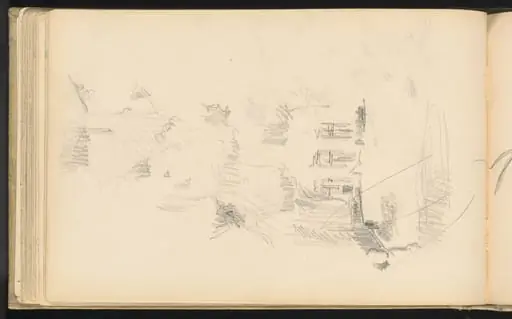 House Surrounded by Vegetation
![Group of Human Forms; A Man Seated [recto], by Paul Gauguin](https://artifactworldgallery.com/img/paul-gauguin--group-of-human-forms-a-man-seated-recto--4584f2f2117fc923-w320.webp) Group of Human Forms; A Man Seated [recto]
Group of Human Forms; A Man Seated [recto]![The Artist's Father and Objects on a Mantel [verso], by Paul Cezanne](https://artifactworldgallery.com/img/paul-cezanne--the-artist-s-father-and-objects-on-a-mantel-verso--a408bf6b7347c203-w320.webp) The Artist's Father and Objects on a Mantel [verso]
The Artist's Father and Objects on a Mantel [verso]