Artwork
Beheading of Saint Catherine
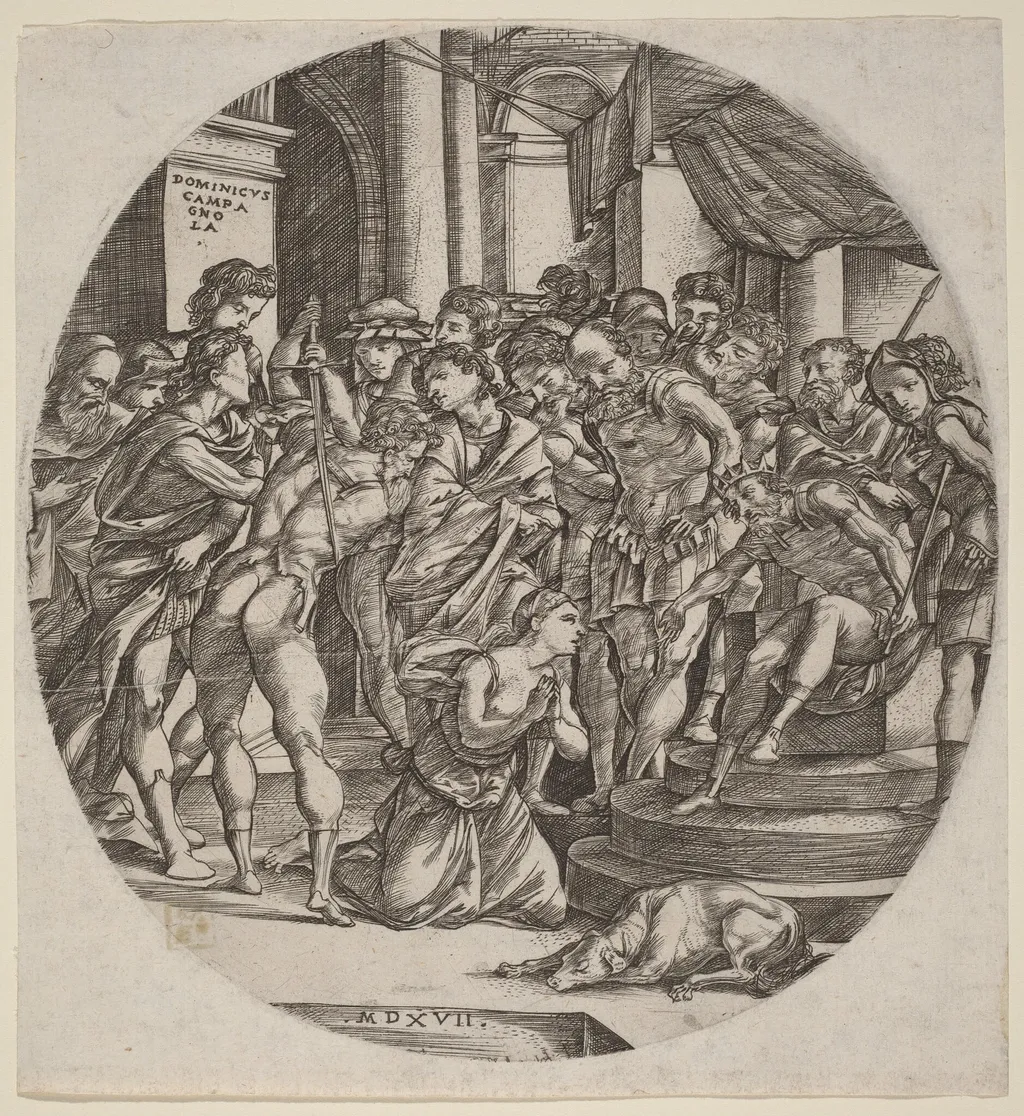
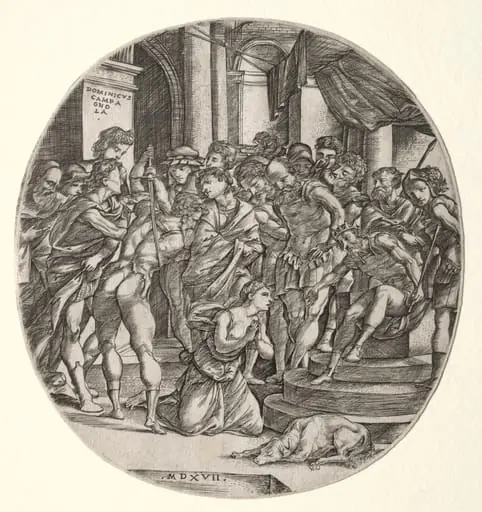
Beheading of Saint Catherine is an ink print by the Renaissance artist Domenico Campagnola. It dates from 1517 and is held in the collection of the National Gallery of Art.
About this work
Overview
Domenico Campagnola’s 1517 engraving, titled *Beheading of Saint Catherine*, presents a narrative moment from the saint’s martyrdom. Executed as a print, the work captures a crowded interior where the kneeling figure of Catherine is surrounded by soldiers and onlookers, all set against a monumental architectural backdrop featuring columns and a large arch.
Subject & Meaning
The composition centers on Saint Catherine at the moment of her beheading, emphasizing her devotion through a posture of prayer amid imminent violence. The inclusion of spectators and military figures underscores the tension between faith and persecution, a common theme in devotional imagery of the period.
Technique & Style
Campagnola employs fine cross‑hatching to model forms and create tonal depth, allowing the figures and architectural elements to emerge with a sense of volume. Intricate line work defines textures—from the fur of a dog lying in the foreground to the drapery of garments—enhancing the realism of the scene.
Context
The engraving reflects early sixteenth‑century Italian interest in religious narrative prints, which served both devotional and didactic purposes. By situating the martyrdom within an architecturally grand space, Campagnola aligns the saint’s sacrifice with classical ideals of order and grandeur prevalent in Renaissance art.
Artist & collection


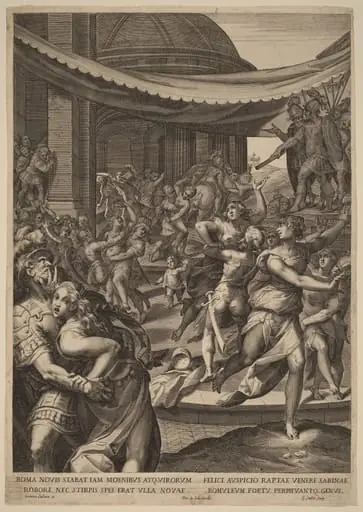 The Rape of the Sabines
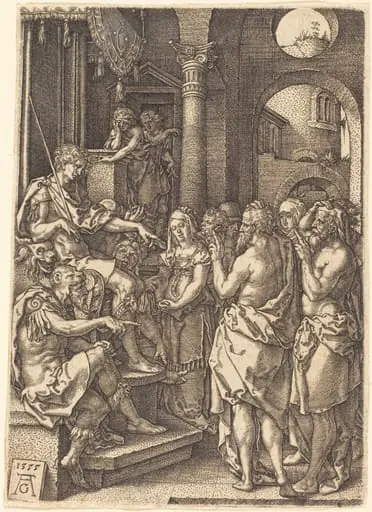 The Two Elders Before the Judge
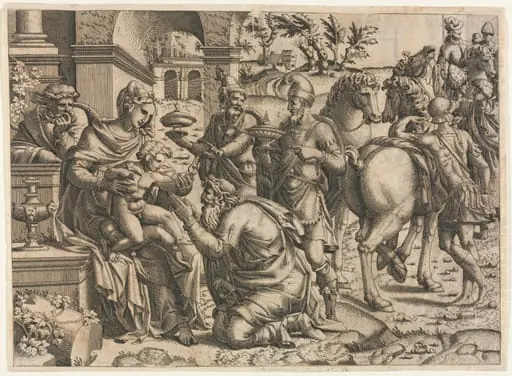 The Adoration of the Magi
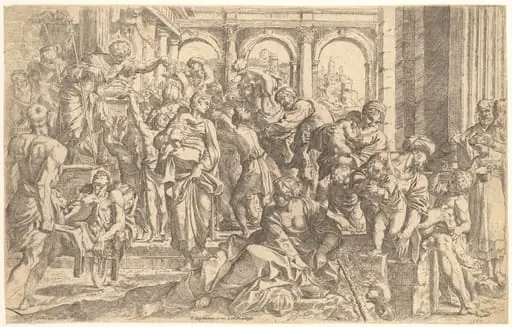 Saint Roch Distributing Alms
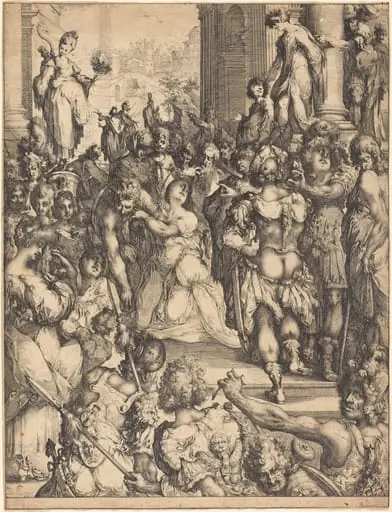 Martyrdom of Saint Lucy
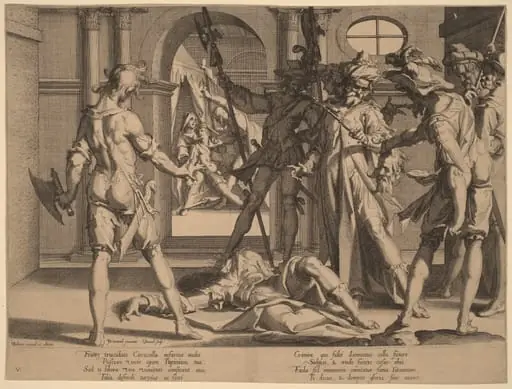 Beheading of the Roman Judge Papinian
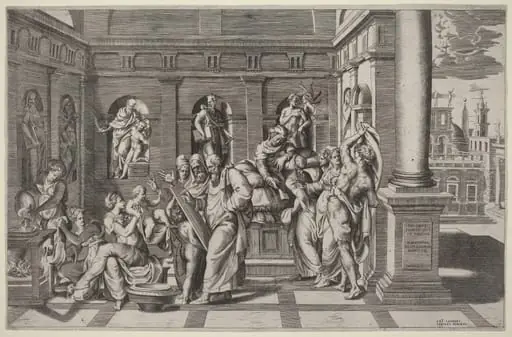 The Birth of Saint John the Baptist
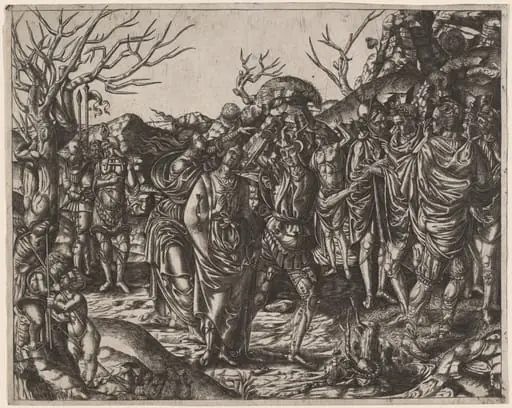 The Death of Virginia
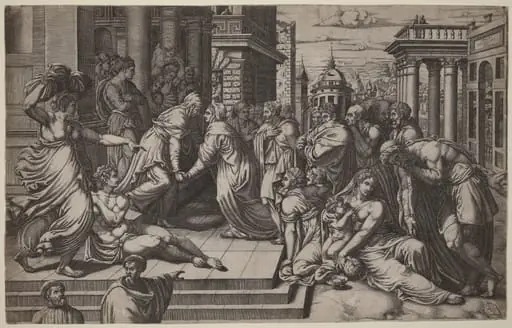 The Visitation
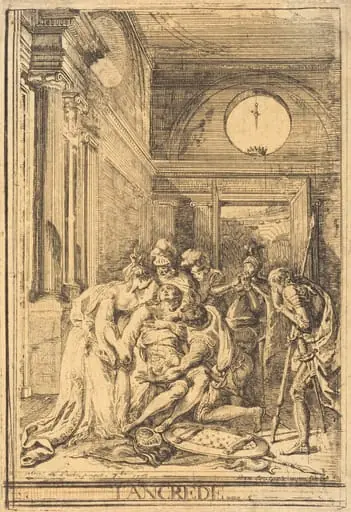 The Death of Tancred
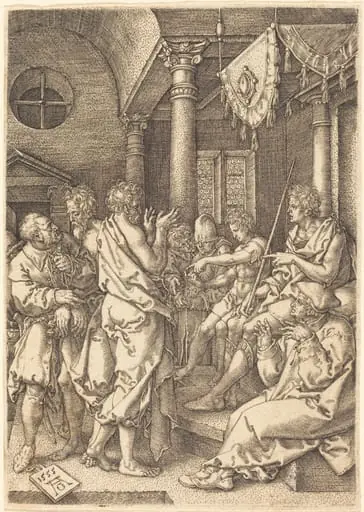 The Two Elders Convicted by the Testimony of Daniel
 Beheading of Saint Catherine