Artwork
Head of a Boy (verso)
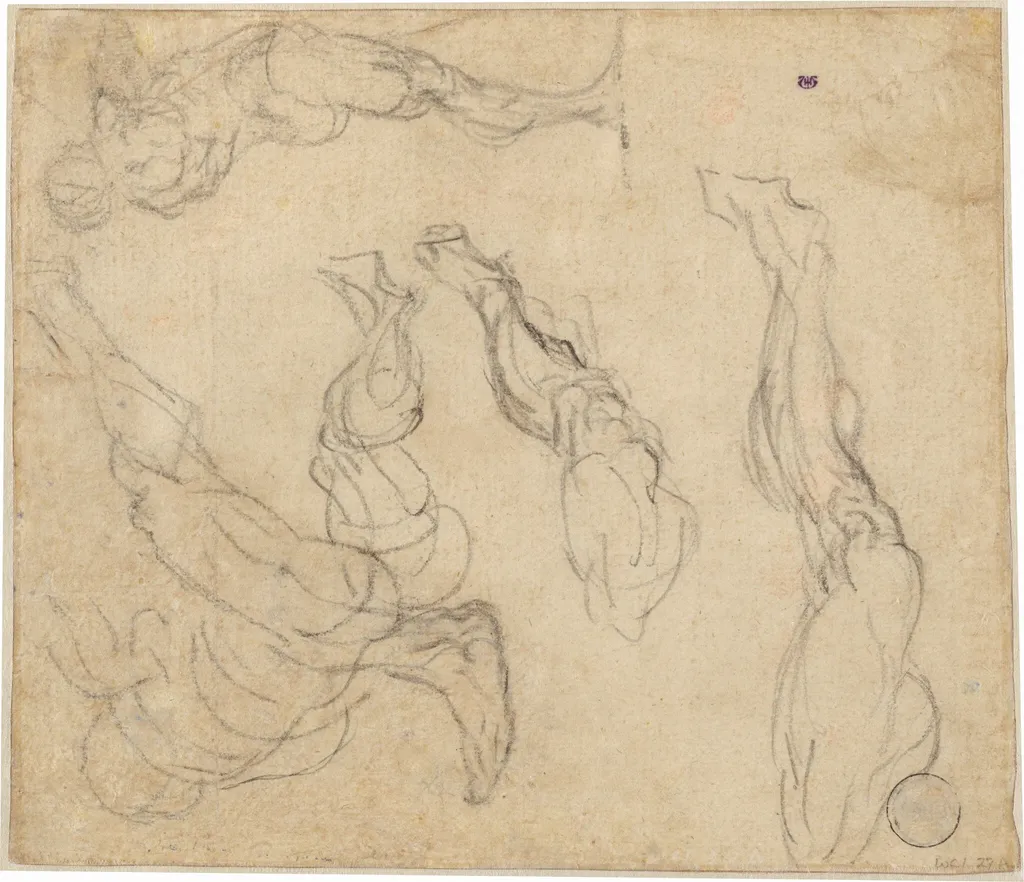
Head of a Boy (verso) is an ink drawing by the Renaissance artist Giulio Campagnola. It dates from 1513 and is held in the collection of the National Gallery of Art.
About this work
Overview
Head of a Boy (verso) is a drawing created around 1513 by Giulio Campagnola, an Italian artist known for his engravings and paintings. The work is executed in pen and brown ink on laid paper.
Technique & Style
The drawing showcases Campagnola's use of delicate linework and subtle tonality, reflecting his expertise in engraving and printmaking techniques. The loose, flowing lines and soft ink suggest a study or preparatory work rather than a finished piece.
Subject & Meaning
The sketch depicts the head and shoulders of a nude boy, captured with a few swift strokes that convey movement rather than detailed representation.
Context
Campagnola's work was influenced by the Venetian Renaissance style, particularly that of Giorgione and early Titian, which he translated into engravings using innovative techniques such as stippling to achieve tonal gradations.
Artist & collection

Artist
Giulio Campagnola (Italian: ; c. 1482 – c. 1515) was an Italian engraver and painter, whose few, rare, prints translated the rich Venetian Renaissance style of oil paintings of Giorgione and the early Titian into the…

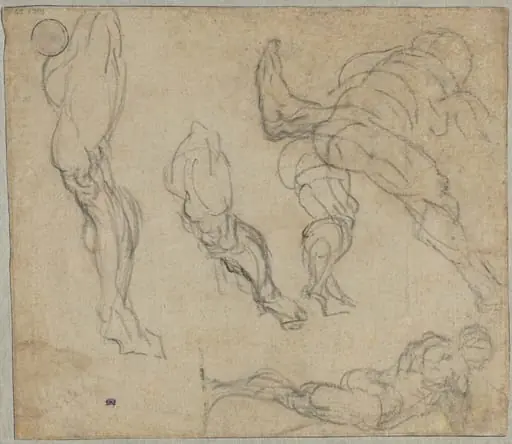 Figures and Legs (verso)
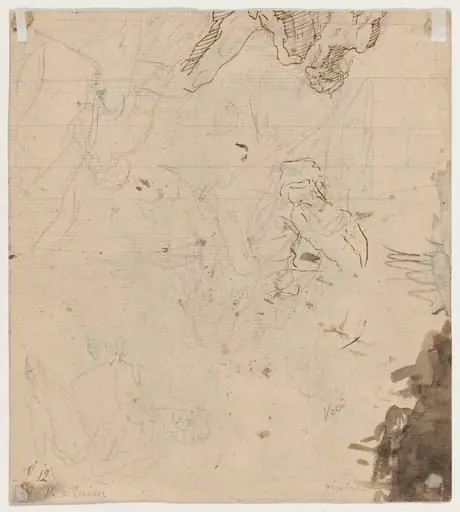 Figure Studies
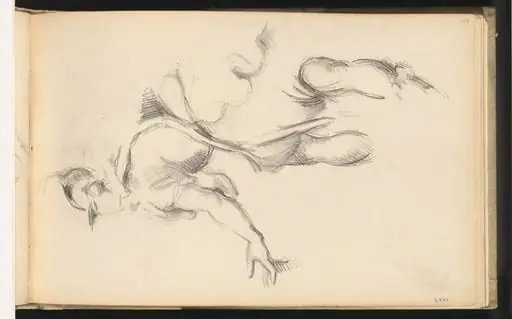 Study of the Allegorical Figure France in Rubens' "The Exchange of the Two Princesses"
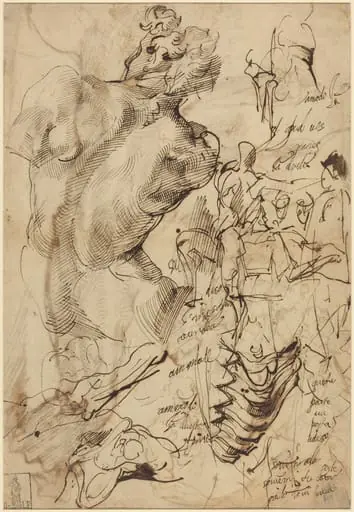 Studies of a Sculpture of a Male Nude, Vertebrae, and Gesturing Figures
![Drapery Studies [recto], by Baldassare Franceschini](https://artifactworldgallery.com/img/baldassare-franceschini--drapery-studies-recto--8283f7732b58979e-w320.webp) Drapery Studies [recto]
Drapery Studies [recto]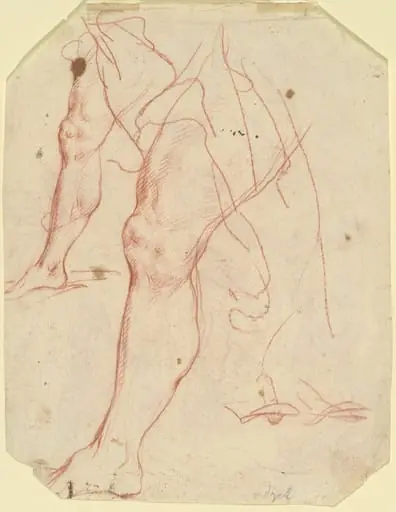 Two Studies of a Leg (verso)
![The Belvedere Torso [verso], by William Blake](https://artifactworldgallery.com/img/william-blake--the-belvedere-torso-verso--3124534f87673a3a-w320.webp) The Belvedere Torso [verso]
The Belvedere Torso [verso]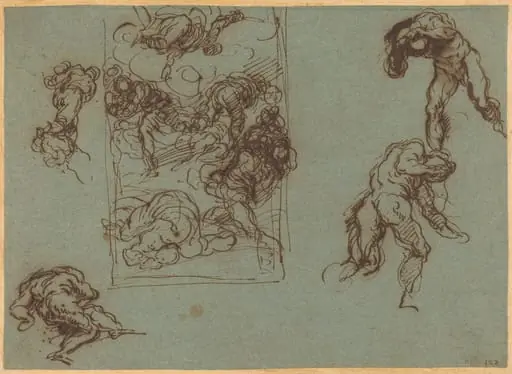 Figure Studies
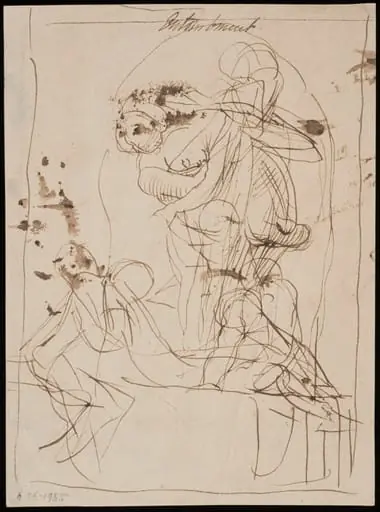 The Entombment
![Sheet of Studies [recto and verso], by John Flaxman](https://artifactworldgallery.com/img/john-flaxman--sheet-of-studies-recto-and-verso--af59e52d5279d768-w320.webp) Sheet of Studies [recto and verso]
Sheet of Studies [recto and verso]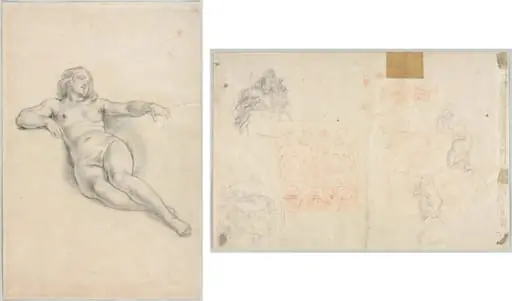 Reclining Female Nude (recto); Various Sketches of Figures and Plants (verso)
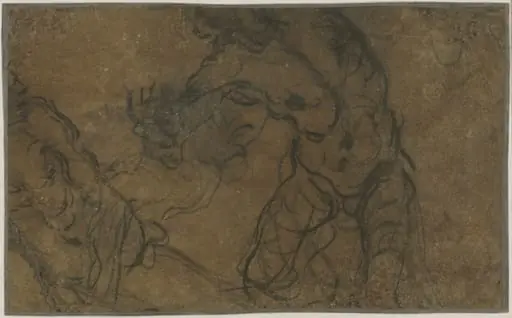 Two Male Figures in Motion (verso)