Artwork
Venus Reclining in a Landscape
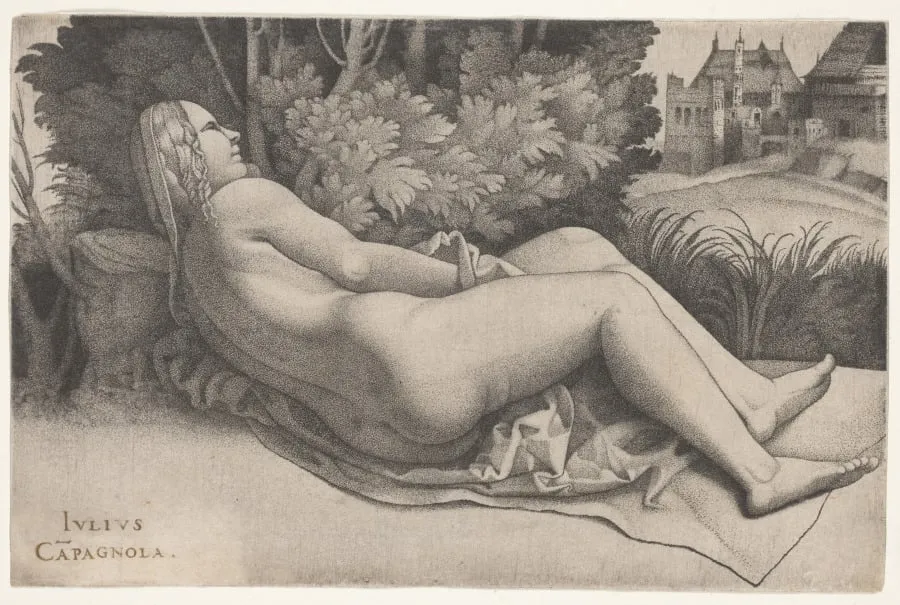
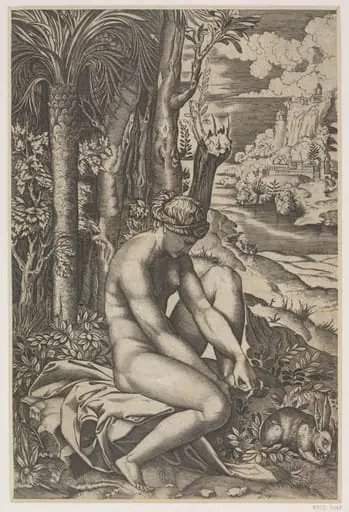
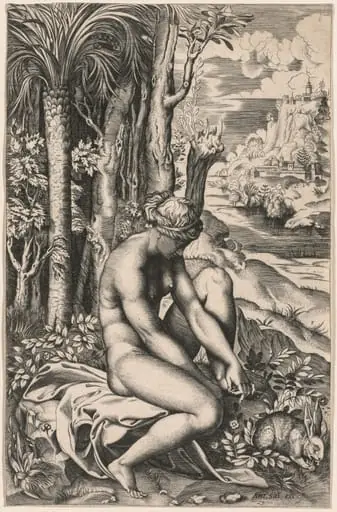
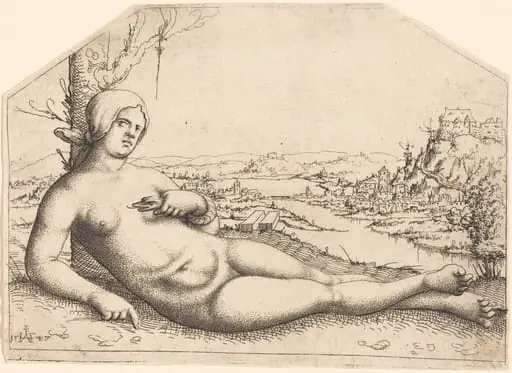
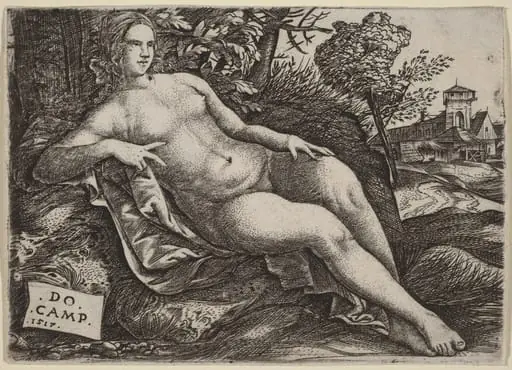
Venus Reclining in a Landscape is a print by the Renaissance artist Giulio Campagnola. It dates from 1508 and is held in the collection of the Cleveland Museum of Art.
About this work
The trees behind her fade softly into the distance, thanks to tiny dots and flicks in the metal plate—Campagnola’s "dot manner" trick.
This engraving shows Venus lying in a grassy meadow, one arm resting behind her head. The trees behind her fade softly into the distance, thanks to tiny dots and flicks in the metal plate—Campagnola’s "dot manner" trick. It makes light feel gentle, like smoky haze.
This isn’t an oil painting. It’s a print, carved on metal. That’s rare for a nude Venus in 1508. The dots shape her body and shadows almost like paint.
To see more of these early Venetian experiments, check sfumato online.
Overview
Giulio Campagnola’s 1508 engraving presents a reclining Venus set within a gently receding landscape. Executed on a metal plate, the image captures the nude figure against a meadow, her arm supporting her head, while trees dissolve into the background through a delicate network of dots.
Subject & Meaning
The composition reflects a burgeoning Venetian motif of the nude goddess situated in an open, natural setting. By placing Venus in a pastoral scene, the work aligns with contemporary ideals of beauty and harmony between the human form and the surrounding environment.
Technique & Style
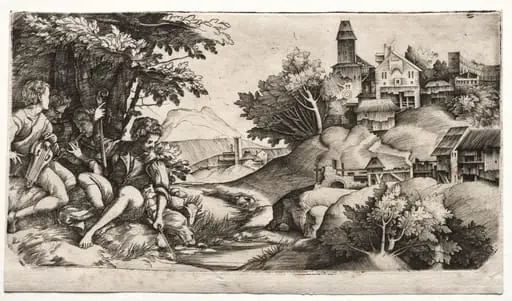
Campagnola pioneered the “dot manner,” employing fine dots and flicks of the burin to render tonal transitions. This method produces a soft, atmospheric gradation reminiscent of the sfumato painting technique favored by Venetian masters, allowing subtle shifts from shadow to light without line.
History & Provenance
The print emerges from an early phase of Venetian printmaking, a period when engravers began to emulate the tonal richness of oil painting. Its rarity as a nude printed before 1510 underscores its significance within the limited corpus of early 16th‑century Venetian engravings.
Context
The work’s refined execution suggests a possible collaboration with or influence from Giorgione, whose own use of sfumato shaped the visual language of the time. The motif of a reclining Venus would later become a staple in Venetian art, influencing subsequent generations of painters and printmakers.
Artist & collection

Artist
Giulio Campagnola (Italian: ; c. 1482 – c. 1515) was an Italian engraver and painter, whose few, rare, prints translated the rich Venetian Renaissance style of oil paintings of Giorgione and the early Titian into the…