Artwork
Christ and the Samaritan Woman
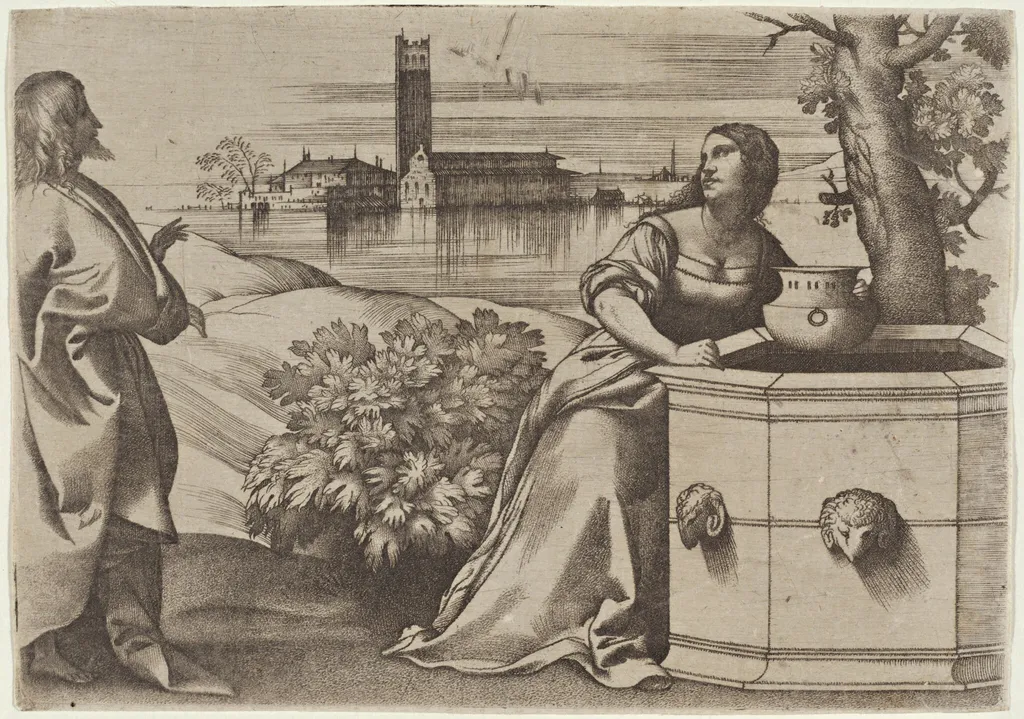
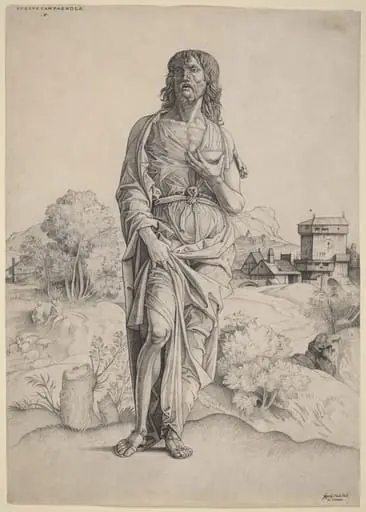
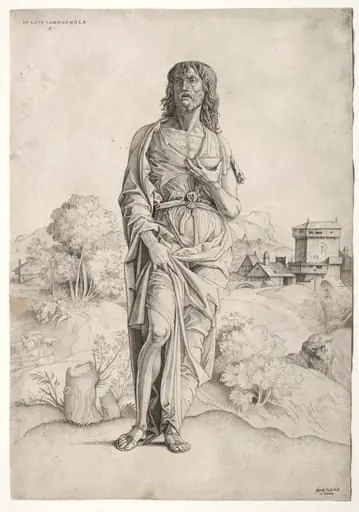
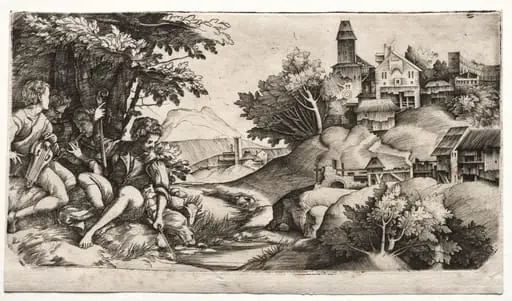
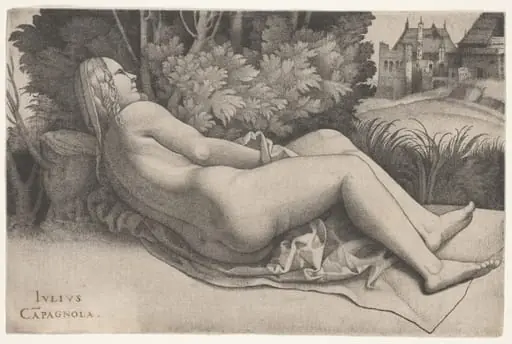
Christ and the Samaritan Woman is an ink print by the Renaissance artist Giulio Campagnola. It dates from 1510 and is held in the collection of the National Gallery of Art.
About this work
Overview
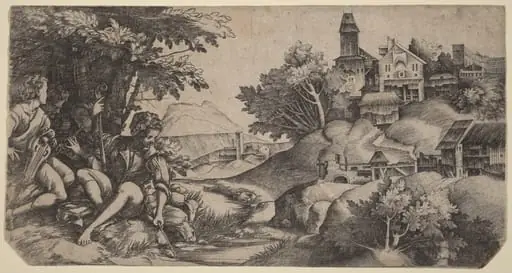
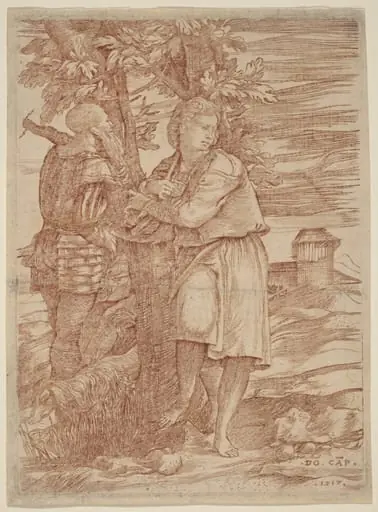
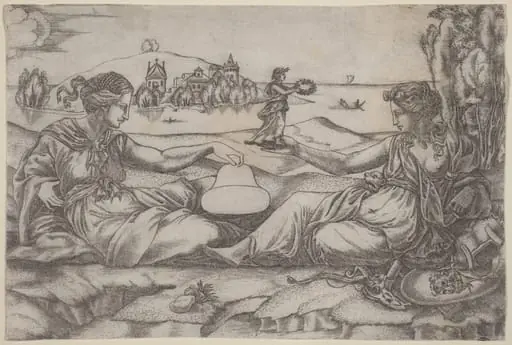
Giulio Campagnola’s engraving *Christ and the Samaritan Woman* presents a quiet encounter set beside a building with a tall tower, a stone ledge, and a distant bridge over water. The composition balances two figures—one gesturing, the other leaning with a vase of flowers—against a softly rendered landscape that hints at depth through delicate shading.
Technique & Style
Campagnola employs a stipple method, arranging minute dots and dashes to achieve gradual tonal transitions uncommon in traditional engraving.
Campagnola employs a stipple method, arranging minute dots and dashes to achieve gradual tonal transitions uncommon in traditional engraving. This approach, combined with cross‑hatching for texture on clothing and foliage, produces a nuanced chiaroscuro that mirrors the atmospheric qualities of contemporary Venetian painting, especially the tonal softness associated with Giorgione and early Titian.
Subject & Meaning
The print illustrates the biblical dialogue between Christ and the Samaritan woman at Jacob’s well, emphasizing the exchange through the figures’ gestures and the intimate setting. The inclusion of a vase of flowers and the surrounding architecture adds a serene, everyday context that underscores the narrative’s themes of revelation and compassion.
History & Provenance
Created around 1510, the work reflects Campagnola’s brief but impactful career in Venice, where he merged printmaking with the city’s evolving visual language. Though specific ownership records are scarce, the engraving has been cited in early catalogues of Italian prints, confirming its circulation among collectors of Renaissance graphic art.
Context
Operating in a period when Venetian painters were exploring tonal richness, Campagnola translated these painterly effects into the print medium. His innovative use of stipple and fine line work positioned the engraving as a bridge between the linear precision of engraving and the atmospheric depth of contemporary oil painting, influencing later printmakers in the region.
Artist & collection

Artist
Giulio Campagnola (Italian: ; c. 1482 – c. 1515) was an Italian engraver and painter, whose few, rare, prints translated the rich Venetian Renaissance style of oil paintings of Giorgione and the early Titian into the…