Artwork
Entrance to the Minakshi Sundareshvara Temple, Madurai
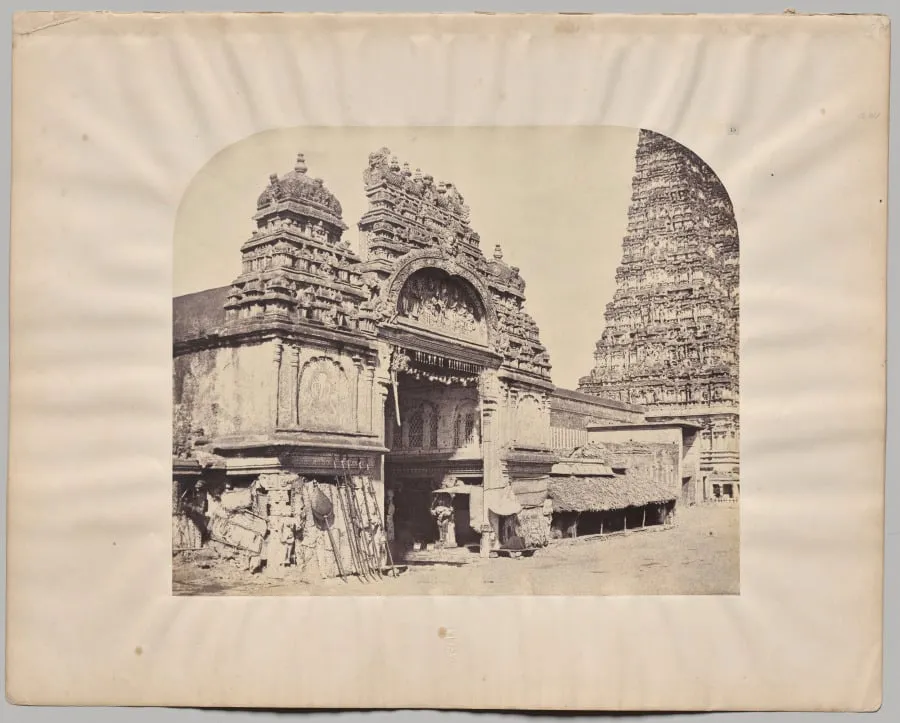
Entrance to the Minakshi Sundareshvara Temple, Madurai is a photography by the Impressionist artist Captain Linnaeus Tripe. It dates from 1858 and is held in the collection of the Cleveland Museum of Art.
About this work
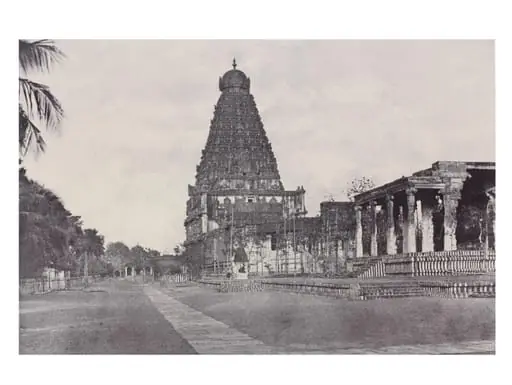
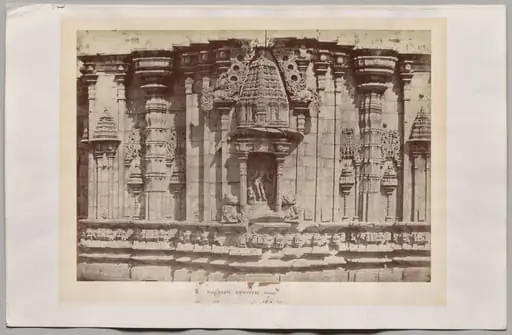
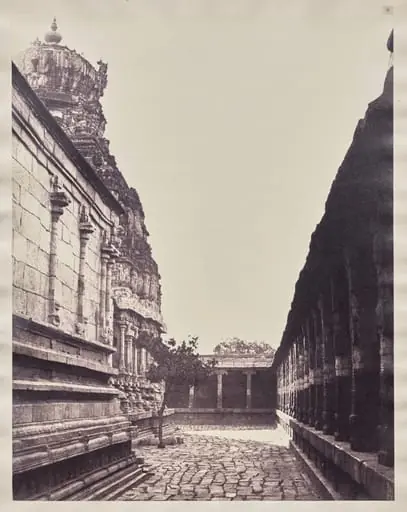
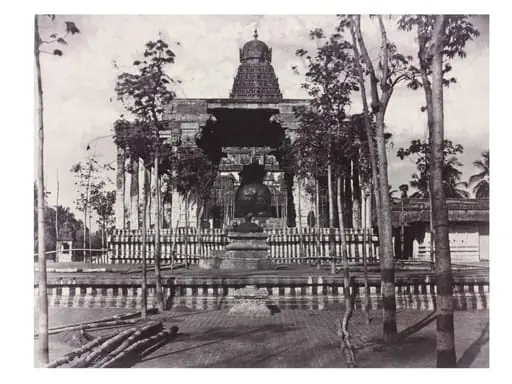
You see a black-and-white photograph of a temple gate in Madurai, India—tall, stacked arches leading inward, each one smaller than the last.
You see a black-and-white photograph of a temple gate in Madurai, India—tall, stacked arches leading inward, each one smaller than the last.
Tripe took this picture in 1858, the same year Britain took direct control of India. The photo was part of a government-backed project to document Indian architecture, then sold in albums to British buyers. It’s not just a picture; it’s a record made for colonial eyes.
To see more of Tripe’s careful work, look up Captain Linnaeus Tripe (British, 1822–1902).
Overview
This 1858 black-and-white photograph captures the Entrance to the Minakshi Sundareshvara Temple in Madurai, India, showcasing its distinctive tiered arches that diminish in size as they recede into the interior.
Subject & Meaning
The image is more than a documentary photograph; it serves as a colonial-era record, created for British audiences during the year India fell under direct British rule. Its context suggests it was intended to showcase Indian architectural achievements to the colonizers.
Technique & Style
The photograph features Tripe's characteristic careful composition, highlighting the architectural details of the temple's gateway. The use of black-and-white medium and the focus on geometric progression of the arches contribute to a sense of clarity and precision.
History & Provenance
Taken in 1858 by Captain Linnaeus Tripe, a British military officer, the photograph was part of a government-supported project to document Indian architecture. It was sold in pre-selected album sets to the British public.
Context
The photograph's creation coincides with the British colonization of India in 1858, following the dissolution of the British East India Company's rule. Tripe's work was thus intertwined with the political and economic interests of the time.
Legacy
As part of Tripe's photographic series, the image contributes to the historical record of Indian architecture under colonial rule. It remains a significant example of 19th-century documentary photography with inherent colonial connotations.
Artist & collection

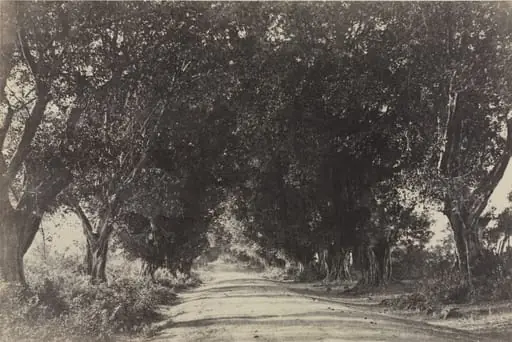 Avenue of the Banian Trees, Seringham, India
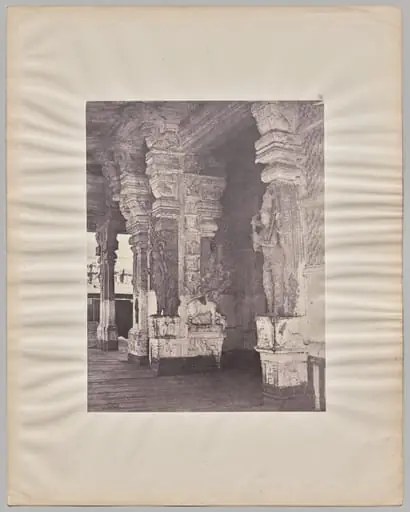 Pudhu Mandapa of Tirumal Nayak (r. 1623–59), Minakshi Sundareshvara Temple, Madurai
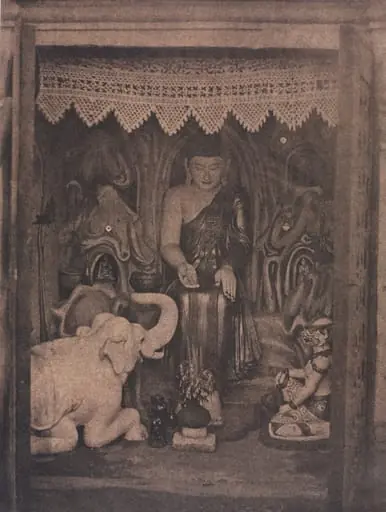 Amerapoora. Gautama's Shrine
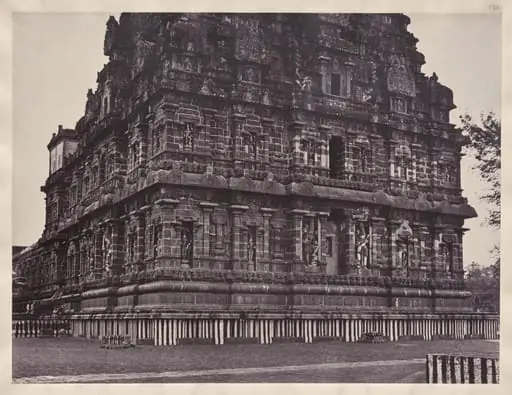 West and South Sides of the Vimana Walls, Great Temple (Brihadeshvara) at Tanjore (Thanjavur)
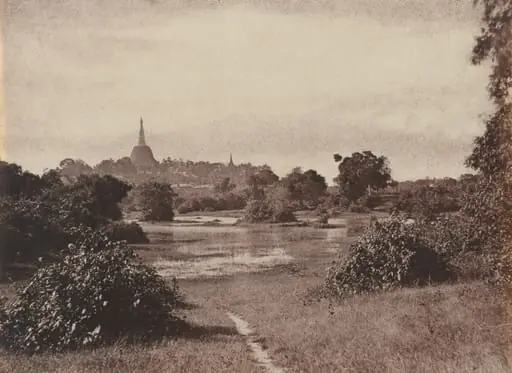 Rangoon. View Near the Lake
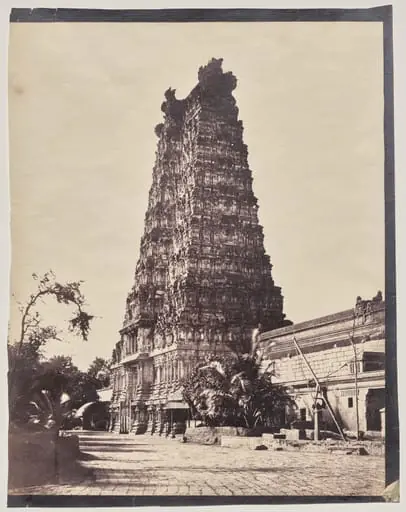 Western Gateway (Gopuram) of the Minakshi Sundareshvara Temple, Madurai
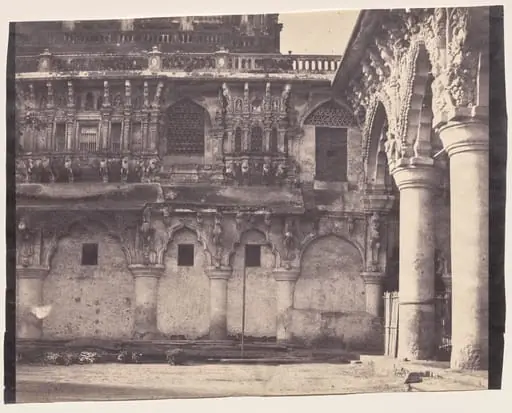 South Façade of the Quadrangle of the Nayak Darbar Hall, Thanjavur
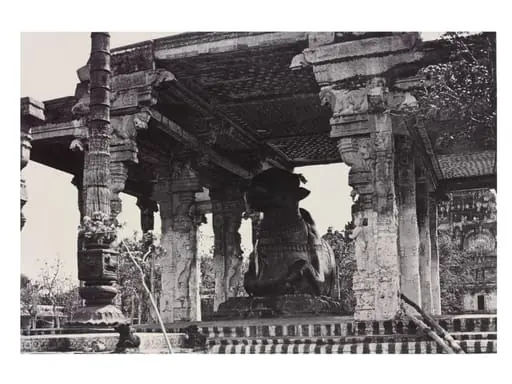
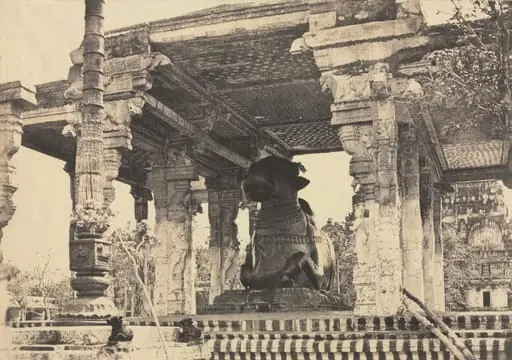 Great Pagoda, Great Bull, Front View, Tanjore, India (Rajarajeshvara Temple), plate 12 from Photographic Views of Tanjore and Trivady (Madras: Madras Presidency)