Artwork
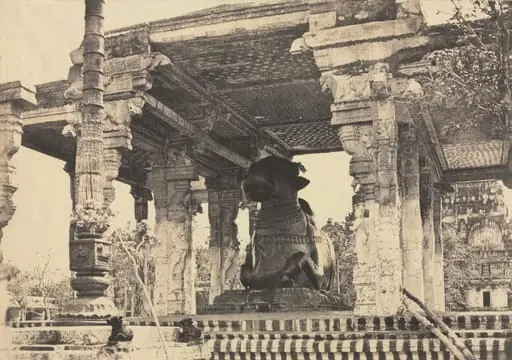
The Great Bull from the Gateway
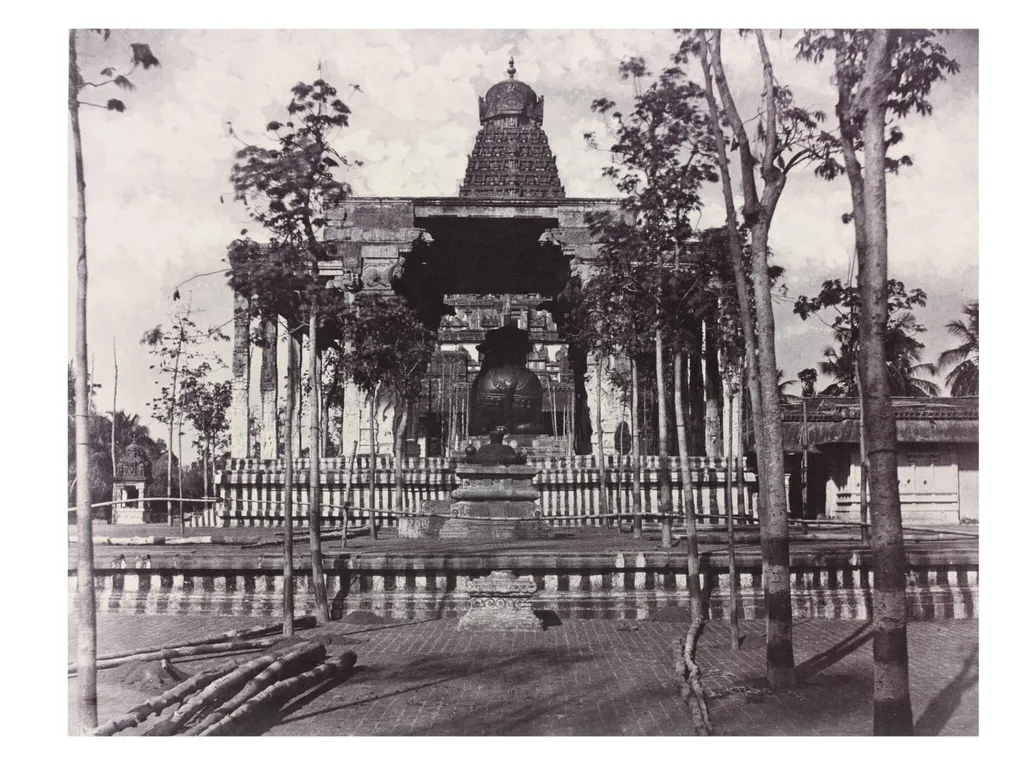
The Great Bull from the Gateway is a photographic photography by the Impressionist artist Linnaeus Tripe. It dates from 1858 and is held in the collection of the Victoria and Albert Museum.
About this work
The Great Bull from the Gateway is a photograph by Linnaeus Tripe. It was taken in March 1858-April 1858.
This photograph is part of an album documenting Tanjore, or Thanjavur. The sculpture in the centre is Nandi, a bull and symbol of fertility, guarding the entrance to the Brihadisvara temple.
To learn more about the style and technique used in this photograph, look up the movement Realism.
Overview
Taken between March and April 1858, this photograph by Linnaeus Tripe is one of many produced during his official assignment with the Madras government.
Taken between March and April 1858, this photograph by Linnaeus Tripe is one of many produced during his official assignment with the Madras government. It captures a monumental granite sculpture of Nandi at the entrance to the Brihadisvara temple in Thanjavur, part of a larger album documenting South Indian architecture and sacred sites. Tripe’s work served both administrative and ethnographic purposes, preserving visual records of cultural landmarks during British colonial rule.
Subject & Meaning
The central figure is Nandi, the sacred bull and vehicle of the Hindu deity Shiva, traditionally positioned to guard temple entrances. Carved from a single slab of granite over six meters in length, the sculpture dates to the late 16th century and embodies themes of devotion, strength, and fertility. Its placement at the threshold signifies transition from the profane to the sacred, a symbolic threshold rendered visible through Tripe’s lens.
Technique & Style
Tripe employed the wet-plate collodion process, a technically demanding method requiring on-site preparation of glass plates. His composition uses the alignment of trees to guide the viewer’s eye toward the bull, creating a sense of axial symmetry. The sharp focus and tonal range reflect the precision of early photographic realism, prioritizing documentary clarity over artistic embellishment.
History & Provenance
The photograph was produced as part of Tripe’s 1858 album of Thanjavur, commissioned by the Madras government to record religious monuments. It was likely distributed to colonial officials and institutions in Britain. The original album survives in institutional collections, and this image remains among the earliest photographic records of the Brihadisvara temple complex, valued for its historical accuracy.
Context
Tripe’s project occurred during a period of intensified colonial documentation, when photography was increasingly used to classify and preserve cultural heritage. His images of South Indian temples were among the first systematic visual surveys of the region, contributing to both Western scholarly interest and the preservation of sites that were otherwise vulnerable to neglect or alteration.
Legacy
Tripe’s photographs of Thanjavur remain important references for historians and conservators studying South Indian temple architecture. His disciplined approach to composition and detail set a standard for ethnographic photography in colonial India. Though not widely exhibited in his lifetime, his work has since been recognized for its contribution to the visual archive of India’s cultural landscape.
Artist & collection
Artist
Linnaeus Tripe made early photographs of Burma for the British government between 1855 and 1858.

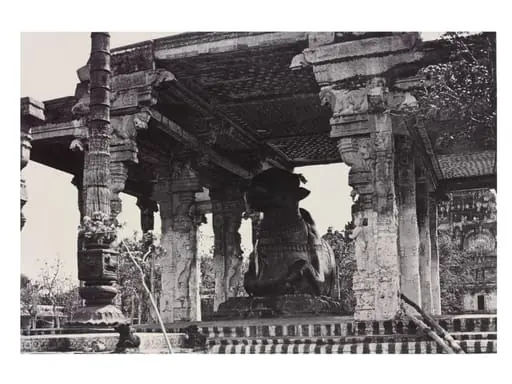
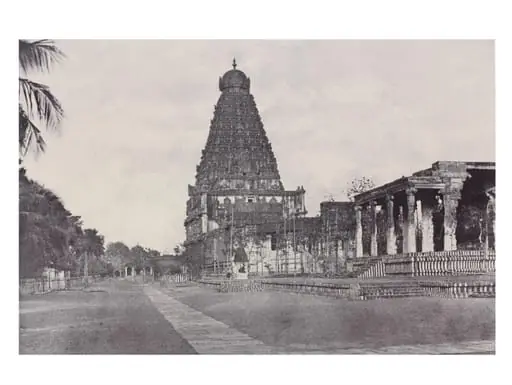
 Great Pagoda, Great Bull, Front View, Tanjore, India (Rajarajeshvara Temple), plate 12 from Photographic Views of Tanjore and Trivady (Madras: Madras Presidency)
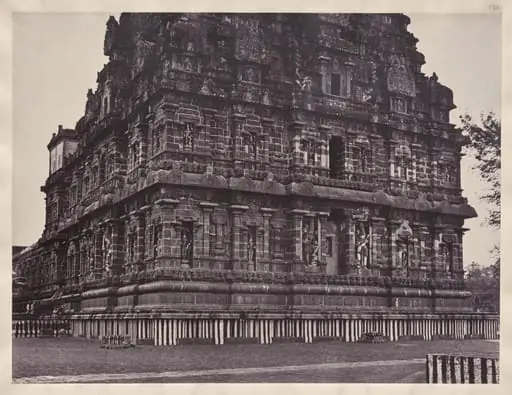 West and South Sides of the Vimana Walls, Great Temple (Brihadeshvara) at Tanjore (Thanjavur)
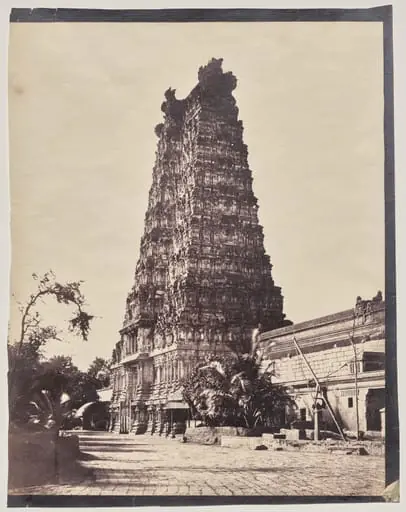 Western Gateway (Gopuram) of the Minakshi Sundareshvara Temple, Madurai
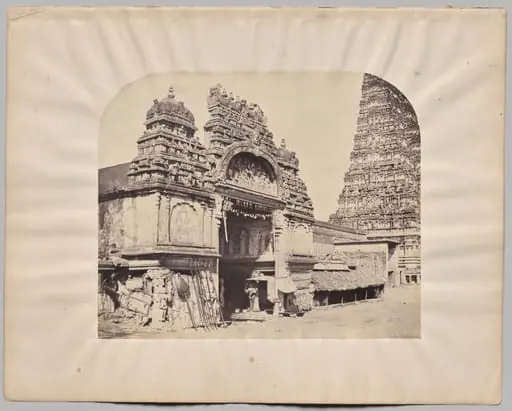 Entrance to the Minakshi Sundareshvara Temple, Madurai
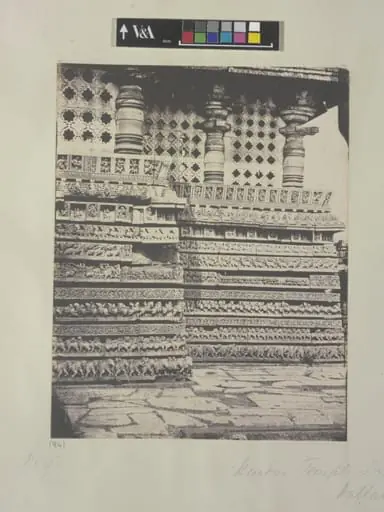 Hindoo Temple Sculpture, Southern India, Hullabeed
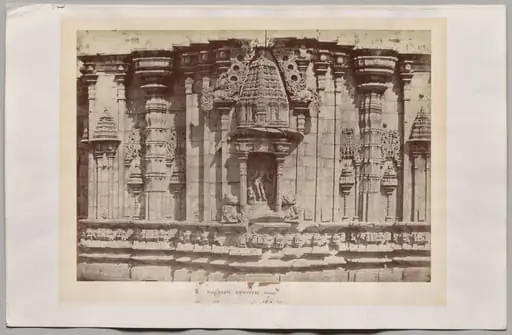 Kirwuttee, A Temple, India
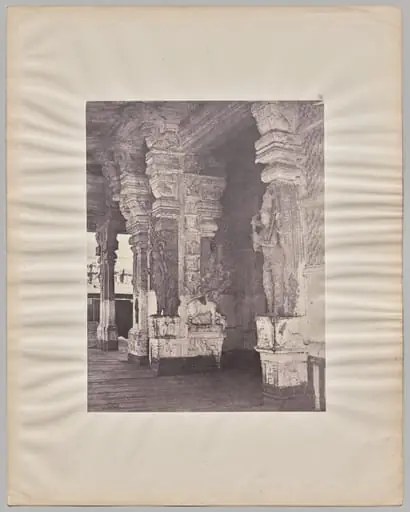 Pudhu Mandapa of Tirumal Nayak (r. 1623–59), Minakshi Sundareshvara Temple, Madurai
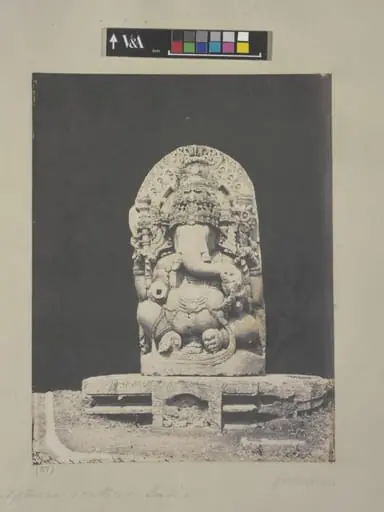 Hindoo Temple Sculptures, Southern India, Hullabeed
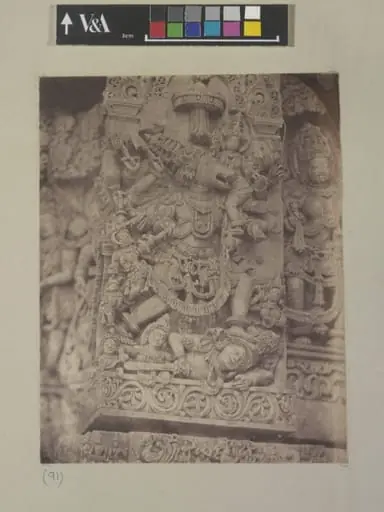 Hindoo Temple Sculptures, Southern India, Hullabeed