Artwork
Western Gateway (Gopuram) of the Minakshi Sundareshvara Temple, Madurai
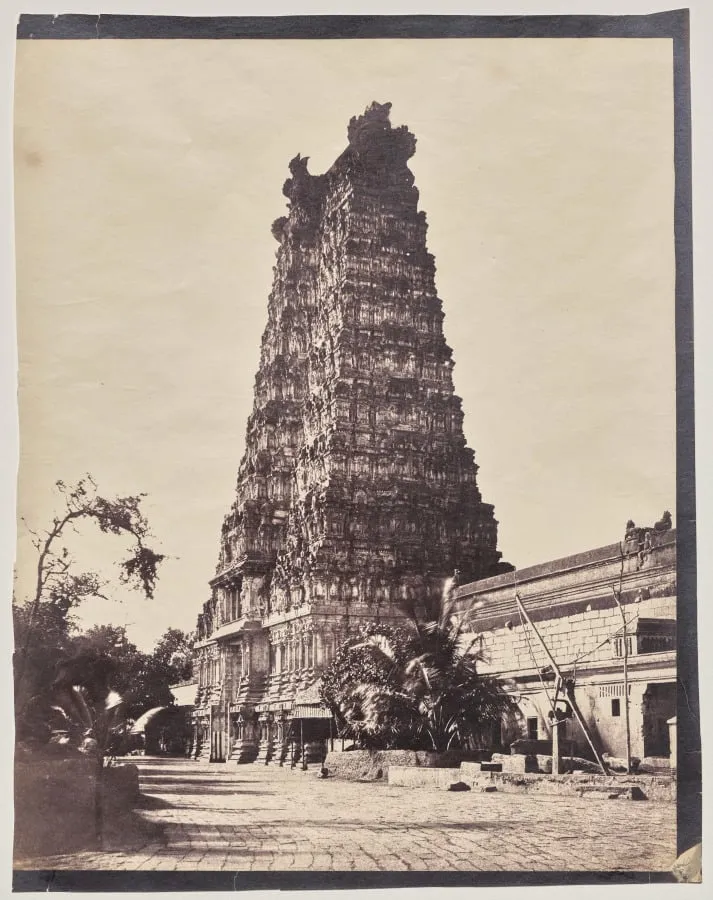
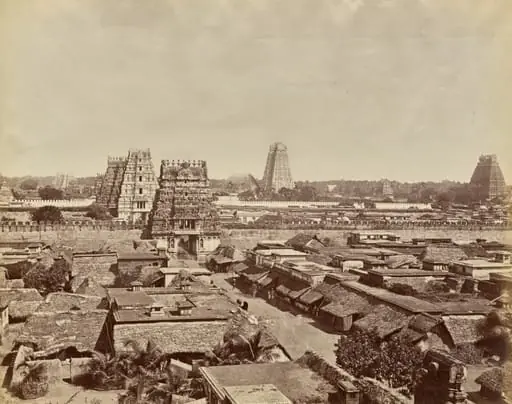
Western Gateway (Gopuram) of the Minakshi Sundareshvara Temple, Madurai is a photography by the Impressionist artist Captain Linnaeus Tripe. It dates from 1858 and is held in the collection of the Cleveland Museum of Art. The image captures the western gopuram of the Minakshi Sundareshvara Temple in Madurai.
About this work
You see a tall stone gateway covered in tiny carved figures of gods and animals, rising against a bright sky.
You see a tall stone gateway covered in tiny carved figures of gods and animals, rising against a bright sky.
Tripe took this photo in 1858, just as photography was becoming a way to document far-off places. The black-and-white image makes the tower feel even bigger and quieter than it really is. It’s one of the first photos of this temple, taken before color film existed.
If you like how light and shadow shape the scene, look up *chiaroscuro*.
Overview
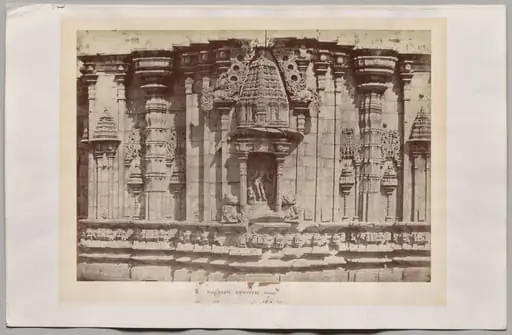
The image captures the western gopuram of the Minakshi Sundareshvara Temple in Madurai. A towering stone gateway rises against a clear sky, its surface densely populated with carved figures of deities, animals and miniature shrines. The photograph, taken in 1858, presents the structure in stark monochrome, emphasizing its verticality and architectural complexity.
Subject & Meaning
The gopuram serves as an entrance to the sacred precinct, its elaborate ornamentation symbolizing the ascent toward the divine. The multitude of sculpted figures represents a pantheon of Hindu gods and mythic creatures, reinforcing the temple’s role as a focal point for religious devotion and communal identity.
Technique & Style
Photographed by Francis Frith (often credited as Tripe) during the early era of photographic documentation, the work employs black‑and‑white film to accentuate contrast between light and shadow. The deliberate exclusion of worshippers creates a sense of timeless stillness, allowing the architectural details to dominate the visual field.
History & Provenance
The Minakshi Sundareshvara Temple originated in the 12th century and underwent successive expansions over five centuries, including the addition of enclosure walls and the towering gopurams. This 1858 photograph is among the earliest visual records of the site, predating the advent of color photography and offering a baseline for later comparative studies.
Context
Taken at a time when photography was emerging as a tool for documenting distant cultures, the image reflects a colonial-era interest in Indian architecture. The compositional focus on the gopuram aligns with contemporary efforts to catalogue and study monumental structures for both scholarly and imperial audiences.
Artist & collection

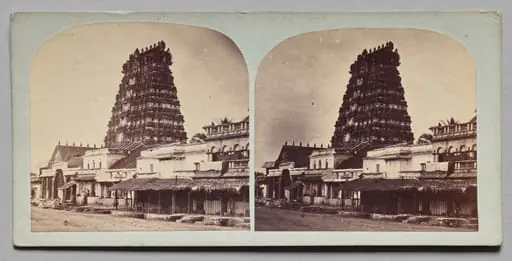
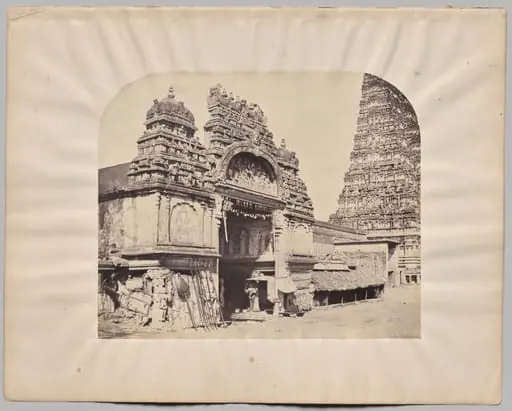 Entrance to the Minakshi Sundareshvara Temple, Madurai
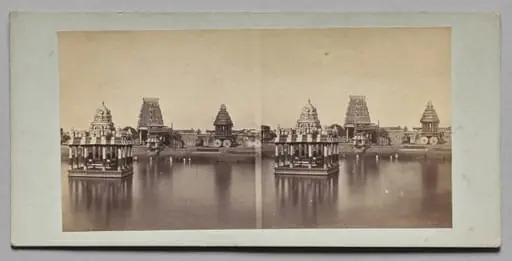
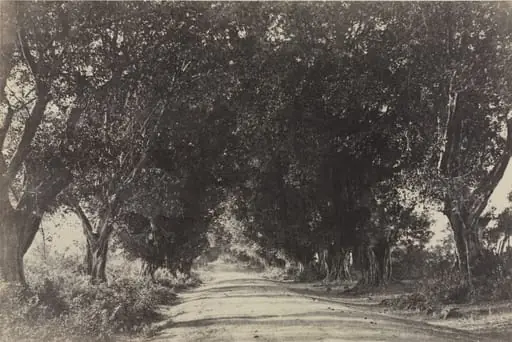 Avenue of the Banian Trees, Seringham, India
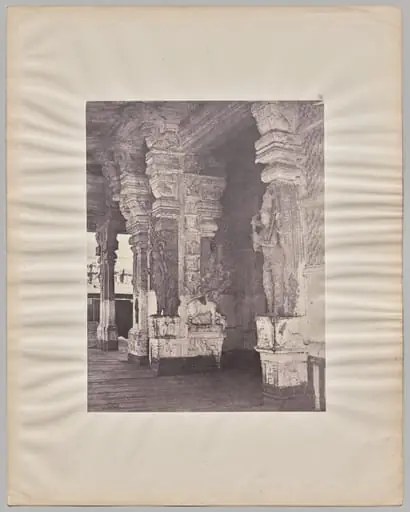 Pudhu Mandapa of Tirumal Nayak (r. 1623–59), Minakshi Sundareshvara Temple, Madurai
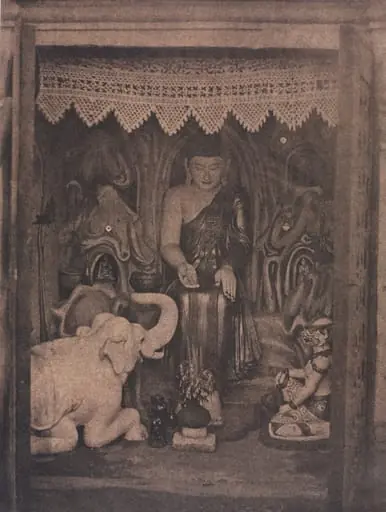 Amerapoora. Gautama's Shrine
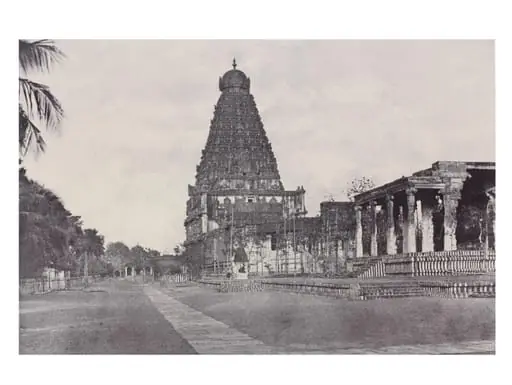
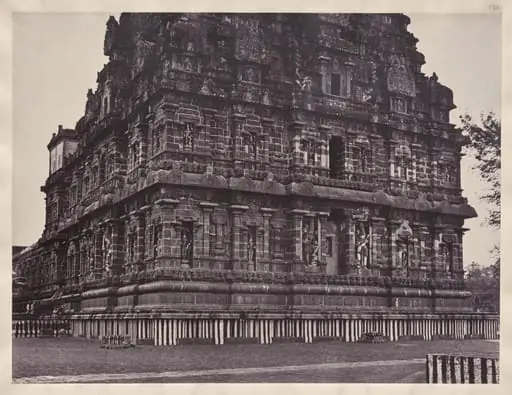 West and South Sides of the Vimana Walls, Great Temple (Brihadeshvara) at Tanjore (Thanjavur)
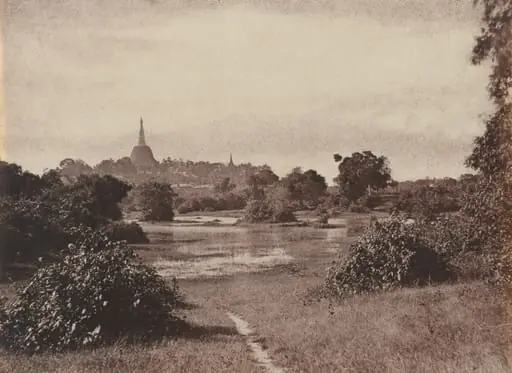 Rangoon. View Near the Lake
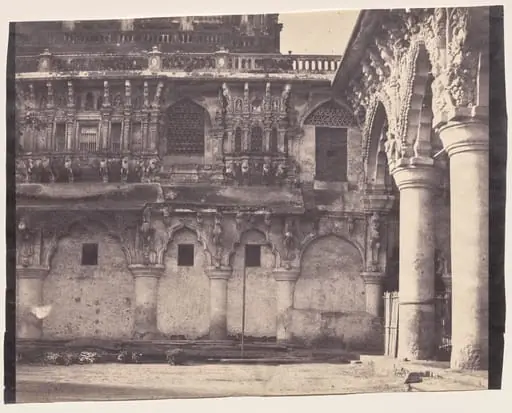 South Façade of the Quadrangle of the Nayak Darbar Hall, Thanjavur
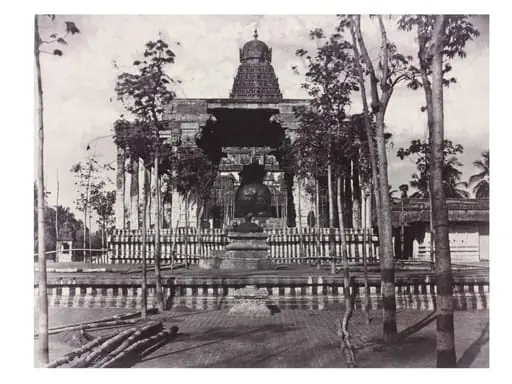
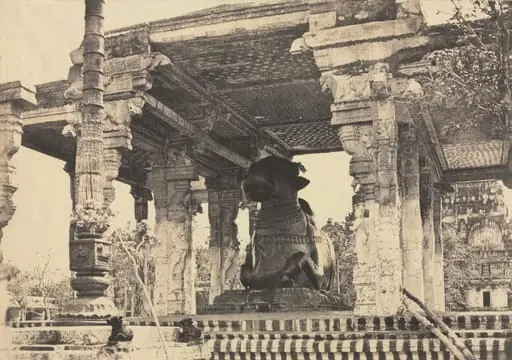 Great Pagoda, Great Bull, Front View, Tanjore, India (Rajarajeshvara Temple), plate 12 from Photographic Views of Tanjore and Trivady (Madras: Madras Presidency)