Artwork
The Great Bull
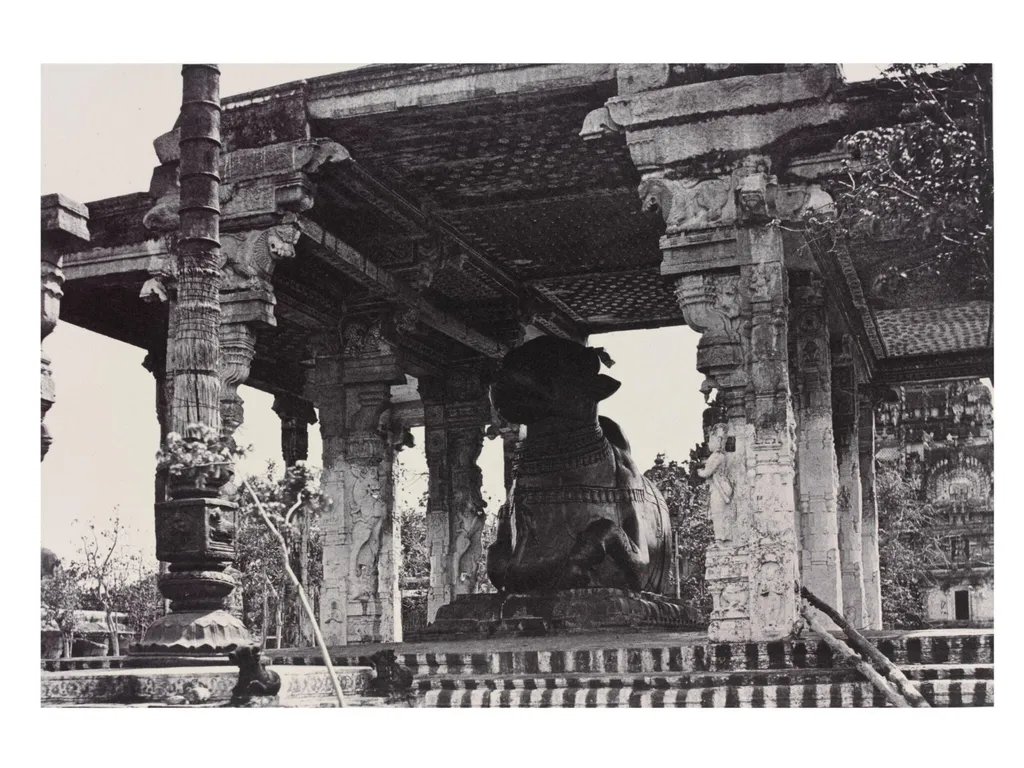
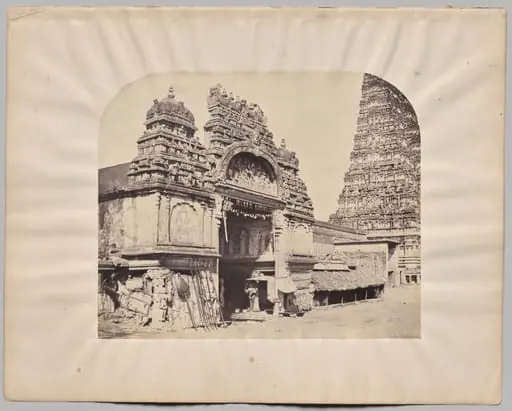
The Great Bull is a photographic photography by the Impressionist artist Linnaeus Tripe. It dates from 1858 and is held in the collection of the Victoria and Albert Museum.
About this work
Linnaeus Tripe made this photo in 1858 of a giant stone bull outside a big Hindu temple. The bull faces the entrance like a guardian. It’s Nandi, Shiva’s ride and a symbol of life.
Tripe worked for the British government in India in the 1850s. He shot many temples and ruins, not just grand interiors.
See more of Tripe’s India photos at the Victoria and Albert Museum.
Overview
This 1858 photograph, taken by Linnaeus Tripe, records a massive stone sculpture positioned at the threshold of the Brihadisvara Temple in Thanjavur, South India. The image captures the figure of Nandi, the sacred bull associated with the Hindu deity Shiva, standing as a guardian before the temple’s entrance.
Subject & Meaning
Nandi, depicted as a bull, serves both as Shiva’s vehicle and a broader emblem of fertility and vitality within Hindu tradition. In this setting, the sculpture functions as a protective sentinel, embodying the religious symbolism of devotion and the perpetuation of life that the temple celebrates.
Technique & Style
Tripe employed the wet‑plate collodion process, the dominant photographic method of the mid‑19th century, to render the stone’s texture and the surrounding architecture with sharp contrast. The composition centers the bull, emphasizing its monumental scale against the temple façade, while the chiaroscuro highlights the polished surface that appears marble‑like despite being syenite.
History & Provenance
Commissioned by the Madras government, Tripe served as its official photographer from 1856 to 1860, documenting South Indian monuments. The stone bull itself dates to the late 16th century, carved from a single granite slab and reportedly transported over great distances—tradition claims a journey of roughly 400 miles—before being installed at the temple.
Context
The photograph forms part of a larger album of Thanjavur that Tripe assembled during his fieldwork in the region. His images, now held by institutions such as the Victoria and Albert Museum, provide a visual record of colonial-era documentation of Indian architectural heritage, complementing textual accounts of the period.
Artist & collection
Artist
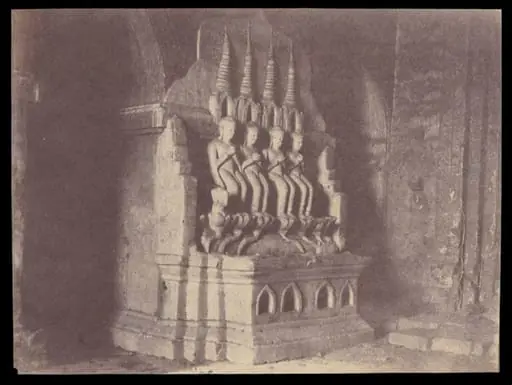
Linnaeus Tripe made early photographs of Burma for the British government between 1855 and 1858.

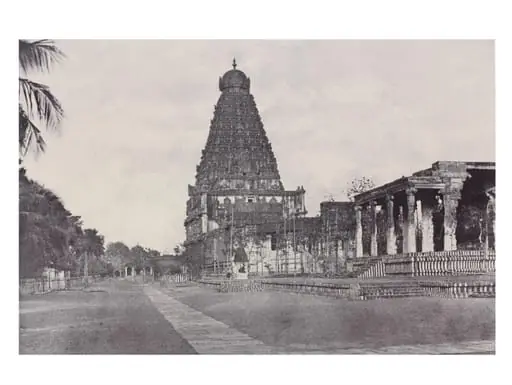
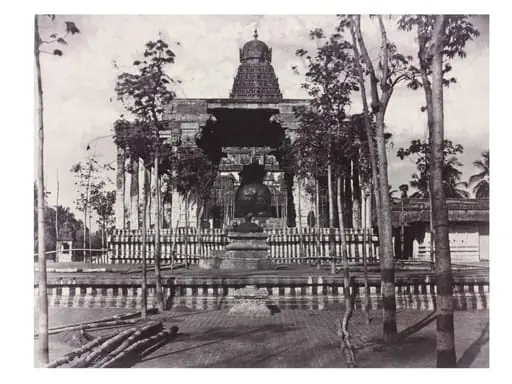
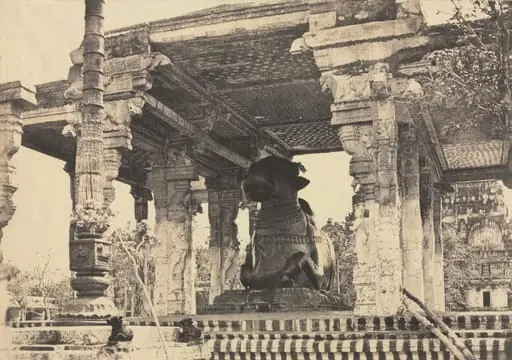 Great Pagoda, Great Bull, Front View, Tanjore, India (Rajarajeshvara Temple), plate 12 from Photographic Views of Tanjore and Trivady (Madras: Madras Presidency)
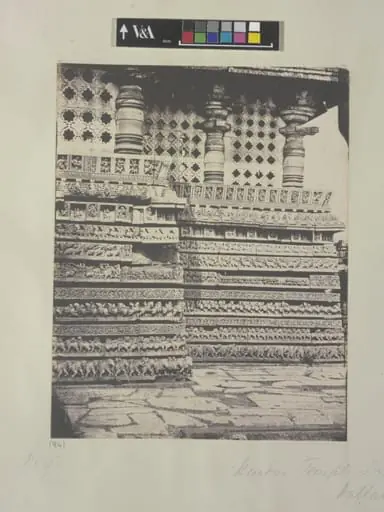 Hindoo Temple Sculpture, Southern India, Hullabeed
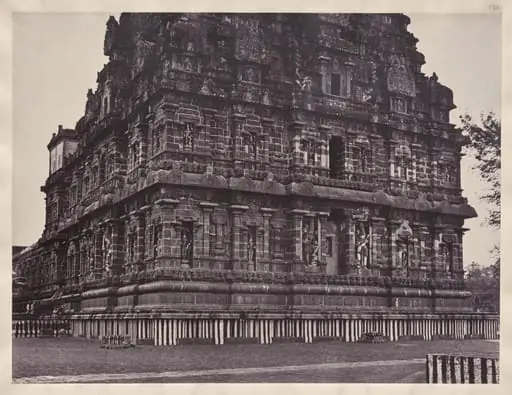 West and South Sides of the Vimana Walls, Great Temple (Brihadeshvara) at Tanjore (Thanjavur)
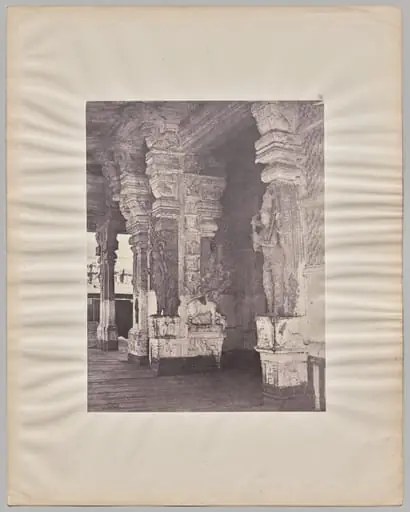 Pudhu Mandapa of Tirumal Nayak (r. 1623–59), Minakshi Sundareshvara Temple, Madurai
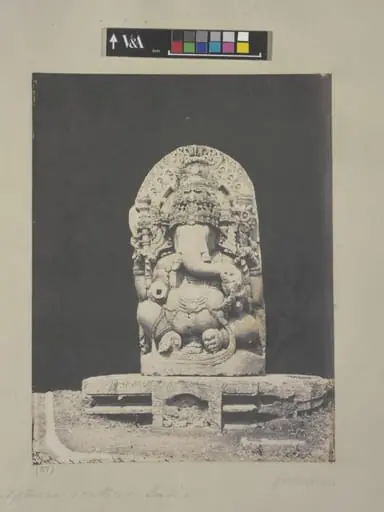 Hindoo Temple Sculptures, Southern India, Hullabeed
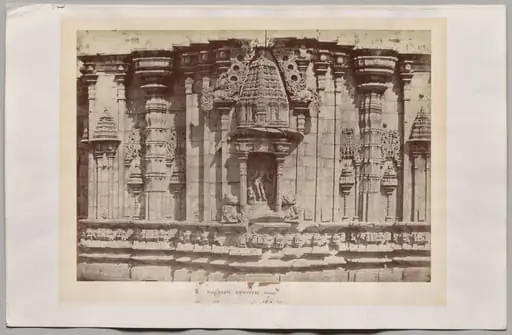 Kirwuttee, A Temple, India
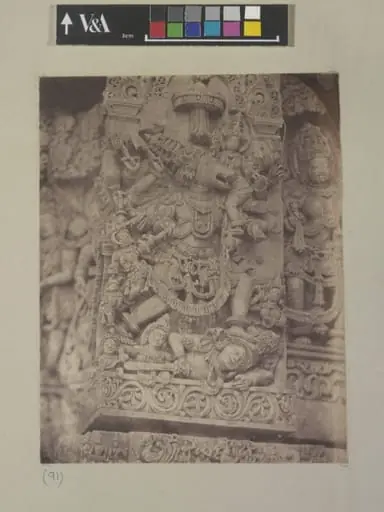 Hindoo Temple Sculptures, Southern India, Hullabeed
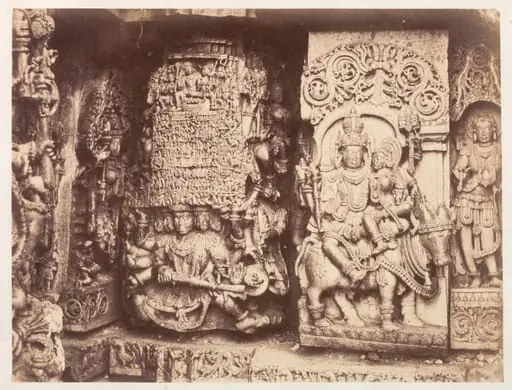 Hoyshaleshvara Temple Sculpture, Halebidu (Halebeedu)
 Entrance to the Minakshi Sundareshvara Temple, Madurai