Artwork
A bangle-seller in his shop, Pune
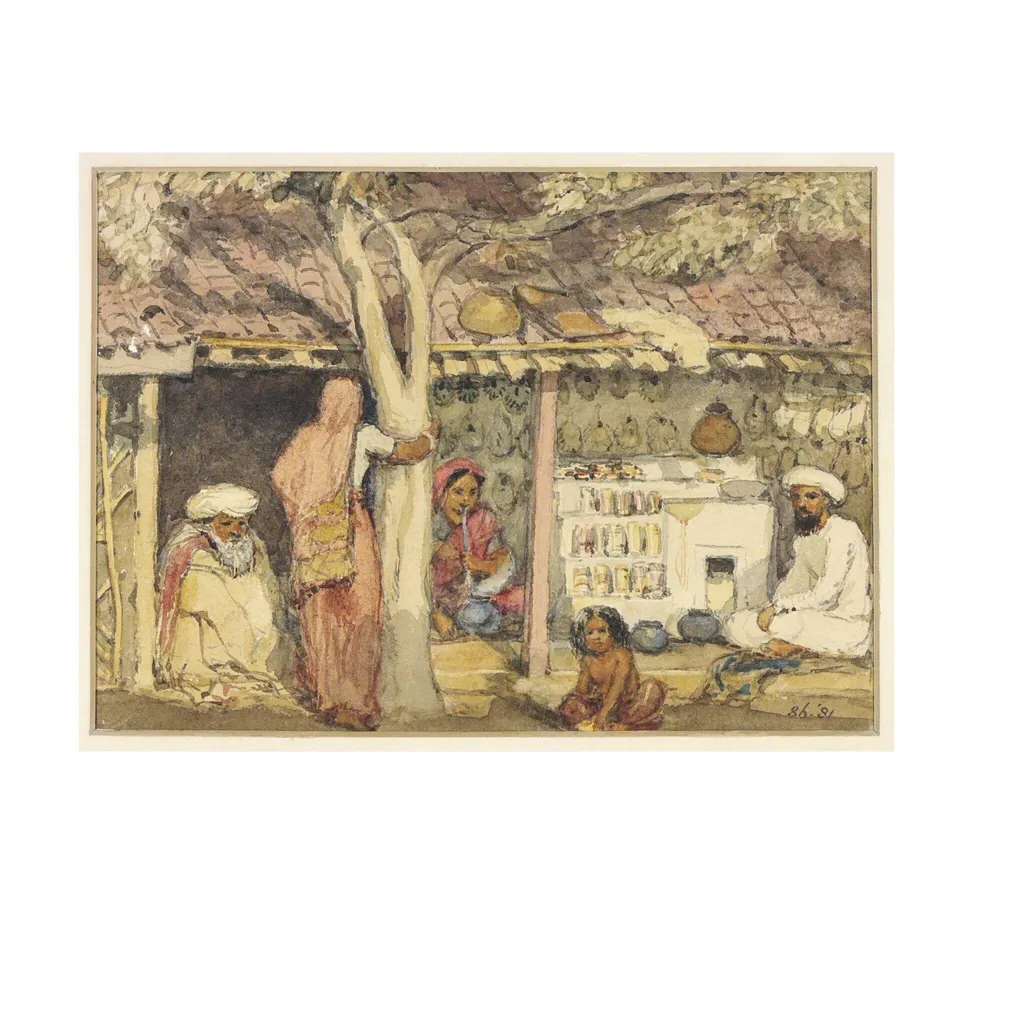
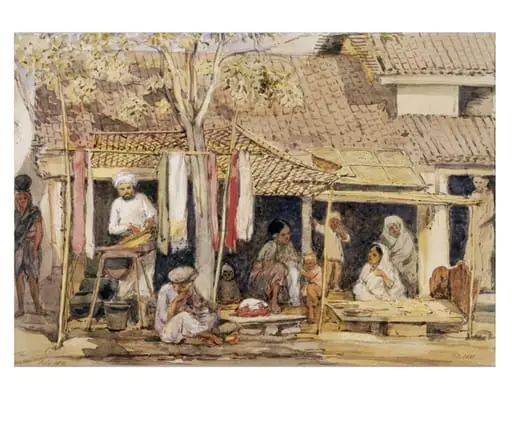
A bangle-seller in his shop, Pune is a paint painting by the Patna School of Painting artist William Carpenter. It dates from 1850 and is held in the collection of the Victoria and Albert Museum.
About this work
William Carpenter painted a man sitting in a small shop with stacks of glass bangles. The bangle-seller wears a long coat and turban, his shop front open to the street.
Carpenter made this in Pune around 1850. He focused on daily life and local clothing. His Indian work stands out for these quiet details.
Look up the Victoria and Albert Museum to see this painting.
Overview
Painted around 1850, this work by William Carpenter captures a quiet moment in Pune’s Sadr bazaar, depicting a bangle-seller within his modest shop.
Painted around 1850, this work by William Carpenter captures a quiet moment in Pune’s Sadr bazaar, depicting a bangle-seller within his modest shop. It belongs to a series of early works Carpenter produced after arriving in Bombay, reflecting his focus on ordinary urban life. The scene is rendered with attention to local detail rather than grandeur, distinguishing it from more conventional colonial imagery of the period.
Subject & Meaning
The bangle-seller, seated amid rows of glass ornaments, embodies the quiet commerce of daily life in mid-19th century western India. His attire—a long coat and turban—signals regional dress, while the open shopfront suggests interaction with passersby. The painting does not idealize or exoticize; instead, it presents the vendor as a grounded figure within his environment, emphasizing continuity and routine over spectacle.
Technique & Style
Carpenter employed a restrained, observational style, favoring clear lines and muted tones to convey texture and spatial depth. The interior of the shop is rendered with careful attention to light and arrangement, while the bangles are suggested through clusters of color rather than intricate detail. His approach avoids dramatic lighting or sentimentality, aligning with a documentary impulse common among British artists engaged with Indian subjects at the time.
History & Provenance
Carpenter arrived in India in early 1850 and spent the next several years traveling widely, from the Punjab to Sri Lanka, often dressing in local clothing to immerse himself in his subjects. This painting was likely made during his early stay in Pune. He returned to England in 1856, taking his works with him. The painting is now held in the Victoria and Albert Museum, part of a larger collection documenting British artistic engagement with India during the colonial era.
Context
Carpenter’s work emerged during a period when British artists increasingly turned from imperial grandeur to ethnographic observation. His focus on artisans, dress, and street life aligned with broader Victorian interests in cultural documentation. Unlike many contemporaries, he avoided portraying Indians as passive or exotic, instead presenting them as active participants in their own environments, a perspective shaped by his personal engagement with local communities.
Legacy
Carpenter’s Indian paintings, including this one, contributed to a growing visual archive of everyday life in 19th-century India. His emphasis on costume, trade, and domestic space influenced later ethnographic art and provided a counterpoint to official colonial narratives. Though not widely celebrated in his time, his work is now valued for its quiet authenticity and its role in preserving details of a rapidly changing society.
Artist & collection
Artist
William Carpenter (1818–1899) was an English watercolour artist. He travelled for six or seven years in the 1850s painting scenes of India, its people and its life. The Victoria and Albert Museum bought over 280 of his…

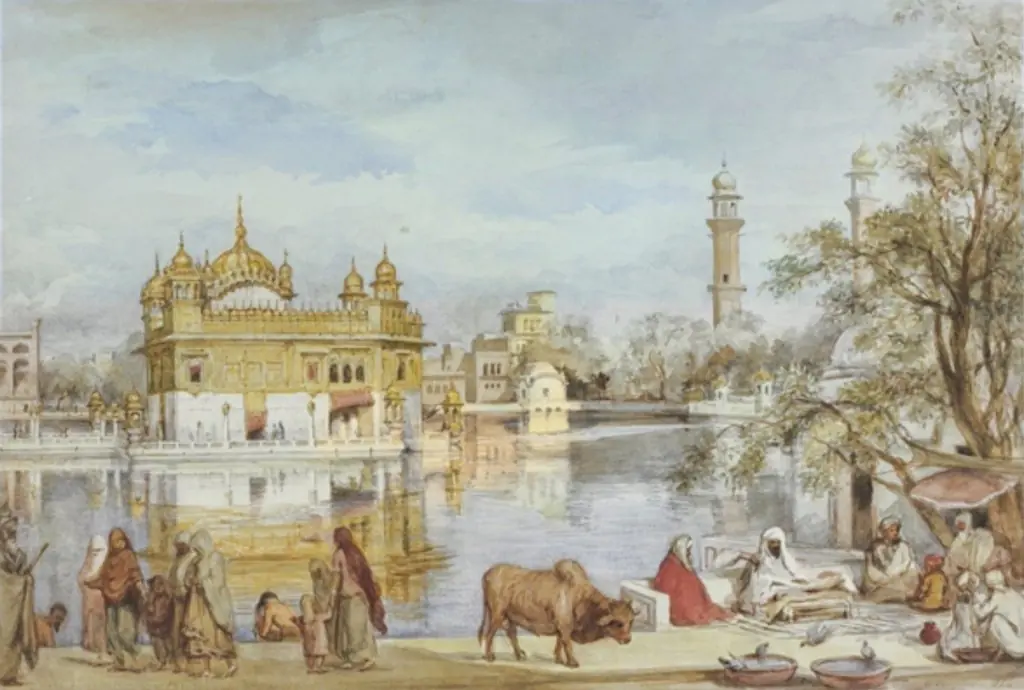 The Golden Temple, Amritsar
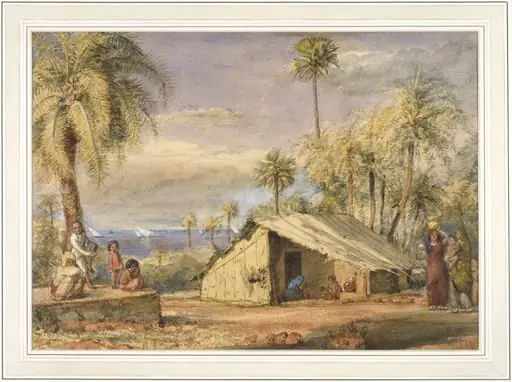 Toddywallah's hut in a grove of date palms near Breach Candy, Bombay
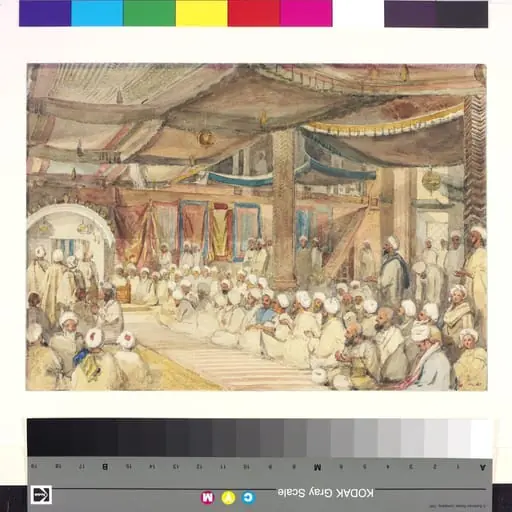 Interior of Shah Hamadan's Masjid during a religious ceremony
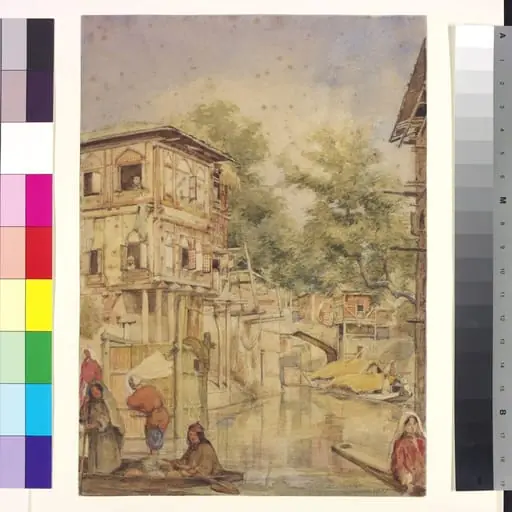 On the Mar Canal at Srinagar, Kashmir
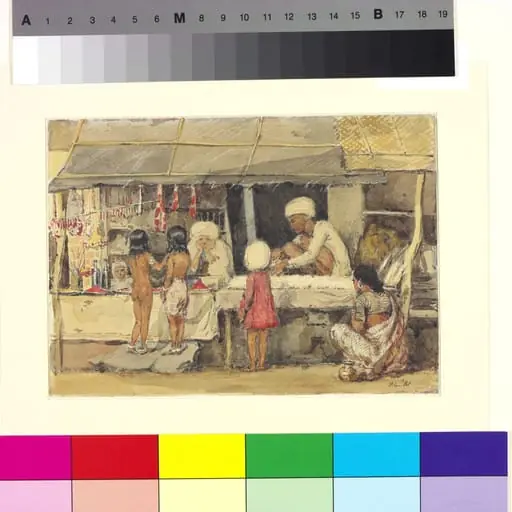 Shops for colours and flowers used at festivals, Sadr bazaar, Pune
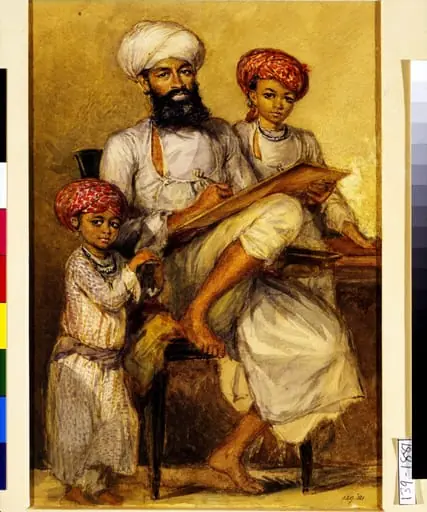 Portrait of Tara Chand, the court painter
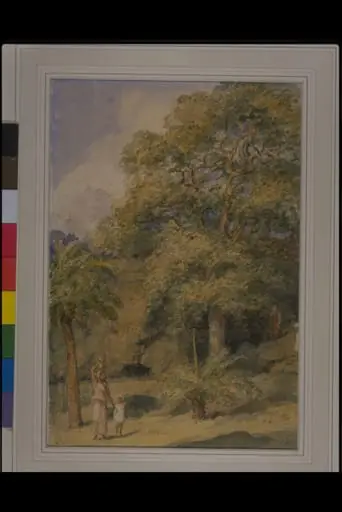 Study of a tamarind tree and date palms near Sir William Yardley's house at Breach Candy, Bombay
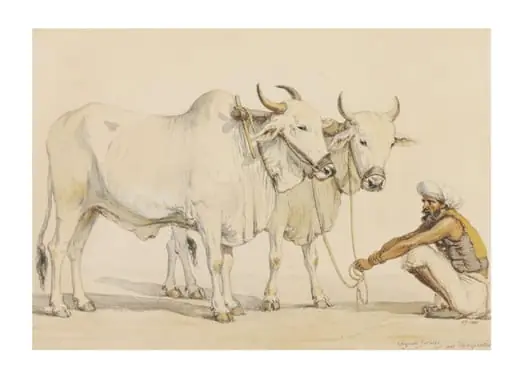 Two harnessed bullocks from Gujarat with their keeper