Artwork
Grain Shop Poona
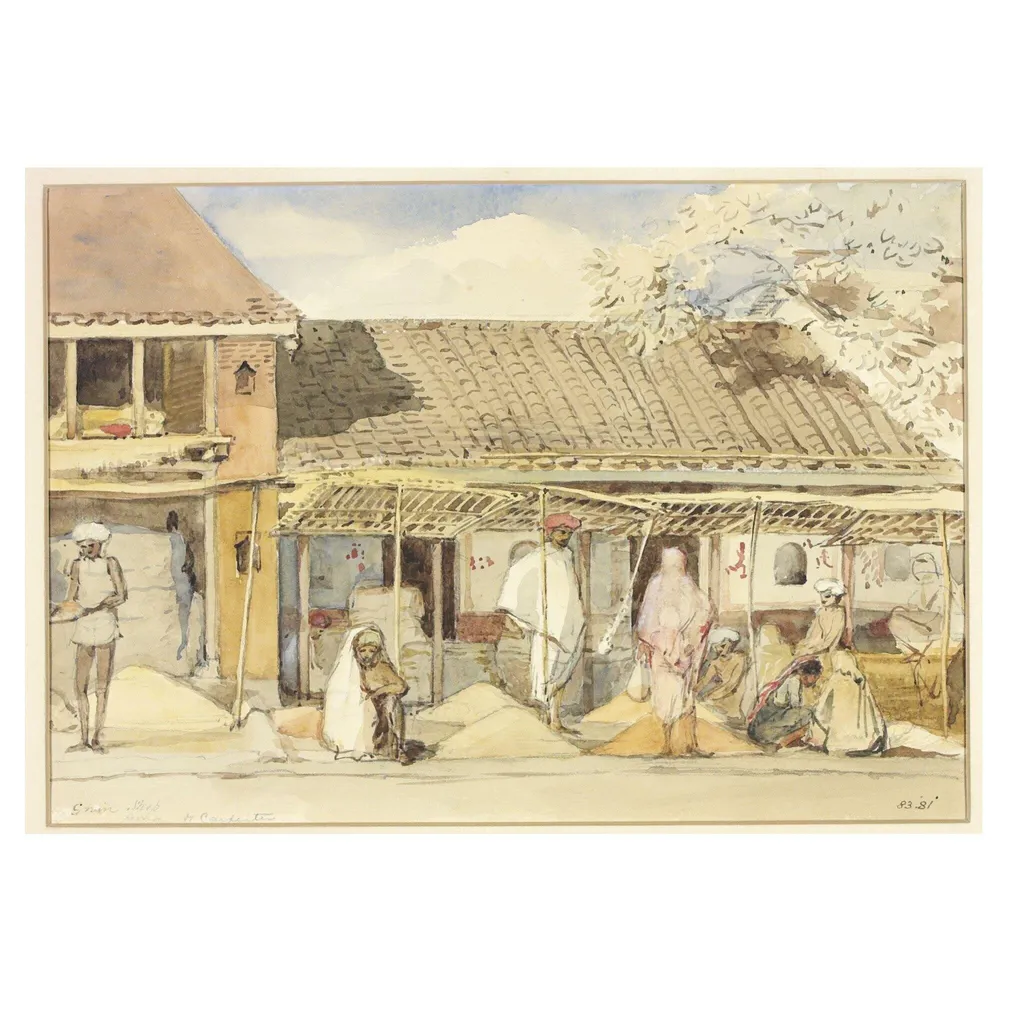
Grain Shop Poona is a paint painting by the Patna School of Painting artist William Carpenter. It dates from 1850 and is held in the collection of the Victoria and Albert Museum. The work depicts the façade of a grain shop in Pune, India, rendered in oil around 1850.
About this work
The shop’s walls are stacked with grain piles, and people sit or stand beside them in colorful local clothes.
William Carpenter painted the outside of a busy grain shop in Pune around 1850. The shop’s walls are stacked with grain piles, and people sit or stand beside them in colorful local clothes.
Carpenter lived in India for years, making many sketches like this one. He focused on daily life—what people wore, how they worked, and the places they gathered.
Want to see more of his work? Look up Carpenter, William.
Overview
The work depicts the façade of a grain shop in Pune, India, rendered in oil around 1850. The composition centers on the shop’s exterior, where stacked grain mounds dominate the scene and figures in regional attire are positioned beside them, either seated or standing. The painting captures a moment of ordinary commercial activity in a bustling urban setting.
Subject & Meaning
The image records everyday commerce, emphasizing the interaction between merchants and customers within a local market environment. By focusing on the grain piles and the clothing of the participants, the artist highlights the importance of agriculture to the regional economy and offers a visual document of 19th‑century Indian dress and social habits.
Technique & Style
Executed in a realistic manner, the artist employs a clear, linear approach to delineate architectural elements and the texture of the grain. The palette combines earthy tones for the shop’s walls with brighter hues for the figures’ garments, creating contrast that draws attention to human activity amid the static structures.
History & Provenance
Created during the artist’s early years in India, the painting dates to his first stay in Bombay after arriving in 1850. The artist, son of noted portraitist Margaret Sarah Carpenter and British Museum prints keeper William Hookham Carpenter, spent several years traveling across the subcontinent before returning to England in 1856. The work remained in private collections before entering its present holding.
Context
The piece belongs to a broader series of Indian scenes produced by the artist, who frequently portrayed local customs, agricultural practices, and portraiture of regional rulers. His immersion in Indian society—often wearing native dress himself—allowed him to observe and record quotidian moments that differ from the grand historical narratives typical of contemporary British Orientalist art.
Artist & collection
Artist
William Carpenter (1818–1899) was an English watercolour artist. He travelled for six or seven years in the 1850s painting scenes of India, its people and its life. The Victoria and Albert Museum bought over 280 of his…

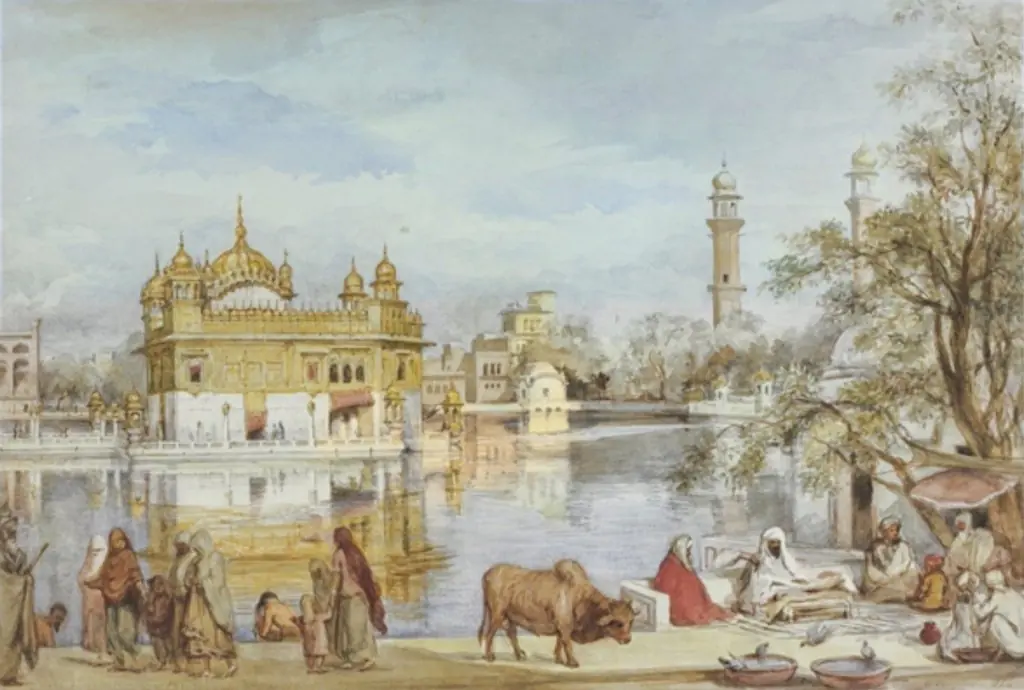 The Golden Temple, Amritsar
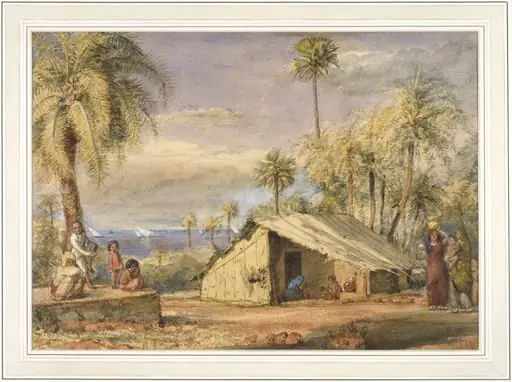 Toddywallah's hut in a grove of date palms near Breach Candy, Bombay
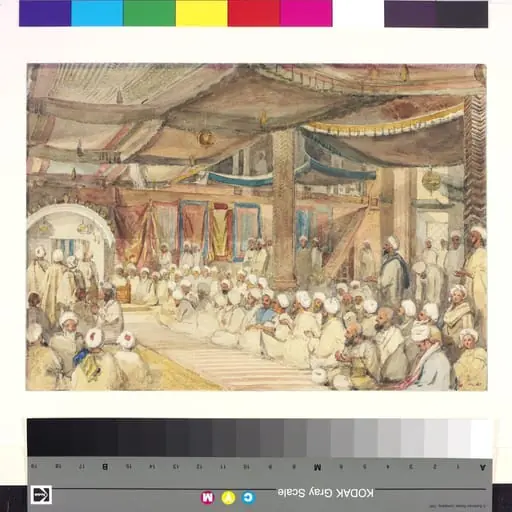 Interior of Shah Hamadan's Masjid during a religious ceremony
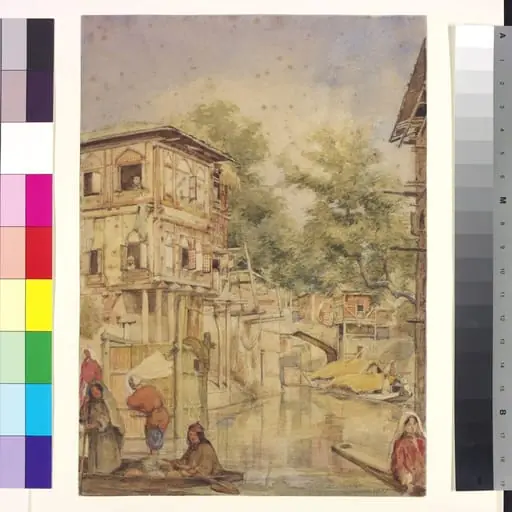 On the Mar Canal at Srinagar, Kashmir
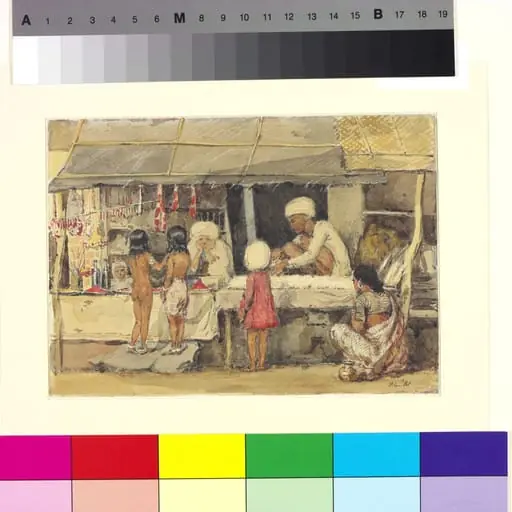 Shops for colours and flowers used at festivals, Sadr bazaar, Pune
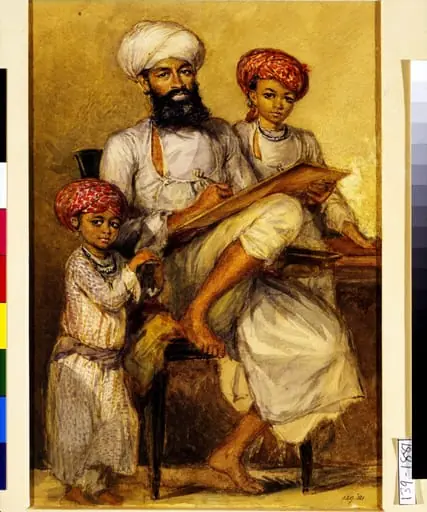 Portrait of Tara Chand, the court painter
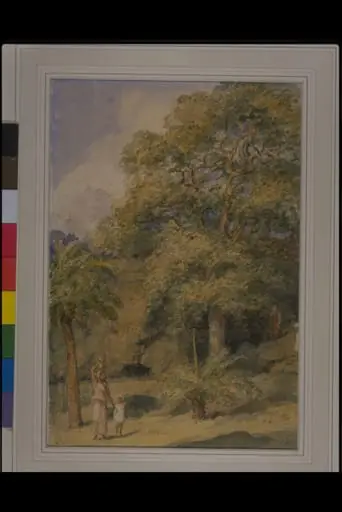 Study of a tamarind tree and date palms near Sir William Yardley's house at Breach Candy, Bombay
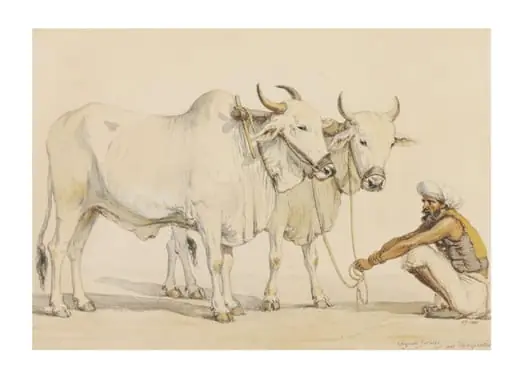 Two harnessed bullocks from Gujarat with their keeper
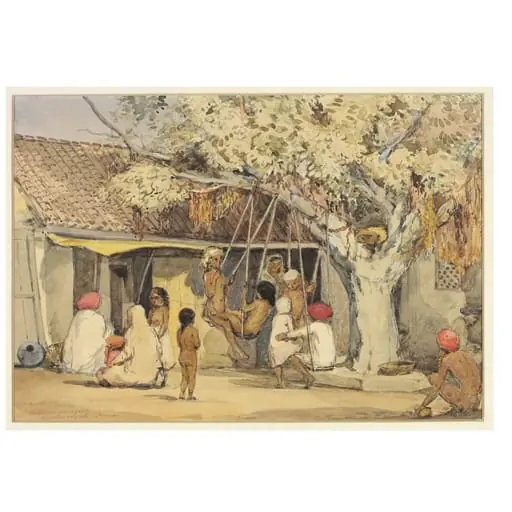 Children swinging Sudder bazaar. Poona
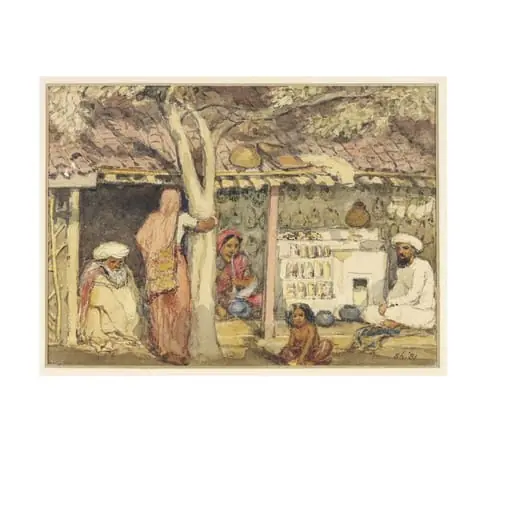 A bangle-seller in his shop, Pune
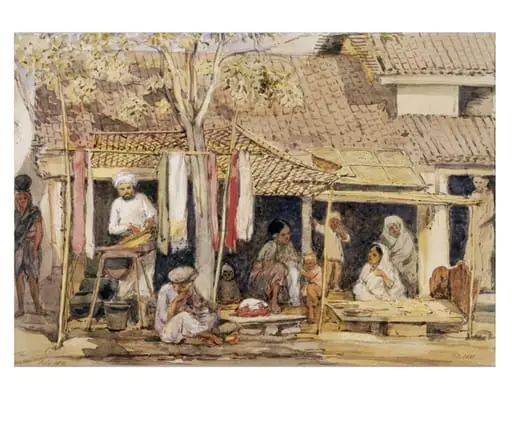 Dyers' and pan-sellers' shops in Pune
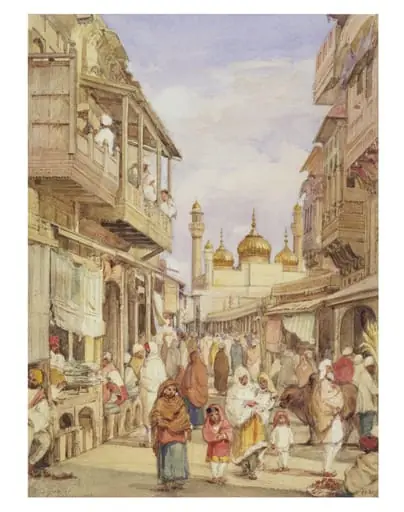 Street scene in Lahore
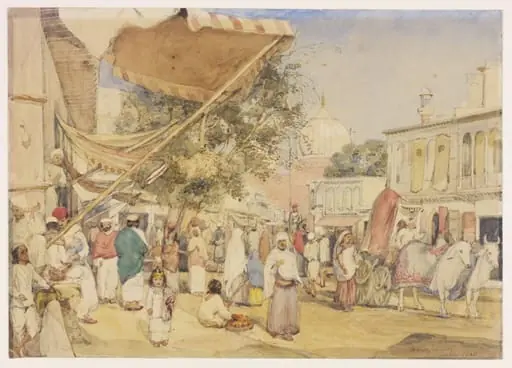 View of the bazaar at the back of the Jami Masjid, Delhi
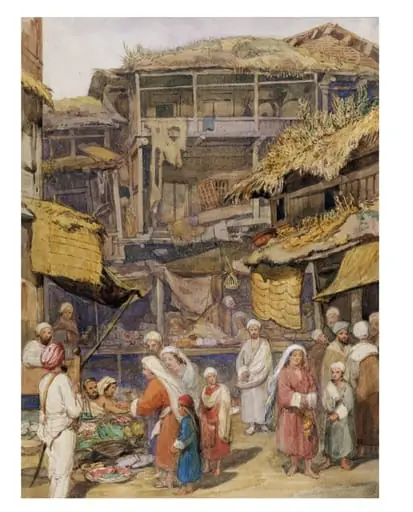 Street in Srinagar
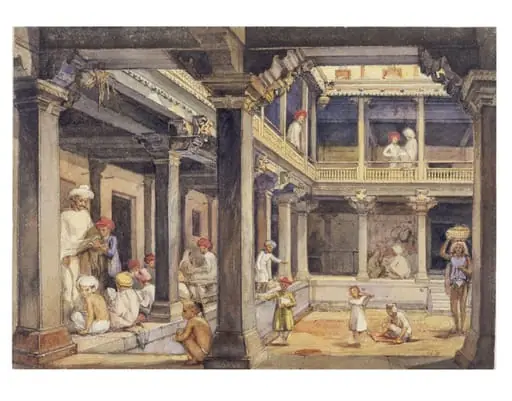 Courtyard of a house in Pune
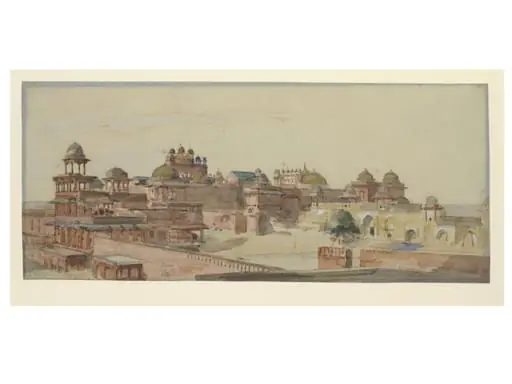 View of Fatehpur Sikri, Agra
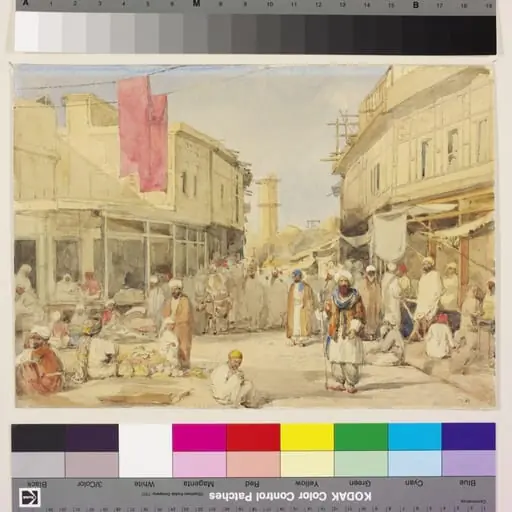 Street scene in Peshawar
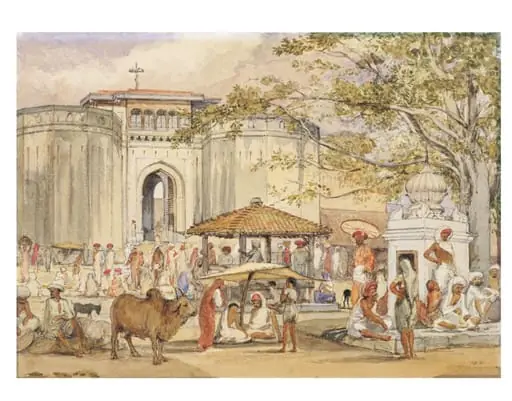 Gateway to the Shanwar Palace