Artwork
Hindu bairagis preparing for a festival outside a shrine
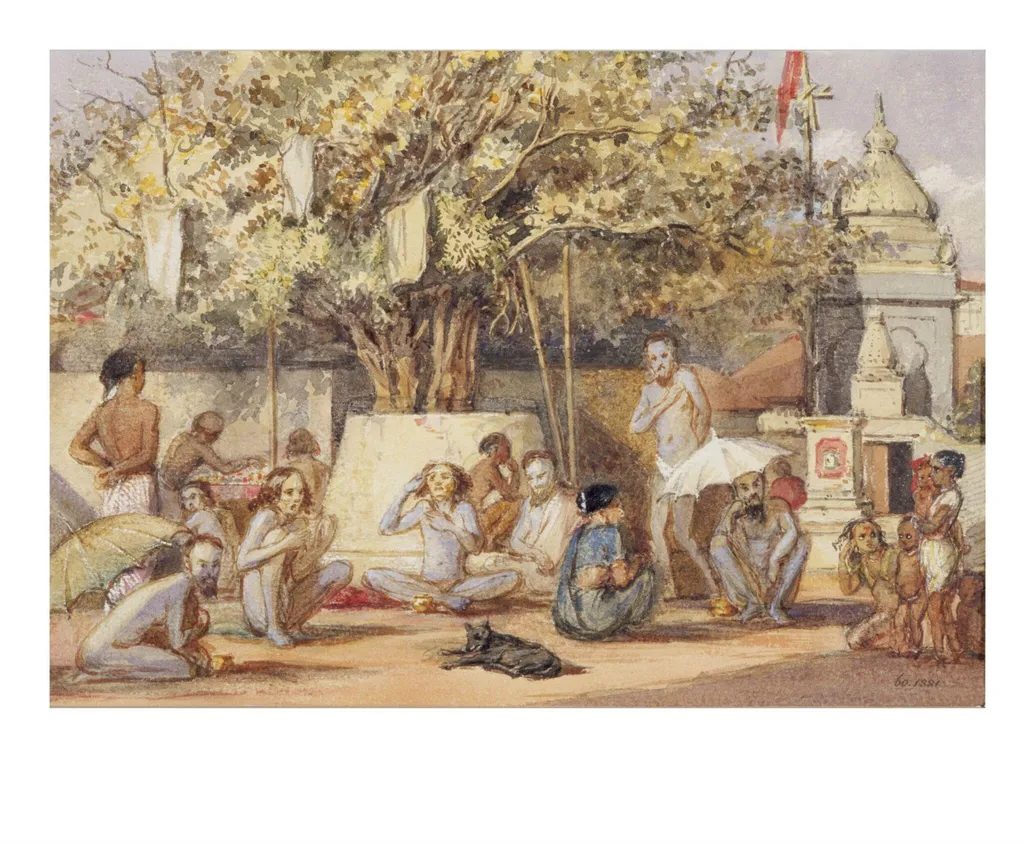
Hindu bairagis preparing for a festival outside a shrine is a paint painting by the Patna School of Painting artist William Carpenter. It dates from 1850 and is held in the collection of the Victoria and Albert Museum.
About this work
William Carpenter painted Hindu bairagis outside a shrine in 1850. They wear saffron robes. One adjusts a drum. Shadows stretch long in the afternoon light.
Carpenter lived in India for six years. He sketched daily life like a camera. Light glows on white fabric. The colors feel real, not fancy.
You’ll see his work next at the Victoria and Albert Museum.
Overview
The work portrays a procession of Hindu bairagis—wandering ascetics—in the moments before a festival, gathered outside a shrine at Breach Candy in Bombay. The figures, clad in saffron robes, are arranged around a drum being tuned, while the late‑day sun casts elongated shadows across the scene, emphasizing the ritual’s anticipation.
Subject & Meaning
Bairagis, known for their itinerant religious devotion, are shown preparing for communal celebration, highlighting the intersection of personal piety and public festivity in 19th‑century Bombay. Their collective activity underscores themes of devotion, communal identity, and the rhythmic cadence of ritual life along the city’s coastal precincts.
Technique & Style
Executed in watercolor, the painting employs a warm palette of ochres, siennas, and muted reds. Light is rendered with a luminous quality, illuminating the white fabrics and creating crisp, elongated shadows. The brushwork balances detailed observation of clothing and instruments with broader washes that convey atmospheric depth, reflecting a restrained romantic realism.
History & Provenance
Created in 1850 during William Carpenter’s six‑year residence in India, the piece was later reproduced in The Illustrated London News after his return to England. In 1881 Carpenter exhibited a comprehensive body of work at the South Kensington Museum; the entire collection, including this watercolor, was subsequently acquired by the Victoria and Albert Museum, where it remains in the permanent holdings.
Context
Carpenter’s Indian period coincided with heightened British interest in the subcontinent’s visual culture. His systematic sketches of everyday scenes functioned as a documentary record, offering metropolitan audiences a glimpse of colonial urban life. This painting exemplifies his focus on authentic representation of local customs within the broader framework of mid‑19th‑century Orientalist art.
Artist & collection
Artist
William Carpenter (1818–1899) was an English watercolour artist. He travelled for six or seven years in the 1850s painting scenes of India, its people and its life. The Victoria and Albert Museum bought over 280 of his…

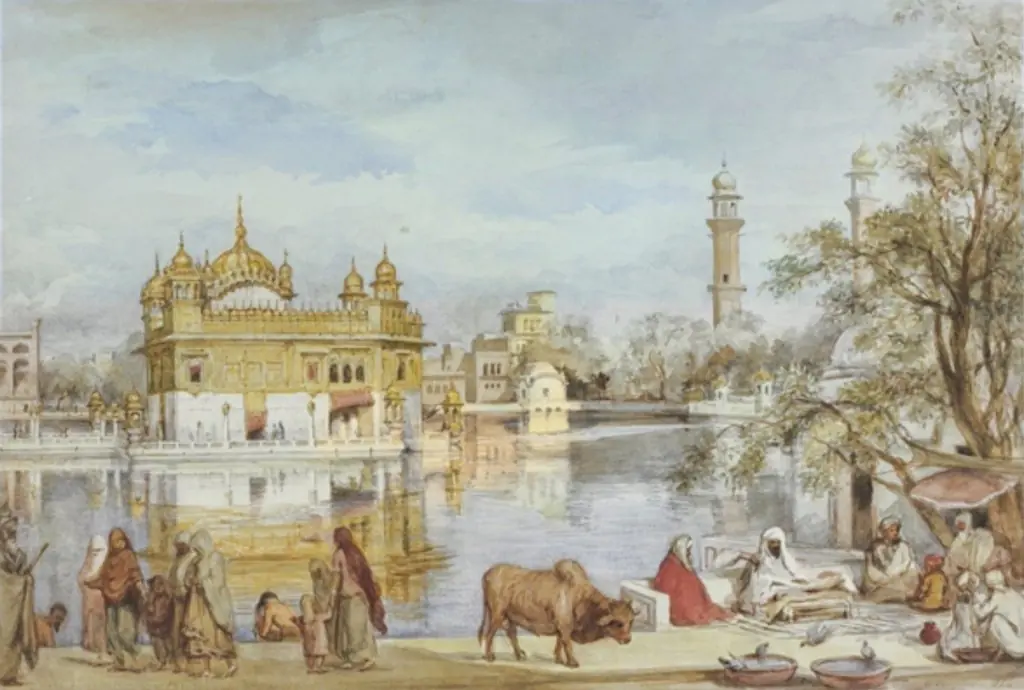 The Golden Temple, Amritsar
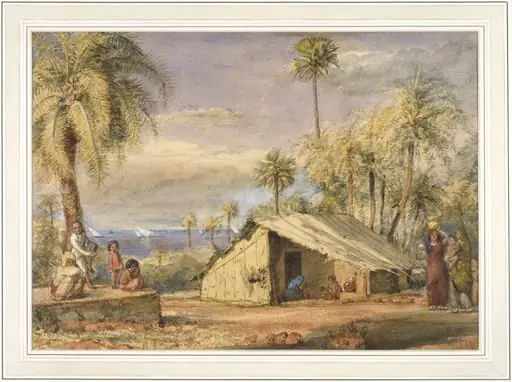 Toddywallah's hut in a grove of date palms near Breach Candy, Bombay
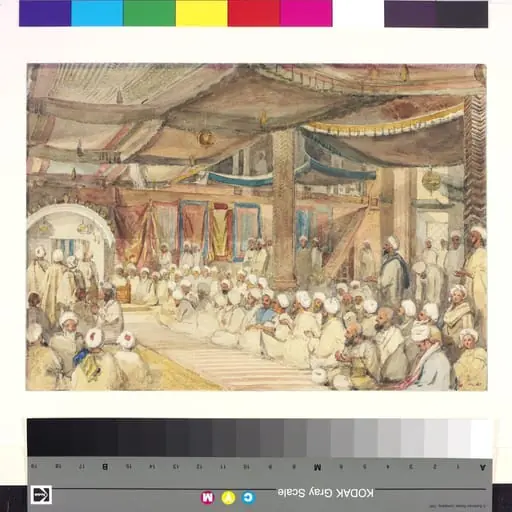 Interior of Shah Hamadan's Masjid during a religious ceremony
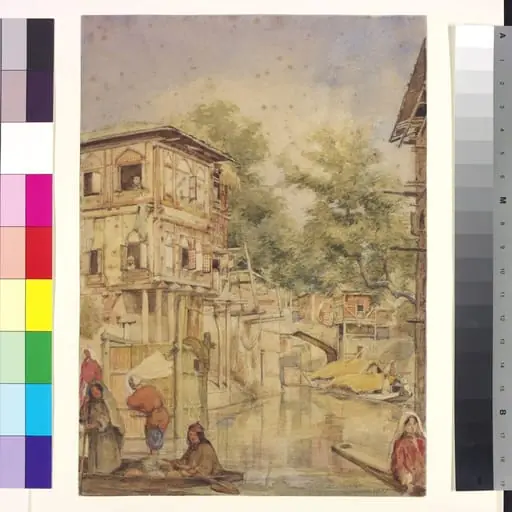 On the Mar Canal at Srinagar, Kashmir
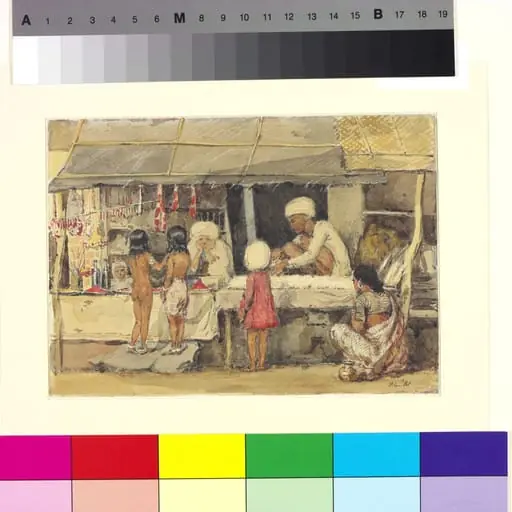 Shops for colours and flowers used at festivals, Sadr bazaar, Pune
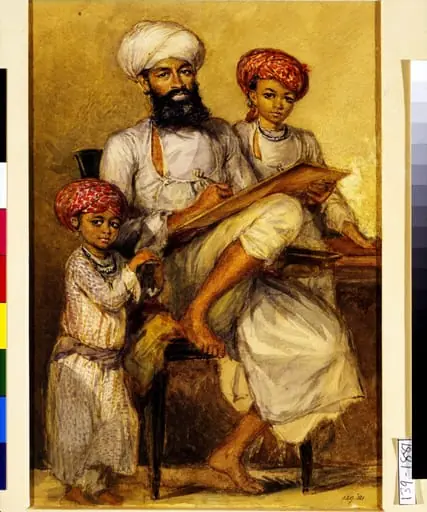 Portrait of Tara Chand, the court painter
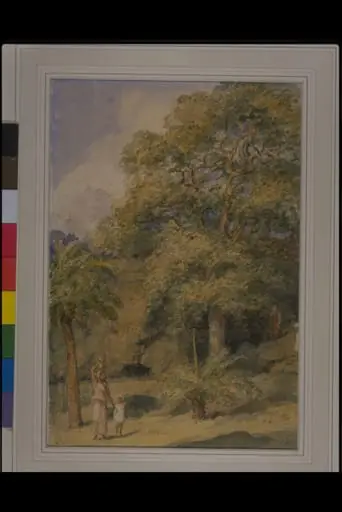 Study of a tamarind tree and date palms near Sir William Yardley's house at Breach Candy, Bombay
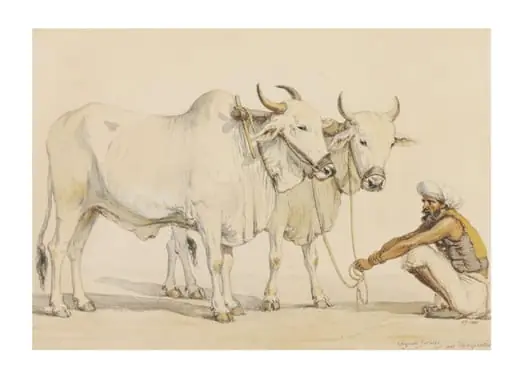 Two harnessed bullocks from Gujarat with their keeper
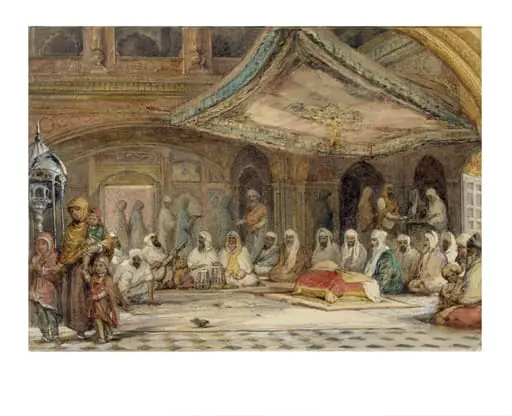 Interior of the Golden Temple, Amritsar
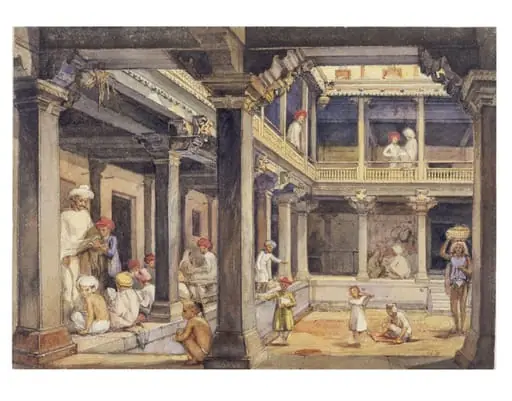 Courtyard of a house in Pune
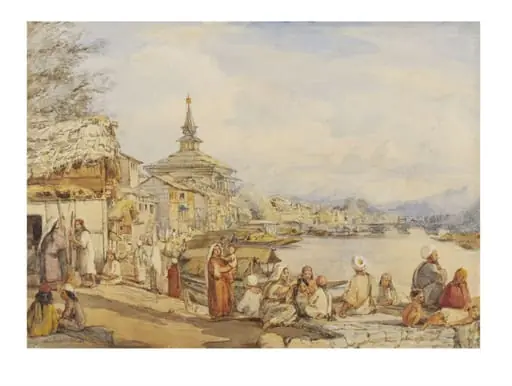 Shah Hamadan's Mosque
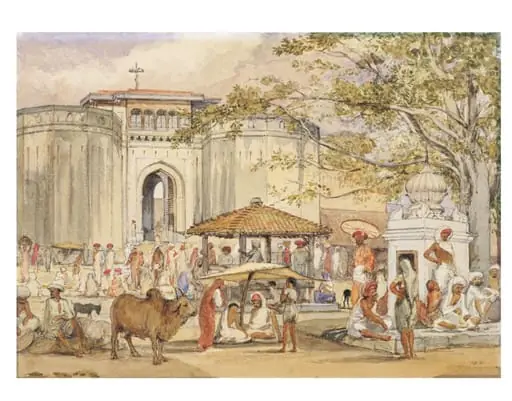 Gateway to the Shanwar Palace
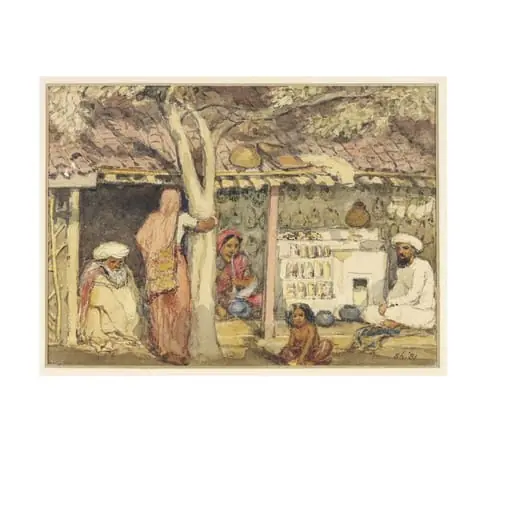 A bangle-seller in his shop, Pune
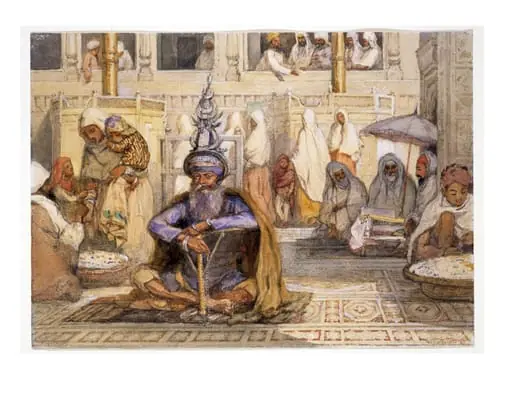 Untitled
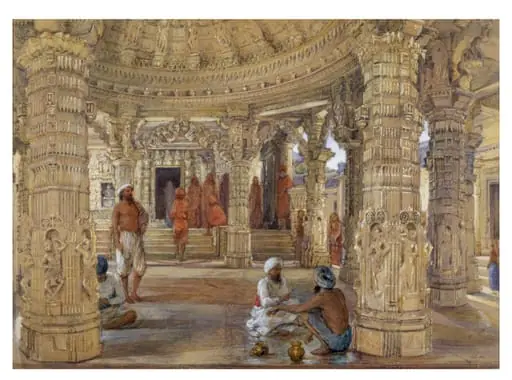 Interior of the domed entrance to the Neminath temple, Dilwara, Mount Abu
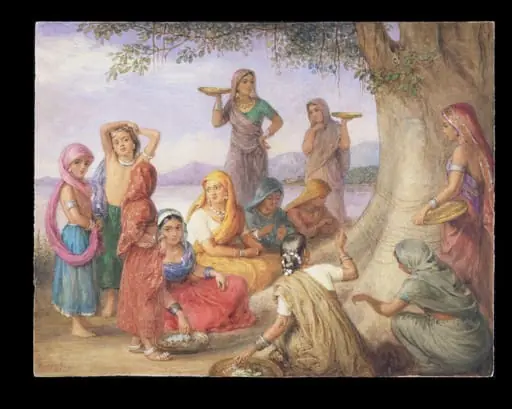 Tree Worship
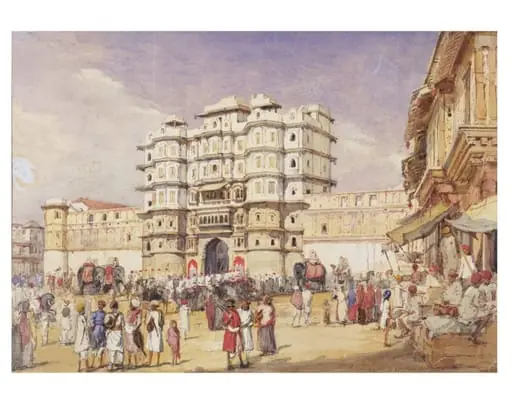 Gateway of the palace at Indore
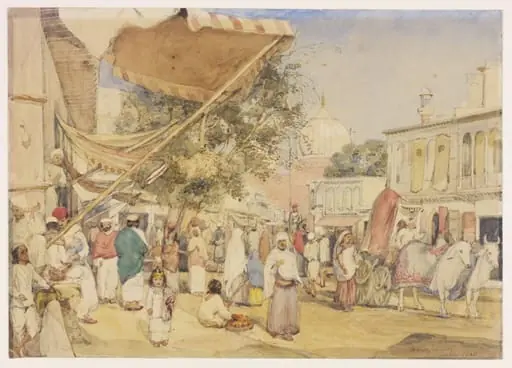 View of the bazaar at the back of the Jami Masjid, Delhi