Artwork
Marsh Tern
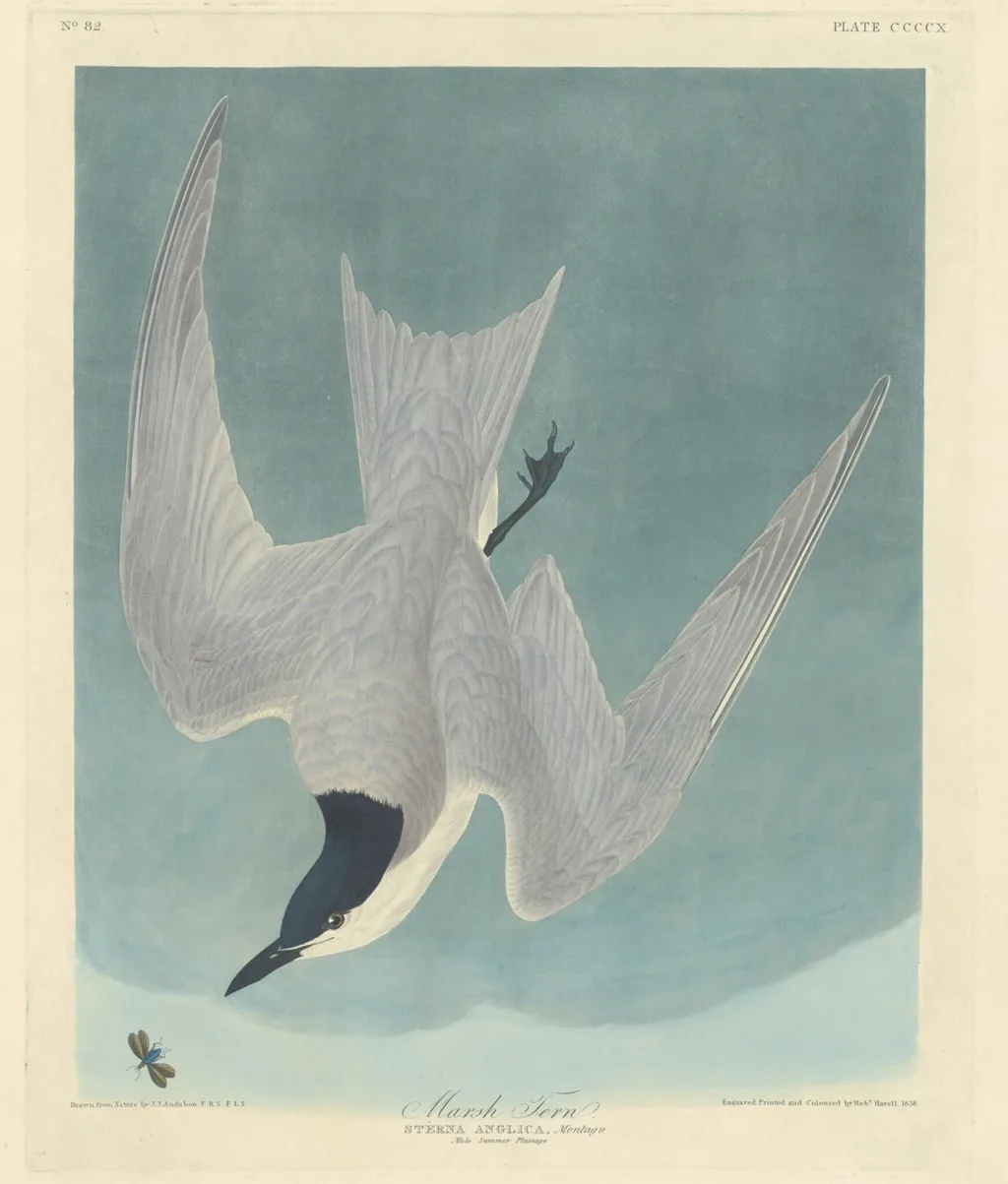
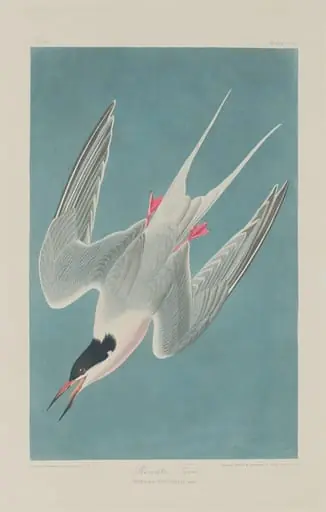
Marsh Tern is an ink print by the Romanticist artist Robert Havell Jr.. It dates from 1838 and is held in the collection of the National Gallery of Art.
About this work
Overview
It belongs to a series of ornithological prints produced during a period of heightened interest in natural history illustration.
Created in 1838 by Robert Havell Jr., *Marsh Tern* is a hand-colored engraving and aquatint on Whatman wove paper. It belongs to a series of ornithological prints produced during a period of heightened interest in natural history illustration. The Havell family, known for their technical skill in printmaking, employed aquatint to achieve subtle tonal gradations, enhancing the realism of their depictions of wildlife.
Subject & Meaning
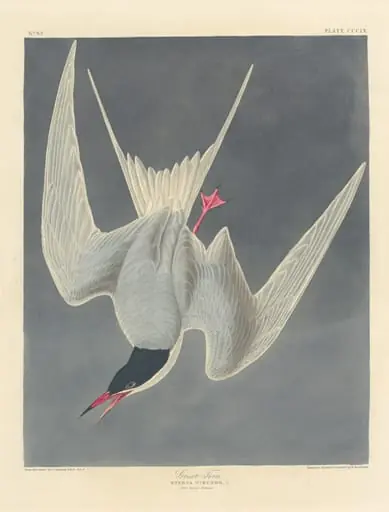
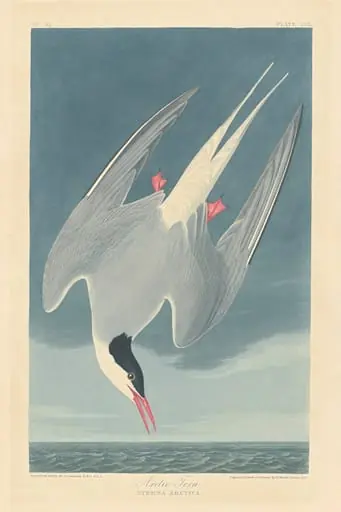
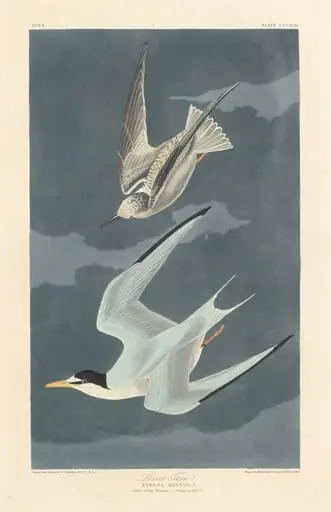
The print captures a marsh tern in mid-flight, wings fully extended against a soft blue sky. Its white plumage, dark cap, and tail are rendered with precision, emphasizing the bird’s agility. A small butterfly, nearly obscured in the lower corner, introduces a quiet contrast—perhaps suggesting the fragility of natural ecosystems or the fleeting presence of life within the vastness of sky and wetland.
Technique & Style
Havell used engraved lines and aquatint to build texture and depth, layering ink and watercolor by hand to mimic the natural variation in the bird’s feathers. Fine hatching defines individual wing contours, while delicate washes suggest atmospheric perspective. The meticulous hand-coloring reflects a commitment to accuracy, aligning with scientific illustration standards of the era rather than decorative flourish.
History & Provenance
Robert Havell Jr. was part of a multi-generational family of printmakers based in Reading, Berkshire, known for their work on natural history publications. *Marsh Tern* was likely produced as part of a larger project documenting North American birds, possibly linked to John James Audubon’s publications. The use of Whatman paper, prized for its durability and texture, underscores the print’s intended longevity and scholarly purpose.
Context
In the early 19th century, detailed naturalist prints were widely circulated as both scientific records and cultural artifacts. The Havells’ work emerged alongside growing public interest in taxonomy and colonial natural history. While European artists dominated the field, their depictions often relied on specimens collected abroad, reflecting broader imperial networks of knowledge and specimen exchange.
Legacy
The Havell family’s prints contributed to the standardization of ornithological imagery in print. Though overshadowed by Audubon’s larger projects, Robert Havell Jr.’s precision and restraint in works like *Marsh Tern* influenced later naturalist illustrators. Their technique preserved a quiet, observational tradition that valued fidelity over drama, leaving a subtle but enduring mark on the visual documentation of wildlife.
Artist & collection

Artist
The Havell family of Reading, Berkshire, England, included a number of notable engravers, etchers and painters, as well as writers, publishers, educators, and musicians.