Artwork
Bonapartian Gull
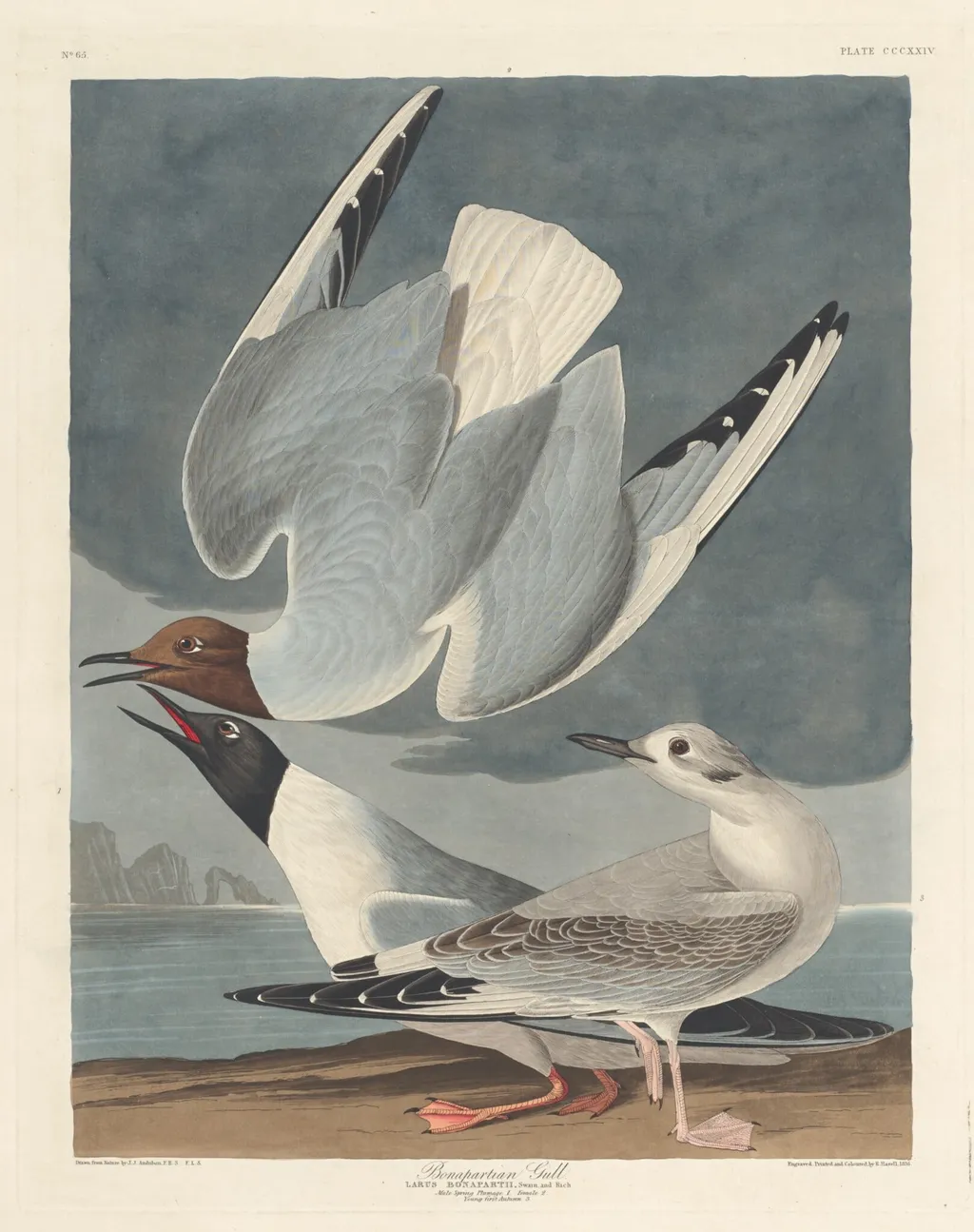
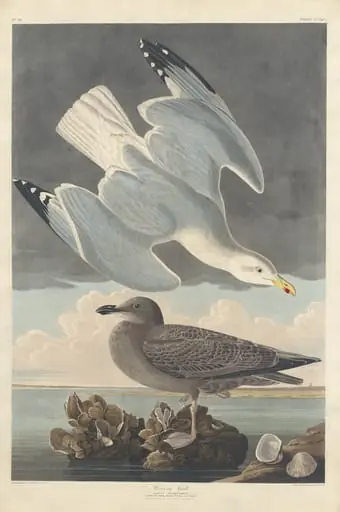
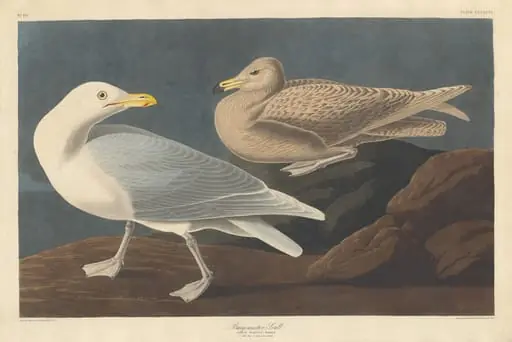
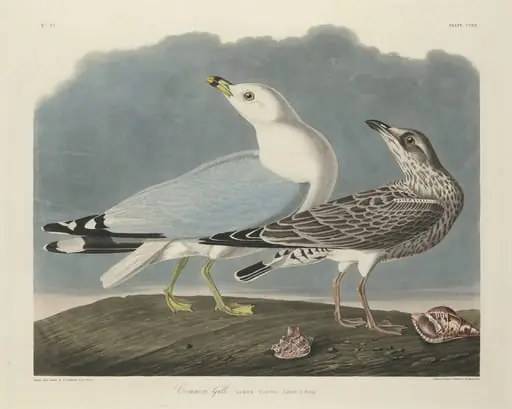
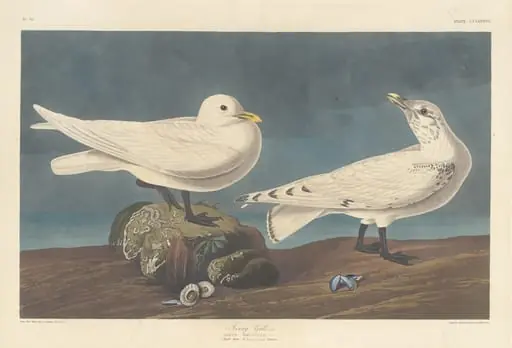
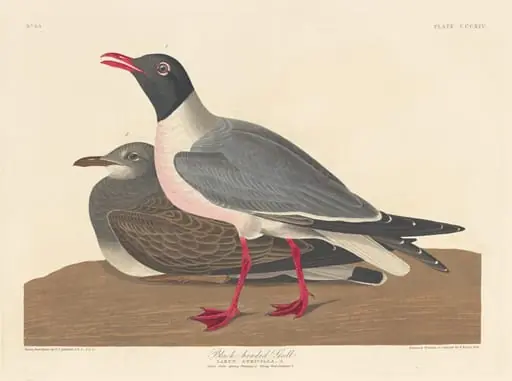
Bonapartian Gull is an ink print by the Romanticist artist Robert Havell Jr.. It dates from 1836 and is held in the collection of the National Gallery of Art.
About this work
Overview
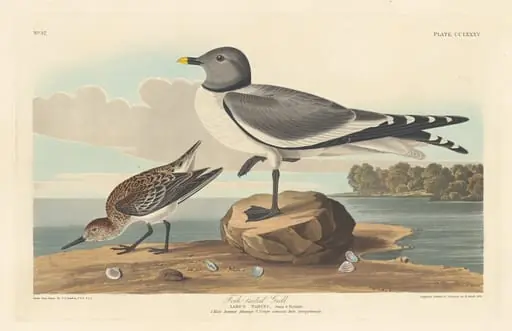
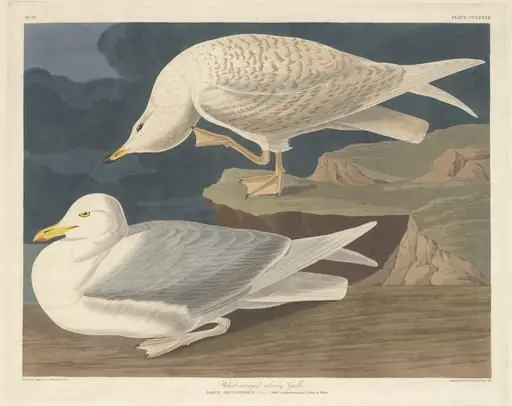
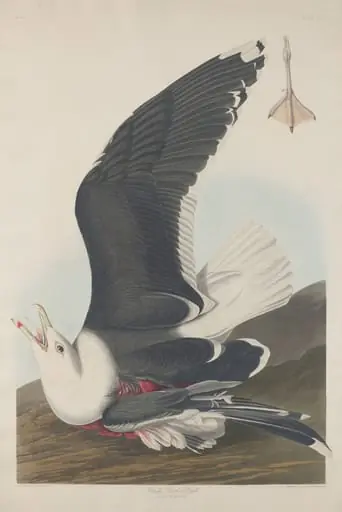
Created in 1836 by Robert Havell Jr., this hand-colored engraving and aquatint on Whatman wove paper depicts a pair of seabirds engaged in a struggle over a fish along a coastal shore. The work belongs to a tradition of natural history illustration practiced by the Havell family, known for their technical precision and integration of artistic and scientific observation in printmaking.
Subject & Meaning
The scene captures two gulls in conflict—one pale with dark wingtips, the other darker-bodied with a red beak—clashing over a small fish on a sandy beach.
The scene captures two gulls in conflict—one pale with dark wingtips, the other darker-bodied with a red beak—clashing over a small fish on a sandy beach. The composition emphasizes competition for survival in a natural setting, devoid of human presence. The birds’ postures and the tension in their movements suggest a momentary, raw encounter, reflecting an interest in wildlife behavior common among 19th-century naturalists.
Technique & Style
Havell employed fine-line engraving and aquatint to render the birds’ plumage with meticulous detail, using layered ink tones to suggest texture and depth. Hand coloring added subtle variations in hue to the feathers, sky, and sand. The use of Whatman paper, prized for its smooth, absorbent surface, allowed for crisp lines and even washes, showcasing the family’s mastery of printmaking processes developed over generations.
History & Provenance
Robert Havell Jr. was part of a multi-generational family of engravers based in Reading, Berkshire, whose work spanned scientific illustration and fine art. His father, Robert Havell the Elder, and uncle, Luke Havell, were established in the field, and this print continues their legacy of producing high-quality natural history prints. The work likely originated as part of a broader project documenting British fauna, though its exact publication context remains undocumented.
Context
In the 1830s, interest in natural history flourished in Britain, fueled by exploration and scientific cataloging. Artists like Havell Jr. contributed to this movement by translating observed specimens into detailed prints for collectors and institutions. While not tied to a specific publication, this piece aligns with the era’s trend of combining artistic skill with empirical observation, bridging art and science in a pre-photographic age.
Legacy
The Havell family’s prints, including this one, remain valued for their technical refinement and contribution to the documentation of British wildlife. Though not widely exhibited today, their work represents a significant chapter in the history of printmaking, where art served as a medium for scientific record. Robert Havell Jr.’s contributions helped sustain a tradition of detailed, hand-crafted natural history imagery into the mid-19th century.
Artist & collection

Artist
The Havell family of Reading, Berkshire, England, included a number of notable engravers, etchers and painters, as well as writers, publishers, educators, and musicians.