Artwork
Etchings of Paris: The Symbolical Arms of the City of Paris
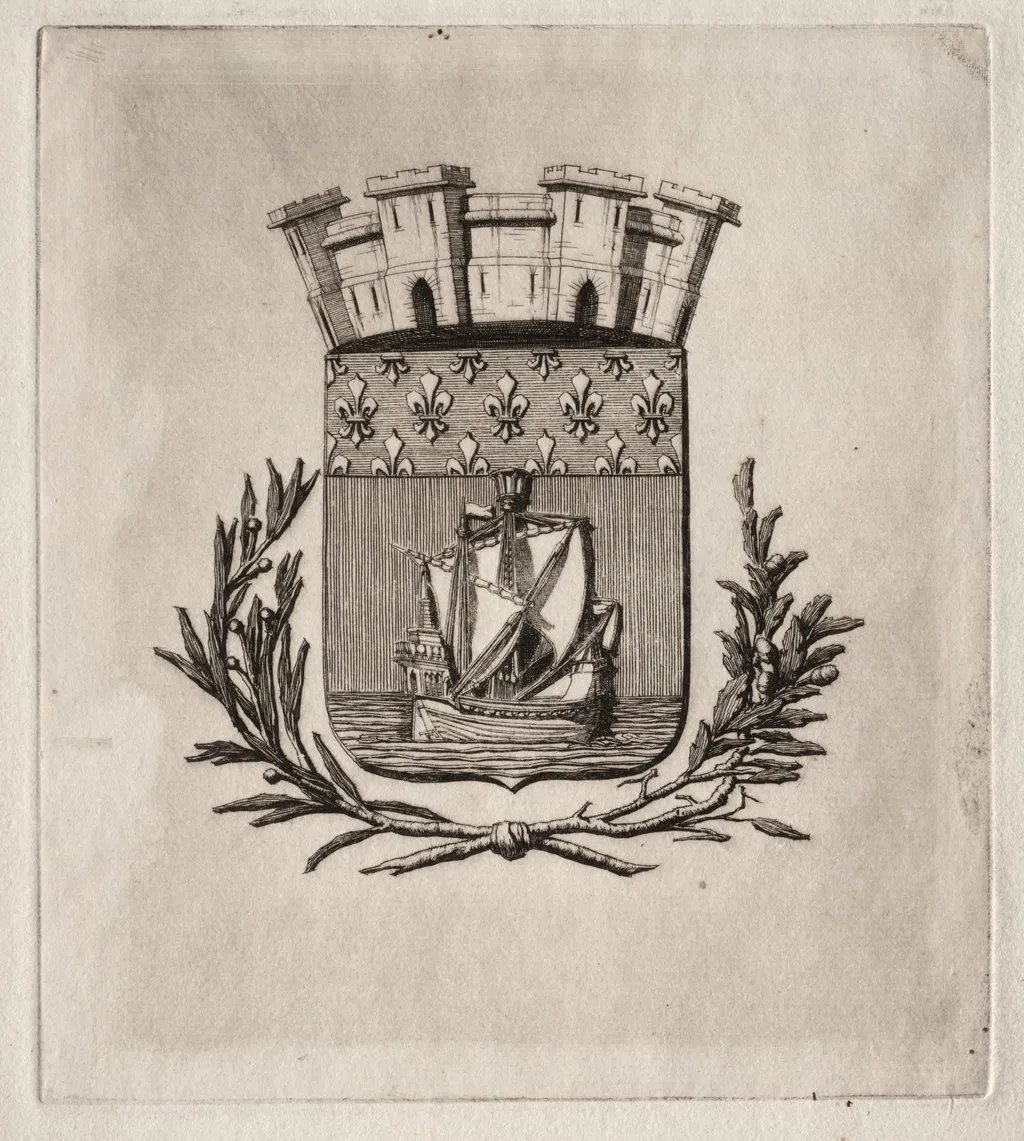
Etchings of Paris: The Symbolical Arms of the City of Paris is a print by the Impressionist artist Charles Meryon. It dates from 1854 and is held in the collection of the Cleveland Museum of Art.
About this work
Overview
Meryon, known for his architectural focus and technical precision in printmaking, rendered the city’s coat of arms with careful line work.
Created in 1854 by Charles Meryon, this etching presents the official heraldic emblem of Paris in monochrome. Meryon, known for his architectural focus and technical precision in printmaking, rendered the city’s coat of arms with careful line work. His choice of etching over painting was influenced by his color blindness, leading him to develop a distinctive graphic language centered on tone and structure rather than hue.
Subject & Meaning
The emblem features a castle with three towers atop a shield, symbolizing Paris’s fortified origins, and a ship sailing on wavy lines below, representing the city’s historical ties to river trade along the Seine. The ship’s X-shaped sail is a traditional heraldic device linked to medieval Parisian identity. Flanking the shield, intertwined branches and a ribbon suggest unity and civic pride, reflecting the emblem’s role as a symbol of municipal authority and continuity.
Technique & Style
Meryon employed fine, controlled etching lines to define each element with clarity and weight. The contrast between the solid castle and the fluid, rhythmic waves beneath it demonstrates his mastery of tonal variation. His style avoids ornamentation, favoring structural economy—each line serves both descriptive and symbolic function. The absence of color heightens the graphic impact, aligning with his broader approach to urban imagery as formal compositions.
History & Provenance
This print was produced as part of Meryon’s series documenting Parisian emblems and monuments during a period of rapid urban transformation. It was likely circulated among collectors and civic institutions interested in the city’s historical iconography. While the original context of its commission is unclear, its inclusion in major museum collections today reflects its enduring value as a record of 19th-century civic symbolism.
Context
In mid-19th-century Paris, heraldic imagery was being re-examined as the city underwent Haussmann’s renovations. Meryon’s etchings captured older symbols amid modernization, preserving visual traditions that were fading from public view. His work stood apart from contemporary landscape views by focusing on emblematic forms, offering a quiet counterpoint to the era’s sweeping architectural changes.
Legacy
Meryon’s etching of Paris’s arms remains a key reference for understanding how civic identity was visually encoded in the 19th century. His precise, introspective style influenced later printmakers interested in urban memory. Though not widely exhibited during his lifetime, the work now contributes to scholarly discussions on the intersection of heraldry, print culture, and the evolving image of Paris.
Artist & collection
Artist
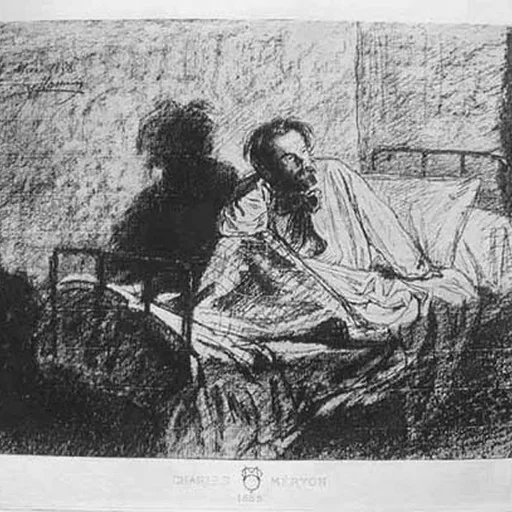
Charles Meryon (sometimes Méryon, 23 November 1821 – 14 February 1868) was a French artist who worked almost entirely in etching, as he had colour blindness.

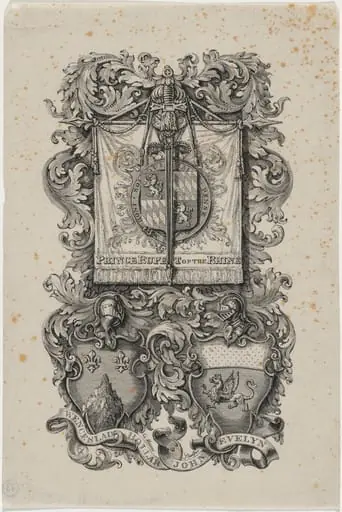 Coat of Arms of Prince Rupert, Hollar and Evelyn
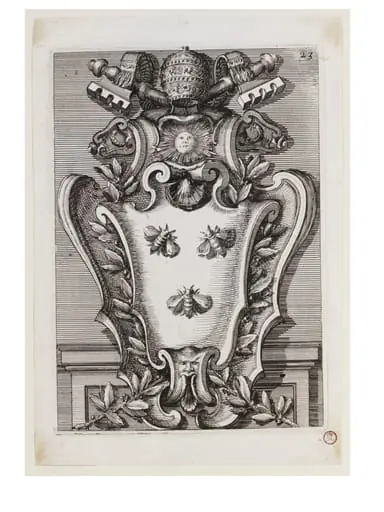 Raccolta di varie targhe di Roma fatte da Profeffori Primarj, Difegnate, ed Intagliate da Filippo Juvarra
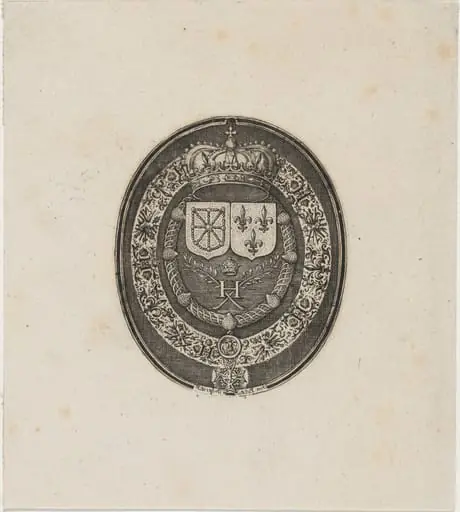 Shields of Henry IV and Maria de Medici
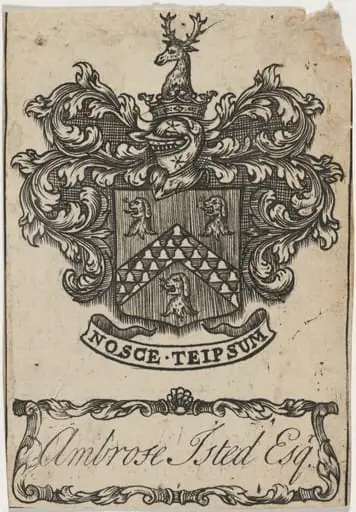 Bookplate for Ambrose Isted
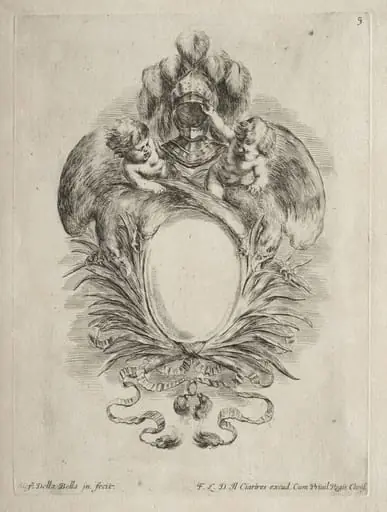 Collection of Various Caprices and New Designs of Cartouches and Ornaments: No. 5
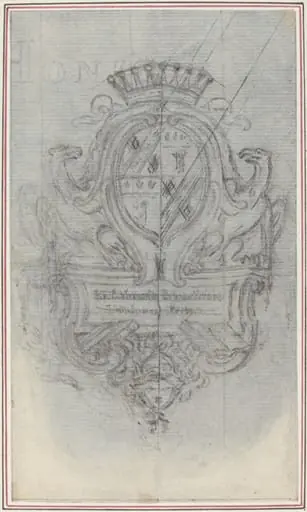 Coat of Arms with Two Eagles
 Ornament Fillet
 Coat of Arms of Lorenz Staiber
 Crest
Crest Bookplate: Coat of Arms with John Chandler Jun.r, Esq. inscribed