Artwork
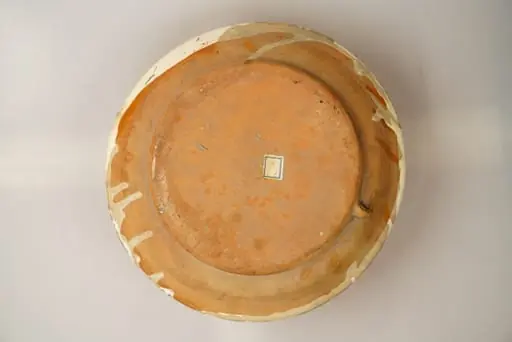
Farfurie de formă tronconică cu buza rotunjită. Decorul este compus din motive geometrice și vegetale pictate cu cornul: pe fund: două spirale cu puncte și două frunze; pe buză: linie ondulată; interior angobat; decor smălțuit. Cromatică: fond: alb; motive: verde; galben.
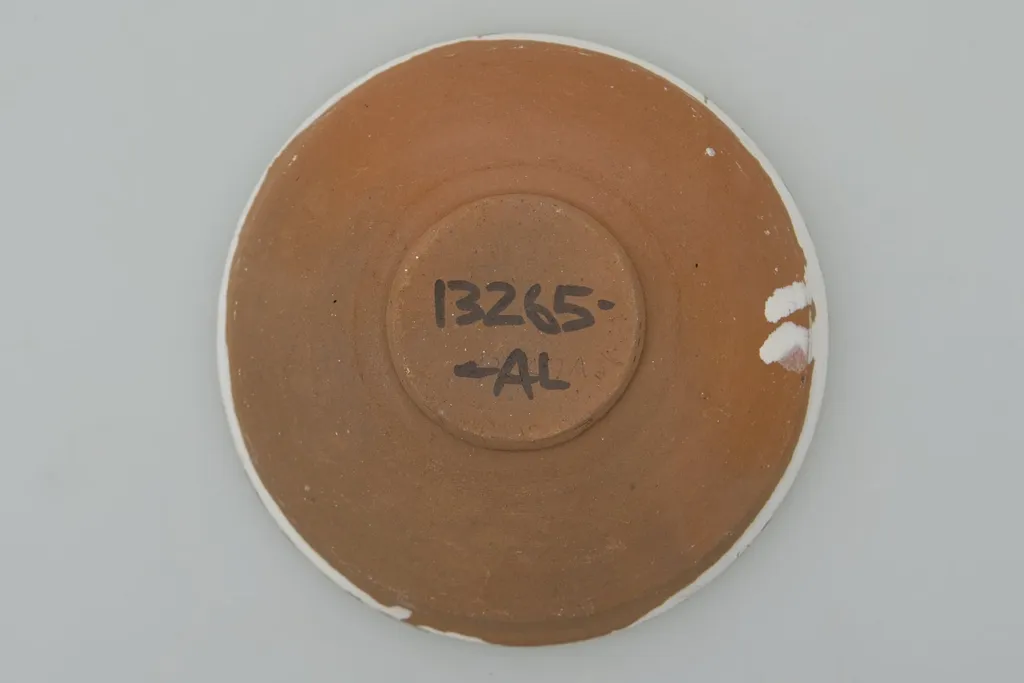
Farfurie de formă tronconică cu buza rotunjită. Decorul este compus din motive geometrice și vegetale pictate cu cornul: pe fund: două spirale cu puncte și două frunze; pe buză: linie ondulată; interior angobat; decor smălțuit. Cromatică: fond: alb; motive: verde; galben. is a photography by Șchiopu Dumitru. It is held in the collection of the ASTRA National Museum Complex. This ceramic vessel features a conical form with a rounded lip, typical of late Neolithic pottery traditions in the Carpathian region.
About this work
Overview
This ceramic vessel features a conical form with a rounded lip, typical of late Neolithic pottery traditions in the Carpathian region. Its surface is coated with a white engobe, providing a light ground for painted decoration. The interior is smoothed and sealed, while the exterior bears a limited but deliberate pattern applied with a stylus or reed tool.
Subject & Meaning
The decoration consists of geometric and vegetal motifs—spirals with dot accents and leaf forms—arranged along the base, with a wavy line encircling the lip. These symbols may reflect natural cycles or communal identity, common in early agrarian societies. The absence of figural imagery suggests an emphasis on abstract, possibly ritual or symbolic, expression rather than narrative representation.
Technique & Style
Pigments in green and yellow were applied over the white engobe, then sealed with a thin glaze. The motifs were likely drawn with a pointed tool dipped in mineral-based paint, producing crisp, linear forms. The use of contrasting colors and controlled repetition indicates a developed aesthetic system, with attention to balance between negative space and pattern.
History & Provenance
The object is attributed to the Gumelnița culture, dating to approximately 4500–4000 BCE, from sites in modern-day Romania. Similar vessels have been recovered from settlements along the Danube. The markings on the base are likely post-depositional identifiers, possibly from early excavation or museum cataloging, and do not originate from the period of manufacture.
Context
This vessel belongs to a broader ceramic tradition in southeastern Europe where painted pottery signaled social complexity and regional exchange.
This vessel belongs to a broader ceramic tradition in southeastern Europe where painted pottery signaled social complexity and regional exchange. The use of engobe and glaze reflects technical experimentation with surface treatment, distinguishing it from earlier, undecorated wares. Its form and decoration align with domestic or ceremonial use in settled communities practicing agriculture and animal husbandry.
Legacy
Though not attributed to any known individual artisan, the piece contributes to understanding the evolution of ceramic art in prehistoric Europe. It exemplifies the transition from utilitarian vessels to objects imbued with symbolic content. Modern studies of such artifacts inform interpretations of early social organization and the role of material culture in ritual life.
Artist & collection
Artist
Șchiopu Dumitru made ceramics and prints. Check out "Recipient ceramic" or "Disc concav smălțuit" to see their style. They used simple shapes and bold colors, like red and green. Look at "Vas ceramic" to see more of…

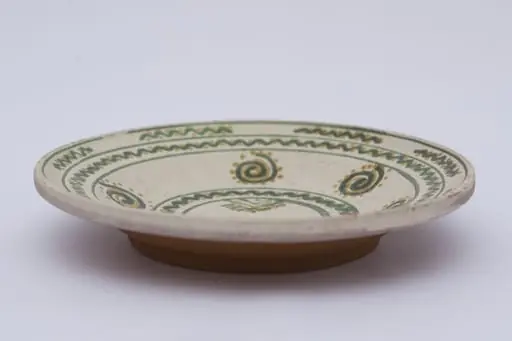 Vas ceramic de formă discoidală pe bază puțin înălțată. Fața farfuriei a fost introdusă în angobă albă, decorația a fost făcută cu pensula. Pe fundul vasului sunt două cercuri concentrice: în primul sunt doi brăduți, iar în al doilea valul punctat. Pe pereți sunt șase spirale punctate. Marginea vasului a fost împărțită în două registre, primul cu val punctat, în al doilea sunt șapte valuri întrerupte. La posterior, pe fund, semătura ”D Șchiopu ''. Pentru atârnare baza este perforată. Cromatică: fond: alb; motive; verde; galben.
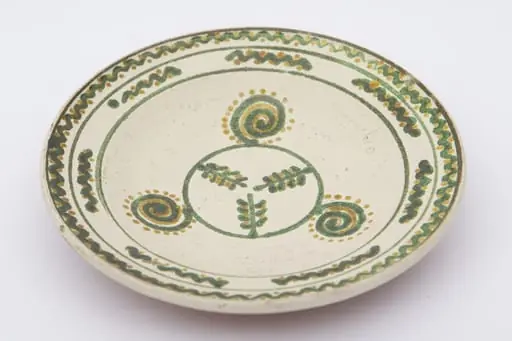 Vas ceramic de formă rotundă și profil tronconic aplatizat cu pereții larg evazați. Fața farfuriei a fost introdusă în angobă albă, decorația a fost făcută cu pensula. Pe fundul vasului sunt trei crengi de brad circumscrise. Pe pereți au fost pictate trei spirale punctate. Buza a fost împărțită în două registre: primul cu șapte valuri întrerupte; al doilea val continu, punctat. La posterior, baza este perforată pentru atârnare și incizată inscripția ,,D. Șchiopu''. Cromatica: fond: motive: verde, galben.
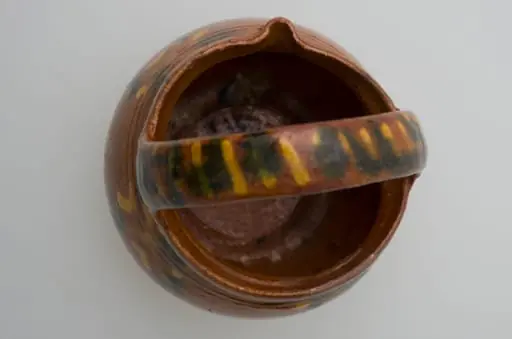 Vas de mici dimensiuni sub forma de bijou; pântecos cu gâtul scurt și gros, gură răsfrântă și cioc. Smălțuit în interior și la exterior. În partea superioară se află două linii incizate. Pe corp avem motive florale stilizate, iar pe mănușă decor geometrice: liniar și punctiform. Diametral, peste gură aven o mânușă aproximativ la fel de înaltă ca vasul. Cromatică: fond: cărămiziu; motive: galben, verde.
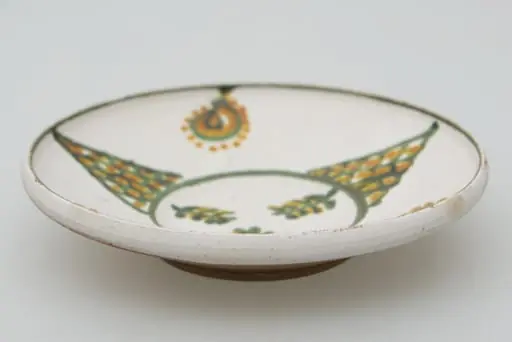 Disc concav smălțuit cu smalț incolor; decor amplasat pe toată suprafața; ordonat în registre; organizare radială; motive geometrice; triunghiuri; cerc; spirale; puncte. Cromatică: fond: alb; motive: verde; cărămiziu.
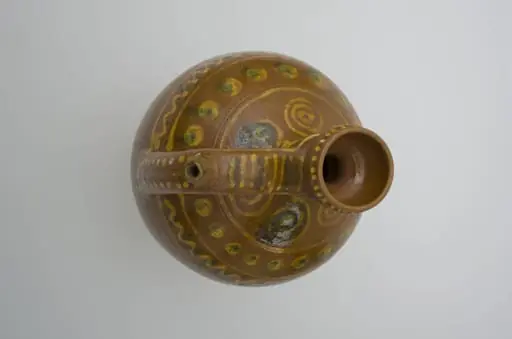 Ulcior de formă sferică cu gât înalt cu guler la mijloc; gura înaltă și largă, în formă de pâlnie tronconică. Buză rotundă și îngustă retrasă spre interior. Prezintă toartă goală aplatizată cu țâța ușor înălțată oblic ce pornește din gulerul gâtului și intră în pântece la diametrul maxim, într-un arc oval. Decorul este format din motive geometrice: brâu median de linii pararele și zig-zag; liniuțe orizontale și două șiruri de punctmotive florale; sub gât avem spirale. Smălțuit cu smalț incolor. Cromatică: fond: maro cărămiziu; motive: galben; verde.
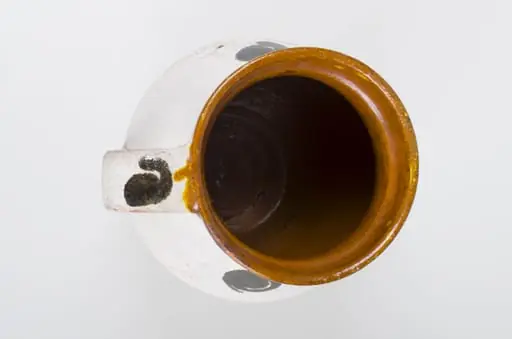 Vasul este confecționat din lut și este prevăzut cu toartă. Acesta este smălțuit în interior (maro), iar exteriorul este 3/4 angobat. Pe pântecul vasului au fost pictate cu pensula, cu smalț verde trei spirale, una dintre acestea aflându-se pe toartă. Cromatică: alb; maro; verde.
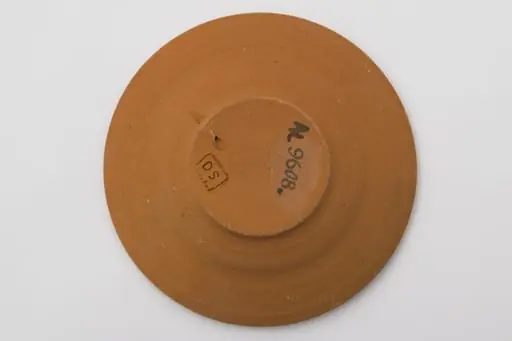 Vas ceramic cu fundul plat puțin adâncit și marginile evazate, puțin ridicate. Ornamentată cu pensula cu angoba albă. Fundul este marcat printr-o spirală din care ies alte șase spirale mici dispuse pe circumferința exterioară. Pe marginea vasului două benzi, una cu o linie întreruptă, a doua cu șase valuri întrerupte. La posterior ștanțat ”DS” încadrat într-un dreptunghi. Cromatică: fond: cărămiziu; motive: alb.
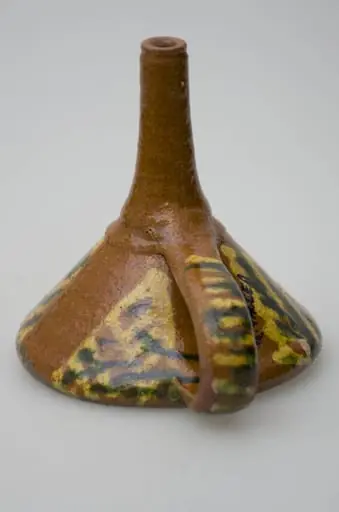 Pâlnie ceramică smălțuită, de formă tronconică, cu gura astupată cu o suprafață de lut găurită, formând o sită. La cealaltă latură a conului pâlnia este continuată printr-un tub cilindric, care se folosește la scurgerea lichidelor. Piesa de uz casnic este dotată cu un mâner care pleacă de la buză până la tubul cilindric de scurgere. Pe suprafața obiectului apar motive geometrice realizate cu pensula. Cromatică: fond: maro; motive: galben; verde.
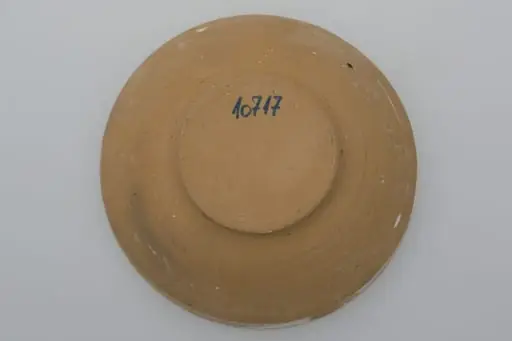 Recipient din lut de uz casnic, nesmălțuit, angobat, de formă circulară, cu profil tronconic, cu buza dreaptă și înaltă. Pe pereții interiori, vasul este decorat cu cornul, cu motive geometrice și florale: un contur de floare urmat de un șir de flori mici stilizate. Spre gura strachinii, la interior, sunt prezente linii concentrice, maro. În centrul vasului este pictată o spirală. Buza vasului este ornată cu o linie ondulată. Cromatică: fond: alb; motive: gri, maro închis, maro deschis.
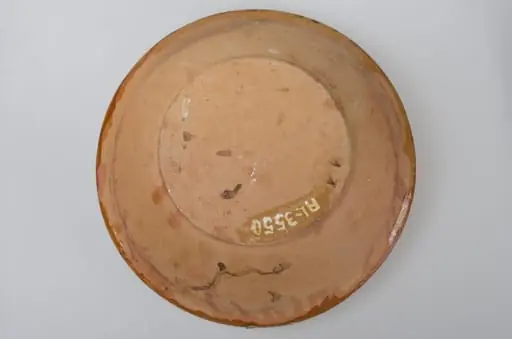 Vas de formă tronconică cu buza dreapta. Decorul este amplasat pe toată suprafața interioară și parțial în exterior, pe buză. Acesta este compus din motive geometrice (val); motive fitomorfe, plasate pe fund (frunza) și motive florale, tot pe fund (pansea). Blidul este smălțuit la interior și pe zona exterioară a buzei. Cromatică: fond: maron; motive: alb, verde.
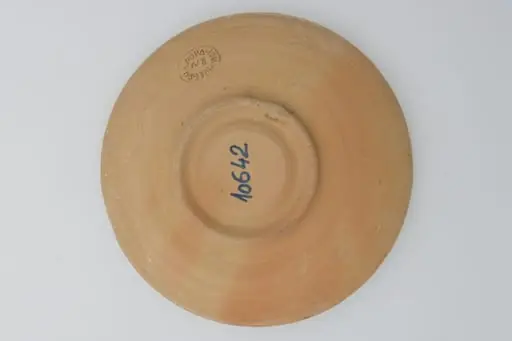 Recipient din lut de uz casnic, nesmălțuit, de formă circulară, cu profil tronconic și buza rotunjită. Acesta este decorat pe toată suprafața cu motive geometrice și florale, realizate cu gaița și cornul. În partea centrală este redată o floare cu petale multiple. Pereții se termină cu o linie ondulată. Cromatică: fond: alb; motive: gri, maro închis, maro deschis.
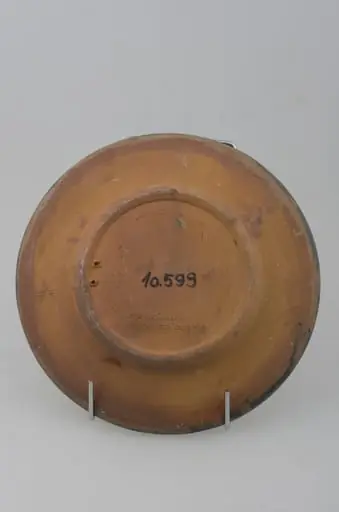 Farfurie de formă tronconică cu pereții rotunjiți, marginea oblică, lată și buza crestată. Decor cu motive geometrice pe margine: linii frânte și curbe; pete de culoare; central prezintă o floare stilizată. Cromatică: fond: verde; motive: brun; verde deschis; alb.
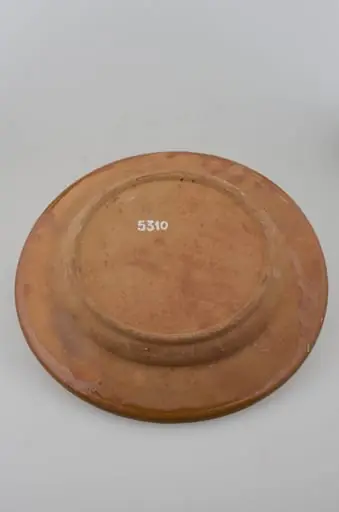 Blid tronconic cu fund plat, margine puțin ridicată și buza ușor oblică. Decor cu motive aviforme și florale: cocoș pe centru și o floare; pe margine, circular, motive geometrice (semicercuri, liniare, punctate, zig-zag). Cromatică: fond: cărămiziu; motive: maro; verde; alb; galben.
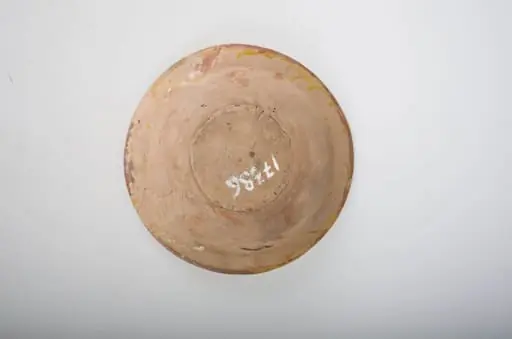 Vas din lut de formă tronconică, cu gura mai largă decât baza și smălțuită la interior. Ornamentată cu motive geometrice și vegetale în felul următor: pe fundul vasului este pictată cu pensula o crenguță cu frunze, împrejmuită în continuare spre pereții vasului de o spirală. Tot aici, este pictat cu negru, litera ”F” și ”R”. Pe marginea vasului, sunt flori dispuse circular cu tulpini și frunze mari, având petalele rotunde, bicolore. Prezintă uzură funcțională. Cromatică: fundal cărămiziu; motive: galben; negru.
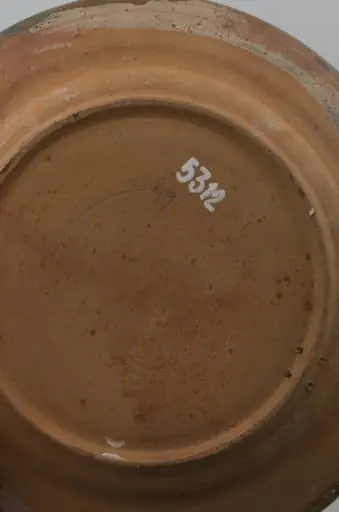 Vas circular cu fund plat, întins cu marginea puțin ridicată, continuată cu buza ușor oblică. Fundul farfuriei este de culoare verde închis. Întreaga suprafață este ornamentată cu motive geometrice (semicercuri, liniare, punctate, zig-zag, cercuri). Smălțuit în interior, exteriorul are culoarea lutului ars. Cromatică: fond: verde; motive: alb; brun; galben.
 Farfurie de formă semi-adâncă, cu buza evazată și muchia buzei rotunjită. Este acoperită pe suprafața interioară cu un strat de angobă albă, peste care este pictat cu pensula și cu cornul decorul format din motive vegetale și florale stilizate, din motive geometrice și motive avimorfe, dispuse astfel: registrul decorativ central de pe fundul farfuriei, încadrat într-un cerc din două linii subțiri albastre, conține o vază cu baza ascuțită și două torți laterale, în care sunt așezate două flori mari albastre, cu frunze verzi, rotunde. În partea superioară a buchetului, pe cele două flori sunt așezate două păsări, una verde (stânga) și cealaltă maro (dreapta), având între ele o floare cu petale galbene, posibil floare de salcâm. Buza farfuriei este decorată cu trei motive vegetale, aproximativ identice (două frunze laterale verzi, o frunză/floare centrală galbenă având de o parte și de alta câte trei linii albastre) separate de câte un mic motiv format din trei linii albastre. Bordura interioară a farfuriei este marcată cu o dungă circulară subțire, albastră, iar marginea buzei cu o linie spiralată circulară, subțire, neglijent realizată. Suprafața ornamentată a farfuriei este acoperită cu un strat de smalț transparent. Cromatica: alb, verde, albastru, maro, galben.
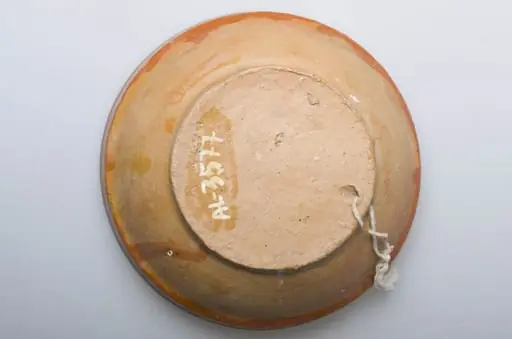 Blid de formă tronconică, cu gura largă, înaltă și dreaptă, smălțuit integral în partea interioară și în exterior doar la nivelul buzei. Este decorat din interior cu motive florale: trei flori - una albă central încadrată de doi brăduți și două verzi lateral; motive geometrice: trei linii ondulate deasupra florii albe și unghiuri de diferite dimensiuni între cele două flori verzi. Fundul este circular și prezintă un orificiu pentru agățare. Cromatică: fond: cărămiziu; motive: alb; verde; negru.