Artwork
The Revelation of Saint John the Evangelist
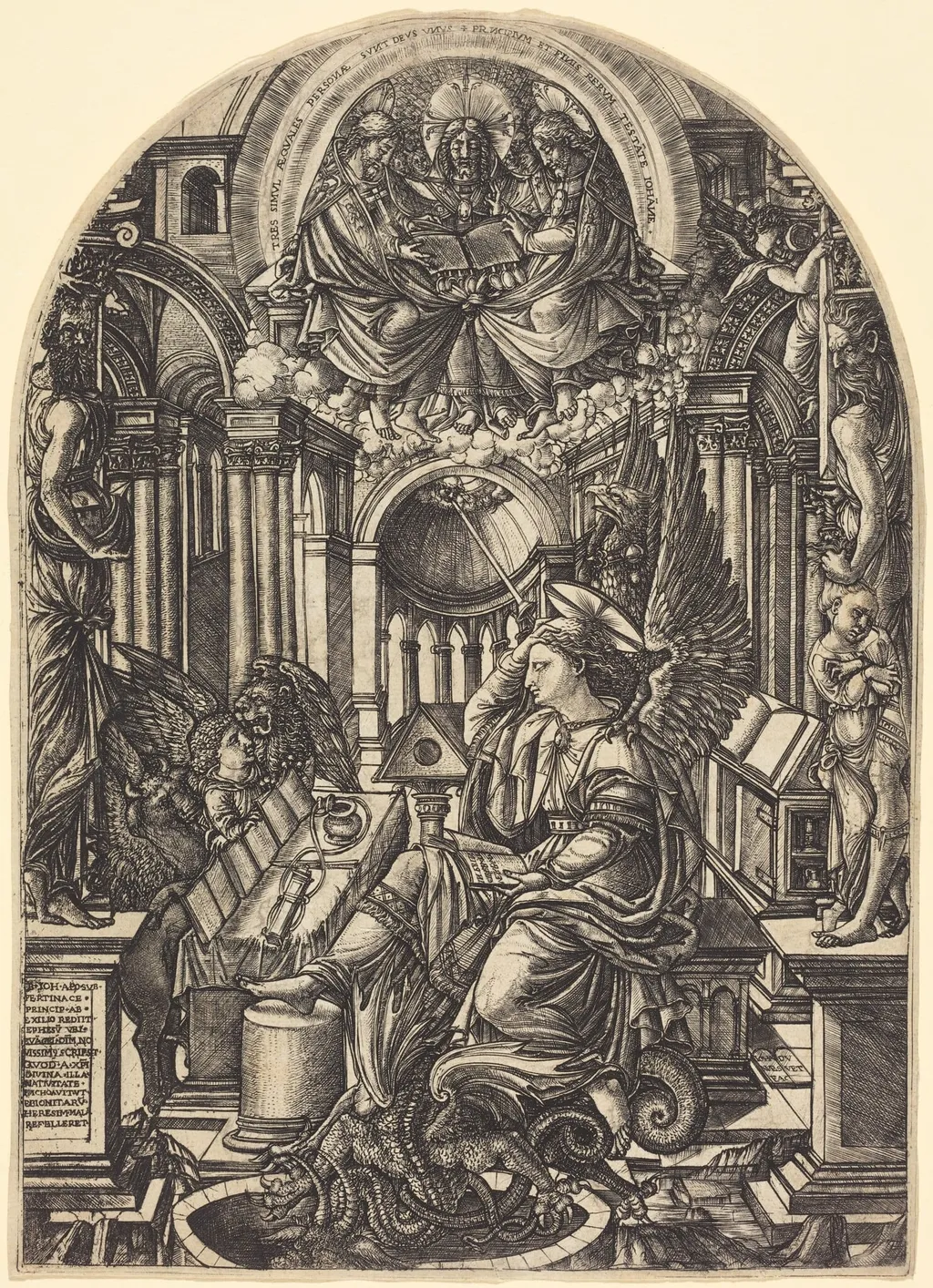
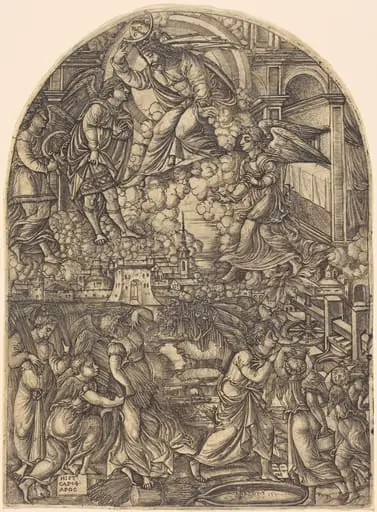
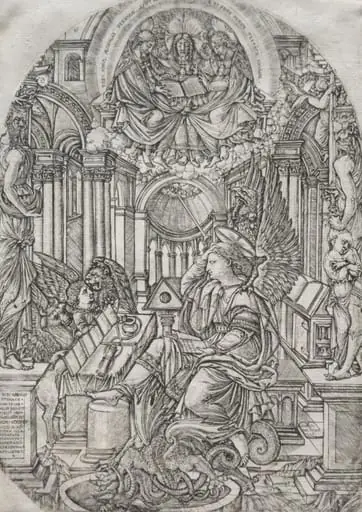
The Revelation of Saint John the Evangelist is an ink print by the Renaissance artist Jean Duvet. It dates from 1555 and is held in the collection of the National Gallery of Art.
About this work
Overview
Duvet, a French goldsmith turned printmaker, produced approximately 73 such plates, all characterized by dense, intricate compositions.
Created around 1555 by Jean Duvet, this engraving on laid paper is part of a series illustrating the Book of Revelation. Duvet, a French goldsmith turned printmaker, produced approximately 73 such plates, all characterized by dense, intricate compositions. Unlike the polished clarity of many Renaissance prints, his work embraces a raw, almost visionary intensity, reflecting his personal devotion rather than academic convention.
Subject & Meaning
The scene depicts a celestial vision from the Book of Revelation, centered on a figure seated on a throne, likely Christ or God, surrounded by symbolic beings and architectural forms. A winged, haloed figure in the foreground, possibly an angel, holds a book and gazes upward, suggesting divine revelation. The layered imagery conveys theological mystery, emphasizing the awe and solemnity of the apocalyptic moment as understood in 16th-century Christian thought.
Technique & Style
Duvet employed fine cross-hatching and varied line weight to model form and suggest depth on a flat surface. The composition is densely packed, with overlapping figures and architectural elements creating a sense of spatial complexity. His style avoids idealized proportions, favoring expressive, almost childlike forms that heighten emotional impact. The texture of the paper and the precision of the engraving enhance the tactile quality of the image.
History & Provenance
Duvet worked primarily in France during the mid-16th century, producing prints for private collectors rather than public markets. This engraving, like others in the series, was likely circulated among religiously inclined patrons. Few of his original plates survive, and impressions are rare, making this work a significant artifact of early French printmaking. Its survival reflects its value to collectors who appreciated its spiritual intensity.
Context
In an era dominated by Italian and Northern Renaissance clarity, Duvet’s work stood apart. France lacked a strong printmaking tradition, and his religious visions emerged amid growing Protestant critiques and Catholic Counter-Reformation fervor. His imagery, though rooted in biblical text, reflects a personal mysticism that diverged from official doctrinal illustrations, aligning more with individual spiritual experience than institutional authority.
Legacy
Duvet’s prints were largely overlooked until the 19th century, when Romantic and Symbolist artists recognized their emotional power. His unorthodox style, with its raw energy and symbolic density, drew comparisons to later visionaries like William Blake. Though not widely influential in his own time, his work is now seen as a unique precursor to expressive, non-classical approaches in printmaking.
Artist & collection

Artist
Jean Duvet (1485 – after 1562) was a French Renaissance goldsmith and engraver, now best known for his engravings.

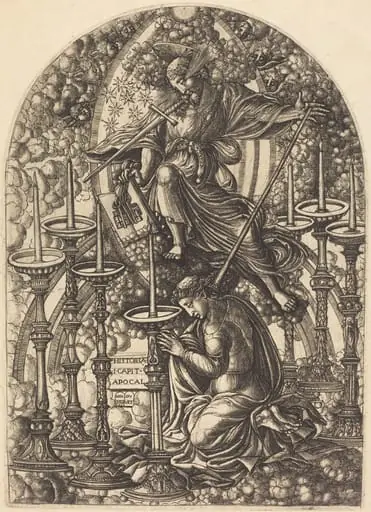
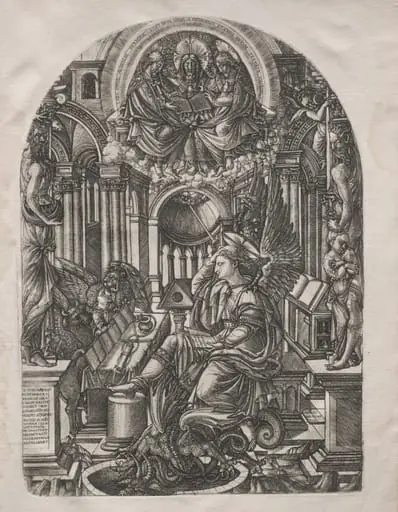 The Apocalypse: St. John on the Island of Patmos
 The Revelation of Saint John the Evangelist
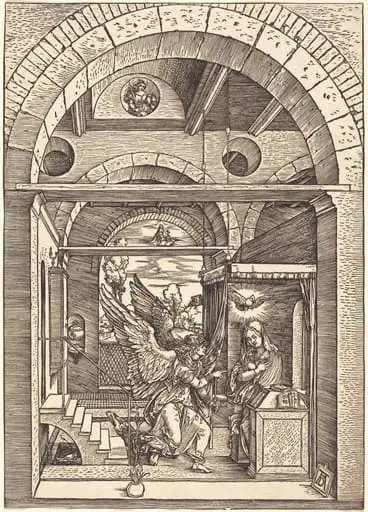 The Annunciation
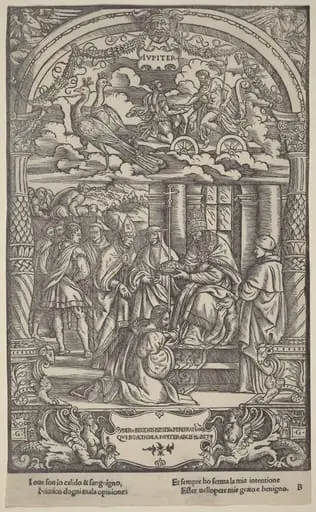 Jupiter
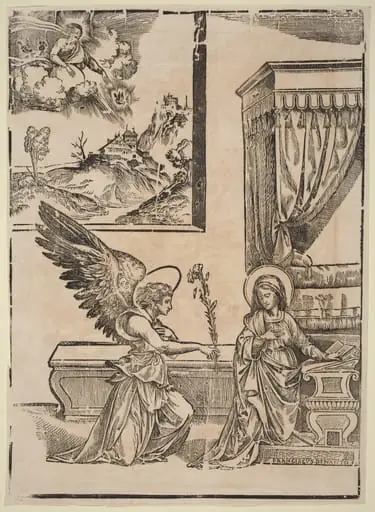 The Annunciation
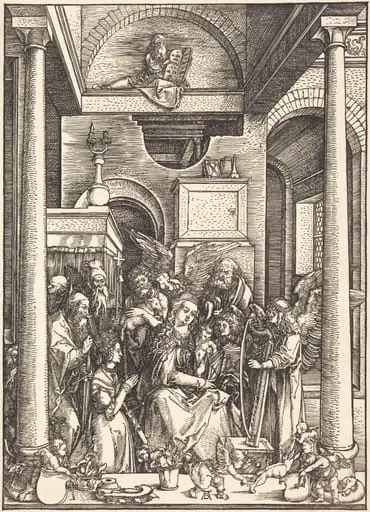 The Glorification of the Virgin
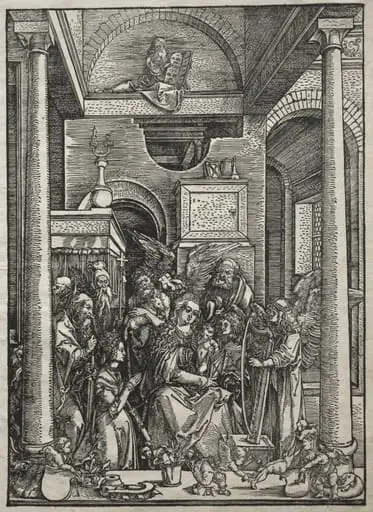 Life of the Virgin: Adoration of the Virgin and Child by Saints and Angels
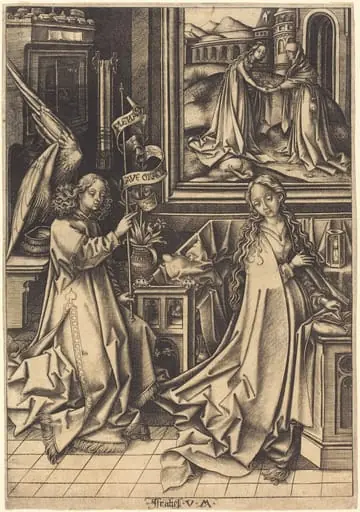 The Annunciation
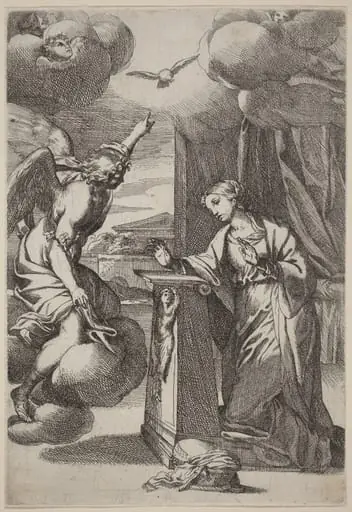 The Annunciation
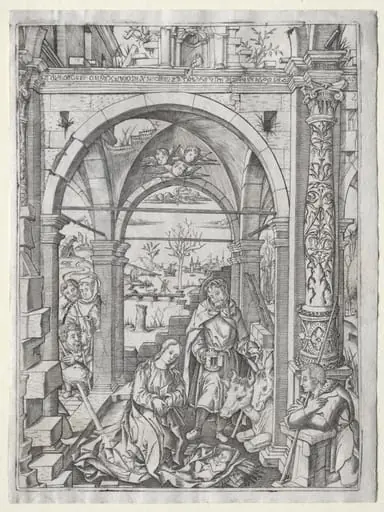 Adoration of the Shepherds
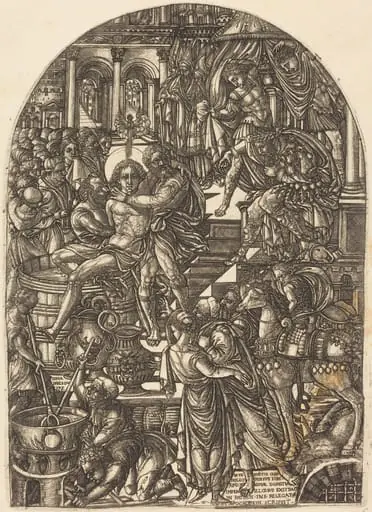 The Martyrdom of Saint John the Evangelist