Artwork
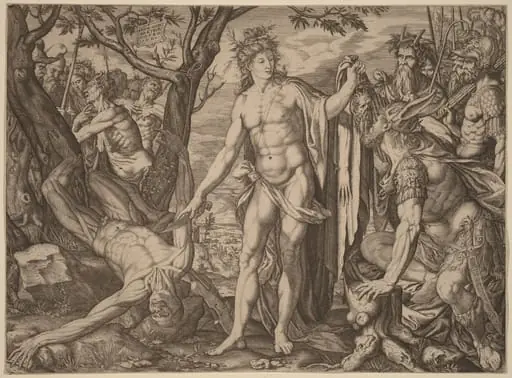
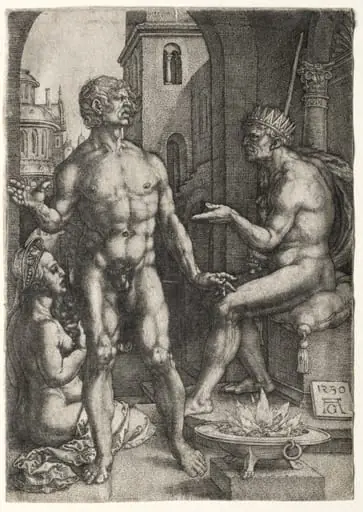
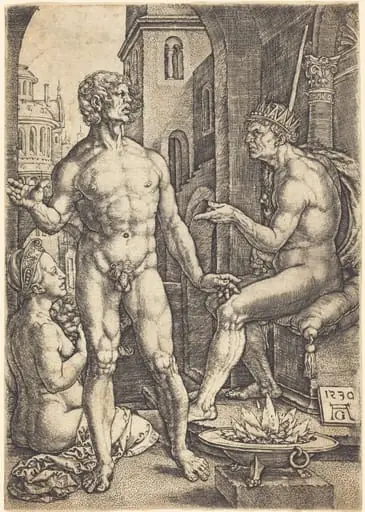
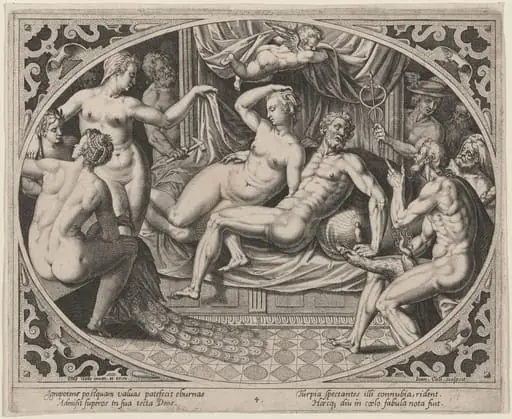
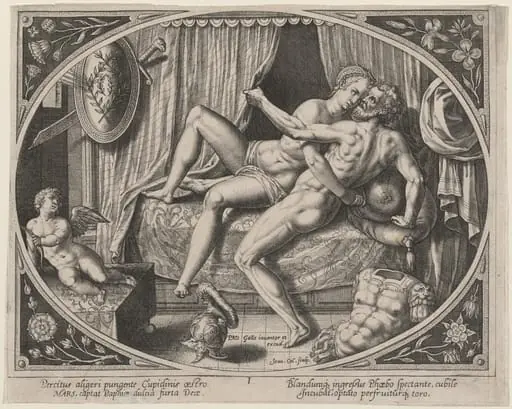
Phoebus Telling Vulcan of His Wife's Adultery
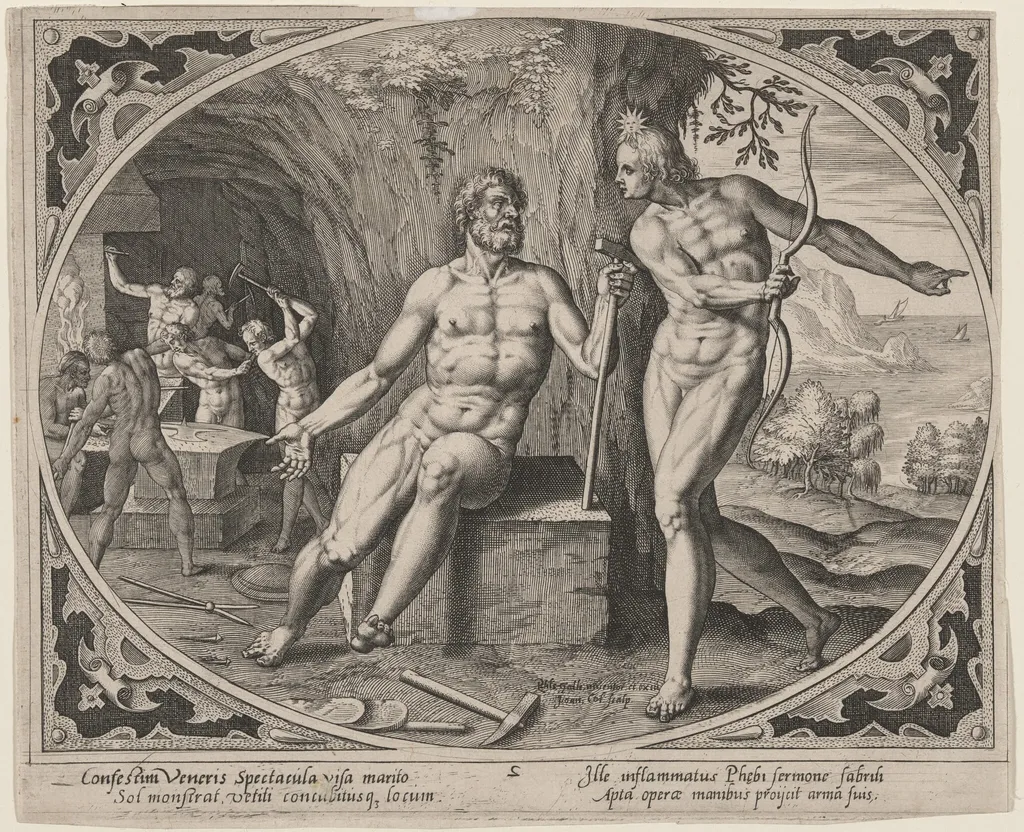
Phoebus Telling Vulcan of His Wife's Adultery is an ink print by the Renaissance artist Hans the Younger Collaert. It dates from 1530 and is held in the collection of the National Gallery of Art.
About this work
Overview
Hans the Younger Collaert’s 1530 engraving presents a mythological confrontation rendered in stark black‑and‑white. The composition centers on two muscular figures on a rocky outcrop, framed by an ornate border of intertwined vines and fanciful forms that give the scene a theatrical quality.
Subject & Meaning
The work illustrates the moment when Phoebus (Apollo) informs Vulcan of his wife’s infidelity with the god of love. Apollo’s radiant hair and Vulcan’s fierce expression convey the tension of betrayal, while the surrounding onlookers—some bearing tools—suggest the domestic workshop of the smith god.
Technique & Style
Executed as an engraving on laid paper, the image relies on fine line work and cross‑hatching to model muscular bodies and the intricate border. The contrast between deep shadows and delicate hatching creates a sense of depth, while the decorative frame functions as a visual stage set.
History & Provenance
Created in the early sixteenth century, the print reflects the Northern Renaissance interest in classical mythology. Hans the Younger Collaert, a Flemish engraver, produced the piece for the market of printed illustrations, and surviving copies are held in several European museum collections.
Artist & collection

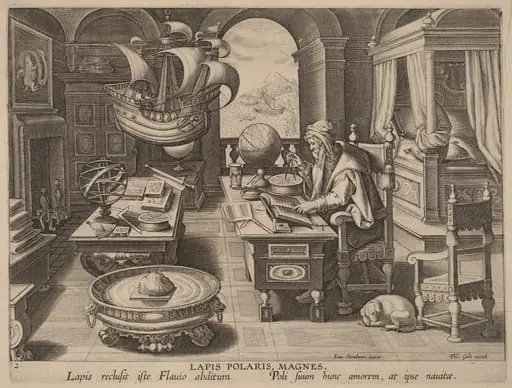 Lapis Polaris, Magnes (The Lodestone, The Magnet)
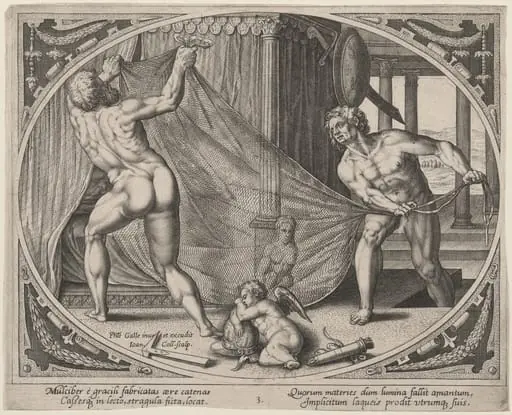 Vulcan Hanging an Iron Net above the Bed
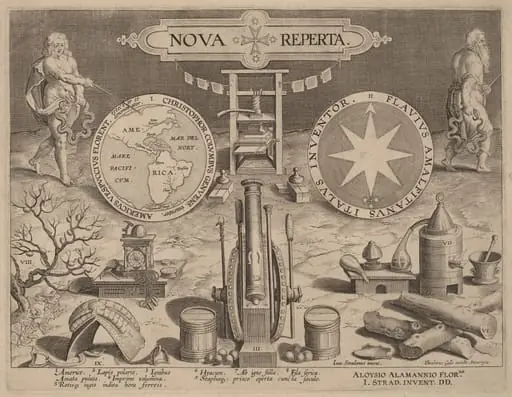 Title Page for Nova Reperta (New Discoveries)
 Mars and Venus Caught by the Gods
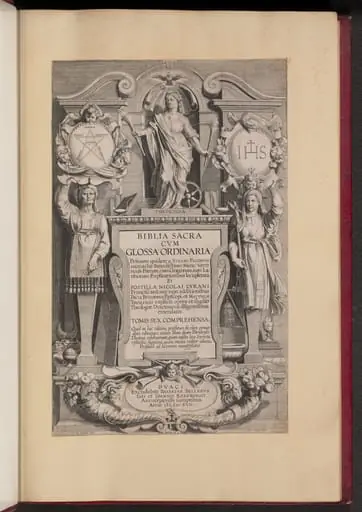 Title Page for Biblia Sacra Cvm Glossa Ordinaria
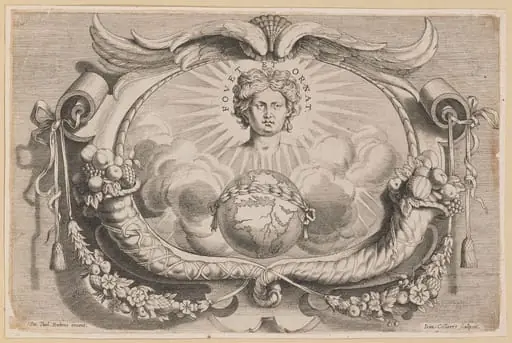 Printer's Device for Jan van Keerbergen: Vignette for Biblia Cum Glossa Ordinaria
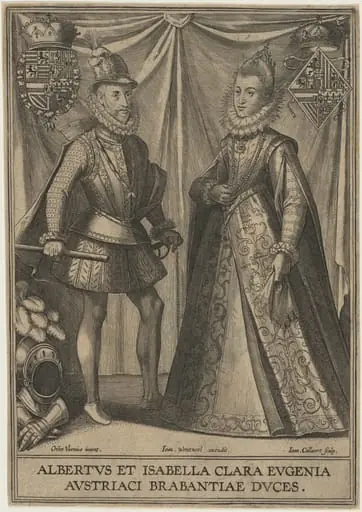 Archduke Albert and Isabella Clara Eugenie of Austria
 Mars and Venus Adulterous