Artwork
Printer's Device for Jan van Keerbergen: Vignette for Biblia Cum Glossa Ordinaria
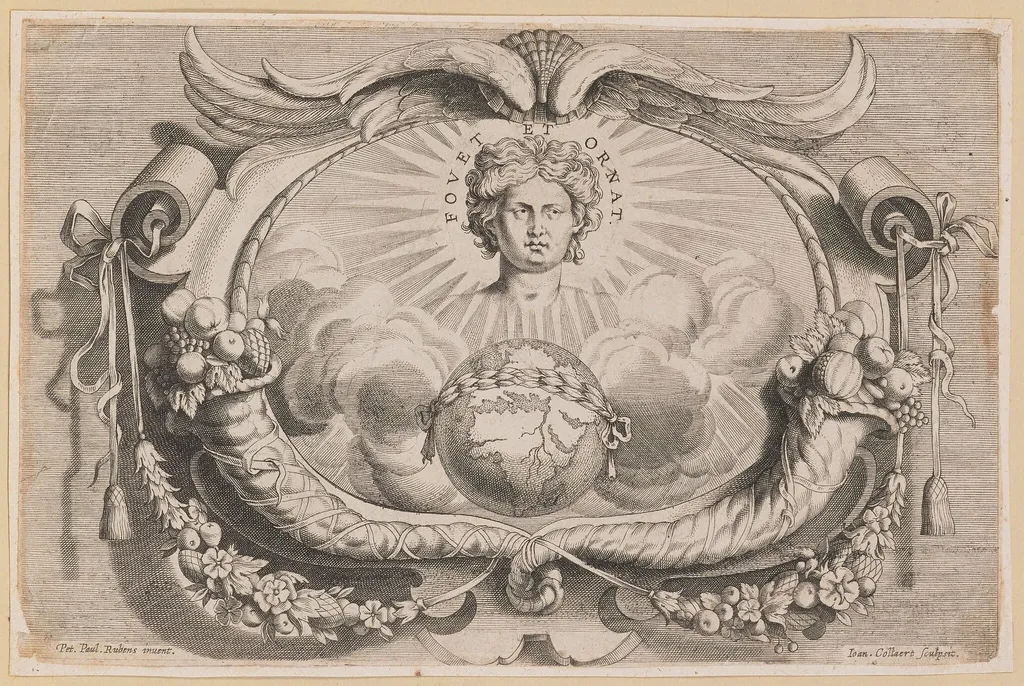
Printer's Device for Jan van Keerbergen: Vignette for Biblia Cum Glossa Ordinaria is an ink print by the Baroque artist Hans the Younger Collaert. It is held in the collection of the National Gallery of Art.
About this work
Overview
Executed on laid paper in proof form, it functions as both a signature and a symbolic emblem.
This 1617 engraving by Hans the Younger Collaert served as a printer’s mark for Jan van Keerbergen, used to identify publications of the Biblia Cum Glossa Ordinaria. Executed on laid paper in proof form, it functions as both a signature and a symbolic emblem. The composition centers on a human face encircled by botanical elements, with a globe and scroll below, all rendered in fine linear detail characteristic of early 17th-century engraving techniques.
Subject & Meaning
The central face, encircled by leaves, flowers, and fruit, suggests a personification of wisdom or divine knowledge, common in scholarly imprints. Above, the Latin phrase 'ET ORNAT'—'and adorns'—links the imagery to the embellishment of sacred text. The globe resting on a scroll implies the spread of biblical learning across the world, while the surrounding flora may symbolize growth, permanence, or the harmony of faith and nature.
Technique & Style
Rendered in fine-line engraving, the image demonstrates precise control over incised copperplate lines to achieve tonal variation and intricate detail. The delicate rendering of botanical forms and the smooth contours of the globe reflect Collaert’s mastery of the medium. The composition is tightly balanced, with symmetrical elements framing the central face, typical of Northern European printer’s devices designed for clarity and symbolic resonance.
History & Provenance
Created in 1617 for the Antwerp printer Jan van Keerbergen, this proof was likely used to stamp title pages of his biblical editions. As a printer’s device, it would have been reproduced in multiple impressions, though surviving proofs are rare. Its preservation suggests it was retained by the printer’s workshop or an early collector, offering insight into the material culture of early modern publishing in the Southern Netherlands.
Context
In early 17th-century Europe, printer’s devices were essential for branding and authentication, especially in religious publishing. Van Keerbergen’s use of allegorical imagery aligned with humanist traditions that linked textual scholarship with moral and cosmic order. Similar devices appeared in works by printers in Antwerp, Leuven, and Paris, reflecting a shared visual language among Catholic scholarly publishers during the Counter-Reformation.
Legacy
Though no longer in active use, this engraving remains a documented artifact of early modern print culture. It contributes to scholarly understanding of how printers communicated authority and purpose through visual symbols. Its survival in institutional collections allows continued study of the intersection between typography, iconography, and religious publishing in the Low Countries.
Artist & collection

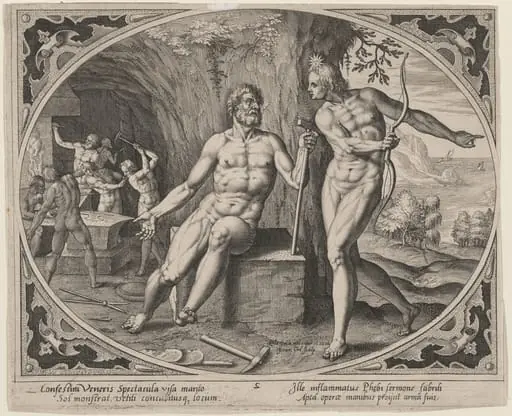 Phoebus Telling Vulcan of His Wife's Adultery
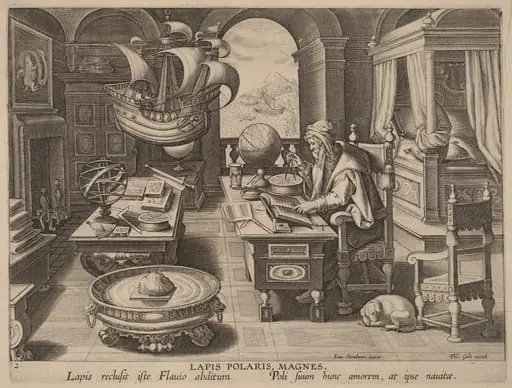 Lapis Polaris, Magnes (The Lodestone, The Magnet)
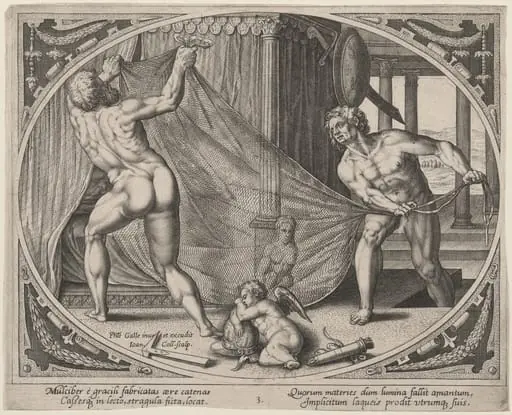 Vulcan Hanging an Iron Net above the Bed
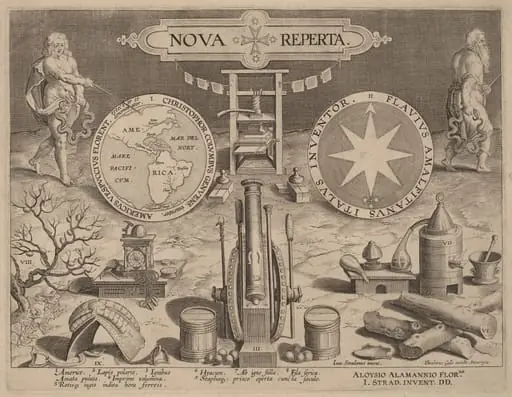 Title Page for Nova Reperta (New Discoveries)
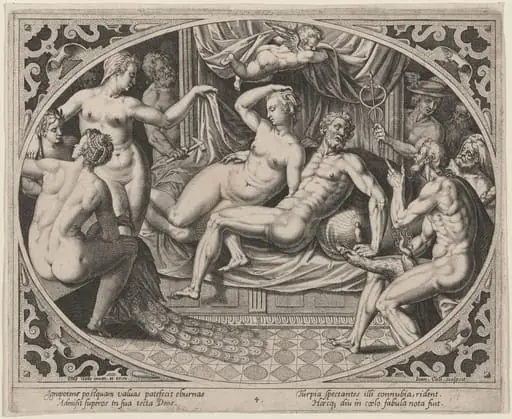 Mars and Venus Caught by the Gods
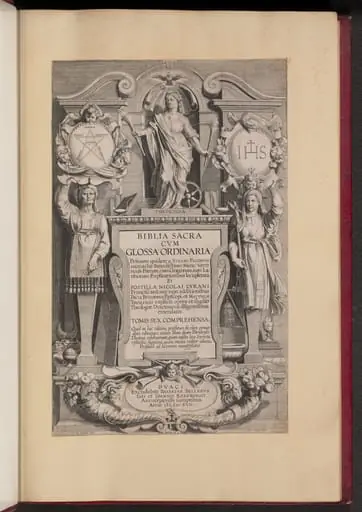 Title Page for Biblia Sacra Cvm Glossa Ordinaria
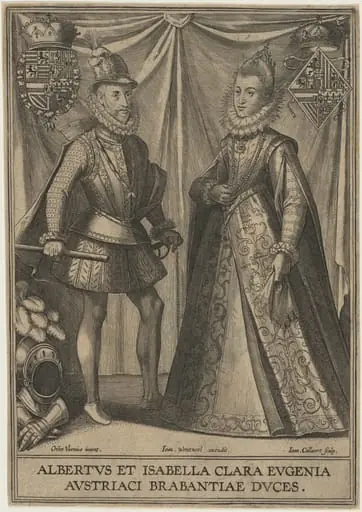 Archduke Albert and Isabella Clara Eugenie of Austria
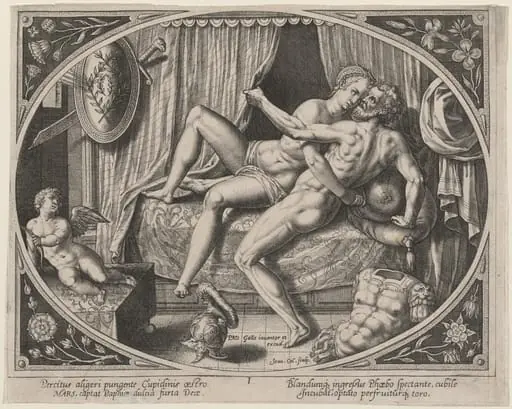 Mars and Venus Adulterous