Artwork
Lapis Polaris, Magnes (The Lodestone, The Magnet)
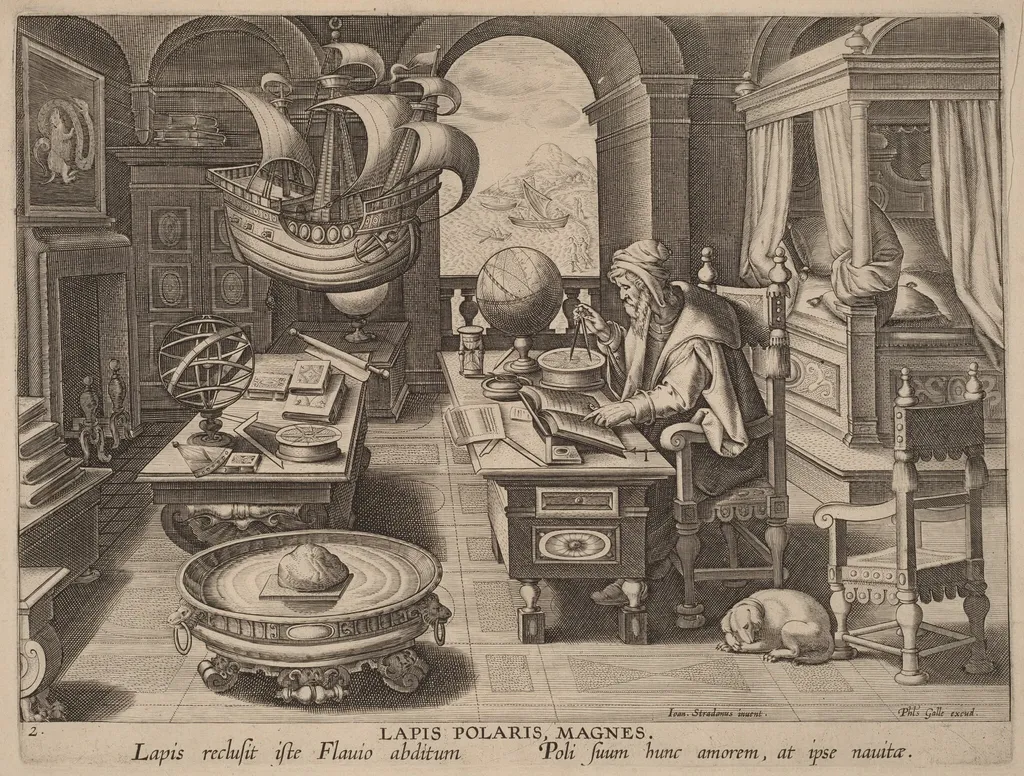
Lapis Polaris, Magnes (The Lodestone, The Magnet) is an ink print by the Renaissance artist Hans the Younger Collaert. It dates from 1592 and is held in the collection of the National Gallery of Art.
About this work
Overview
Hans the Younger Collaert’s engraving Lapis Polaris, Magnes, dated around 1592, presents a detailed interior scene centered on a seated figure. Rendered on laid paper, the print captures a study space filled with scholarly paraphernalia, illuminated by daylight that streams through an unseen window.
Subject & Meaning
The central figure, clad in a robe and hat, holds a compass, suggesting a focus on measurement and navigation. Surrounding objects—a globe, telescope, stacked books, and scattered papers—indicate an engagement with celestial observation and the broader pursuit of natural knowledge typical of Renaissance scholars.
Technique & Style
Collaert employs fine line engraving to render textures and light, distinguishing the sheen of metal, the softness of fabric, and the reflective surfaces of scientific instruments. The composition balances intricate detail with a clear spatial arrangement, guiding the viewer’s eye across the desk’s clutter.
Context
Printed in the late sixteenth century, the work reflects contemporary interest in astronomy and the emerging scientific method. The inclusion of a telescope—a relatively new invention—places the scene within the period’s expanding horizon of empirical inquiry.
Legacy
As a visual document of early modern scholarly practice, the engraving offers insight into the material culture of scientific study. Its precise depiction of tools and setting has informed later interpretations of Renaissance intellectual life and the visual representation of science.
Artist & collection

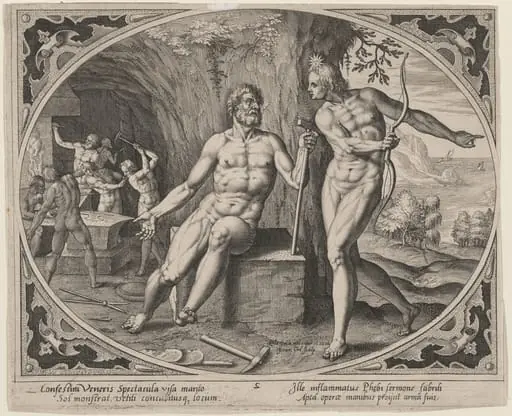 Phoebus Telling Vulcan of His Wife's Adultery
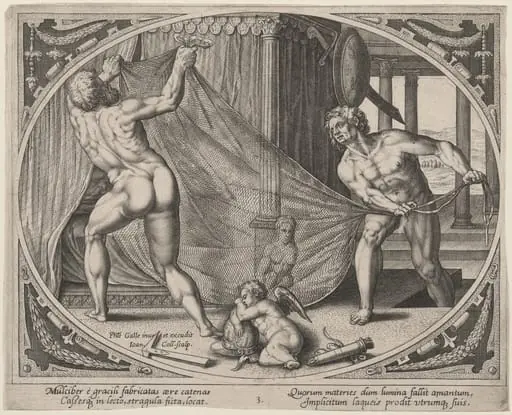 Vulcan Hanging an Iron Net above the Bed
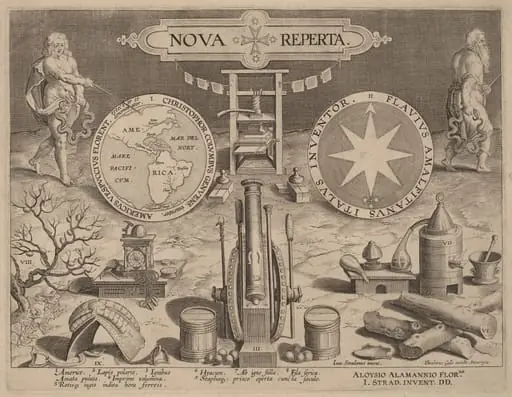 Title Page for Nova Reperta (New Discoveries)
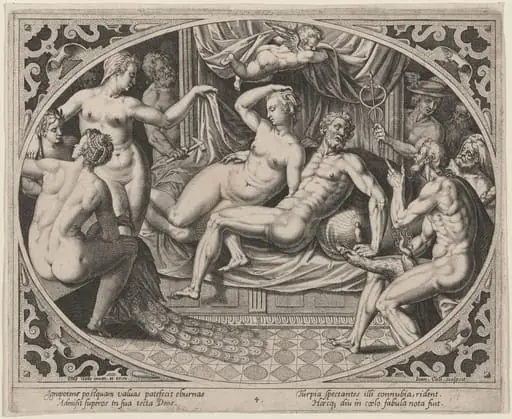 Mars and Venus Caught by the Gods
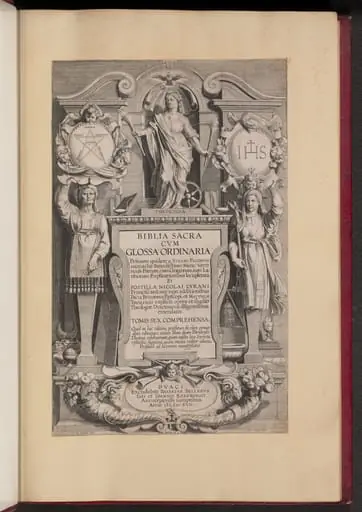 Title Page for Biblia Sacra Cvm Glossa Ordinaria
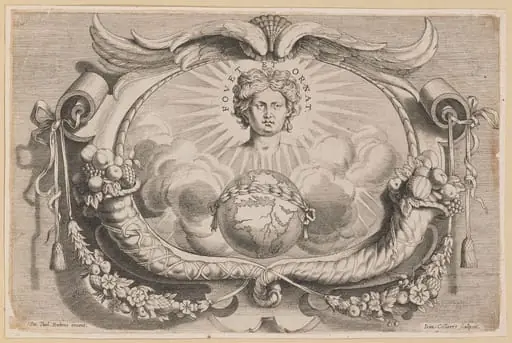 Printer's Device for Jan van Keerbergen: Vignette for Biblia Cum Glossa Ordinaria
 Archduke Albert and Isabella Clara Eugenie of Austria
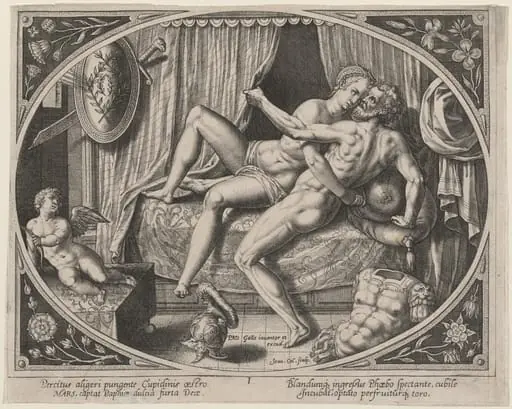 Mars and Venus Adulterous
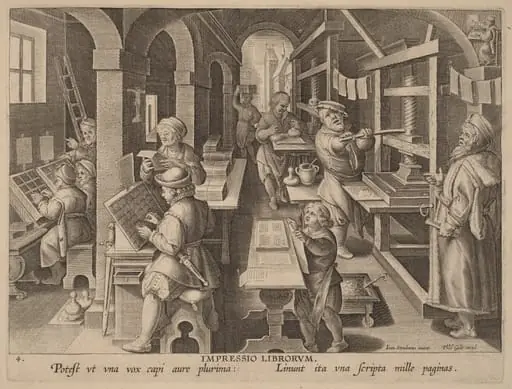 Impressio Liborum (Printing Books)
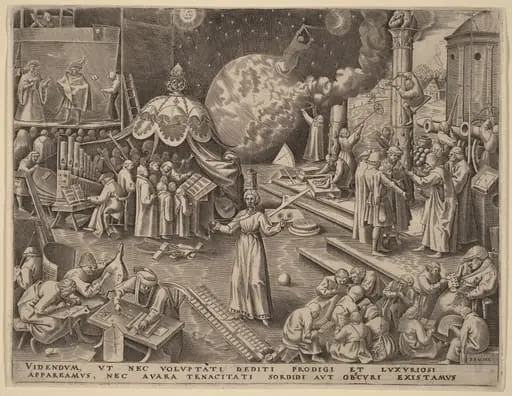 Temperance
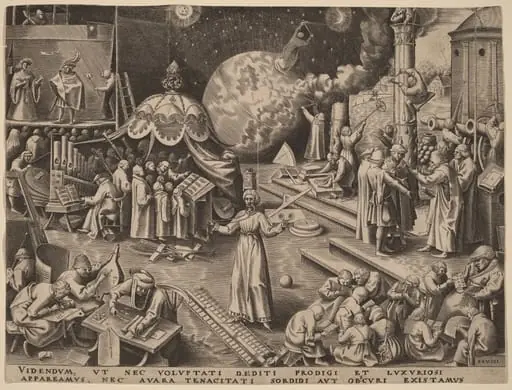 Temperance
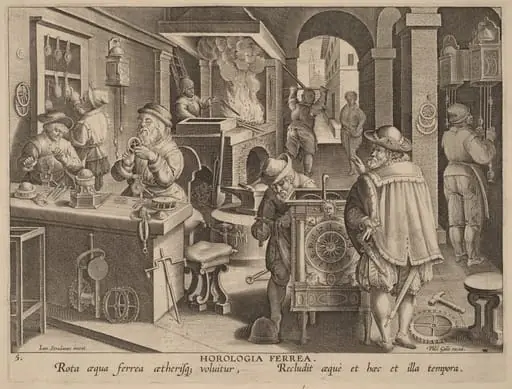 Horologia Ferrea (Iron Clocks)
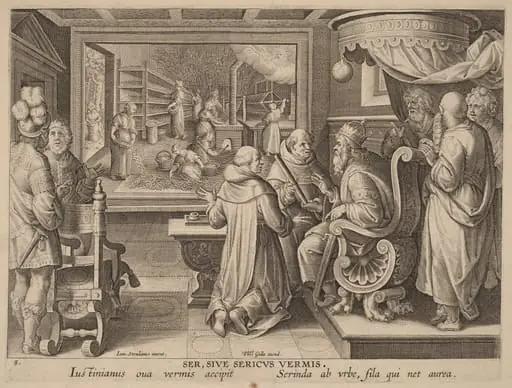 Ser, Sive Sericus Vermis (Silk, or the Silkworm)
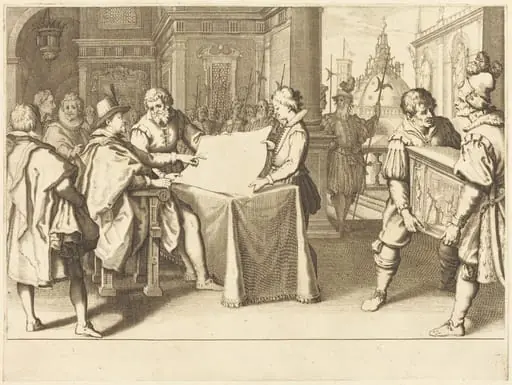 Restoration of the Duomo, Florence
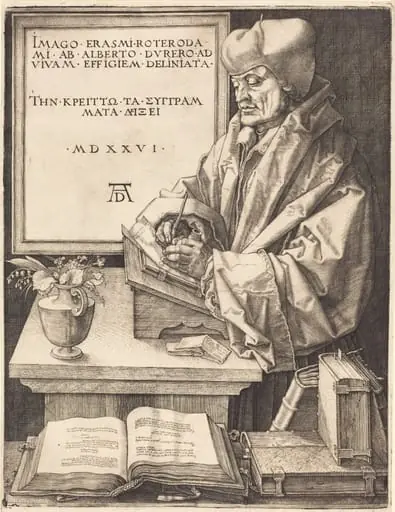 Erasmus of Rotterdam
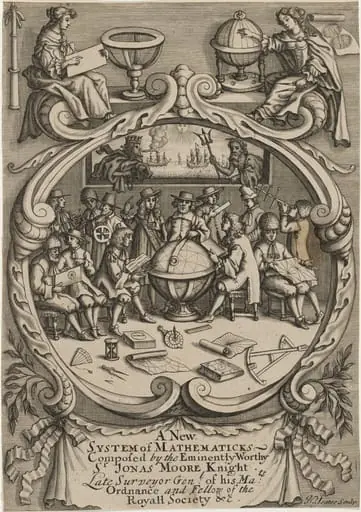 Title Page to A New System of Mathematicks, Composed by Sir Jonas Moore, Knight
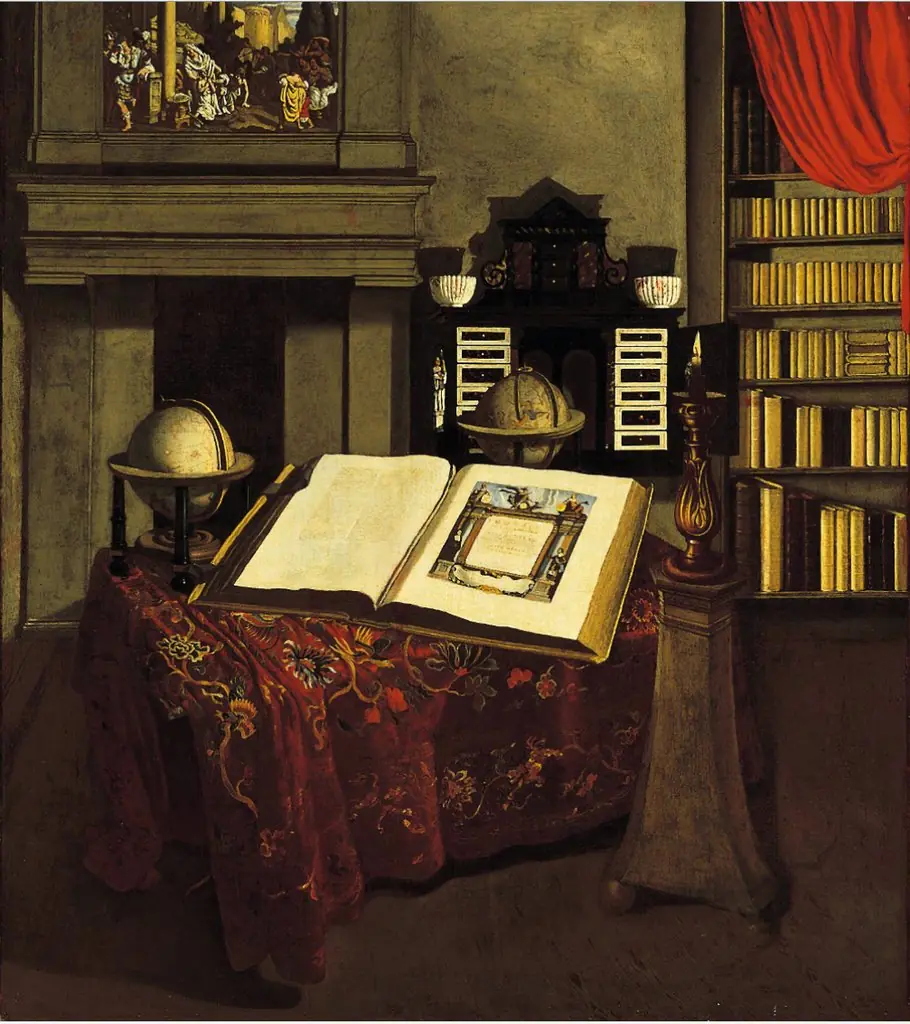 Library Interior with Still Life
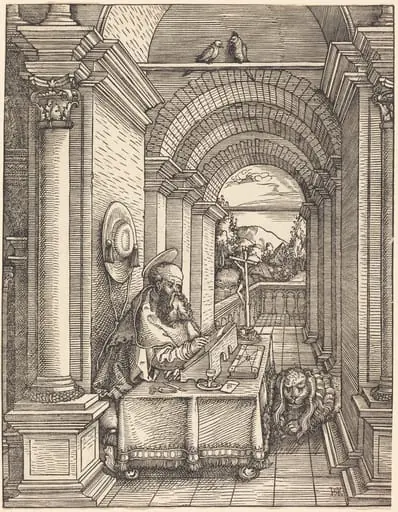 Saint Jerome Writing
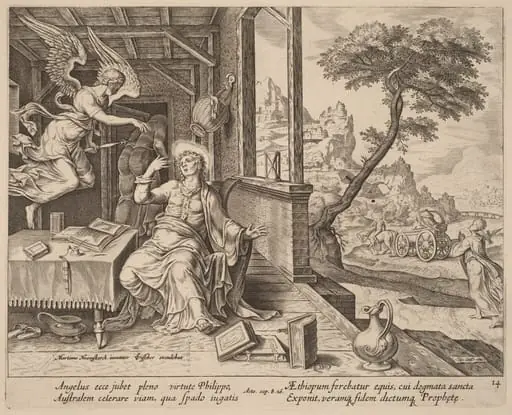 The Angel Orders Saint Philip to Accompany the Ethiopian Eunuch
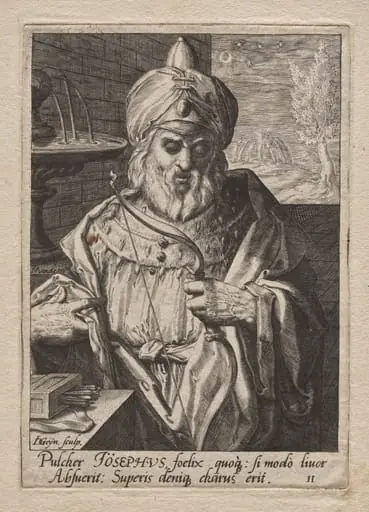 Plate 11: Joseph