Artwork
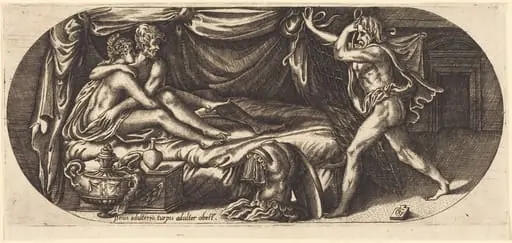
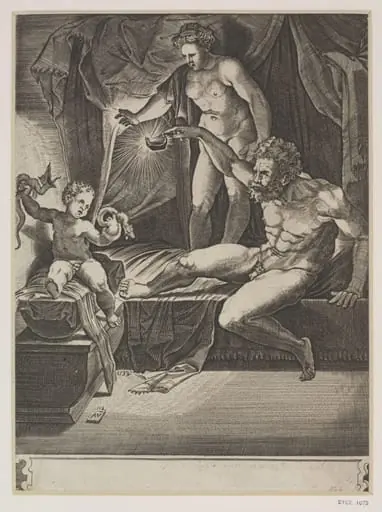
Vulcan Hanging an Iron Net above the Bed
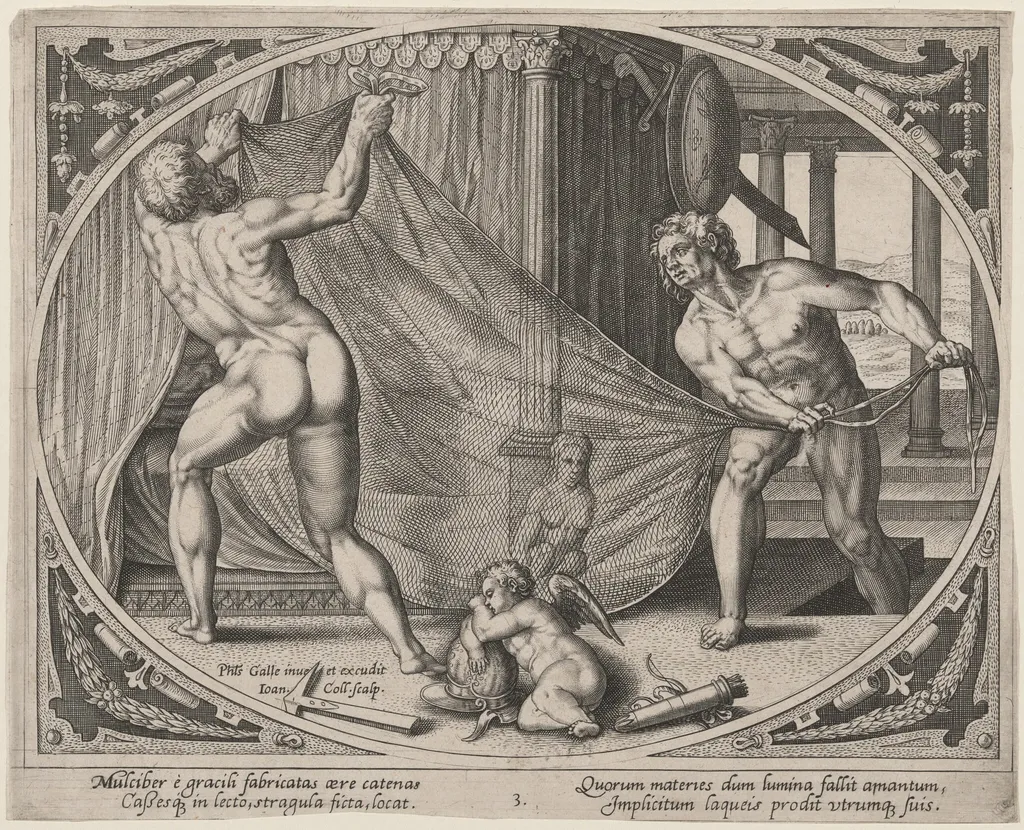
Vulcan Hanging an Iron Net above the Bed is an ink print by the Renaissance artist Hans the Younger Collaert. It dates from 1580 and is held in the collection of the National Gallery of Art.
About this work
Overview
Hans the Younger Collaert’s 1580 engraving titled *Vulcan Hanging an Iron Net above the Bed* presents a compact, circular composition on laid paper. Two robust male figures dominate the scene: one suspends an iron net over a bed while the other steadies its lower edge. A small cherubic figure rests on the floor, gazing upward, and the interior setting is hinted at by columns and a distant window.
Subject & Meaning
The work depicts the mythological blacksmith god Vulcan engaged in a domestic task, suggesting themes of craftsmanship and protection. The iron net, poised above the bed, may symbolize a safeguard against unseen forces, while the cherub’s curious glance introduces a playful, perhaps moralizing contrast between divine labor and innocent observation.
Technique & Style
Collaert employs fine cross‑hatching to model flesh, fabric, and metal, achieving a nuanced sense of volume and texture. The muscular anatomy of the men is rendered with realistic attention, and the chiaroscuro created by the dense lines enhances depth within the confined circular frame. The engraving reflects the late‑Renaissance interest in anatomical accuracy combined with decorative detail.
History & Provenance
Created in 1580, the print belongs to the oeuvre of Hans the Younger Collaert, a Flemish engraver active in the late 16th century. While specific ownership records are scarce, the work survives in several European print collections, indicating its circulation among connoisseurs of Renaissance graphic art during the period.
Artist & collection

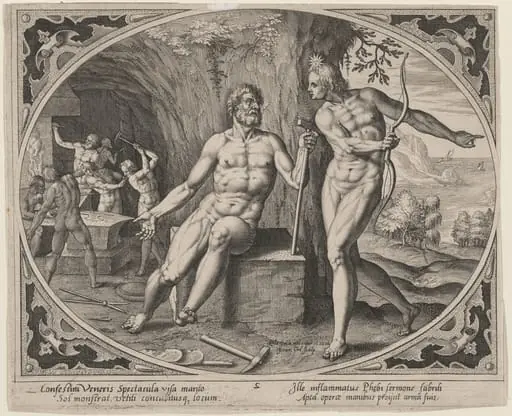 Phoebus Telling Vulcan of His Wife's Adultery
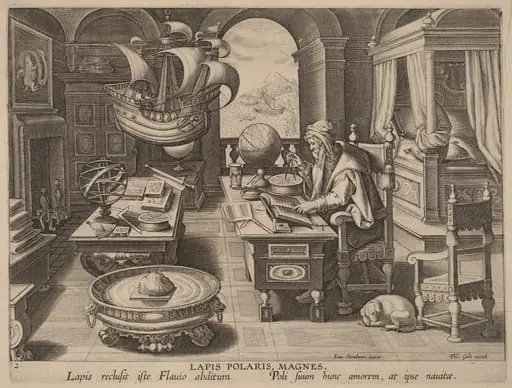 Lapis Polaris, Magnes (The Lodestone, The Magnet)
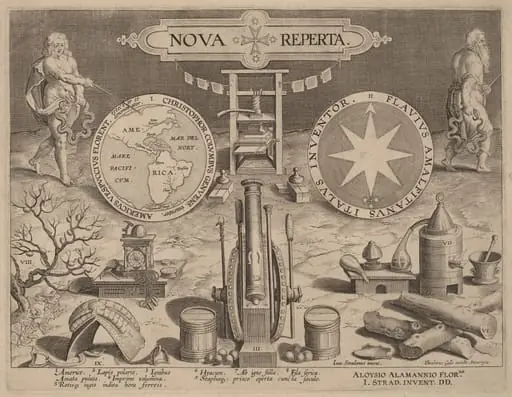 Title Page for Nova Reperta (New Discoveries)
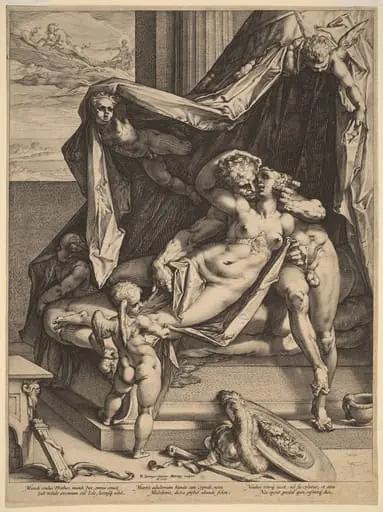
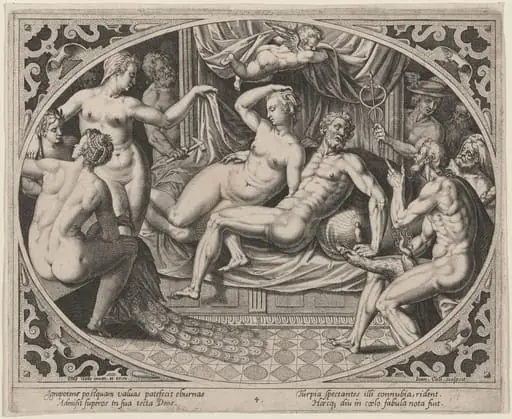 Mars and Venus Caught by the Gods
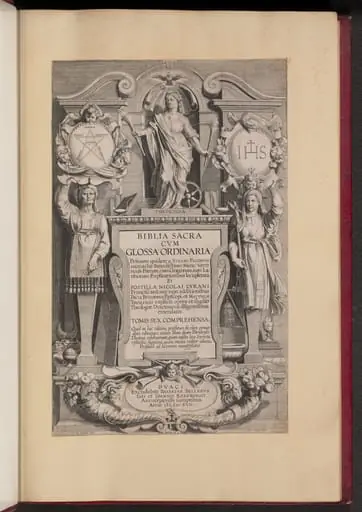 Title Page for Biblia Sacra Cvm Glossa Ordinaria
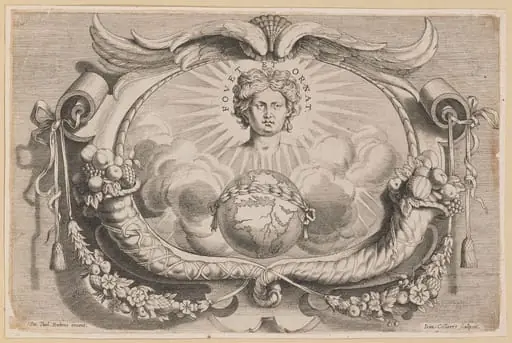 Printer's Device for Jan van Keerbergen: Vignette for Biblia Cum Glossa Ordinaria
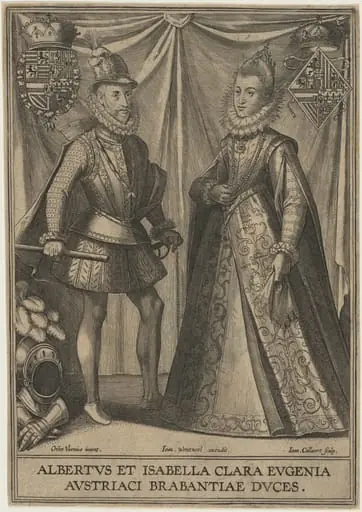 Archduke Albert and Isabella Clara Eugenie of Austria
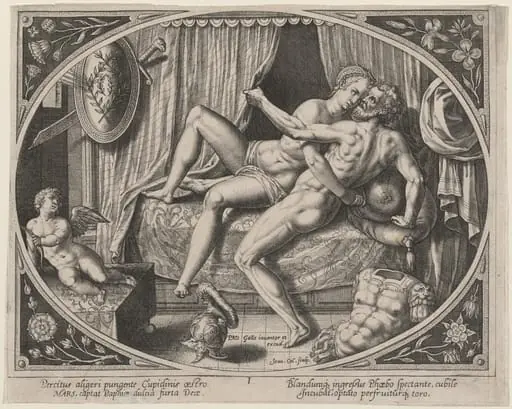 Mars and Venus Adulterous