Artwork
Ornamental Fillet
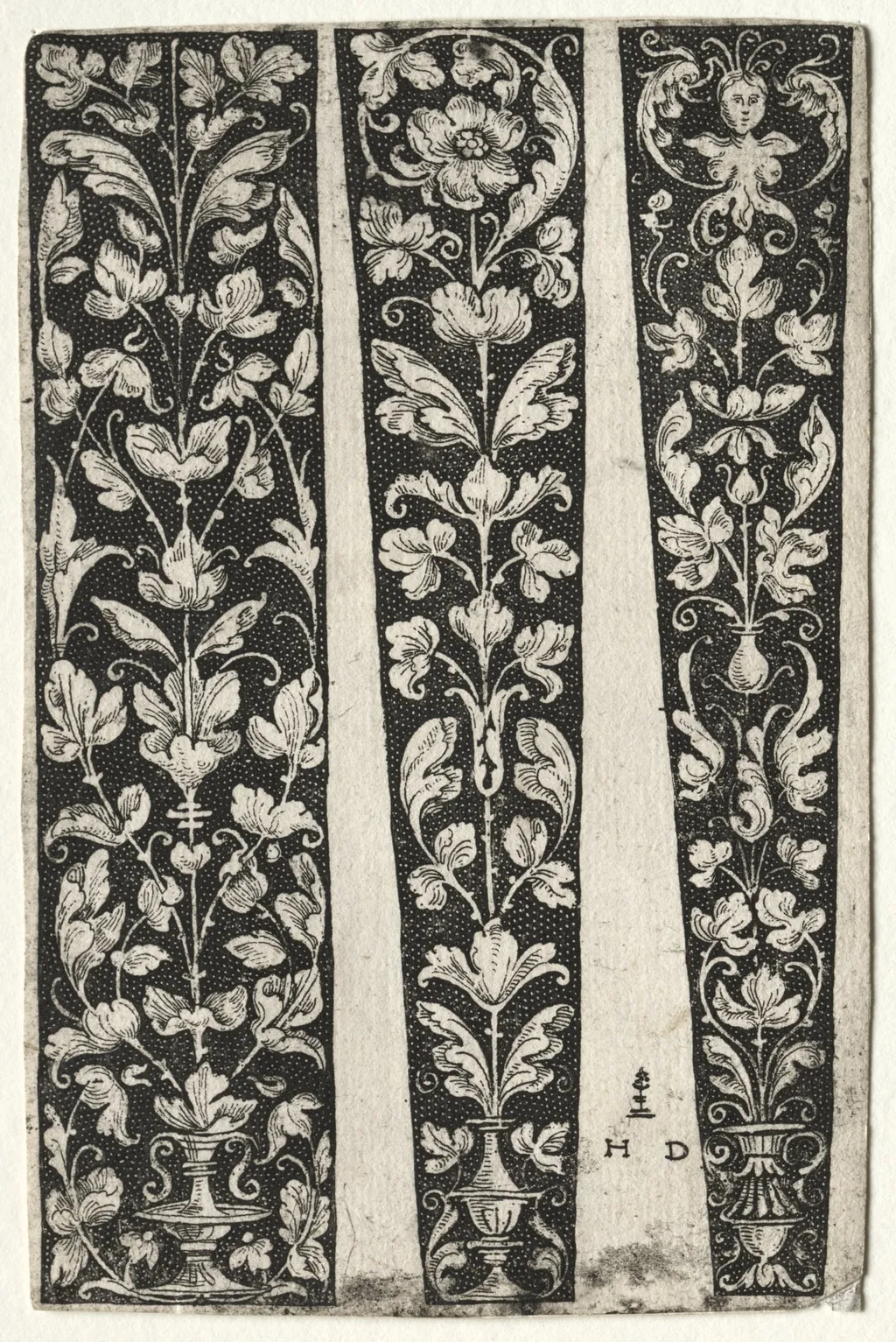
Ornamental Fillet is a print by the Renaissance artist Daniel Hopfer. It dates from 1518 and is held in the collection of the Cleveland Museum of Art.
About this work
Overview
Hopfer, originally trained in armor production, adapted metalworking skills to etching, distinguishing his work from contemporaries who favored copper.
Created in 1518 by the German artist Daniel Hopfer, *Ornamental Fillet* is an etching on iron plate, reflecting the artist’s innovative use of printmaking techniques during the early 16th century. Hopfer, originally trained in armor production, adapted metalworking skills to etching, distinguishing his work from contemporaries who favored copper. This piece belongs to the collection of the Cleveland Museum of Art and exemplifies the decorative potential of printmaking beyond narrative or religious subjects.
Subject & Meaning
The work presents three vertical bands filled with stylized floral motifs—curving stems, delicate leaves, and star-like petals—arranged in rhythmic, repeating patterns. No figural or symbolic content is present; instead, the design serves purely ornamental purposes, likely intended as a template for decorative arts such as textiles, metalwork, or book borders. Its abstraction reflects Renaissance interest in geometry and natural forms, stripped of narrative to emphasize aesthetic harmony.
Technique & Style
Hopfer employed etching on iron, a less common medium than copper, which allowed for sharper, more durable lines. The contrast between white linear patterns and a black ground is achieved through the acid-bitten lines holding ink, with fine white dots suggesting texture or shadow. The precision of the filigree stems and floral elements reveals his familiarity with metal engraving, translating armor decoration into a graphic language suited for reproduction and dissemination.
History & Provenance
The print entered the Cleveland Museum of Art’s collection as part of its broader holdings in early Northern European prints. While its exact provenance before the 20th century is not fully documented, its survival in good condition suggests it was valued by collectors interested in Renaissance decorative arts. Hopfer’s role as an early adopter of etching ensures his works, including this one, are studied as milestones in print history.
Context
In early 16th-century Germany, printmaking was expanding beyond religious imagery into secular decoration. Hopfer’s ornamental prints catered to artisans and craftsmen seeking patterns for metalwork, woodcarving, and textiles. His fusion of armor-making techniques with printmaking positioned him uniquely within the artisanal culture of the time, bridging functional craft and artistic innovation during the Renaissance’s material flourishing.
Legacy
Hopfer’s use of etching on iron and his focus on ornamentation influenced later printmakers and decorative designers across Europe. Though not widely known today, his work laid groundwork for the proliferation of pattern books in the 16th and 17th centuries. *Ornamental Fillet* remains a testament to the quiet but vital role of decorative prints in shaping visual culture beyond the realm of fine art.
Artist & collection

Artist
Daniel Hopfer (c. 1470 – 1536) was a German artist who is widely believed to have been the first to use etching in printmaking, at the end of the 15th century. He also worked in woodcut. Although his etchings were…

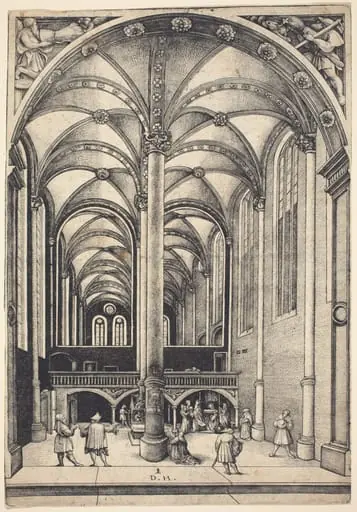 Interior of the Church of Saint Maria Magdalena with the Parable of the Offering of the Widow
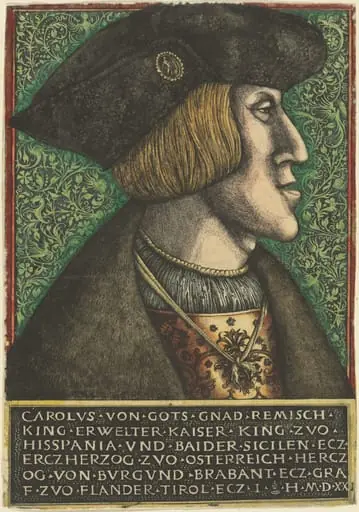 Emperor Charles V
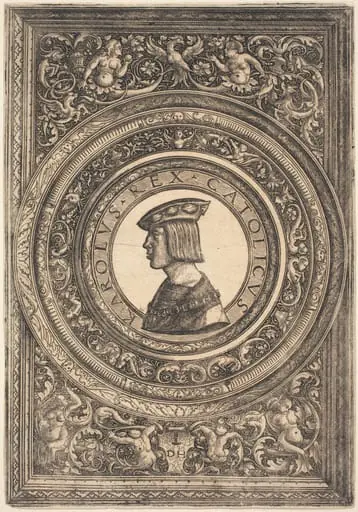 Emperor Charles V
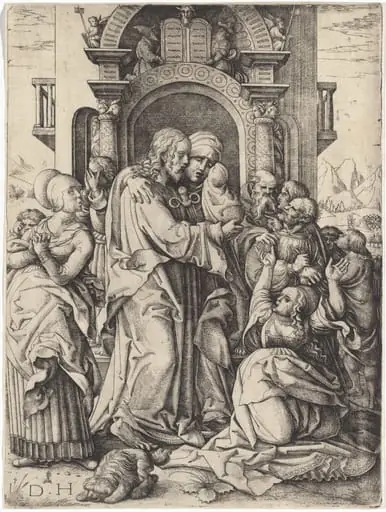 The Virgin Mary Taking Leave of Christ
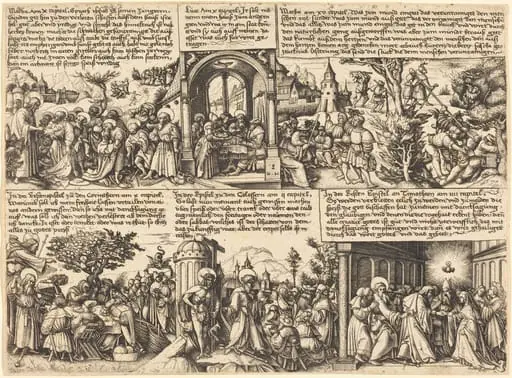 Jesus Christ Giving the Mission to the Apostles and Other New Testament Scenes
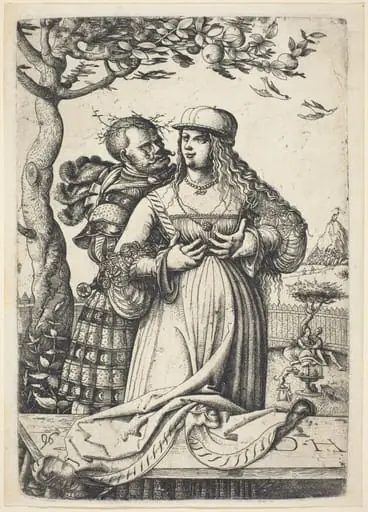 Soldier Embracing a Woman
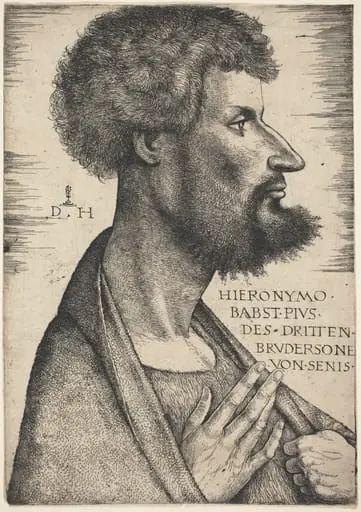 Girolamo da Siena
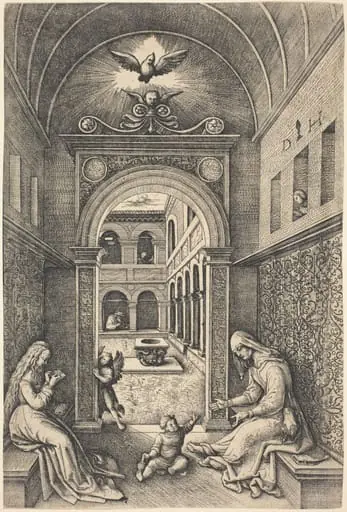 The Virgin and Child with Saint Anne by a Portal
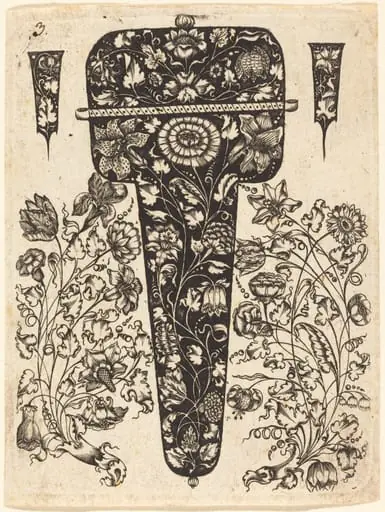 Pendant Embellished with Flowers
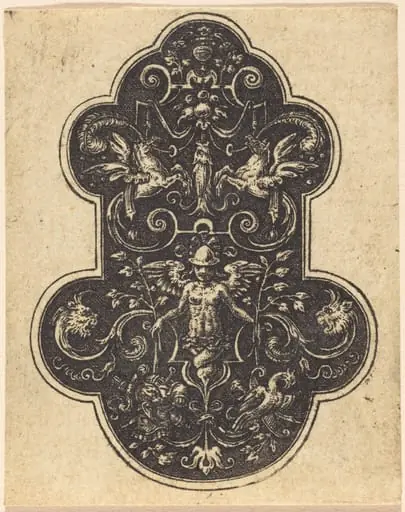 Female Figure
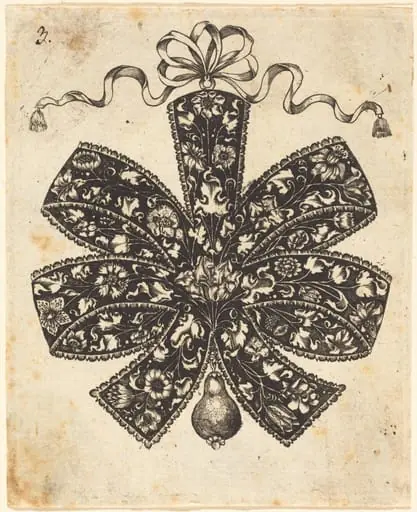 Bow Embellished with Flowers
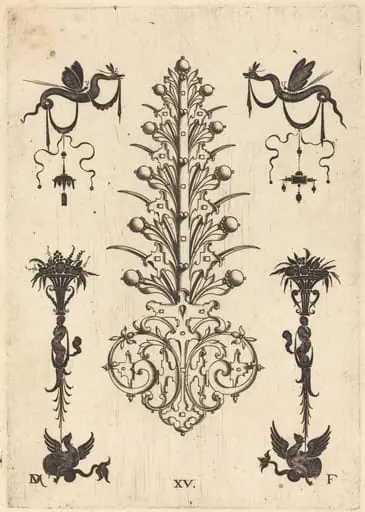 Hyacinth-Shaped Brooch with Winged Snakes at Top and Winged Animals at Bottom
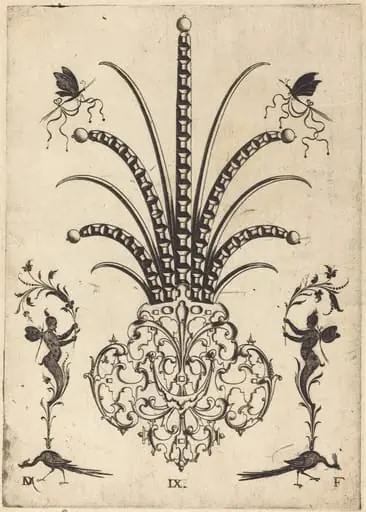 Brooch with Table-Stones, Butterflies at Top, and Peacocks and Hermes at Bottom
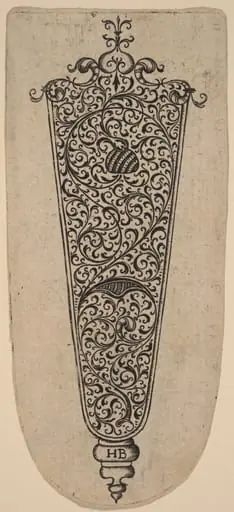 Ornament for Knife Handle
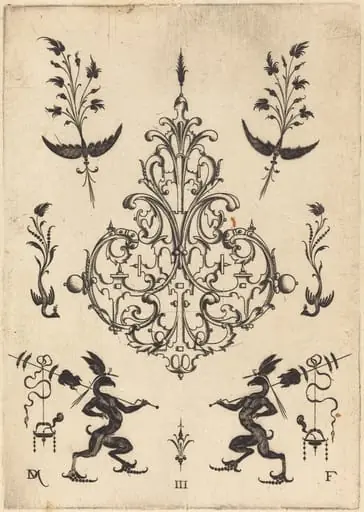 Brooch with Sprigs at Top and Griffins with Trophies at Bottom
 Cherub
 Large Pendant, Prudence Standing at Centre
 Ornament for Knife Handle
 Ornament for Knife Handle
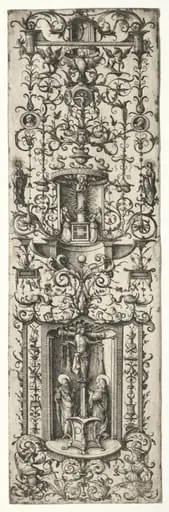 Ornamental fillet with the crucifixion and the virgin and child