Artwork
Sacrifice of Abraham
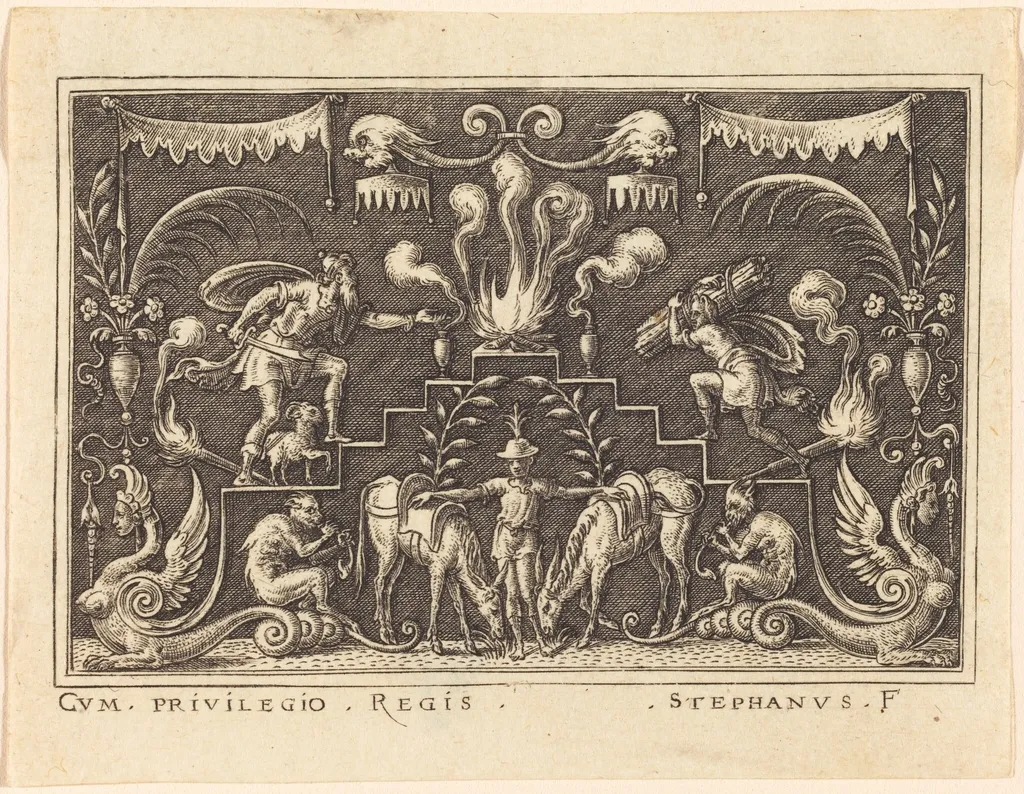
Sacrifice of Abraham is an ink print by the Renaissance artist Etienne Delaune. It dates from 1551 and is held in the collection of the National Gallery of Art.
About this work
Overview
Etienne Delaune’s 1551 engraving titled *Sacrifice of Abraham* depicts the biblical moment when Abraham prepares to offer his son Isaac. The composition centers on a kneeling figure wielding a knife over a bound youth, while three angels intervene in varied gestures. The scene is framed by foliage, animals, and a decorative border, all set against a sky filled with swirling clouds.
Subject & Meaning
The work visualizes the test of faith recounted in Genesis, emphasizing divine intervention through the angels’ presence. One angel holds a staff, another points upward, and the third gazes downward, suggesting a narrative of halted violence and the triumph of obedience over sacrifice. The surrounding natural elements reinforce the tension between human action and heavenly oversight.
Technique & Style
Executed as an intaglio engraving, Delaune incised fine lines into a copper plate, achieving intricate textures and tonal contrasts. The dense hatching creates depth in the figures and the atmospheric clouds, while the ornamental border showcases the artist’s skill in decorative detailing. The precise line work reflects the Northern Renaissance’s emphasis on meticulous craftsmanship.
History & Provenance
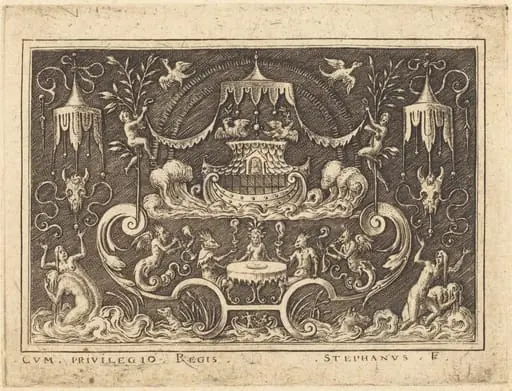
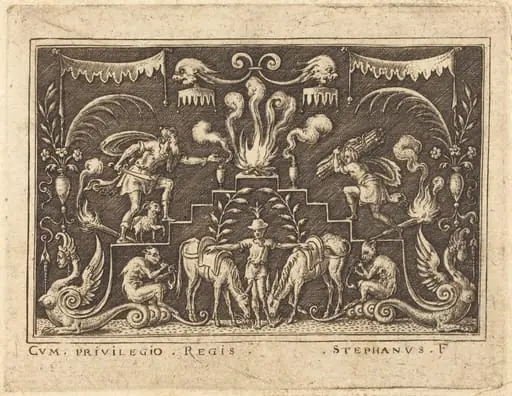
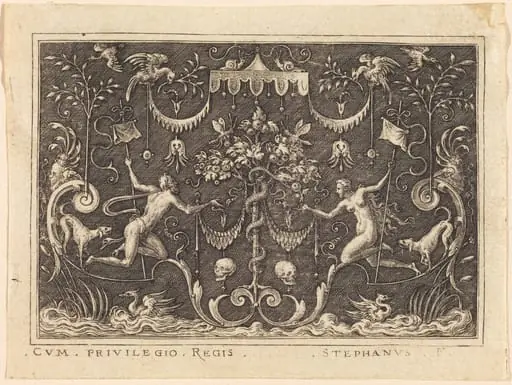
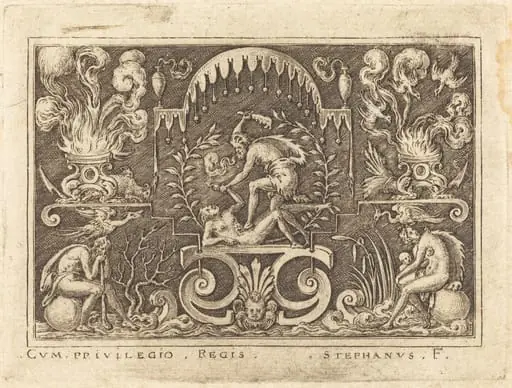
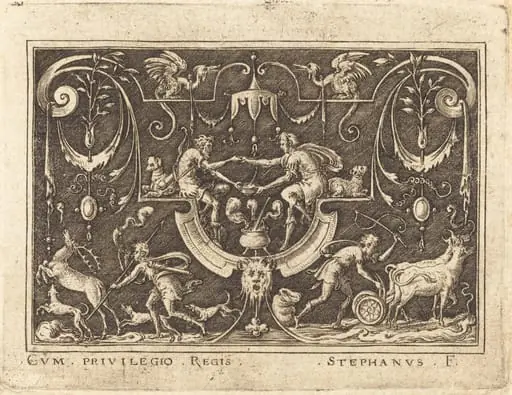
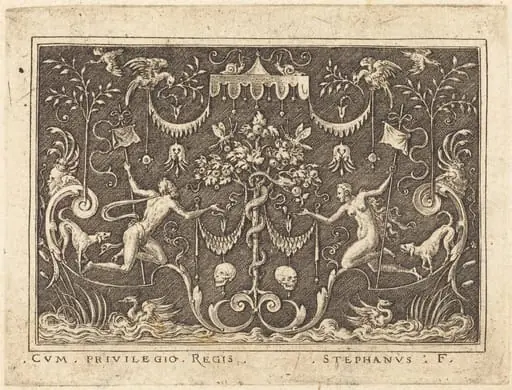
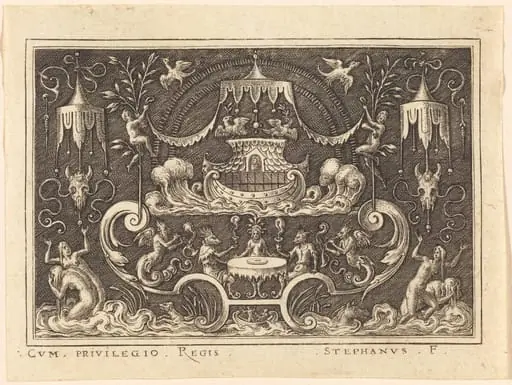
A Latin inscription at the lower margin reads *Cum Privilégio Regis*, indicating the print was issued under a royal privilege, a common practice to control reproduction and confer prestige. This suggests the engraving was intended for a courtly audience and circulated as a sanctioned work of art in the mid‑16th century.
Artist & collection