Artwork
Death of Abel
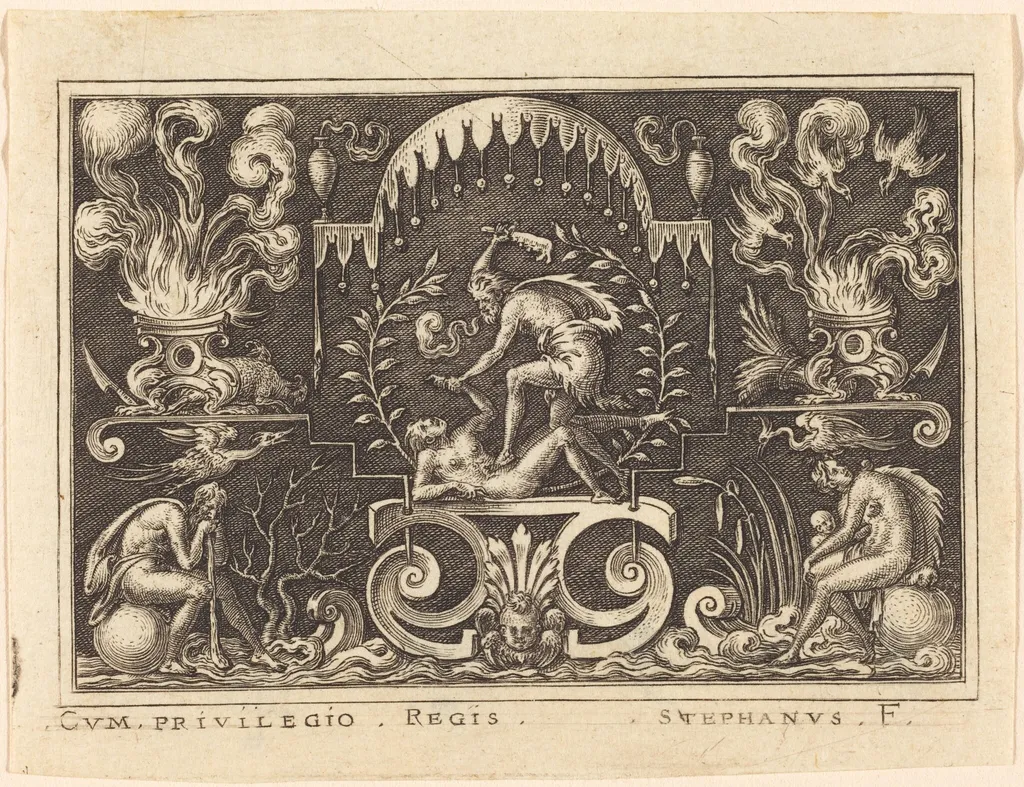
Death of Abel is an ink print by the Renaissance artist Etienne Delaune. It dates from 1551 and is held in the collection of the National Gallery of Art.
About this work
Overview
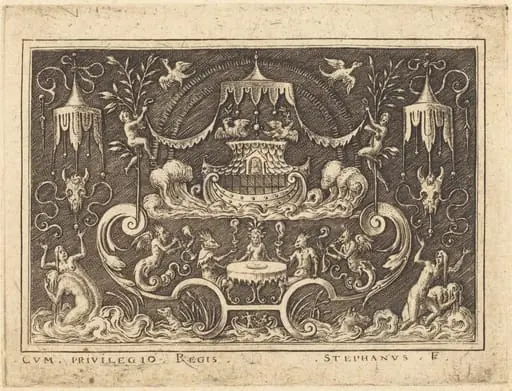
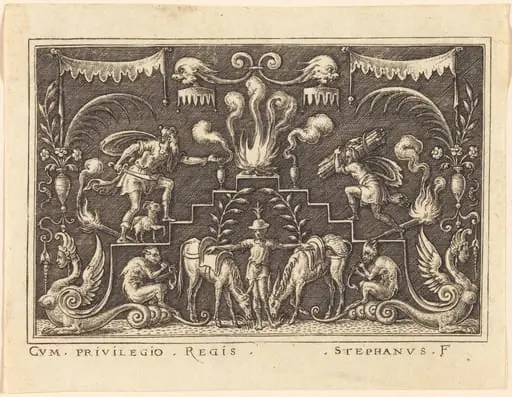
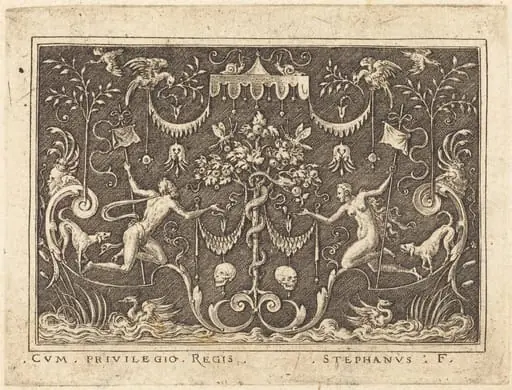
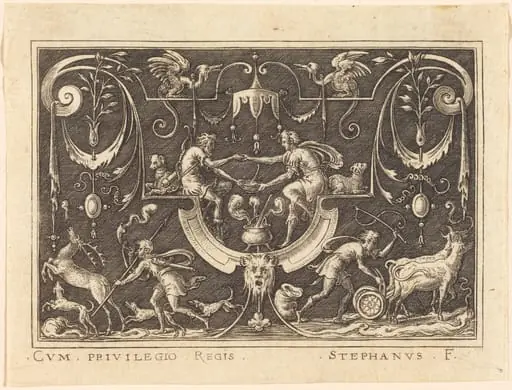
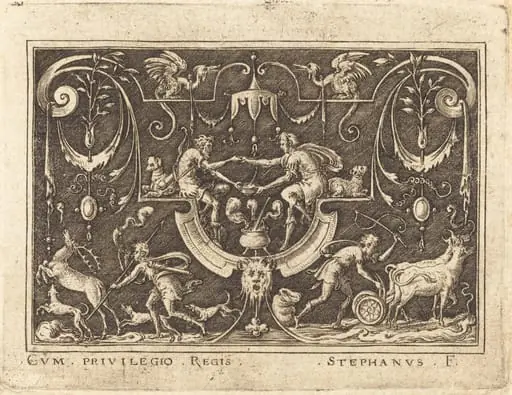
Etienne Delaune’s 1551 engraving entitled *Death of Abel* presents a compact, monochrome tableau that captures a moment of biblical violence. The composition centers on two figures—one kneeling, the other sprawled on the ground—surrounded by a turbulent sky filled with swirling clouds, ornamental frames, and a host of diminutive figures concealed in the corners.
Subject & Meaning
The work depicts the aftermath of the first fratricidal act, focusing on Abel’s lifeless body and the posture of the aggressor, suggesting both the tragedy of the murder and its moral implications. Symbolic elements such as a crown hovering above the scene and a prominently placed initial “C” within a decorative cartouche hint at themes of authority and perhaps a patron’s identity.
Technique & Style
Delaune employs fine cross‑hatching and parallel lines to model volume, creating a sculptural quality that makes the figures appear carved from stone. The intricate network of lines renders shadows, textures, and atmospheric effects, while the lower border features a sinuous line reminiscent of water or flame, adding a dynamic edge to the otherwise static composition.
History & Provenance
Created in the mid‑sixteenth century, the engraving reflects the Northern Renaissance’s fascination with biblical narratives rendered in detailed print form.
Created in the mid‑sixteenth century, the engraving reflects the Northern Renaissance’s fascination with biblical narratives rendered in detailed print form. While specific ownership records are scarce, the piece survives in several European collections, illustrating Delaune’s reputation as a leading French engraver of his generation and his contribution to the dissemination of religious iconography through prints.
Artist & collection