Artwork
The Fall of Man
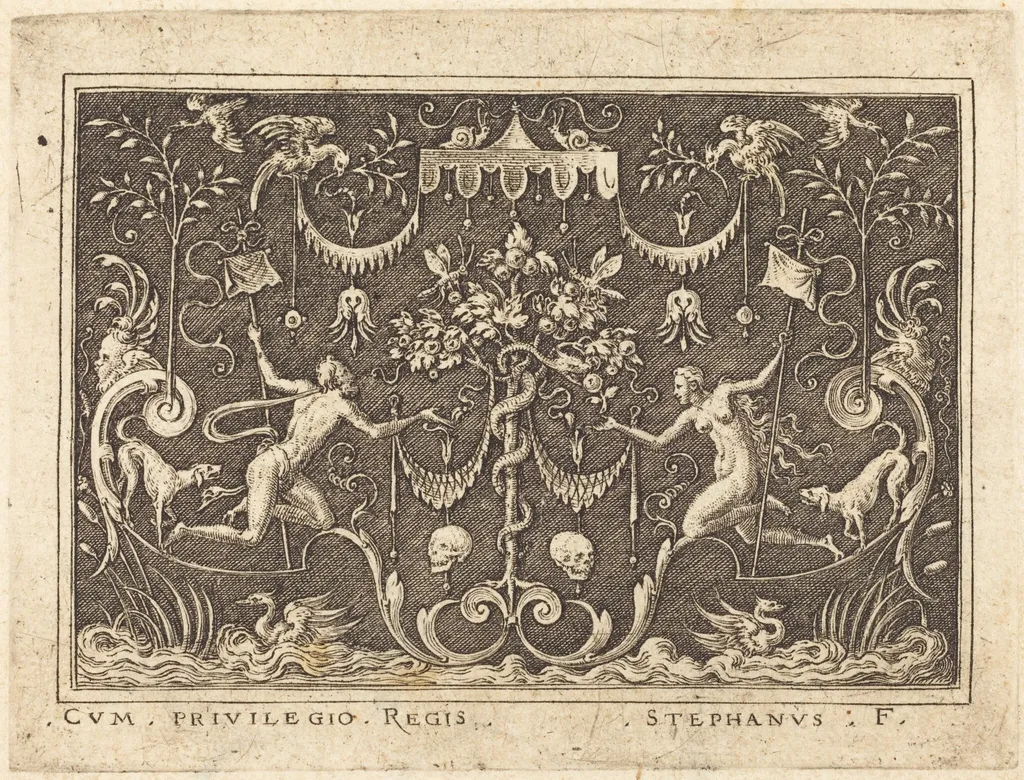
The Fall of Man is an ink print by the Renaissance artist Etienne Delaune. It dates from 1551 and is held in the collection of the National Gallery of Art.
About this work
Overview
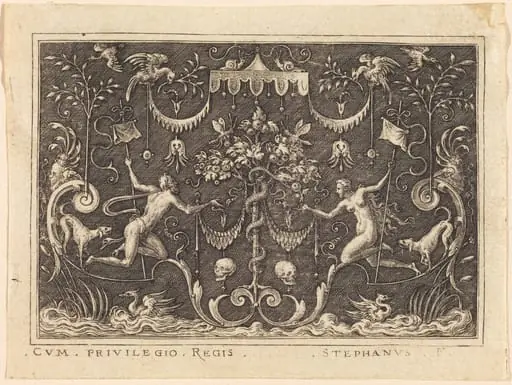
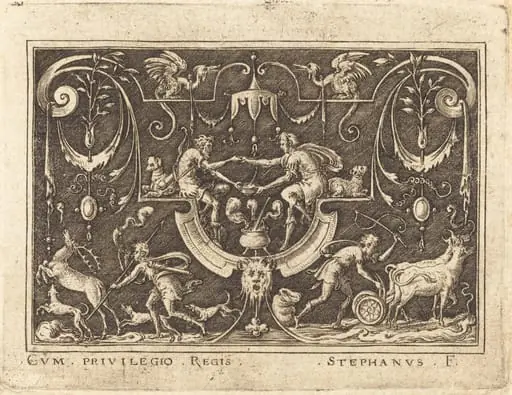
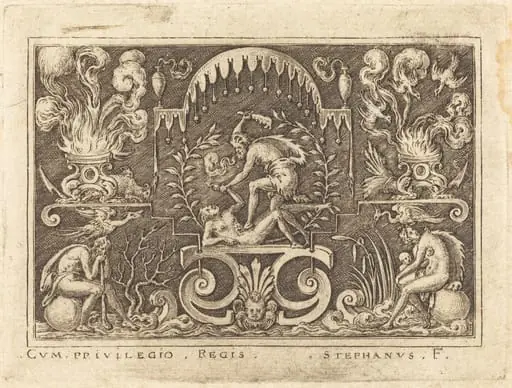
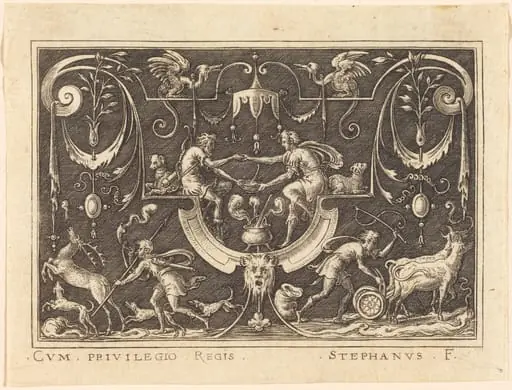
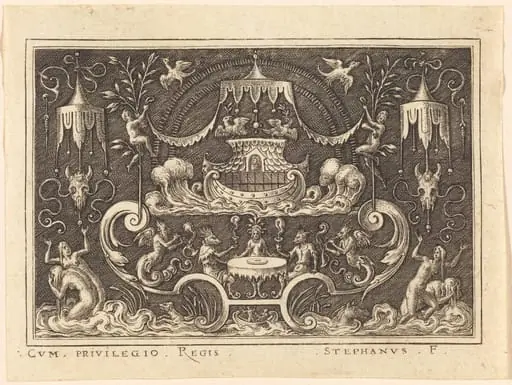
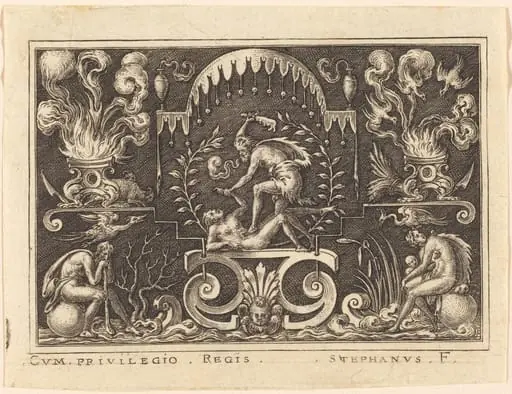
Etienne Delaune’s 1551 engraving titled The Fall of Man presents a stark, monochrome composition. Rendered entirely in black ink, the print depicts a garden scene populated by two human figures, a tree bearing fruit, and a range of symbolic elements that together convey a moral narrative.
Subject & Meaning
In the foreground, one figure reaches toward the fruit while another stands nearby, clutching a staff. Snakes coil at their feet and skulls lie on the ground, suggesting themes of temptation, sin, and mortality. The inclusion of a distant building, a crescent moon, and entwining vines reinforces the work’s allegorical warning against disobedience.
Technique & Style
Delaune employed the engraving process, incising fine lines into a copper plate with a burin. The artist achieved depth through cross‑hatching and varied line density, allowing subtle gradations of tone. This meticulous line work renders the figures, foliage, and symbolic objects with clarity and a sense of three‑dimensional space.
Context
The print reflects the mid‑16th‑century preoccupation with biblical and moral subjects, common in Northern European art. Its iconography aligns with contemporary didactic imagery intended for a broad audience, while the technical precision showcases the period’s advances in printmaking as a vehicle for disseminating religious and ethical ideas.
Artist & collection