Artwork
The Deluge
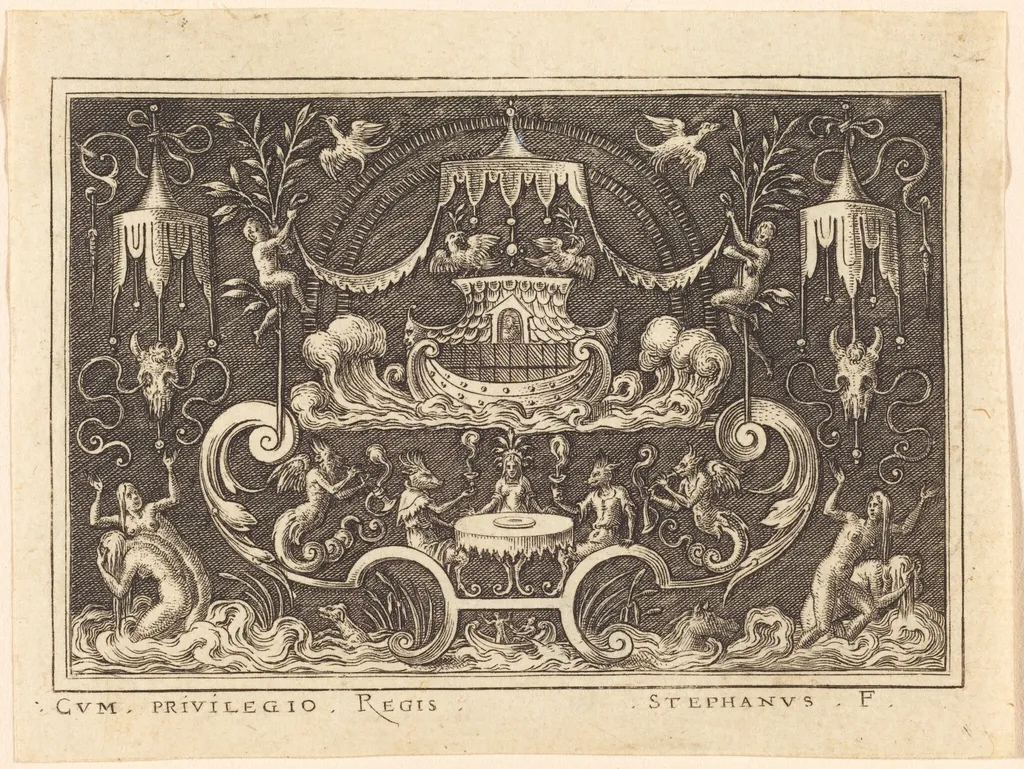
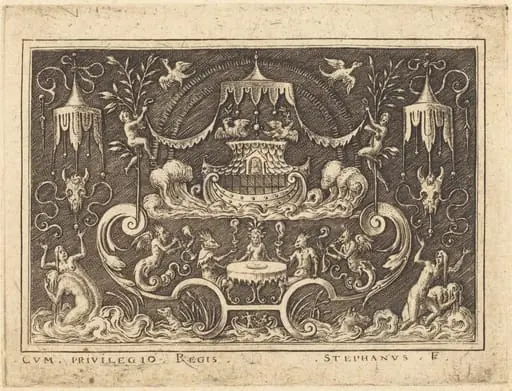
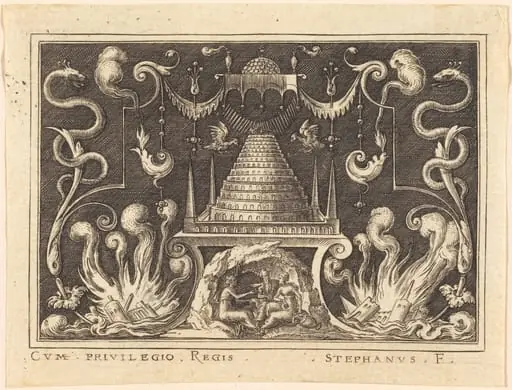
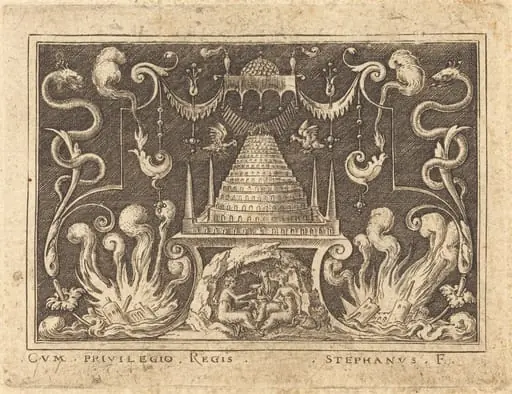
The Deluge is an ink print by the Renaissance artist Etienne Delaune. It dates from 1551 and is held in the collection of the National Gallery of Art.
About this work
Overview
Etienne Delaune’s 1551 engraving titled The Deluge presents a densely populated scene of catastrophe rendered in stark black‑and‑white.
Etienne Delaune’s 1551 engraving titled The Deluge presents a densely populated scene of catastrophe rendered in stark black‑and‑white. Central to the composition is a partially submerged structure adrift on tumultuous water, surrounded by frantic figures, broken architectural elements, and a shipwreck. Ornamental borders of scrollwork and silhouetted towers frame the tumult, creating a sense of enclosed disaster.
Subject & Meaning
The print visualizes a flood narrative, likely alluding to biblical or mythic deluge themes. The crowded figures grasping shattered columns and clinging to debris convey panic and loss, while the sinking building and wrecked vessel symbolize the collapse of human constructs in the face of overwhelming natural forces. Avian silhouettes overhead hint at a broader, perhaps divine, perspective.
Technique & Style
Executed as an engraving, the work relies on incised lines of varying depth to produce rich tonal contrasts. Delaune’s use of swirling, interlacing forms creates a dynamic sense of movement, while the intricate ornamental frame demonstrates the period’s decorative sensibility. The dense hatching and cross‑hatching generate texture in water, stone, and sky, emphasizing the scene’s dramatic intensity.
History & Provenance
Created in 1551, The Deluge reflects Delaune’s activity during the mid‑16th century, a time when printmaking served both artistic and didactic purposes. Though specific ownership records are scarce, the engraving has been catalogued in several collections of Renaissance prints, indicating its circulation among connoisseurs of the era and its inclusion in studies of early French engraving.
Artist & collection