Artwork
Essau Selling his Birthright
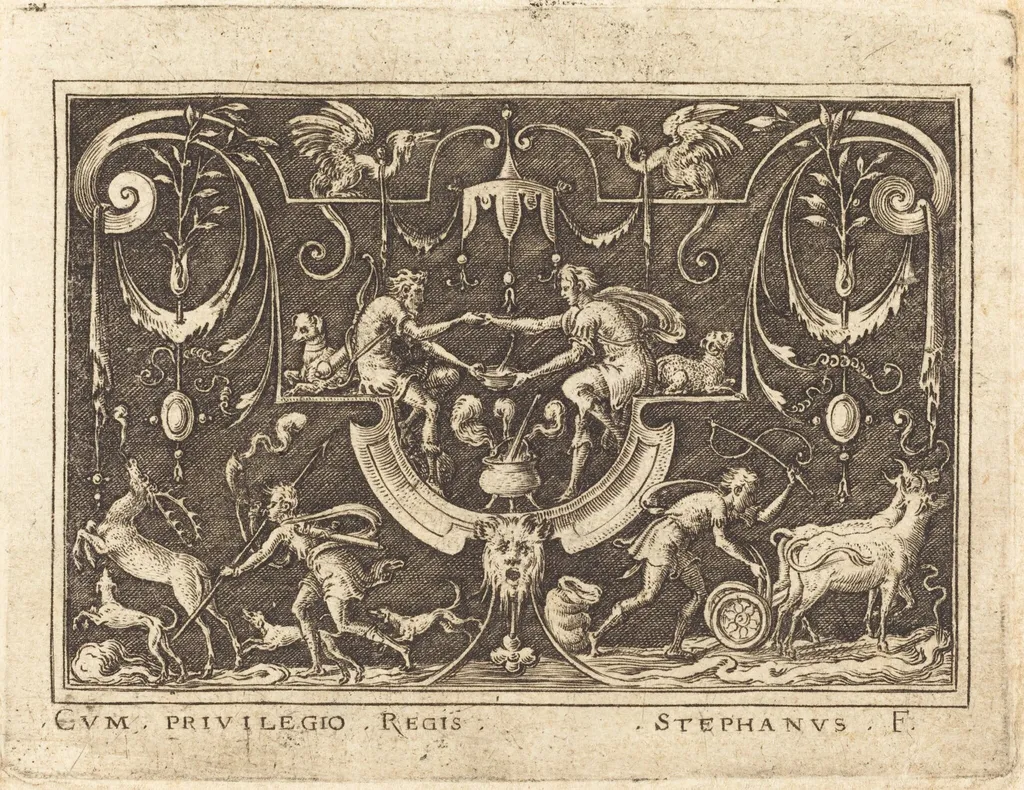
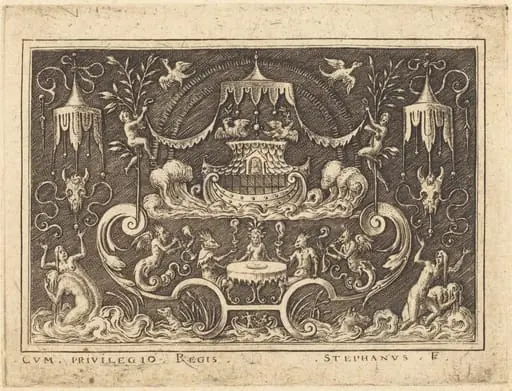
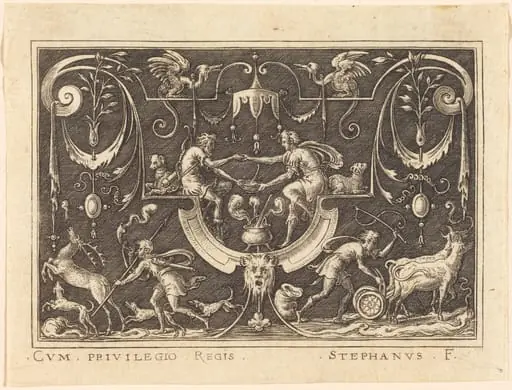
Essau Selling his Birthright is an ink print by the Renaissance artist Etienne Delaune. It dates from 1551 and is held in the collection of the National Gallery of Art.
About this work
Overview
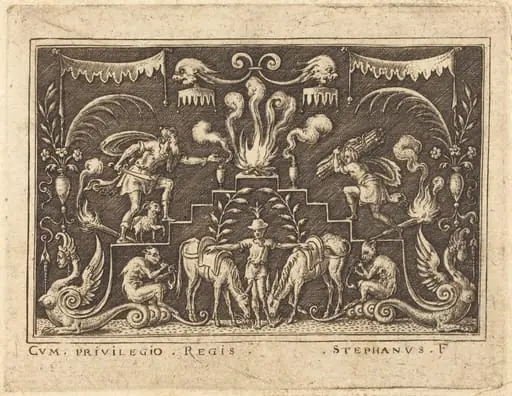
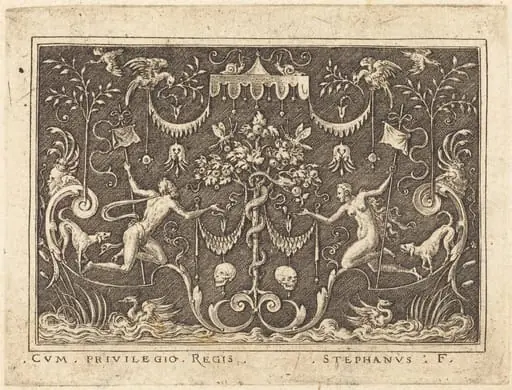
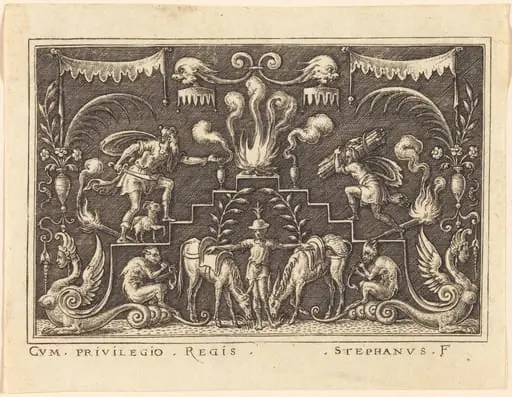
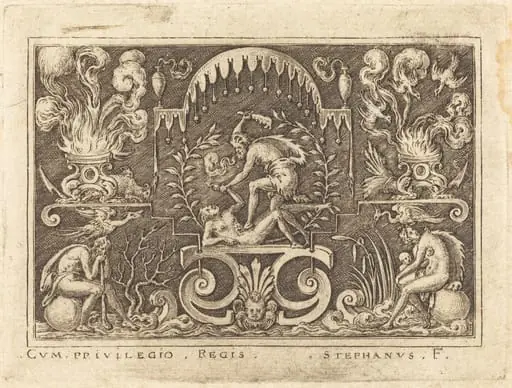
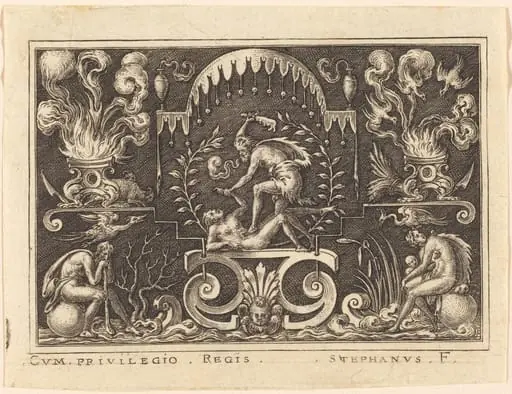
Etienne Delaune’s 1551 engraving, titled *Essau Selling his Birthright*, presents a densely populated tableau rendered in stark black‑and‑white lines. Central to the composition are two male figures—a mature, bare‑chested man clutching a bowl and a younger, clothed figure extending his hand toward it—surrounded by a tumult of animals and symbolic emblems.
Subject & Meaning
The work visualizes the biblical episode in which Esau relinquishes his birthright to Jacob, interpreting the transaction as a transfer of inheritance and authority. The younger man’s gesture of receipt and the older man’s offering of a bowl suggest a negotiated exchange, while the surrounding fauna and regal motifs underscore themes of power, wealth, and familial rivalry.
Technique & Style
Delaune employs the fine incised lines characteristic of mid‑sixteenth‑century French engraving, achieving intricate detail in the animal figures and ornamental frames. The contrast between densely cross‑hatched areas and open spaces creates a sense of depth, while the precise rendering of textures—fur, feathers, and metal—demonstrates the artist’s mastery of the medium.
History & Provenance
Created in 1551, the print reflects Delaune’s activity during the reign of Henry II, a period when French engravers were increasingly engaged with biblical and classical subjects. Surviving copies are held in several European collections, indicating the work’s circulation among collectors of religious prints in the late Renaissance.
Context
The engraving belongs to a broader tradition of visualizing Old Testament narratives that flourished in the Reformation era, when scriptural stories were frequently reproduced for devotional and didactic purposes. Delaune’s treatment aligns with contemporary French artistic trends that combined elaborate ornamentation with narrative clarity.
Legacy
While not as widely reproduced as later biblical prints, Delaune’s *Essau Selling his Birthright* illustrates the technical possibilities of engraving in the mid‑1500s and contributes to the visual vocabulary of inheritance and covenant that would inform subsequent generations of printmakers.
Artist & collection