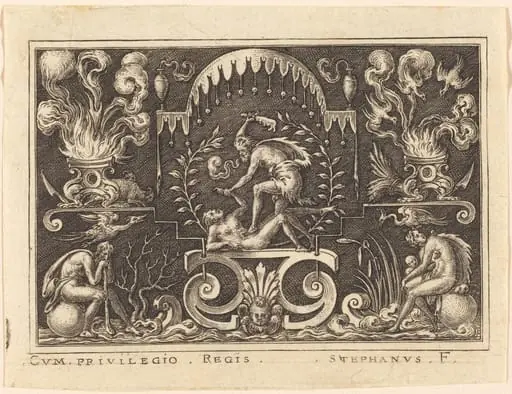
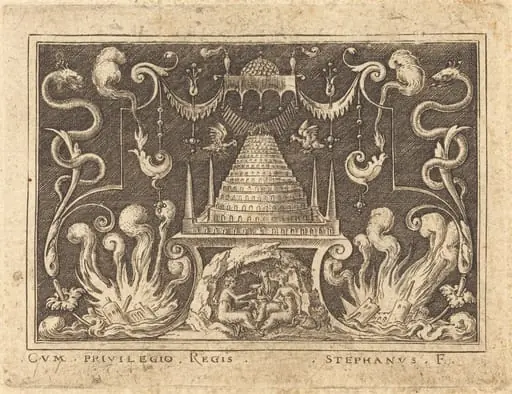
Artwork
Incest of Loth
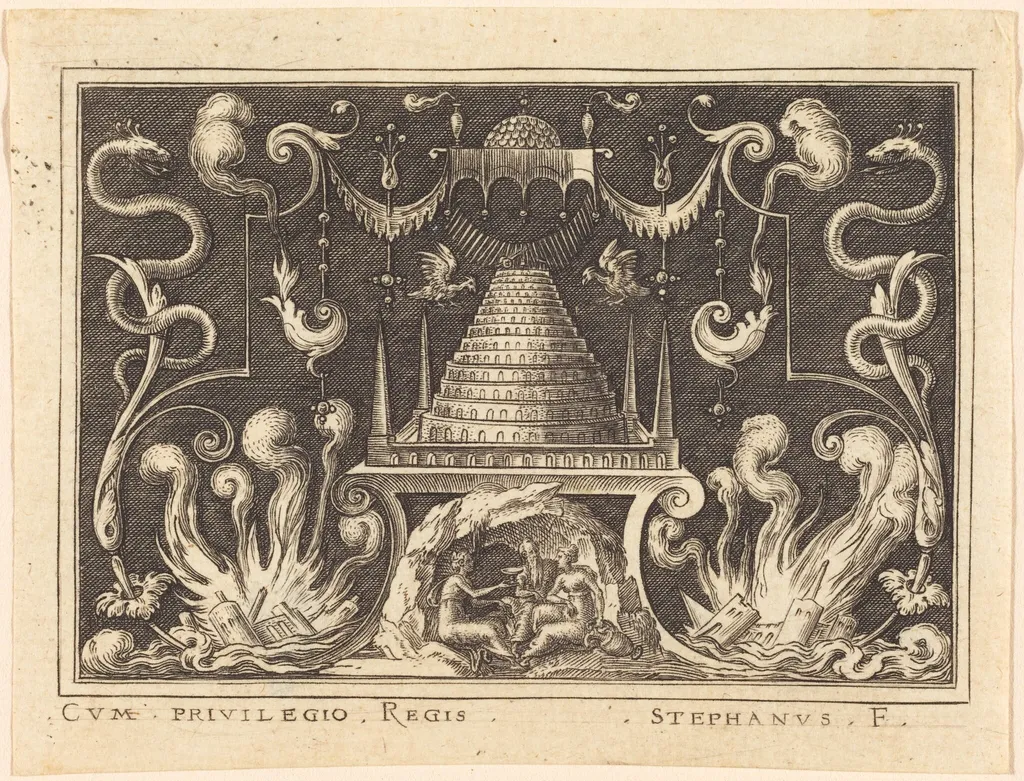
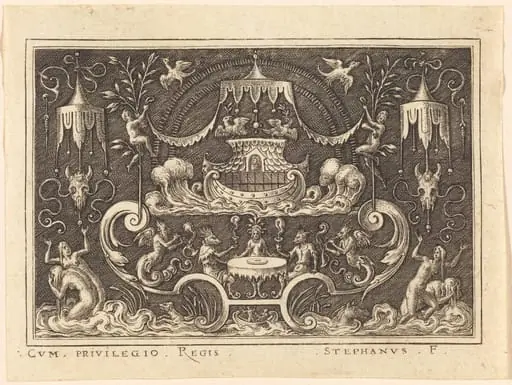
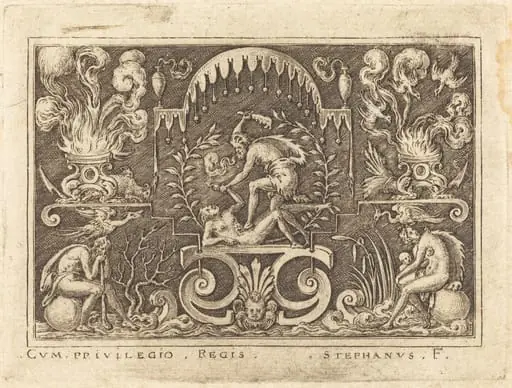
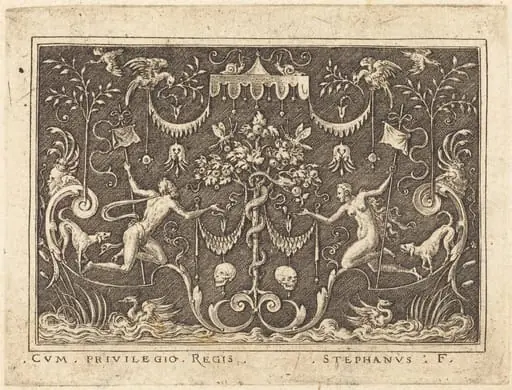
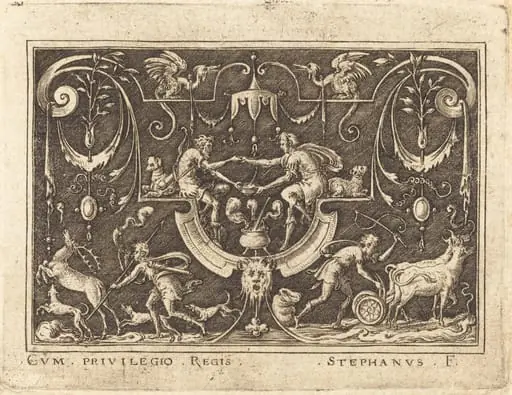
Incest of Loth is an ink print by the Renaissance artist Etienne Delaune. It dates from 1551 and is held in the collection of the National Gallery of Art.
About this work
Overview
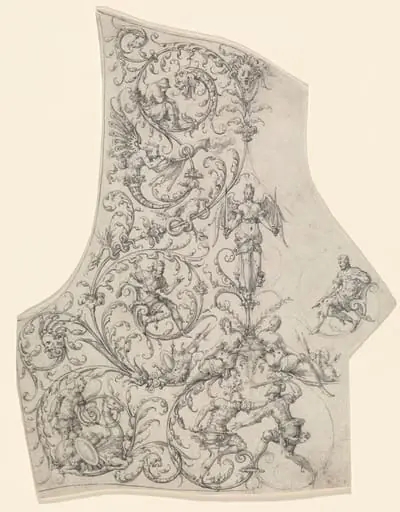
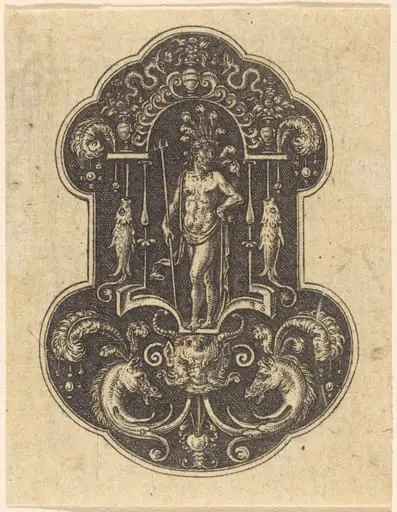
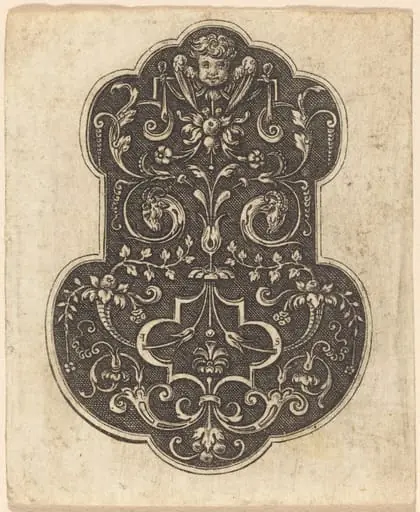
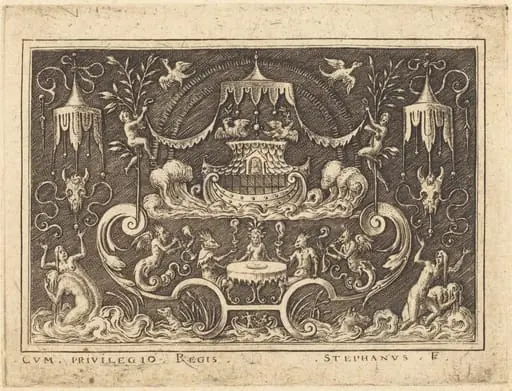
Etienne Delaune’s 1551 engraving, titled Incest of Loth, presents a densely composed tableau that merges mythic narrative with elaborate decorative elements. The print is dominated by a towering staircase that ascends toward a luminous dome, framed by swirling clouds, intricate scrollwork, and a profusion of tangled vines and grotesque visages.
Subject & Meaning
The central scene depicts a woman with disheveled hair cradling a man’s head in her lap, a visual reference to the biblical episode in which Lot’s daughters intoxicate their father and commit incest. By juxtaposing this intimate act with a chaotic seascape of shipwreck and storm, Delaune amplifies the moral turbulence of the tale.
Technique & Style
Executed entirely in line engraving, the work relies on sharply cut incisions and deep cross‑hatching to generate stark contrasts of light and shadow. The heavy chiaroscuro and intricate ornamental borders demonstrate Delaune’s command of the medium, allowing him to render both the architectural grandeur of the staircase and the turbulent sea with equal precision.
History & Provenance
Created in the mid‑sixteenth century, the print reflects the period’s fascination with biblical subjects rendered in a manner that emphasized moral complexity. While specific ownership records are scarce, the engraving has been catalogued in several major European print collections, attesting to its circulation among connoisseurs of religious and allegorical imagery.
Context
The work emerges from a Renaissance milieu where artists frequently reinterpreted scriptural narratives through a lens of humanist inquiry and decorative excess. Delaune’s inclusion of elaborate scrollwork and monstrous faces aligns with contemporary trends in Northern European printmaking that blended sacred themes with ornamental exuberance.
Artist & collection