Artwork
Henry, Count de Bergh
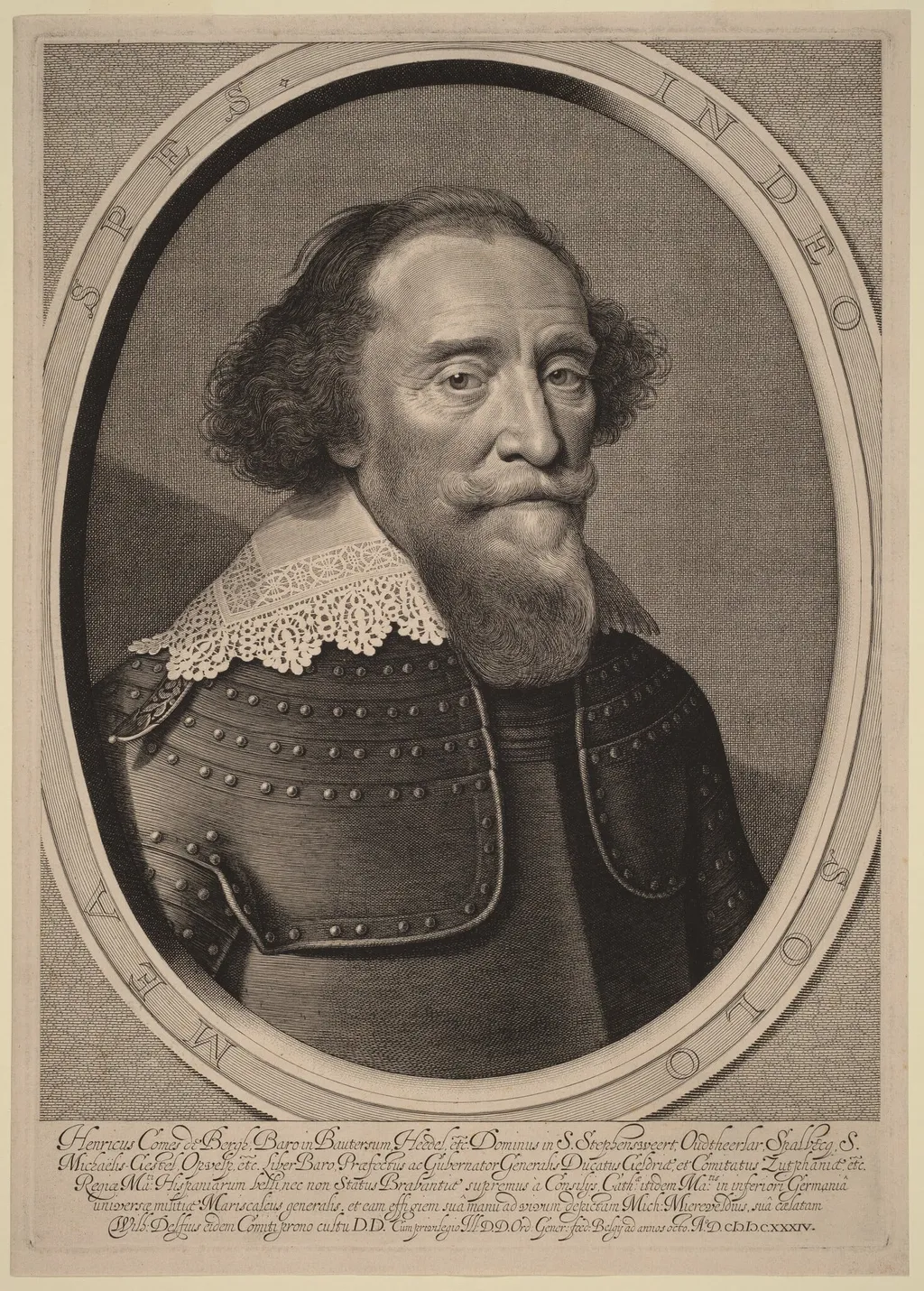
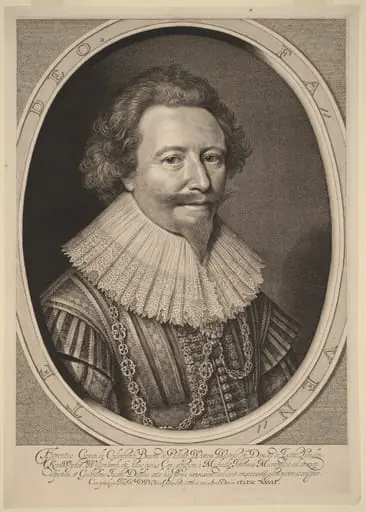
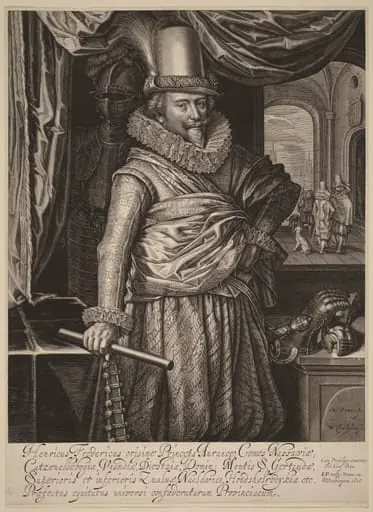
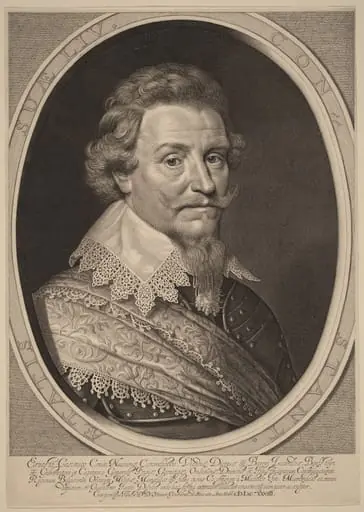
Henry, Count de Bergh is an ink print by the Baroque artist Willem Jacobsz Delff. It dates from 1634 and is held in the collection of the National Gallery of Art.
About this work
Overview
This 1634 engraving by Willem Jacobsz Delff depicts Henry, Count de Bergh, a Dutch nobleman. Rendered in monochrome, the portrait captures the subject in formal attire, emphasizing texture and precision through fine linear work. The medium’s capacity for detail allows for subtle gradations of light and shadow, characteristic of early 17th-century printmaking traditions in the Netherlands.
Subject & Meaning
The stiff, studded chest piece suggests military or aristocratic status, while the ruffled collar reflects contemporary elite fashion.
Henry, Count de Bergh is portrayed with solemnity and authority, his full beard and direct gaze conveying experience and gravitas. The stiff, studded chest piece suggests military or aristocratic status, while the ruffled collar reflects contemporary elite fashion. The composition avoids ornamentation, focusing instead on the dignity and presence of the individual, aligning with portraiture norms for nobility of the period.
Technique & Style
Delff employed fine, controlled lines to model form and texture, particularly in the facial features and layered clothing. Shading is achieved through cross-hatching and delicate parallel strokes, a hallmark of engraving. The contrast between the smooth skin and the textured metal studs or fabric folds demonstrates mastery of the burin tool, allowing for crisp definition and tonal depth without color.
History & Provenance
Created in 1634, the engraving likely served as a commissioned likeness for a noble family or as part of a collection of portraits. Delff, known for his reproductive prints, often worked from painted originals. While the original painting’s whereabouts are unconfirmed, this print circulated among collectors, preserving the count’s image in the absence of photography.
Context
In early 17th-century Holland, engraved portraits were valued for their reproducibility and precision, serving both personal and political functions. Nobles commissioned such works to assert status, while artists like Delff gained reputations for technical skill. This piece reflects a broader trend of using print to disseminate likenesses of the elite beyond the confines of courtly circles.
Legacy
Delff’s engraving of Henry, Count de Bergh exemplifies the refinement of Dutch printmaking during its golden age. Though not widely exhibited today, it remains a representative example of how engraving preserved aristocratic identity through meticulous craftsmanship. Its survival underscores the role of prints in documenting social hierarchies and visual culture before the advent of modern reproduction methods.
Artist & collection