Artwork
Henry VII of England
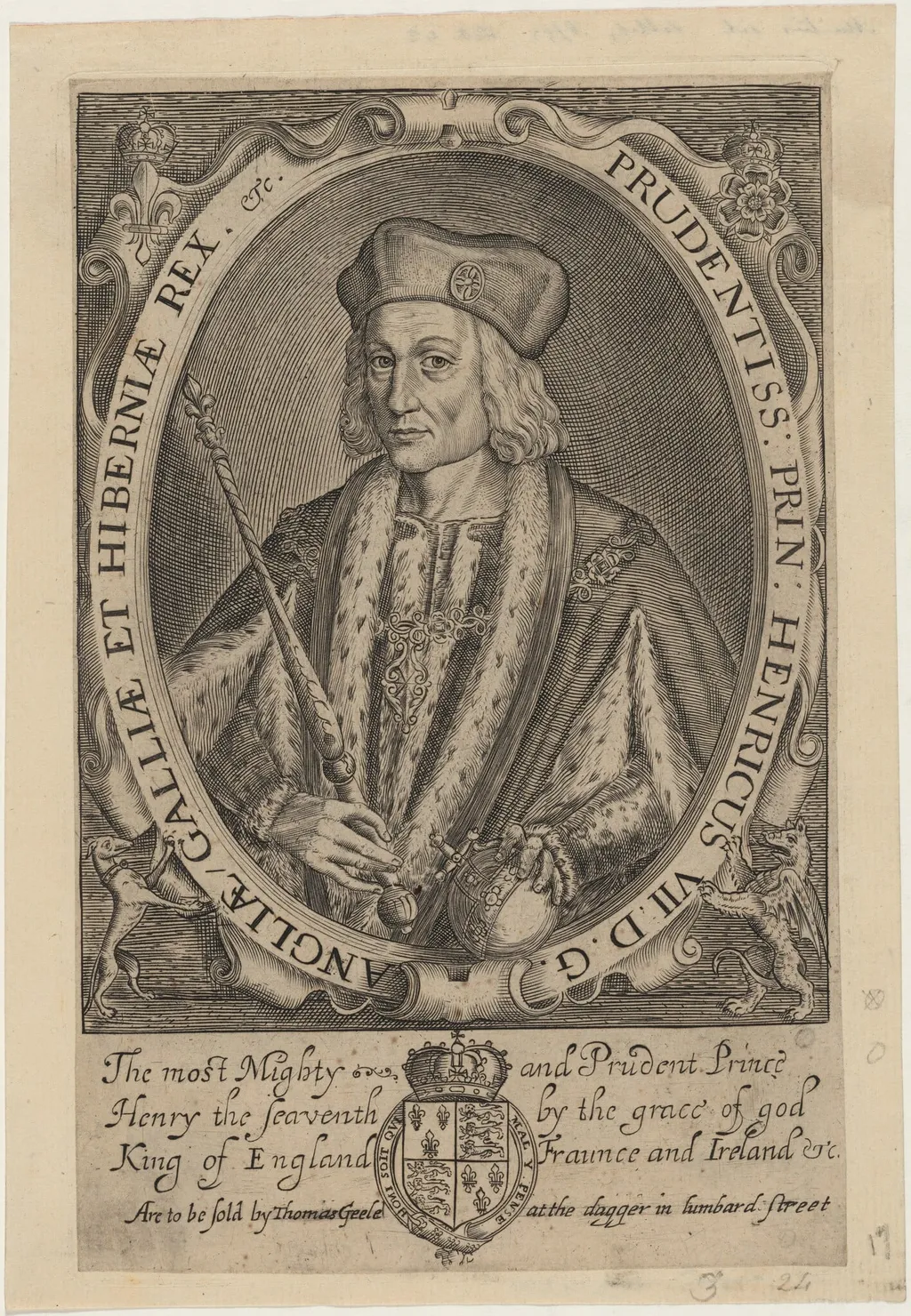
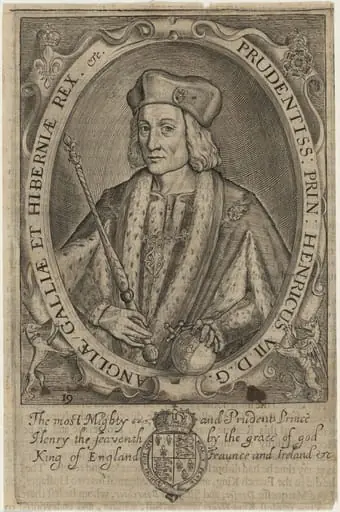
Henry VII of England is an ink print by the Renaissance artist Renold Elstrack. It dates from 1598 and is held in the collection of the National Gallery of Art.
About this work
Overview
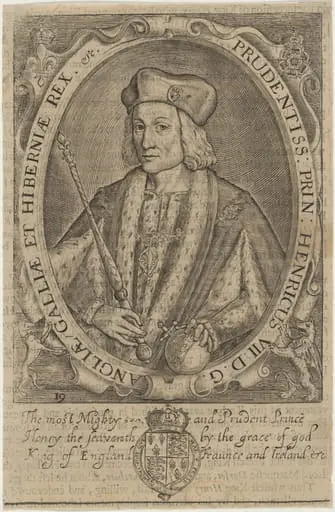
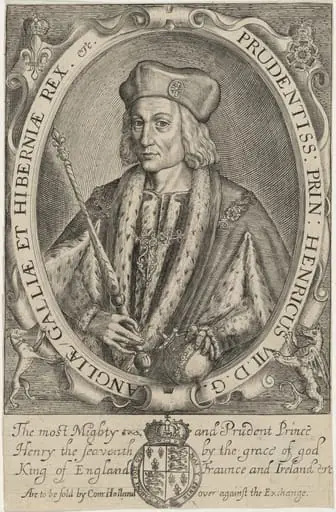
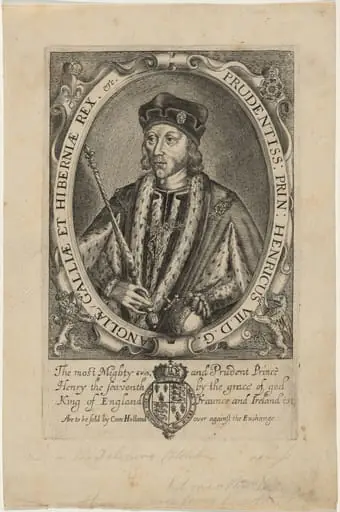
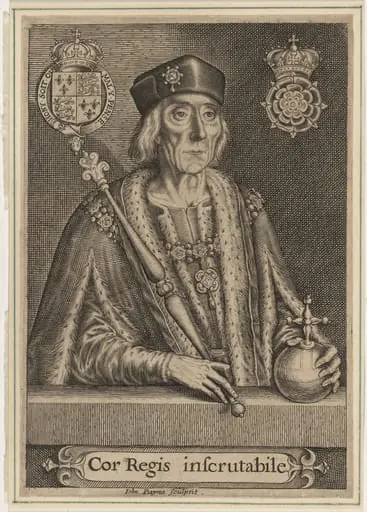
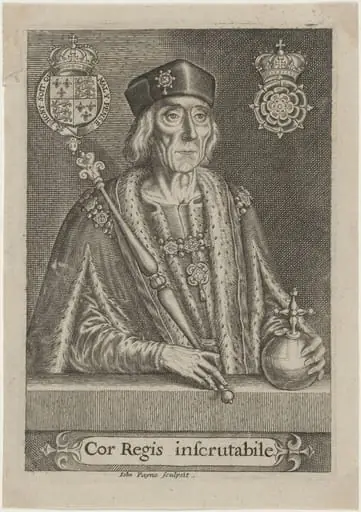
This black-and-white engraving, produced in 1598 by Renold Elstrack, depicts Henry VII, the first monarch of the Tudor dynasty.
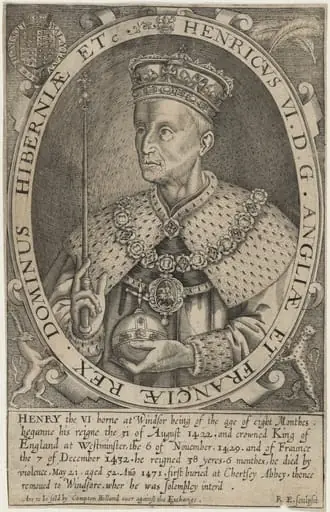
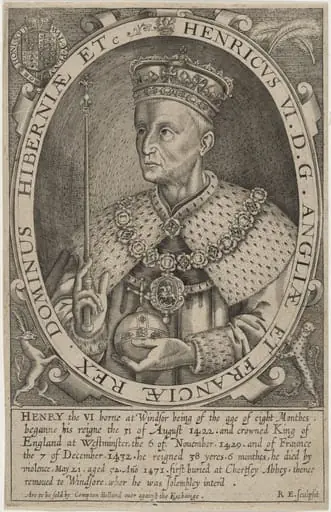
This black-and-white engraving, produced in 1598 by Renold Elstrack, depicts Henry VII, the first monarch of the Tudor dynasty. Executed as a reproductive print, it was intended for commercial distribution rather than private commission. The image presents the king in formal regalia, framed by ornate text identifying his titles, and marked with a commercial notice at the base indicating availability for sale.
Subject & Meaning
Henry VII is portrayed with symbolic attributes of sovereignty: a jeweled pointed hat, a fur-lined robe, and a crown suspended above him. His clasped hands suggest piety and authority, while the surrounding inscriptions—'King of England' and 'Prince of Wales'—emphasize his dynastic legitimacy. The composition reinforces his role as a unifying ruler following the Wars of the Roses, projecting stability through visual hierarchy and heraldic detail.
Technique & Style
Elstrack employed fine cross-hatching to model volume and texture, particularly in the fabric of the robe and the contours of the face. The linear precision characteristic of late 16th-century engraving allows for subtle gradations of light and shadow without tone or color. The decorative border, rendered in elegant script, complements the central portrait with typographic formality, typical of printed portraiture meant for public circulation.
History & Provenance
Created during the reign of Elizabeth I, the engraving reflects a period of renewed interest in Tudor lineage. Elstrack, one of England’s earliest native engravers, produced this work as part of a series of royal portraits intended for wider dissemination. Its commercial annotation suggests it was sold as a standalone print, likely to merchants, scholars, or loyalists seeking to display allegiance to the Tudor cause.
Context
In the late 1590s, England saw a surge in printed images of past monarchs, often used to reinforce national identity under a female ruler. Henry VII, as the founder of the Tudor line, became a symbol of order and legitimacy. Elstrack’s print aligns with this trend, drawing on continental engraving traditions while adapting them to English political needs, bridging visual culture and dynastic memory.
Legacy
Elstrack’s engraving of Henry VII remains one of the earliest widely circulated portraits of the king in print form. It influenced later depictions and served as a reference for historical imagery in the 17th century. Though not an original likeness, its standardized format helped solidify a visual archetype of Henry VII in the public imagination, anchoring his image in England’s printed heritage.
Artist & collection