Artwork
John La Motte
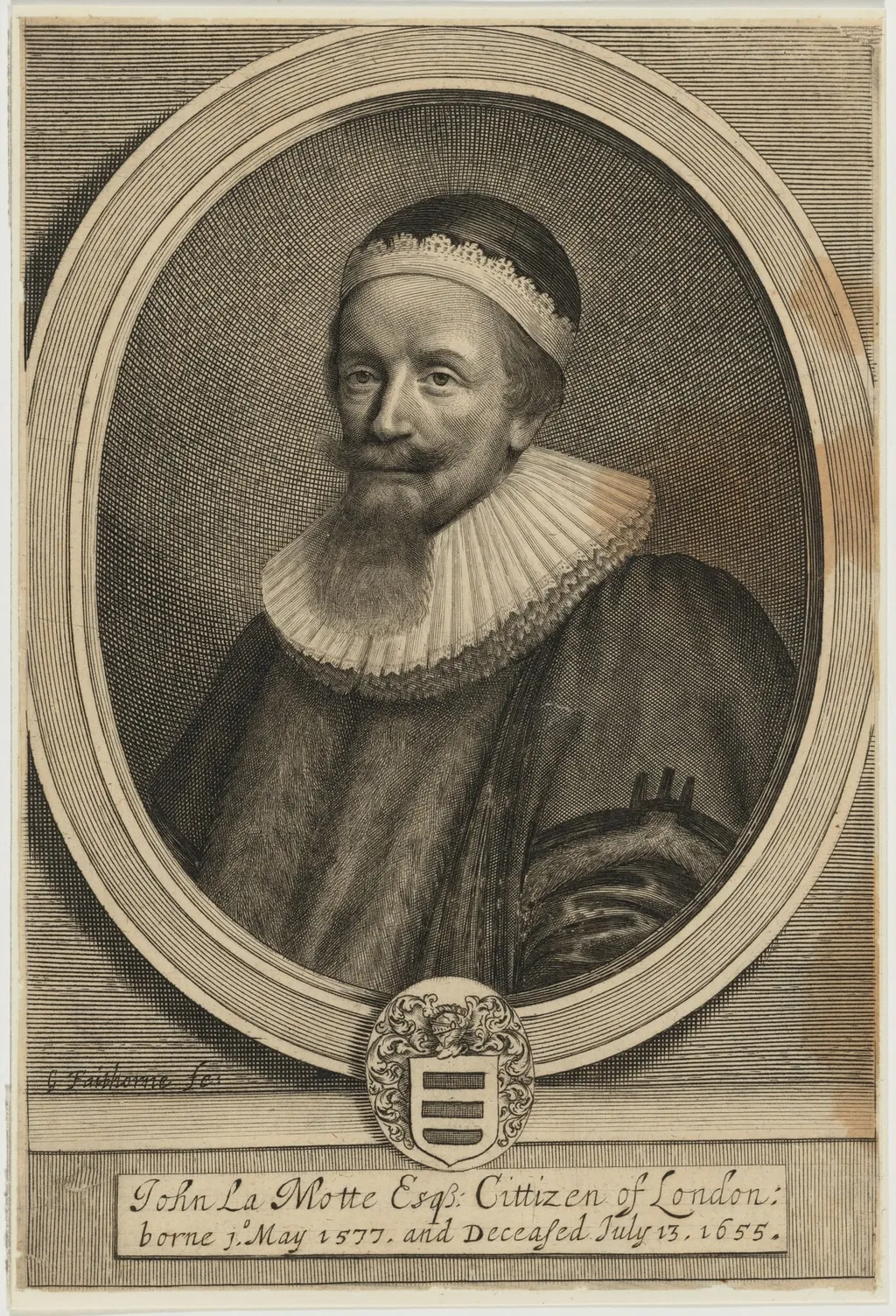
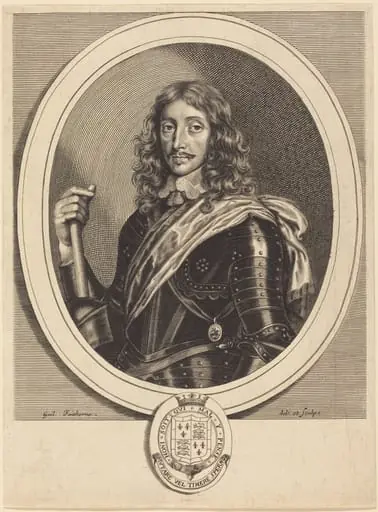
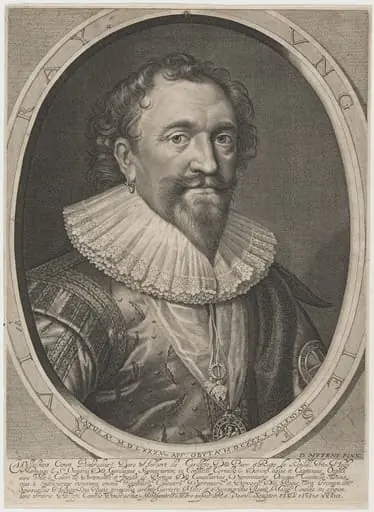
John La Motte is an ink print by the Baroque artist William Faithorne. It dates from 1656 and is held in the collection of the National Gallery of Art.
About this work
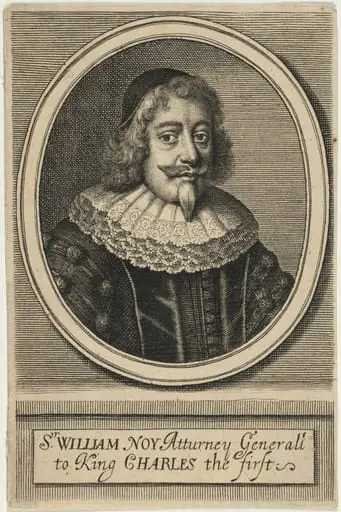
The background is plain, but the edges of the oval frame are filled with tiny lines that create texture.
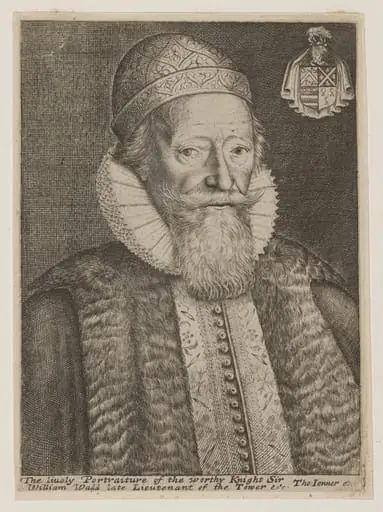
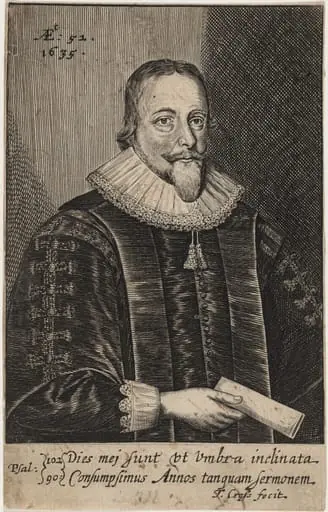
This is a black-and-white portrait of a man with a serious expression. He wears a large, ruffled collar and a hat with a flat brim. The background is plain, but the edges of the oval frame are filled with tiny lines that create texture.
The text below says the man was a London citizen, born in 1577 and died in 1655. His coat of arms sits at the bottom of the oval, adding a touch of detail.
This is made using engraving, a technique where lines are carved into metal to create the image.
Overview
William Faithorne’s 1656 engraving titled “John La Motte” presents a formal portrait rendered in stark black and white. The sitter is depicted within an oval frame, his expression solemn, his attire marked by a broad, ruffled collar and a flat‑brimmed hat. The background remains unadorned, while the perimeter of the oval is textured with fine cross‑hatching that adds subtle depth to the composition.
Subject & Meaning
The portrait identifies the figure as John La Motte, a London citizen born in 1577 who died the year before the print’s creation. His dignified pose and the inclusion of his family’s coat of arms at the lower edge of the oval suggest a desire to convey status and lineage, typical of civic portraiture in mid‑seventeenth‑century England.
Technique & Style
Faithorne employed the traditional engraving method, incising lines into a copper plate to produce the image. The work relies on a network of delicate hatching and stippling to model light and shadow, especially in the facial features and the textured collar. The restrained palette of black ink on paper emphasizes tonal variation rather than color, aligning with the period’s emphasis on draughtsmanship.
History & Provenance
Created in 1656, the print was likely issued shortly after La Motte’s death, serving as a commemorative likeness. As an example of Faithorne’s output, it reflects his reputation as one of England’s leading engravers of the era. The work has passed through various collections, documented in print catalogues of the seventeenth century, and now resides in a museum holding of early modern English prints.
Artist & collection
Artist
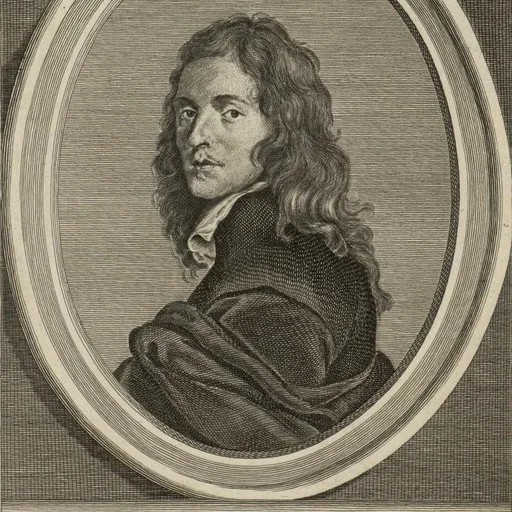
William Faithorne (1616–1691) was a British artist, born in Greater London.