Artwork
The Flaying of Marsyas
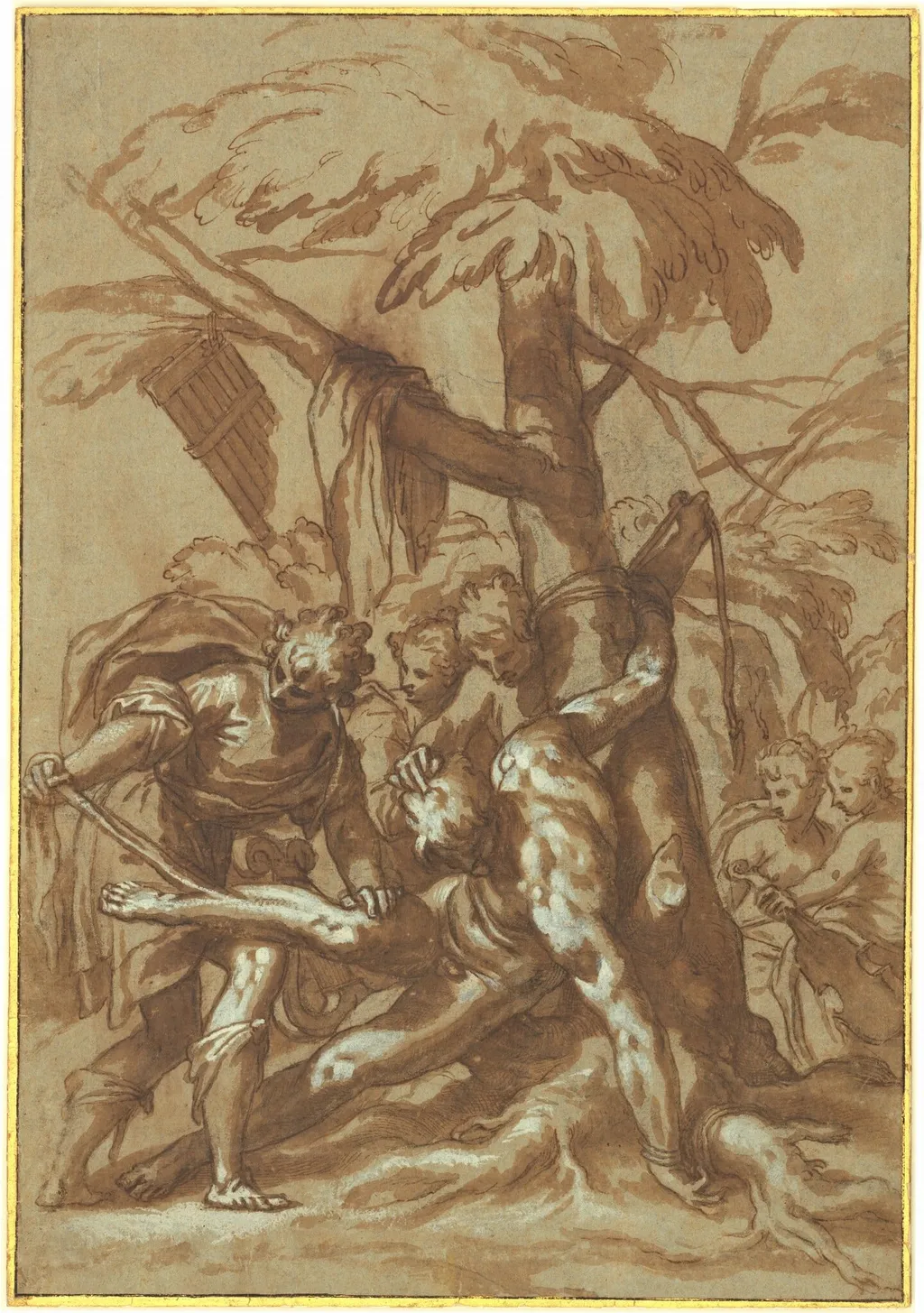
The Flaying of Marsyas is an ink drawing by the Renaissance artist Paolo Farinati. It dates from 1572 and is held in the collection of the National Gallery of Art.
About this work
Overview
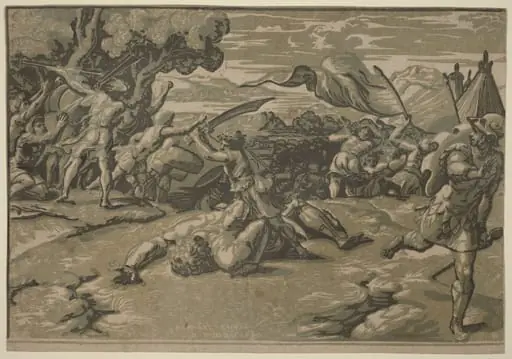
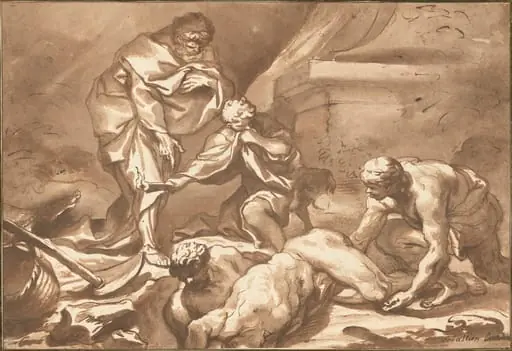
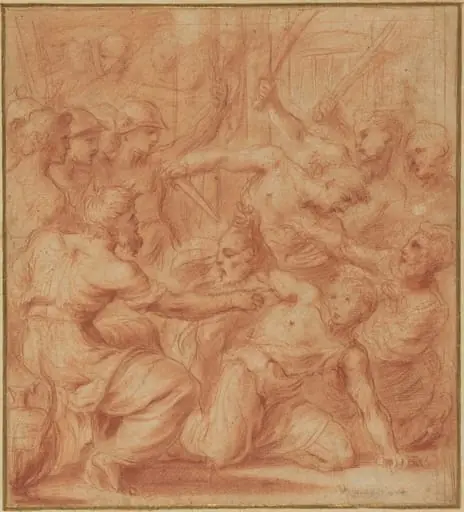
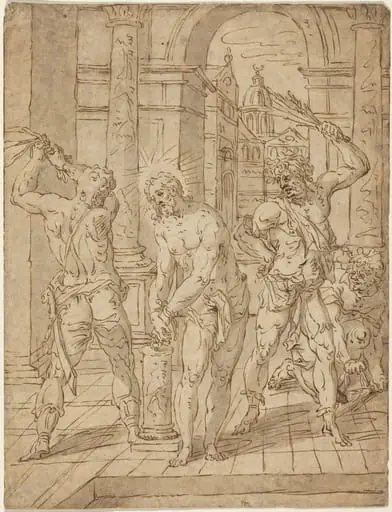
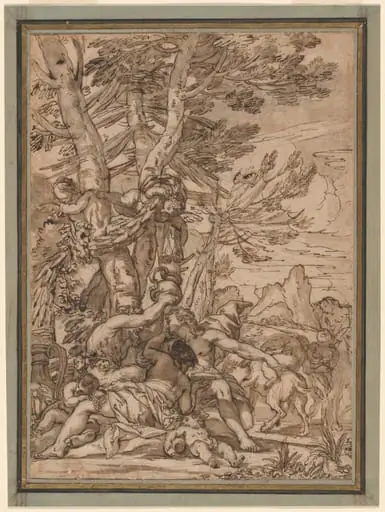
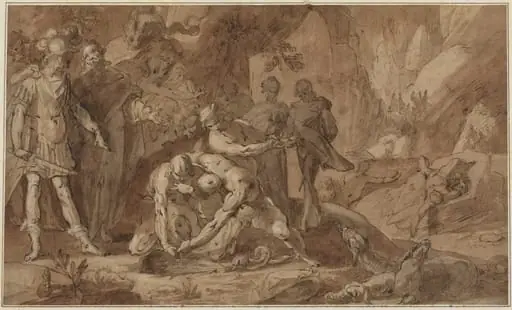
Created in 1572, this drawing by Paolo Farinati portrays the myth of Marsyas, a satyr who suffers a gruesome execution at the hands of Apollo. Executed with pen, brown ink, and a gray‑brown wash on greenish laid paper, the work is heightened with white accents that intensify the stark contrasts between flesh and shadow.
Subject & Meaning
The composition captures the moment of Marsyas’ flaying, showing the satyr’s exposed torso being peeled back while surrounding figures wield weapons and observe the torment. The violent tableau reflects the ancient legend’s themes of hubris, divine retribution, and the harsh penalties imposed on mortals who challenge the gods.
Technique & Style
Farinati employs a combination of fine pen lines and broader washes to model form, using cross‑hatching to build depth in the shadows. White highlights are applied to the flesh, making the muscles and torn skin appear sharply illuminated against the darker background of sketchy trees and clouds, a hallmark of his Mannerist draftsmanship.
History & Provenance
Active in northern Italy during the late sixteenth century, Farinati worked mainly in Verona, Mantua, and Venice, alongside contemporaries such as Paolo Veronese. The drawing’s paper, originally blue but now greenish, and its material palette reflect the refined drawing practices of the period, though its later ownership history remains undocumented.
Context
The work belongs to a broader Mannerist interest in dramatic mythological subjects, where artists emphasized emotional intensity and complex compositions. Farinati’s treatment of the Marsyas episode aligns with the era’s fascination with classical narratives rendered in a heightened, often unsettling visual language.
Artist & collection
Artist
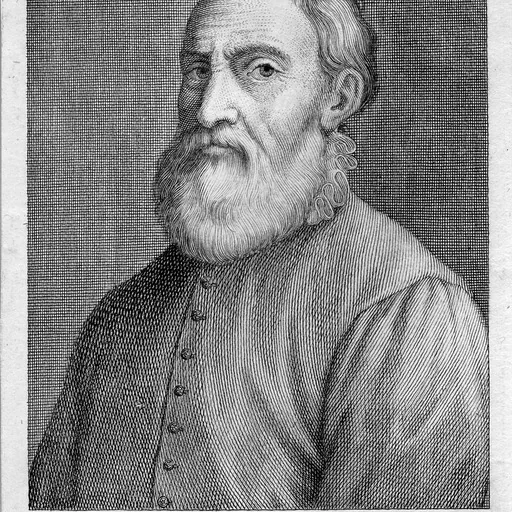
Paolo Farinati (also known as Farinato or Farinato degli Uberti; c. 1524 – c. 1606) was an Italian painter of the Mannerist style, active mainly in his native Verona, but also in Mantua and Venice. He may have ancestors…