Artwork
The Fakeers Rock
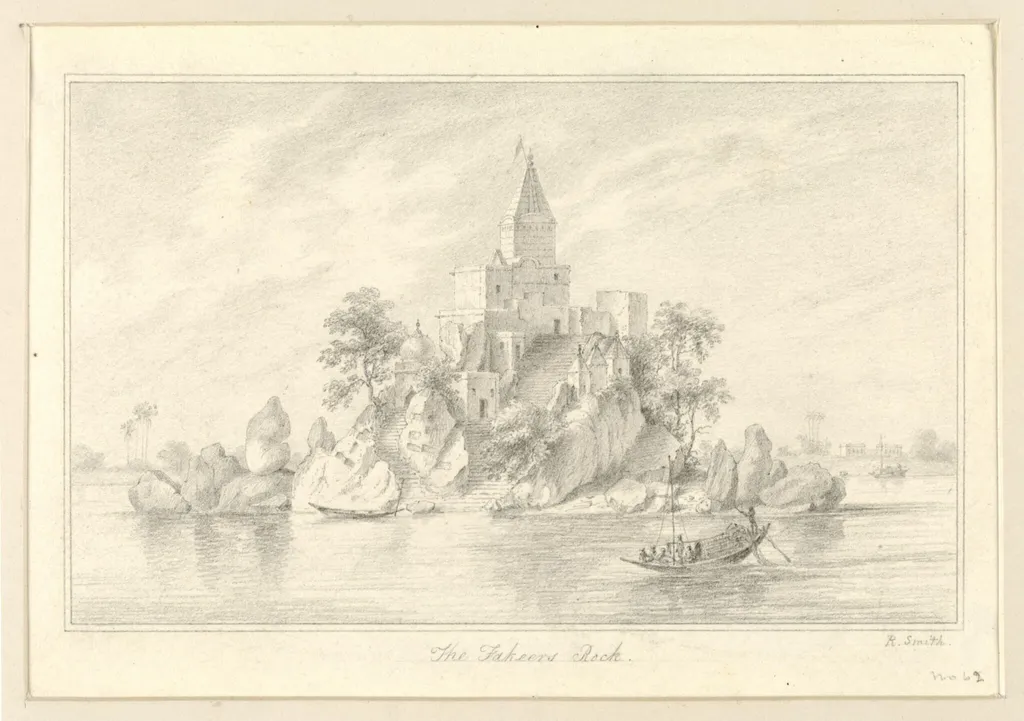
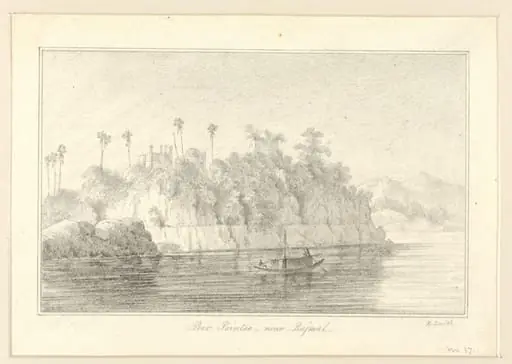
The Fakeers Rock is a drawing by the Romanticist artist Robert Captain Smith. It dates from 1830 and is held in the collection of the Victoria and Albert Museum.
About this work
Overview
Biden of Hampton-on-Thames, preserving a visual record of British colonial-era travel in northern India.
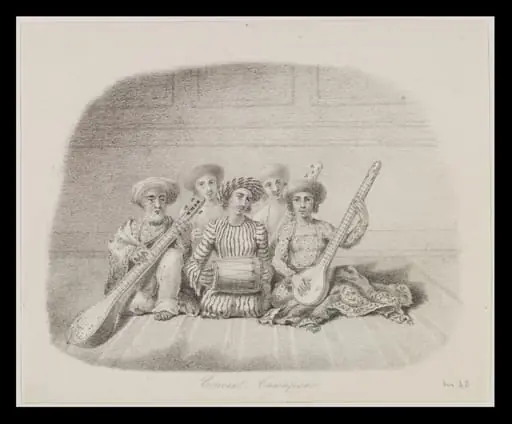
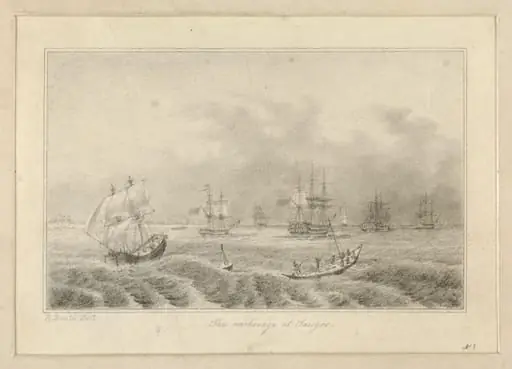
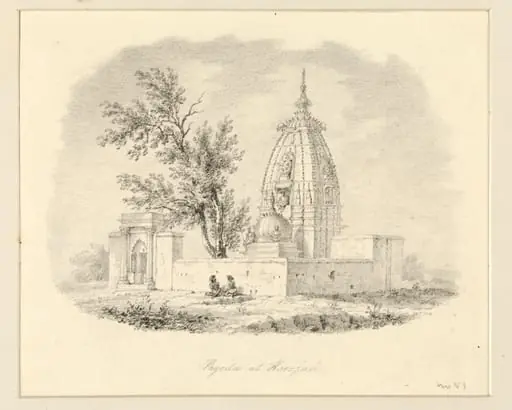
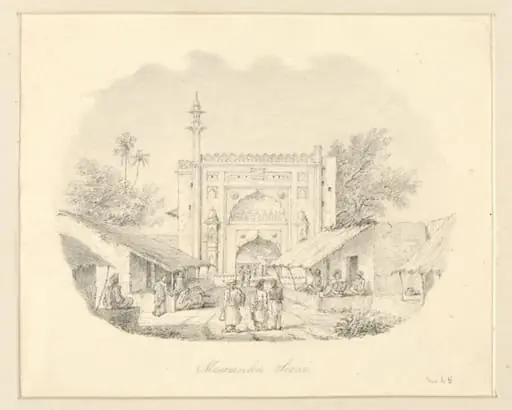
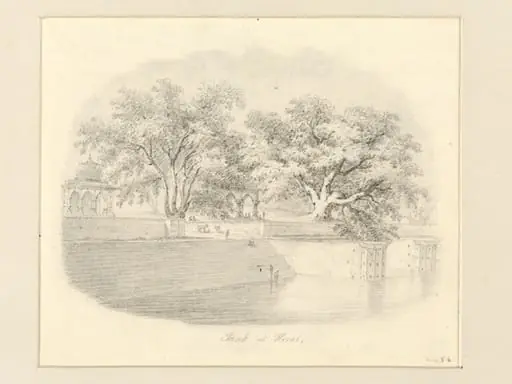
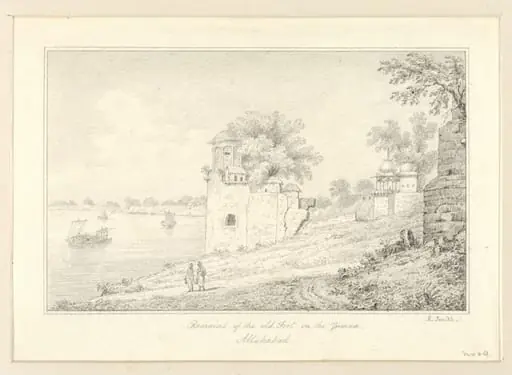
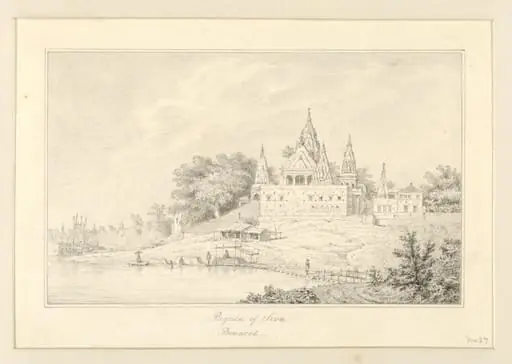
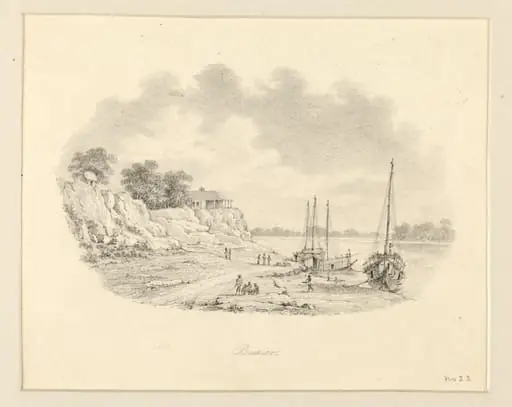
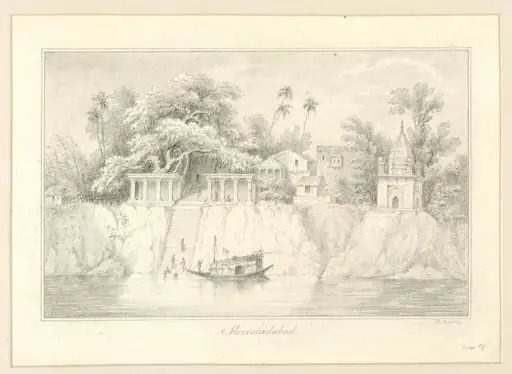
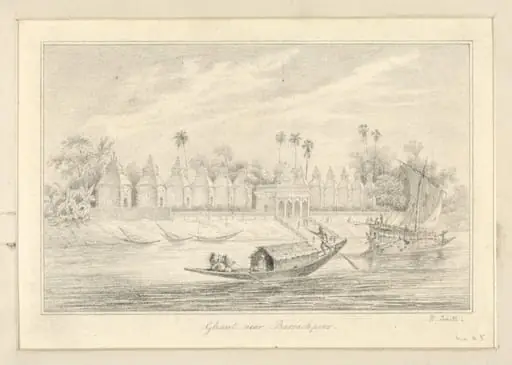
This pencil drawing is one of 65 illustrations in Captain Robert Smith’s *Pictorial Journal of Travels in Hindustan*, compiled between 1828 and 1833 and finalized in 1845. It captures a secluded rocky islet in a riverine landscape, rendered with delicate linear precision. The work was later acquired by the museum in 1915 from W. M. Biden of Hampton-on-Thames, preserving a visual record of British colonial-era travel in northern India.
Subject & Meaning
The scene centers on a rocky outcrop known as 'The Fakeers Rock,' likely referencing a site associated with ascetic Hindu mendicants. A modest structure with a tall spire rises from the island, surrounded by dense vegetation and boulders. A small boat with figures suggests human presence, hinting at pilgrimage or local use. The title implies a place of spiritual significance, though the drawing offers no explicit narrative, focusing instead on topography and atmosphere.
Technique & Style
Smith employed fine, controlled pencil lines to define form and texture, using cross-hatching to suggest shadow and depth without color. The soft gradations of gray convey a muted, tranquil mood. Details like the boat’s sail and the tower’s conical roof are rendered with economical strokes, emphasizing clarity over ornament. The composition avoids dramatic contrast, favoring quiet observation and topographical accuracy.
History & Provenance
Created during Smith’s journey along the Ganges from Calcutta to Cawnpore, the drawing is part of a larger documentary project that included visits to Delhi, Agra, and Lucknow. The journal remained in private hands until 1915, when it was acquired by the museum from W. M. Biden. Its preservation reflects early 20th-century interest in colonial-era travel records as historical artifacts.
Context
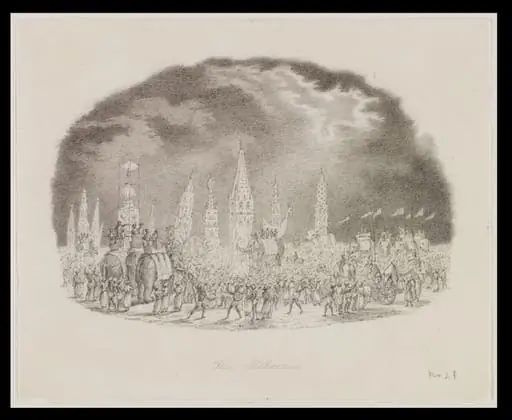
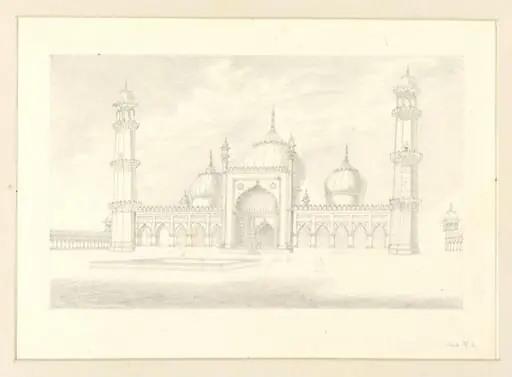
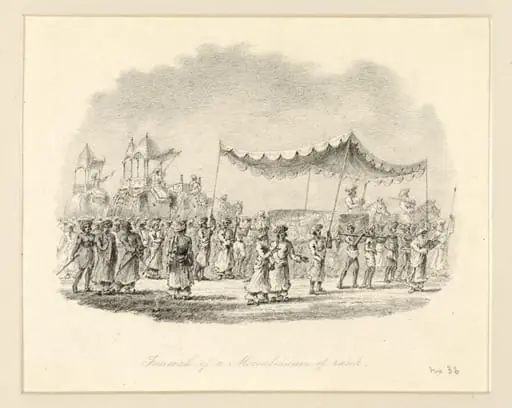
Smith’s illustrations emerged during a period when British officers documented Indian landscapes as part of administrative and cultural curiosity. His work aligns with contemporary topographical drawing traditions, blending survey precision with aesthetic restraint. Unlike later romanticized depictions, these drawings prioritize factual recording, offering insight into how colonial observers perceived and categorized the Indian environment.
Legacy
The drawing contributes to a broader archive of 19th-century visual records of India, valued for its unembellished observation. As part of Smith’s complete journal, it remains a reference for historians studying colonial travel, landscape representation, and the intersection of cartography and ethnography. Its quiet realism distinguishes it from more theatrical portrayals of the era.
Artist & collection