Artwork
The Nativity
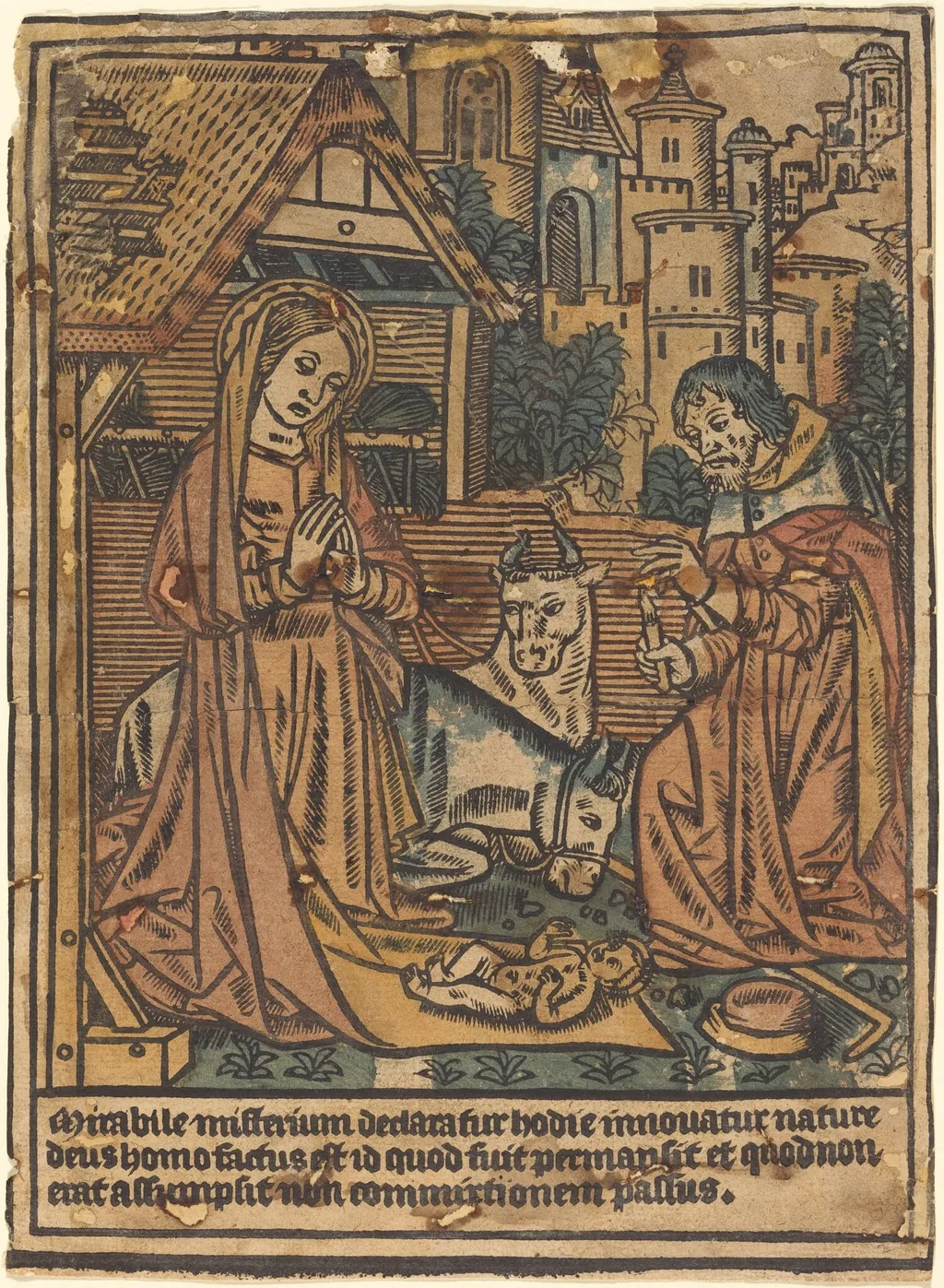
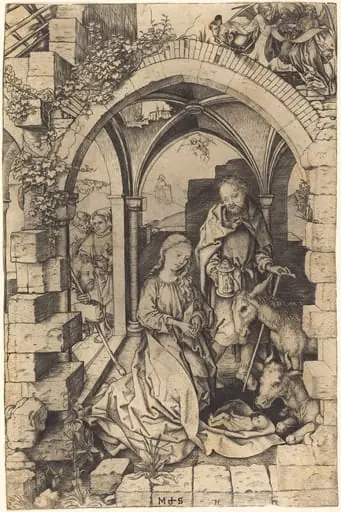
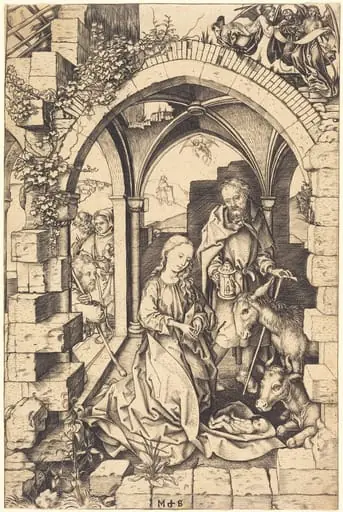
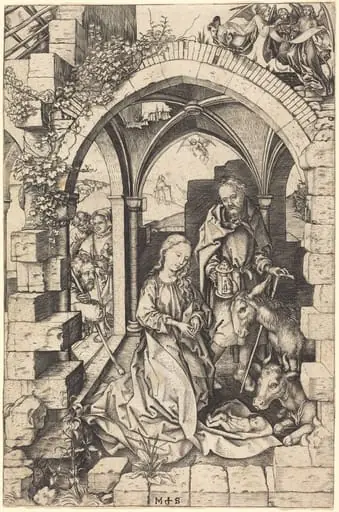
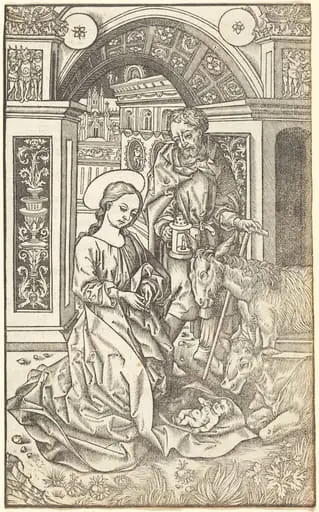
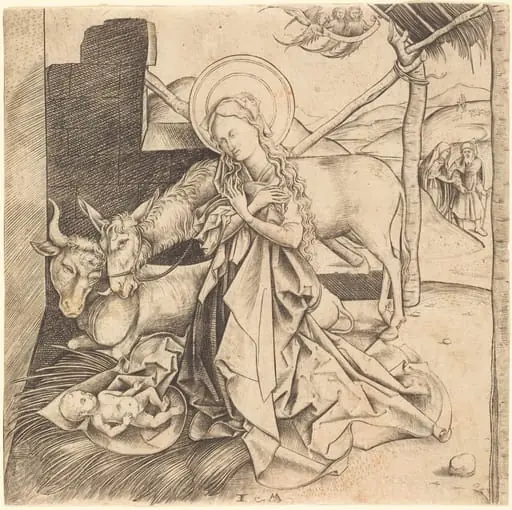
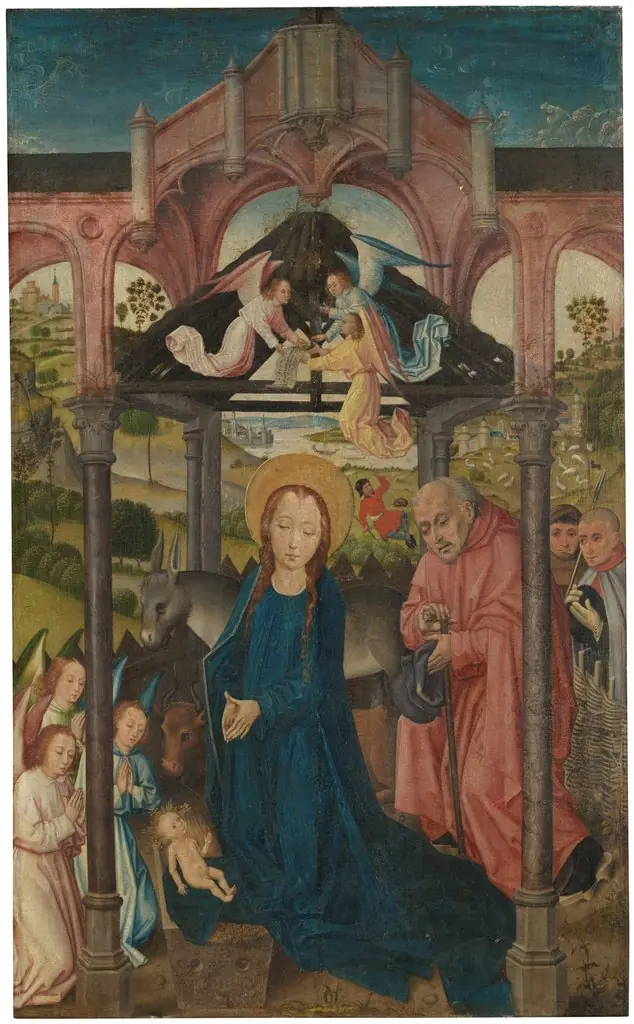
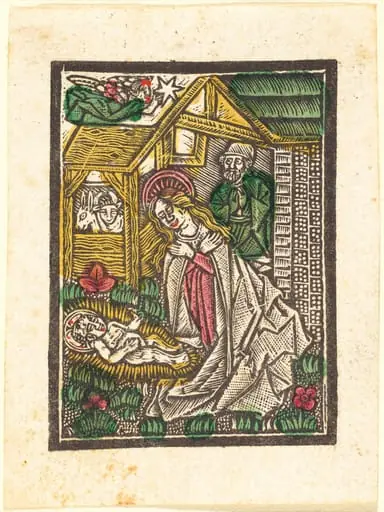
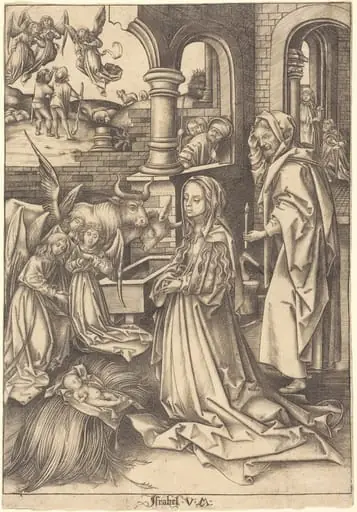
The Nativity is an ink print by the Renaissance artist French 15th Century. It dates from 1495 and is held in the collection of the National Gallery of Art.
About this work
Overview
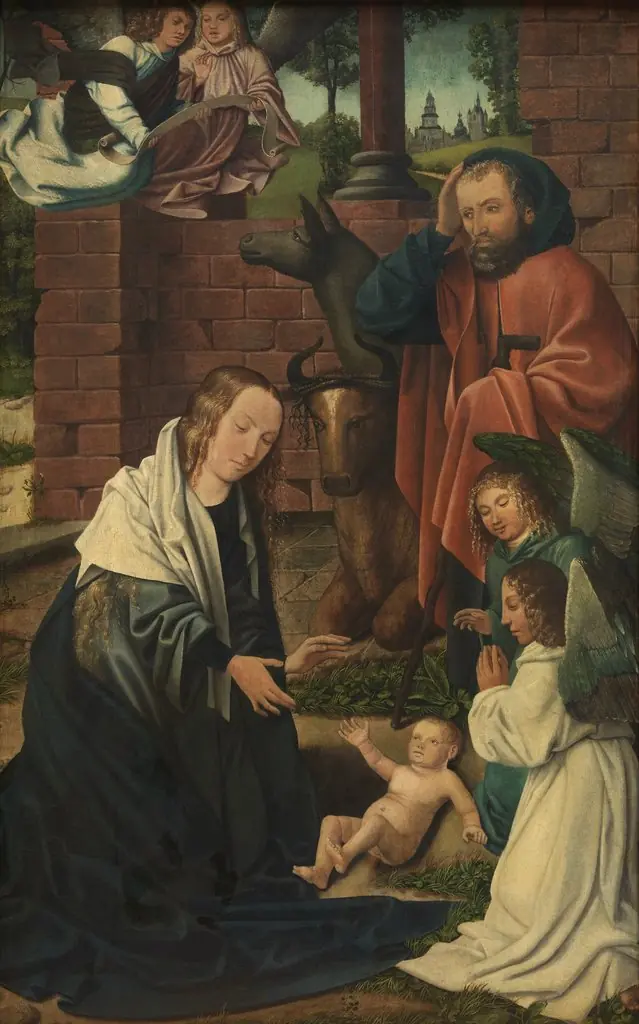
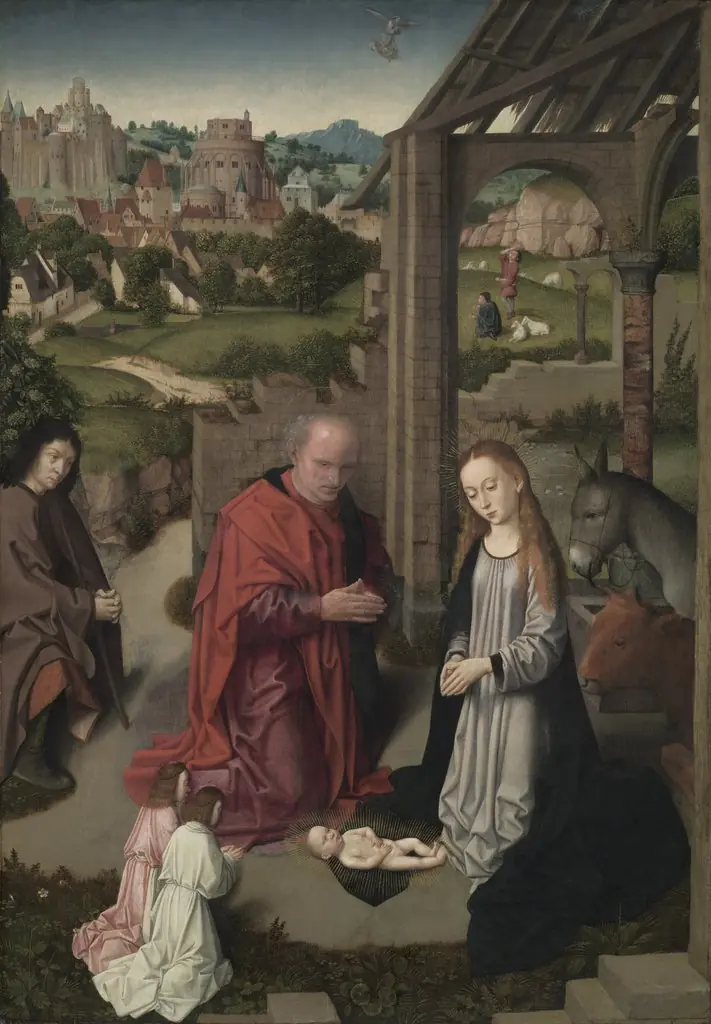
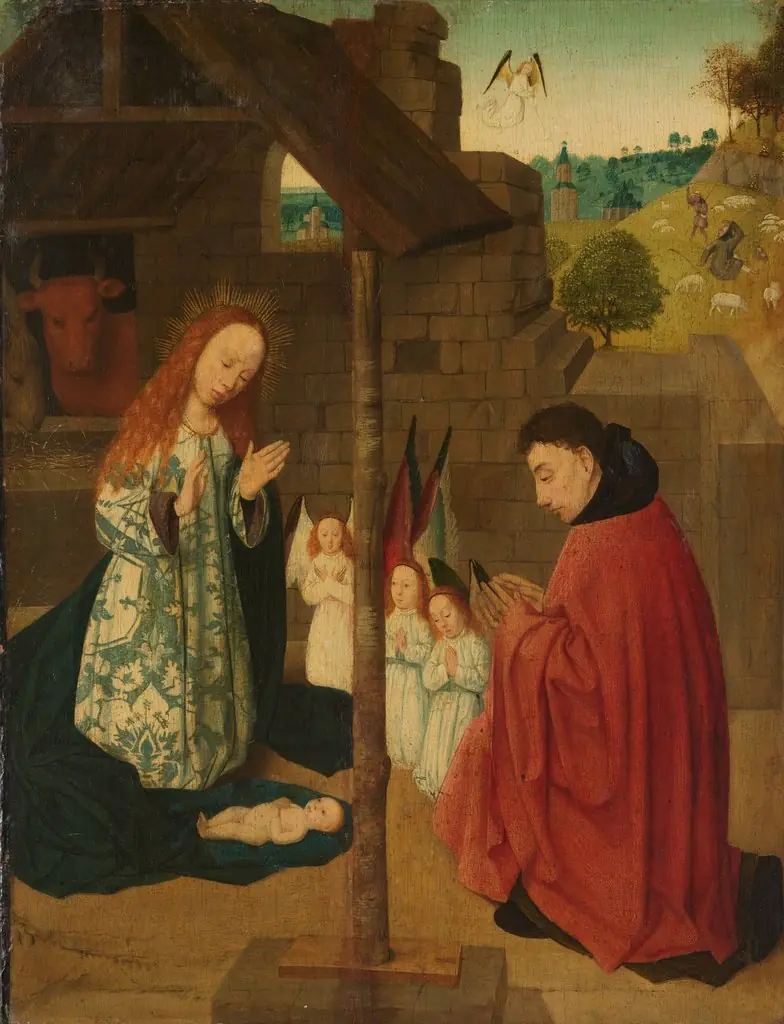
Executed with precise linear carving, the image presents the Virgin Mary, Saint Joseph, and the infant Jesus within a modest stable.
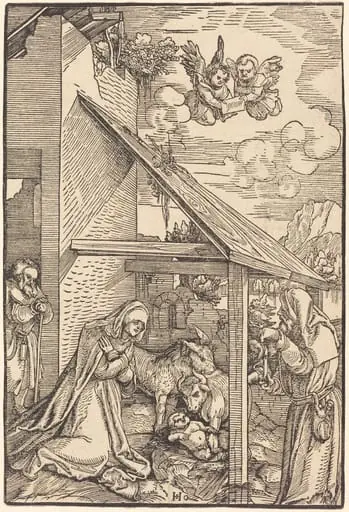
This hand-colored woodcut depicts the Nativity in a compact, devotional format. Executed with precise linear carving, the image presents the Virgin Mary, Saint Joseph, and the infant Jesus within a modest stable. Subtle washes of red, brown, slate blue, ochre, and blue were applied manually after printing, resulting in uneven tonal variations. The background reveals a distant town with architectural details, grounding the sacred moment in a recognizable earthly setting.
Subject & Meaning
The scene centers on the humble birth of Christ, framed by the quiet reverence of Mary and Joseph. Their postures—standing and kneeling—emphasize contemplation rather than celebration. The enclosed stable and distant town suggest a separation between the divine event and the secular world. Latin text at the base likely cites scriptural passage, reinforcing the image’s function as a devotional aid for private prayer or liturgical use.
Technique & Style
The image was produced using a woodcut technique, with clean, incised lines defining forms and contours. Hand-coloring was applied with brushes, resulting in irregular pigment distribution and fading in places, indicating individual artisan intervention. The palette is restrained, favoring earth tones and muted blues, avoiding theatricality. The style reflects early Northern European printmaking traditions, prioritizing clarity and spiritual focus over ornamental detail.
History & Provenance
This print likely originated in the late 15th or early 16th century, during the peak of devotional woodcut production in Germany or the Low Countries. Its hand-coloring suggests it was made for a private or modest ecclesiastical buyer, not mass distribution. Surviving examples of such prints are rare due to fragility and frequent use. Its current condition—faded color, intact lines—points to careful handling over centuries.
Context
In the decades before the Reformation, woodcuts like this served as accessible religious imagery for laypeople who could not read Latin or afford painted altarpieces. The simplicity of composition and muted palette align with devotional practices emphasizing humility and introspection. Similar prints circulated alongside prayer books, often used in domestic settings to aid meditation on the life of Christ.
Legacy
This print exemplifies how early print technology democratized religious imagery, enabling widespread access to sacred narratives. Its restrained aesthetic influenced later Protestant visual culture, which favored clarity and modesty over Catholic ornamentation. Though unsigned and unattributed, it remains a representative artifact of pre-Reformation devotional art, illustrating the quiet power of the printed image in shaping personal faith.
Artist & collection

Artist
This artist hid their best work inside old travel trunks. They glued vivid woodcuts into the lids of wooden boxes meant to be carried on horseback, like secret postcards from God. If you’ve ever pried open a cracked lid…