Artwork
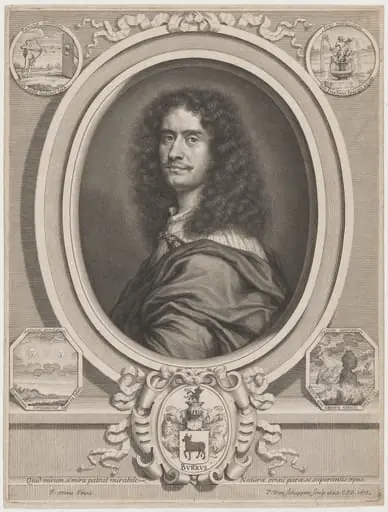
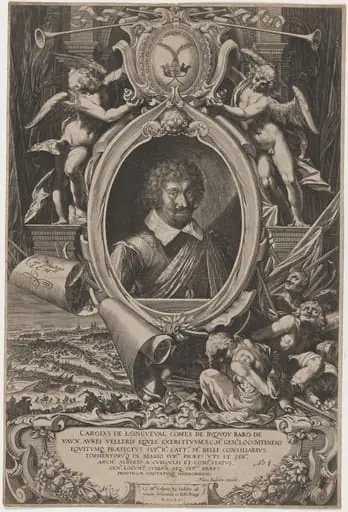
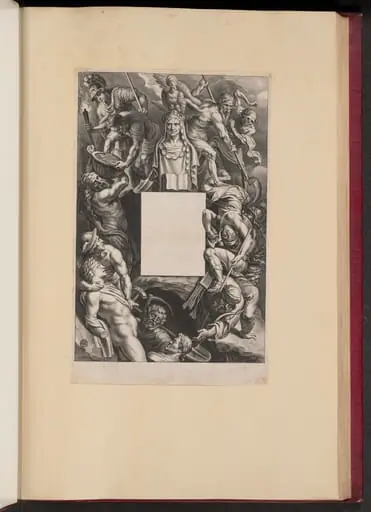
Portrait of Man in Oval with Decoration of Winged Figures
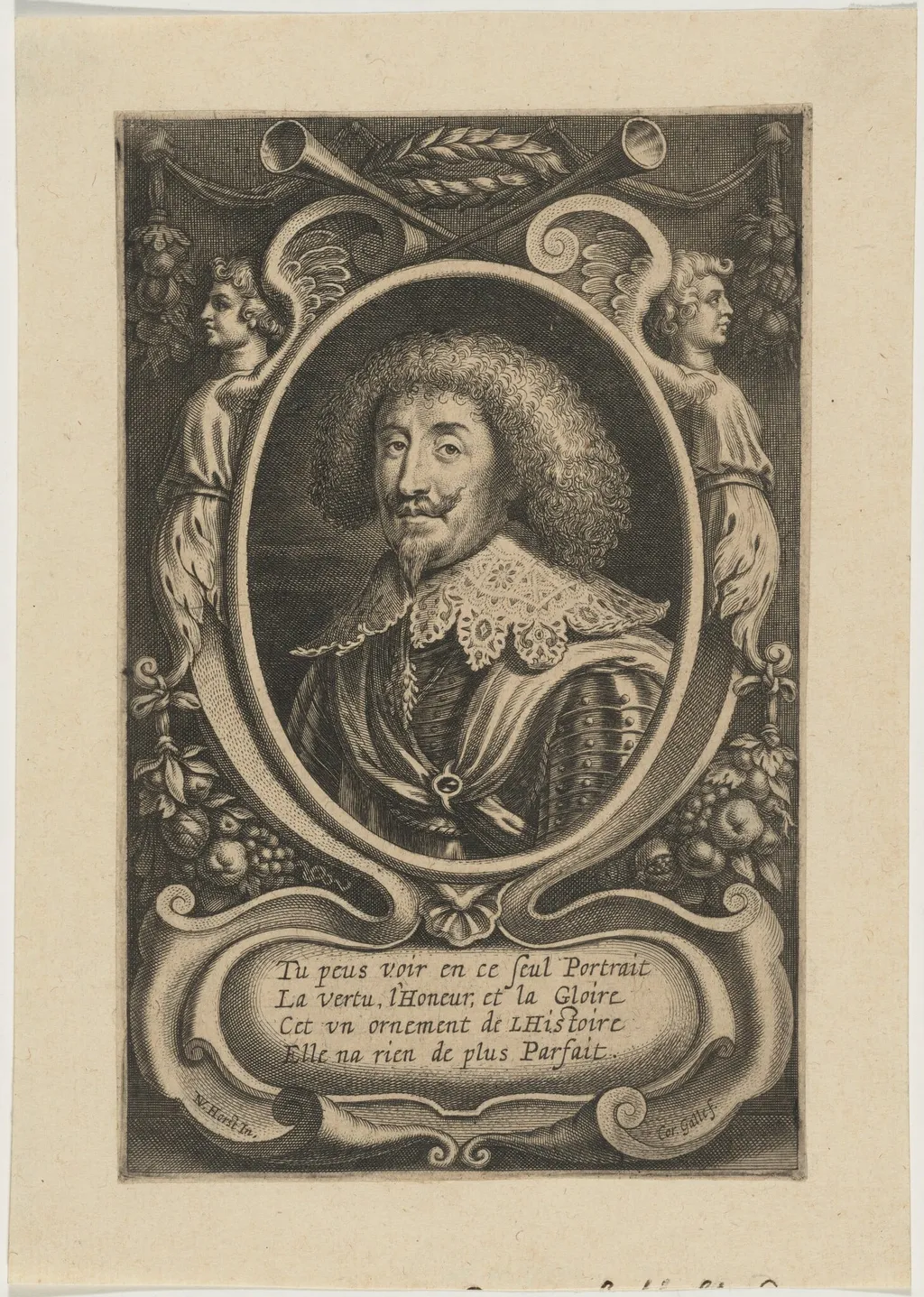
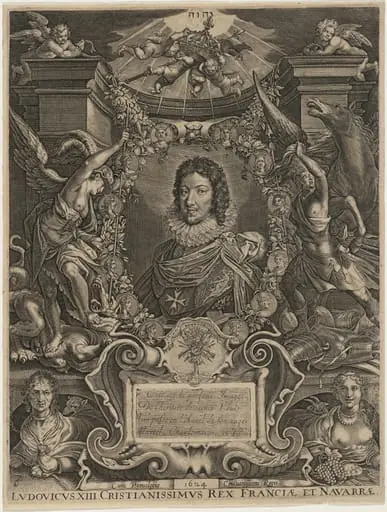
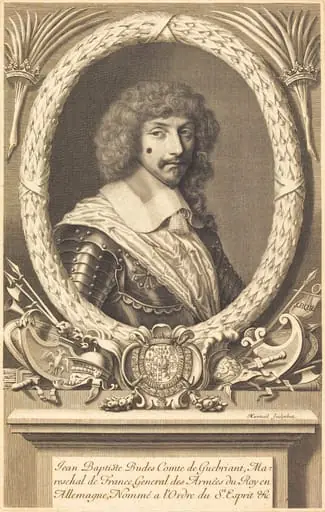
Portrait of Man in Oval with Decoration of Winged Figures is an ink print by the Renaissance artist Cornelis Galle I. It dates from 1613 and is held in the collection of the National Gallery of Art.
About this work
Overview
This 1613 engraving by Cornelis Galle the Elder presents a formal portrait of a man enclosed within an oval border, adorned with stylized winged figures.
This 1613 engraving by Cornelis Galle the Elder presents a formal portrait of a man enclosed within an oval border, adorned with stylized winged figures. Executed in the intaglio technique, the print demonstrates Galle’s precision and command of line. As a Flemish artist trained in Antwerp and influenced by his time in Rome, Galle translated classical motifs into refined graphic form, contributing to the print culture of early 17th-century Northern Europe.
Subject & Meaning
The seated man, rendered with restrained expression and dignified posture, likely represents a noble or scholarly figure, though his identity remains unconfirmed. The surrounding winged putti, drawn from classical iconography, suggest themes of intellect, virtue, or divine favor. Their presence elevates the portrait beyond mere likeness, embedding it within a humanist tradition that linked personal character with elevated ideals.
Technique & Style
Galle employed fine-line engraving to achieve subtle tonal gradations and intricate detail, particularly in the textures of the man’s attire and the delicate contours of the winged figures. His style reflects the influence of Italian Mannerism, evident in the elongated forms and rhythmic composition. The clarity and evenness of the lines indicate mastery of the burin, a hallmark of his training under his father, Philip Galle.
History & Provenance
Created in 1613, the engraving emerged from Galle’s Antwerp workshop, a center of print production linked to the Rubens circle. Though specific early ownership records are sparse, similar works by Galle circulated widely among collectors and artists across Europe. His prints were often used as models for other media, reinforcing his role in disseminating visual culture beyond the confines of painting.
Context
In early 17th-century Antwerp, engraving served as a vital medium for reproducing and disseminating images, especially portraits and allegorical scenes. Galle’s work aligned with broader trends in humanist portraiture and the revival of classical ornament. His time in Rome exposed him to antiquities and Renaissance prints, which he synthesized into a distinctive Northern European idiom that balanced elegance with technical rigor.
Legacy
Cornelis Galle the Elder’s engravings helped define the aesthetic of Flemish printmaking in the Baroque era. His ability to translate painterly compositions into precise graphic forms influenced subsequent generations of engravers. Though less celebrated than contemporaries like Rubens, his technical contributions sustained the Antwerp print trade and preserved visual motifs for wider cultural circulation.
Artist & collection

Artist
Cornelis Galle the Elder (1576 – 29 March 1650), a younger son of Philip Galle, was born at Antwerp in 1576, and was taught engraving by his father.

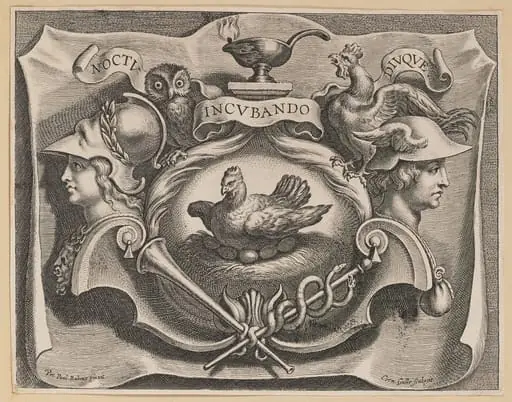 Vignette for the Title Page of Martinus Bonacina, Opera Omnia
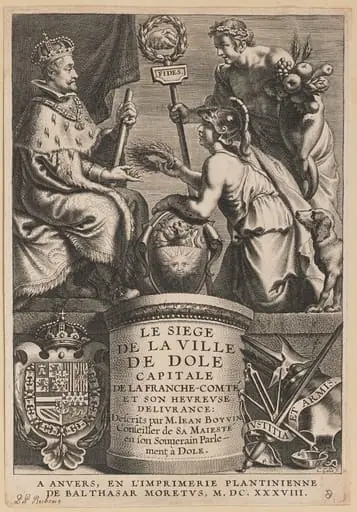 Title Page for Jean Boyvin, Le Siege de la Ville de Dole
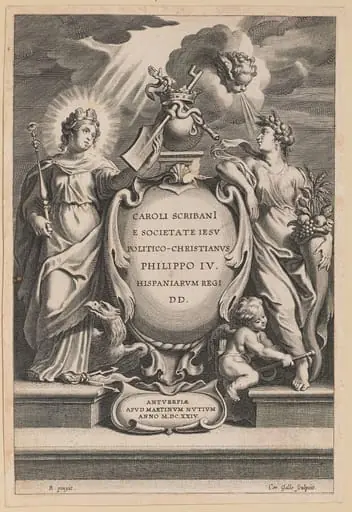 Title Page for Carolus Scribani, Politico-Christianus
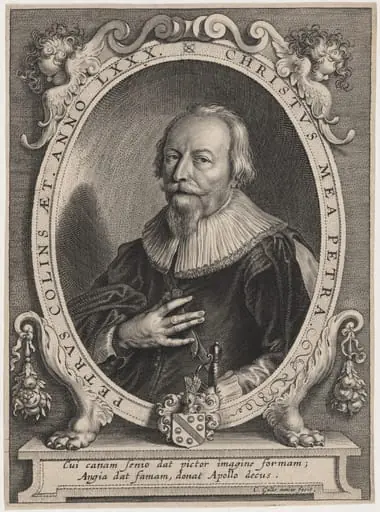 Petrus Collins
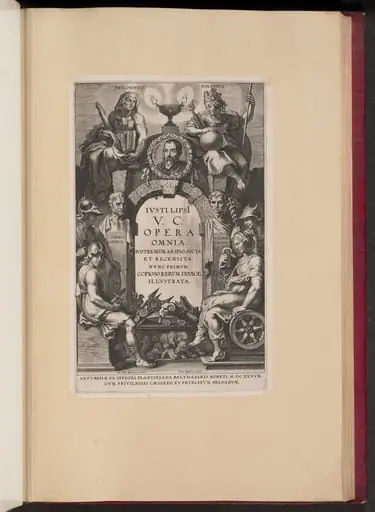 Title Page for Justus Lipsius, Opera Omnia, I
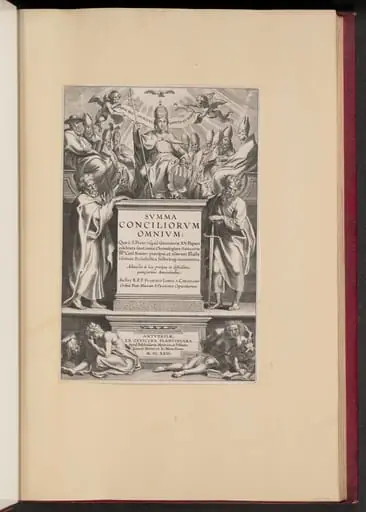 Title Page for F. Longo a Coriolano's "Svmma Conciliorvm Omnivm"
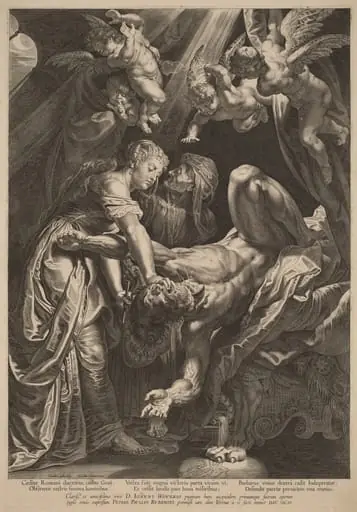 Judith Beheading Holofernes
 Title Page for Hubert Goltzius, Romanae et Graecae Antiqvitatis Monvmenta (Opera Omnia, I)