Artwork
Horologia Ferrea (Iron Clocks)
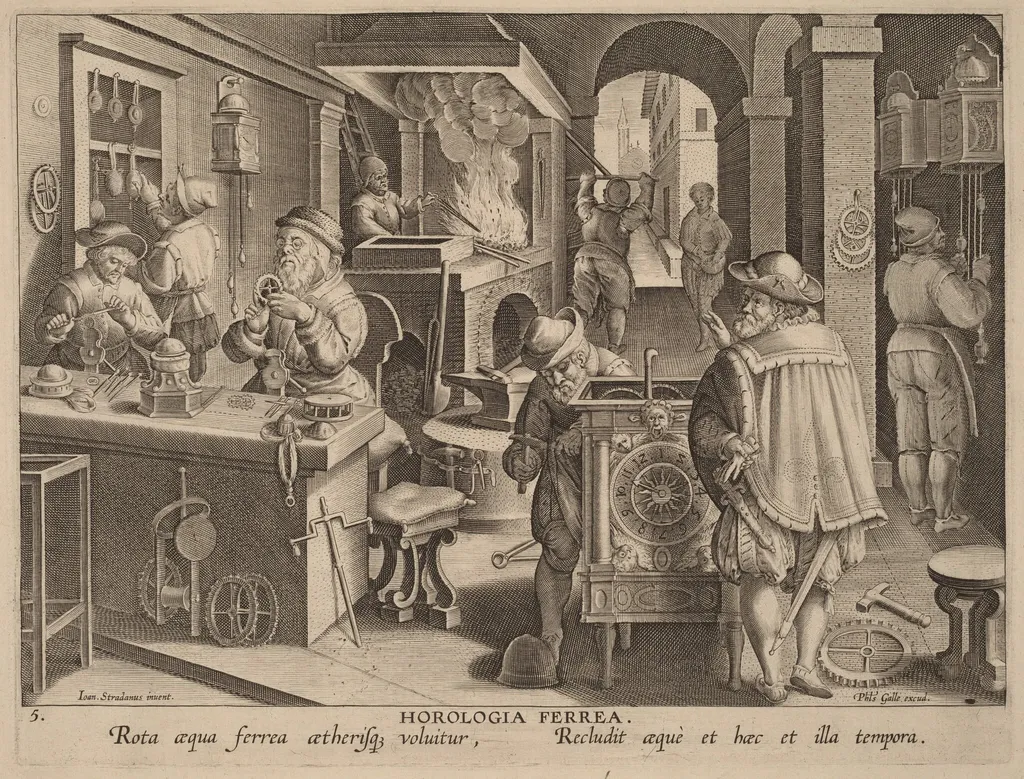
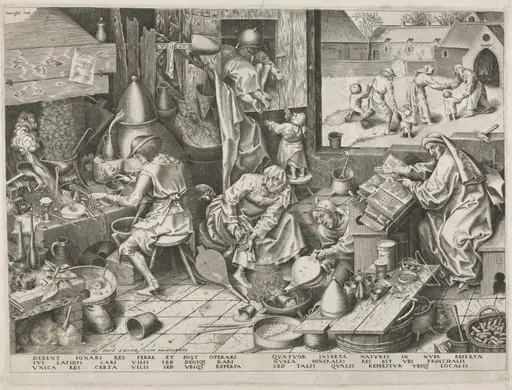
Horologia Ferrea (Iron Clocks) is an ink print by the Renaissance artist Philip Galle. It dates from 1592 and is held in the collection of the National Gallery of Art.
About this work
Overview
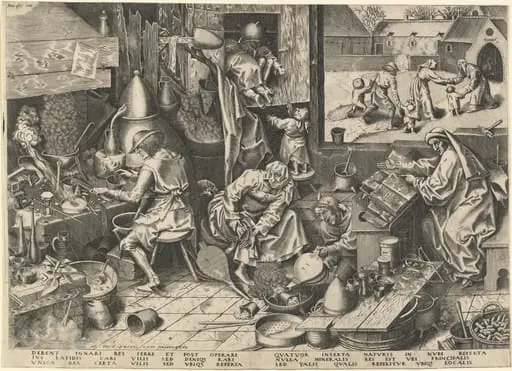
Created circa 1592, *Horologia Ferrea* is an engraving executed on laid paper by the Dutch printmaker Philip Galle. The image presents a densely populated interior where several figures attend to large, iron‑worked timepieces. The composition combines elements of a workshop and a laboratory, emphasizing the intricate mechanisms of the clocks and the collaborative activity of the craftsmen.
Subject & Meaning
The scene centers on the construction and maintenance of massive iron clocks, each displaying visible gears and components.
The scene centers on the construction and maintenance of massive iron clocks, each displaying visible gears and components. Figures are shown handling tools, polishing metal surfaces, and observing the devices, suggesting a didactic portrayal of the technical processes behind timekeeping. The work reflects contemporary curiosity about the relationship between art, engineering, and the measurement of time.
Technique & Style
Galle employed fine line engraving to render the textures of metal, wood, and paper, achieving a high level of detail on the laid paper substrate. The use of cross‑hatching conveys depth and material qualities, while the crowded arrangement creates a sense of bustling activity. The composition balances scientific illustration with the aesthetic conventions of late‑Renaissance prints.
History & Provenance
Philip Galle (1558–1612) was a prominent publisher and engraver in the Low Countries, known for reproducing works of old masters and for original designs. *Horologia Ferrea* belongs to his output of technical and allegorical prints produced for a market interested in scientific instruments and mechanical innovation during the late sixteenth century.
Context
The engraving emerges at a time when mechanical clocks were transitioning from ecclesiastical to civic and domestic use, and iron became a favored material for durable mechanisms. The depiction aligns with a broader European fascination with precision engineering, reflecting the burgeoning interest in empirical observation that would later characterize the scientific revolution.
Artist & collection
Artist
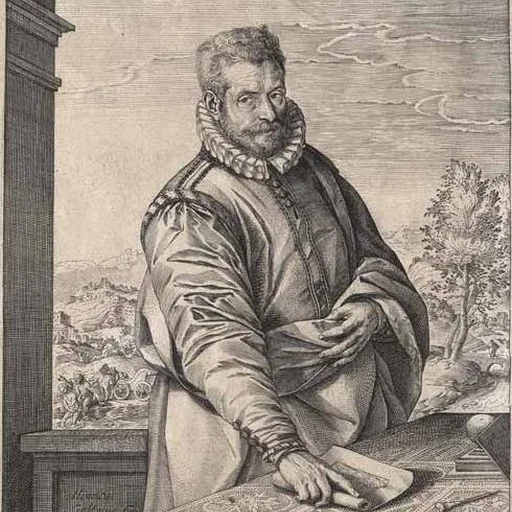
Philip (or Philips) Galle (1537 – March 1612) was a Dutch publisher, best known for publishing old master prints, which he also produced as designer and engraver. He is especially known for his reproductive engravings of paintings.

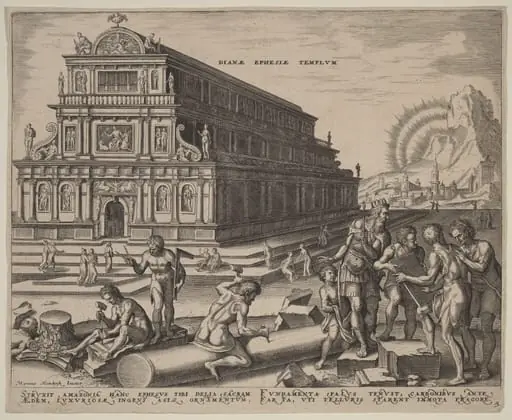 Dianae Ephesiae Templum (The Temple of Diana at Ephesus)
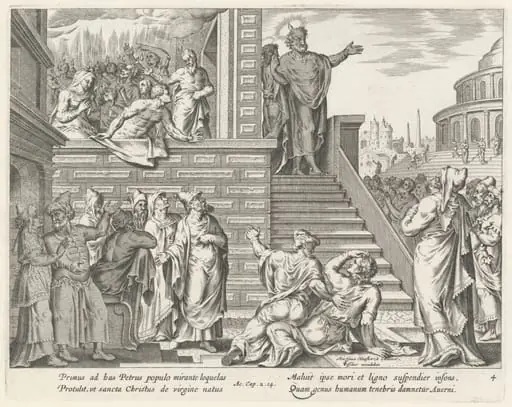 Saint Peter Speaks to the People about Christ
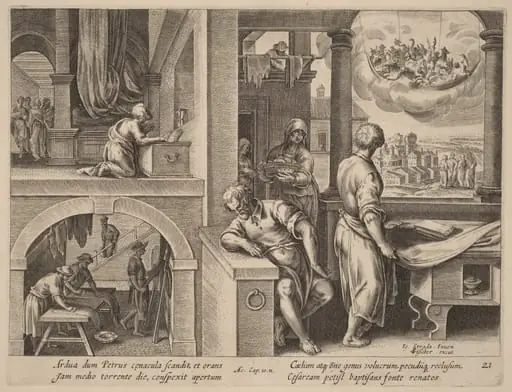 The Vision of Saint Peter
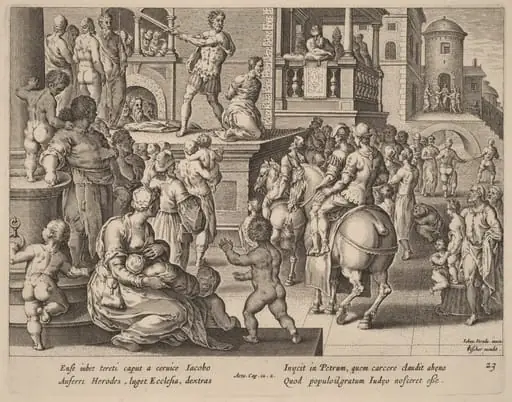 Beheading of Saint James
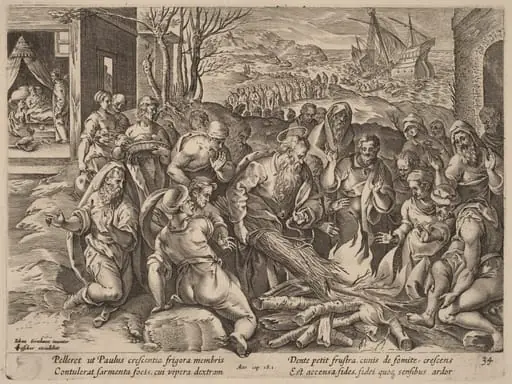 Saint Paul Shipwrecked on the Island of Melita
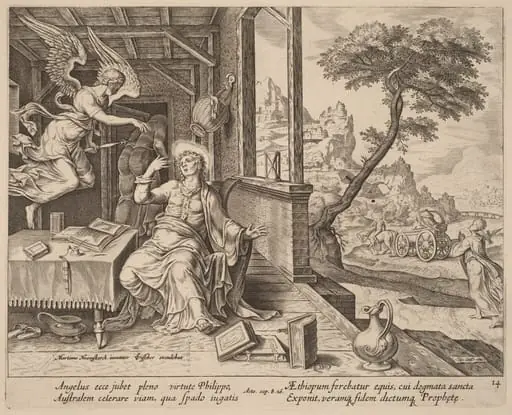 The Angel Orders Saint Philip to Accompany the Ethiopian Eunuch
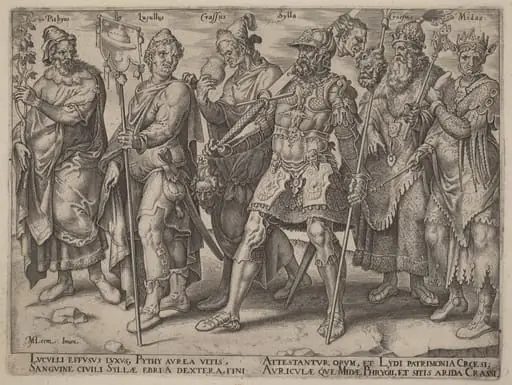 Notorious Examples of Wealth from Antiquity
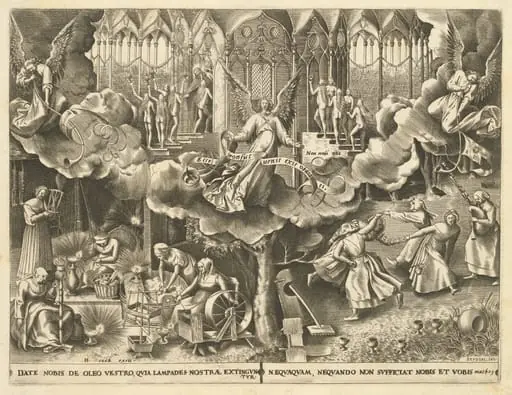 The Parable of the Wise and Foolish Virgins