Artwork
Saint Paul Driving Out Evil Spirits
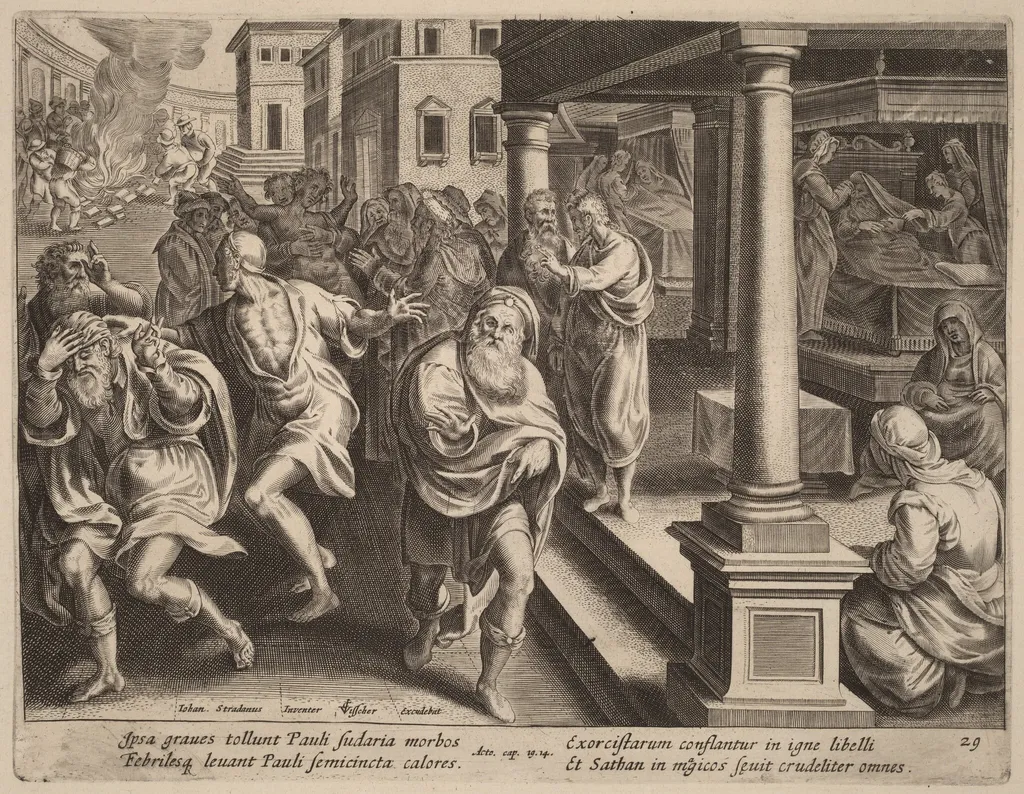
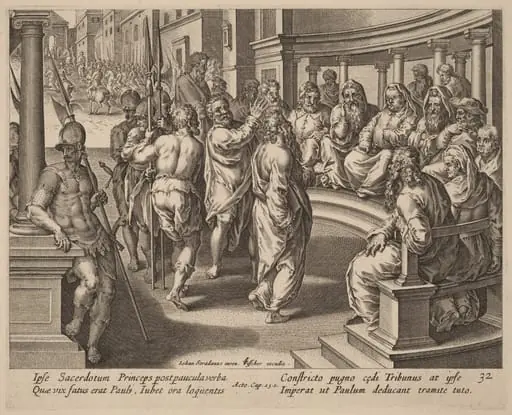
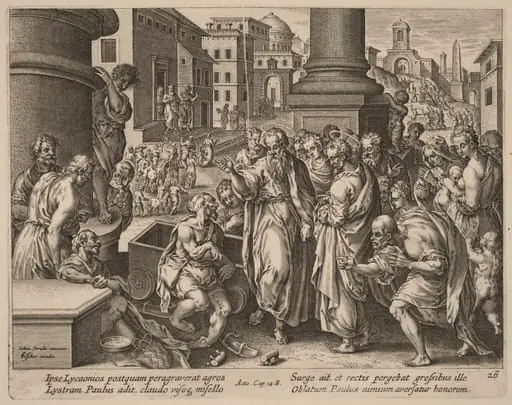
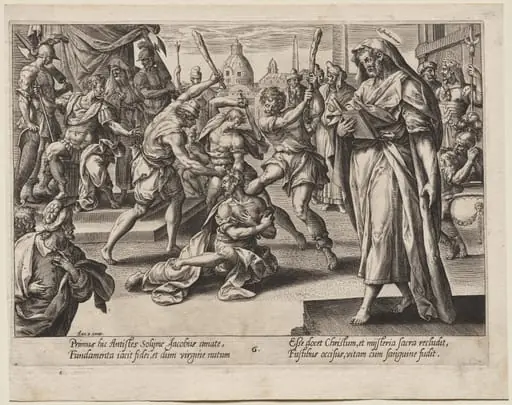
Saint Paul Driving Out Evil Spirits is an ink print by the Renaissance artist Philip Galle. It dates from 1574 and is held in the collection of the National Gallery of Art.
About this work
Overview
Philip Galle’s 1574 engraving, Saint Paul Driving Out Evil Spirits, presents a bustling biblical tableau in which the apostle confronts demonic possession. Executed in the Northern Renaissance print tradition, the work translates a painted composition into a black‑and‑white medium, allowing the scene to reach a broad European audience.
Subject & Meaning
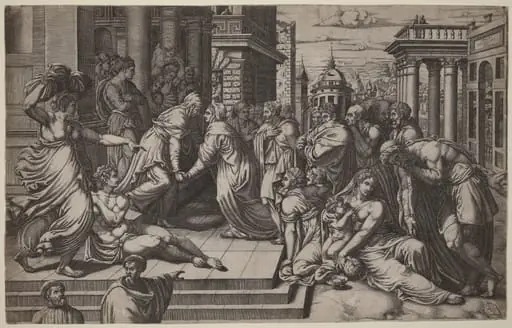
The image captures Saint Paul amid a tumult of afflicted figures, his gestures commanding the expulsion of demons from a suffering individual. One of the two central figures kneels with a book, suggesting scriptural authority, while the other points decisively toward the crowd, emphasizing the apostle’s role as spiritual healer.
Technique & Style
Galle employs dense cross‑hatching to model light and shadow, a hallmark of mid‑16th‑century Flemish engraving. The sharp, interlaced lines convey texture in clothing, architecture, and the writhing bodies, creating a sense of movement and dramatic tension without the use of colour.
History & Provenance
Operating as a publisher, printer, and engraver in Antwerp, Galle specialized in reproducing works by prominent painters. This print exemplifies his practice of disseminating contemporary and earlier religious imagery across the Low Countries and beyond, contributing to the visual culture of the Reformation era.
Context
The work belongs to the broader Northern Renaissance trend of reproductive printmaking, where engravers served as intermediaries between original paintings and a wider public. Such prints facilitated the spread of theological narratives and artistic styles during a period of intense religious debate.
Artist & collection
Artist
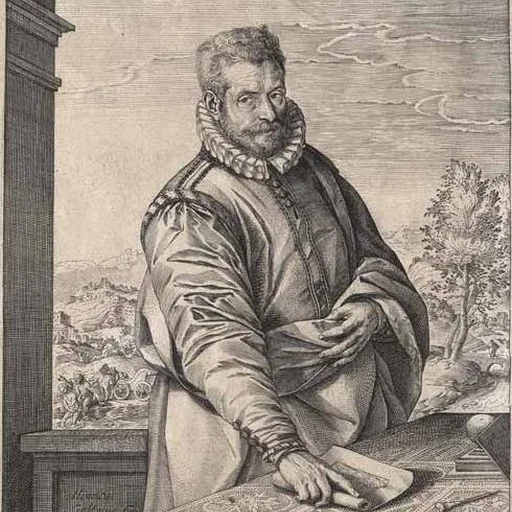
Philip (or Philips) Galle (1537 – March 1612) was a Dutch publisher, best known for publishing old master prints, which he also produced as designer and engraver. He is especially known for his reproductive engravings of paintings.

 Dianae Ephesiae Templum (The Temple of Diana at Ephesus)
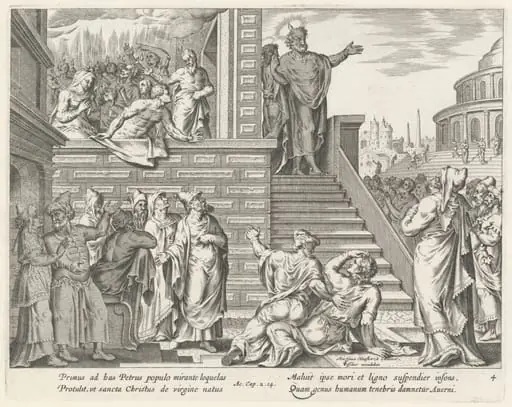 Saint Peter Speaks to the People about Christ
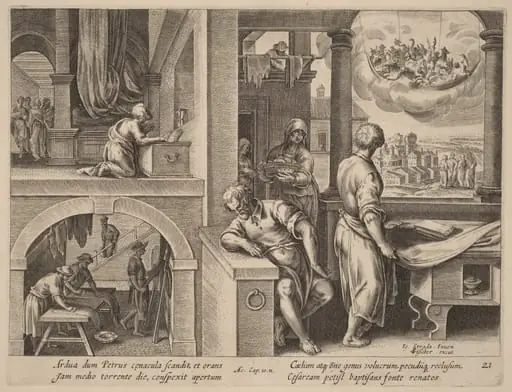 The Vision of Saint Peter
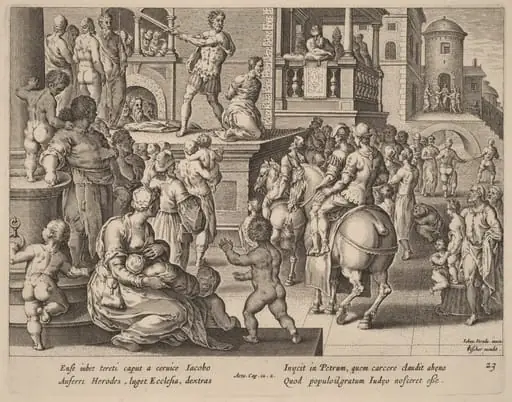 Beheading of Saint James
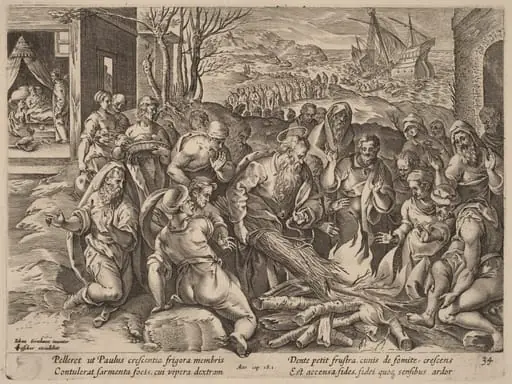 Saint Paul Shipwrecked on the Island of Melita
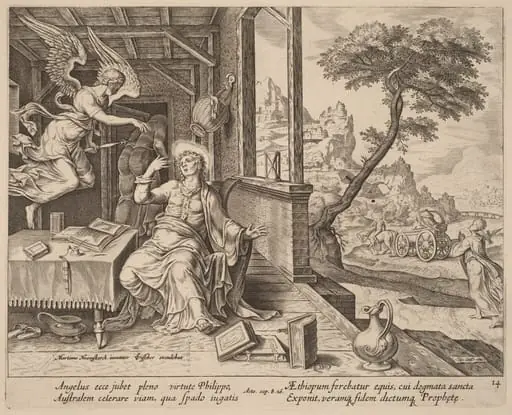 The Angel Orders Saint Philip to Accompany the Ethiopian Eunuch
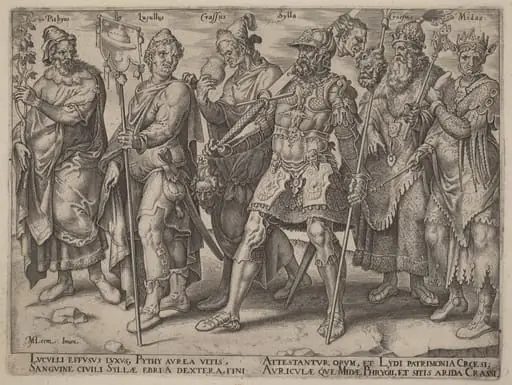 Notorious Examples of Wealth from Antiquity
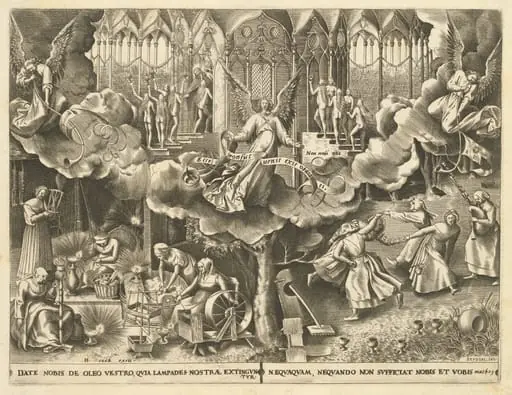 The Parable of the Wise and Foolish Virgins