Artwork
The Parable of the Wise and Foolish Virgins
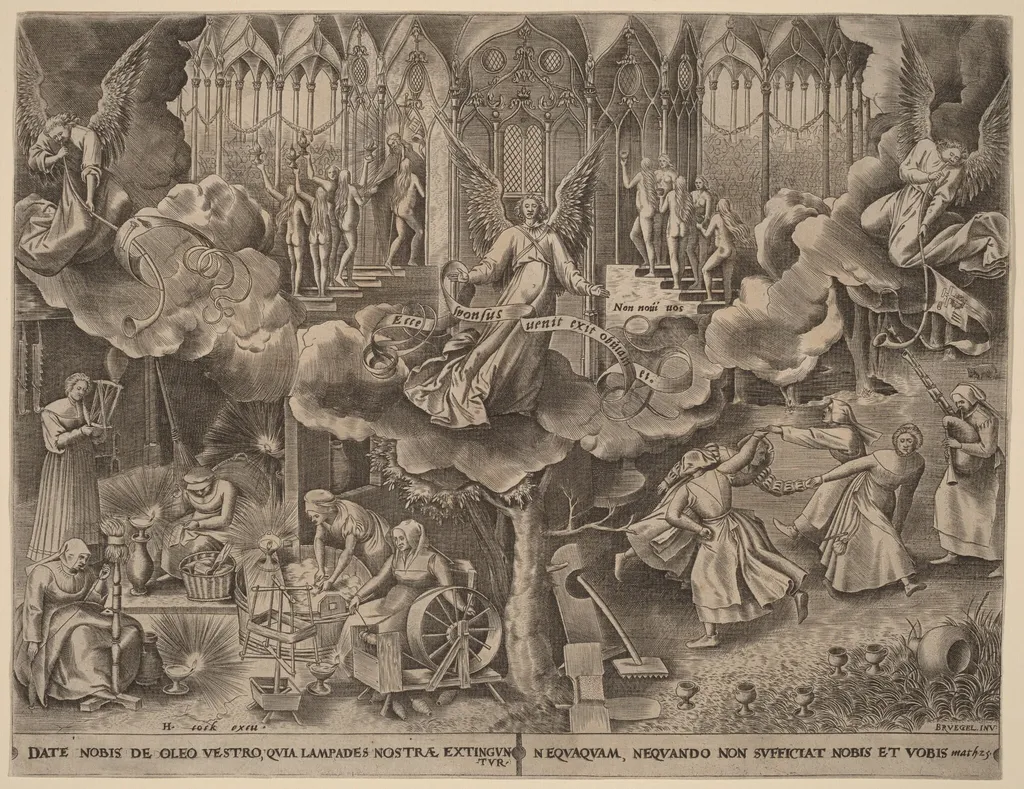
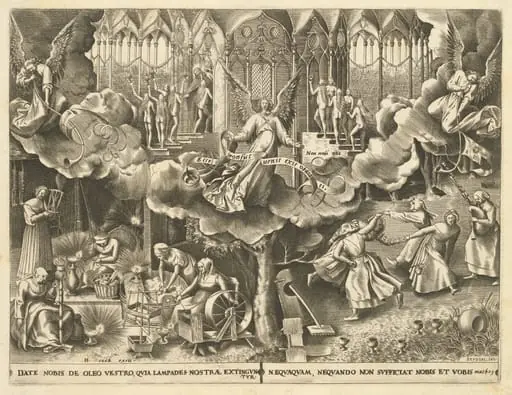
The Parable of the Wise and Foolish Virgins is an ink print by the Renaissance artist Philip Galle. It dates from 1562 and is held in the collection of the National Gallery of Art.
About this work
Overview
As a prominent Antwerp publisher and printmaker, Galle specialized in translating religious narratives into detailed printed images for wide dissemination.
Philip Galle’s 1562 engraving illustrates the biblical parable of the ten virgins from Matthew 25, rendered in fine-line engraving on laid paper. As a prominent Antwerp publisher and printmaker, Galle specialized in translating religious narratives into detailed printed images for wide dissemination. This work combines narrative clarity with dense visual symbolism, characteristic of Northern Renaissance print culture.
Subject & Meaning
The composition divides into two realms: above, ten nude virgins stand in a luminous church, five holding lit lamps, five with extinguished flames. Below, a chaotic earthly scene unfolds—figures spin wool, quarrel, and beg. Latin inscriptions in the clouds, such as 'Non novit nos' ('I do not know you'), underscore the parable’s warning of spiritual unreadiness. The contrast between celestial stillness and earthly turmoil reinforces moral urgency.
Technique & Style
Galle employed fine, precise engraving lines to render intricate textures and minute details across a crowded scene. The architectural arches, swirling clouds, and tiny human activities—spinning wheels, hidden figures, gestures of despair—are meticulously carved into copper. The tonal range is controlled through line density, not shading, typical of Northern European reproductive prints of the period.
History & Provenance
Created around 1562 in Antwerp, the print was part of a broader market for religious imagery in the wake of the Reformation. Galle, known for reproducing works by established painters, here executed an original design. The print likely circulated among educated laypeople and clergy as a devotional aid, reflecting the period’s emphasis on moral instruction through visual media.
Context
In mid-16th century the Low Countries, religious prints served as tools for moral education amid theological upheaval. Galle’s work aligns with Protestant and Catholic efforts to communicate scripture visually, even as iconoclasm challenged traditional imagery. The parable’s theme of vigilance resonated in a time of uncertainty, making such prints both devotional and didactic.
Legacy
Galle’s engraving exemplifies the technical precision and narrative ambition of Northern European printmaking. While not widely reproduced in later centuries, it remains a key example of how religious parables were translated into complex visual allegories. Its detailed composition influenced subsequent generations of printmakers seeking to merge theological depth with artistic craftsmanship.
Artist & collection
Artist
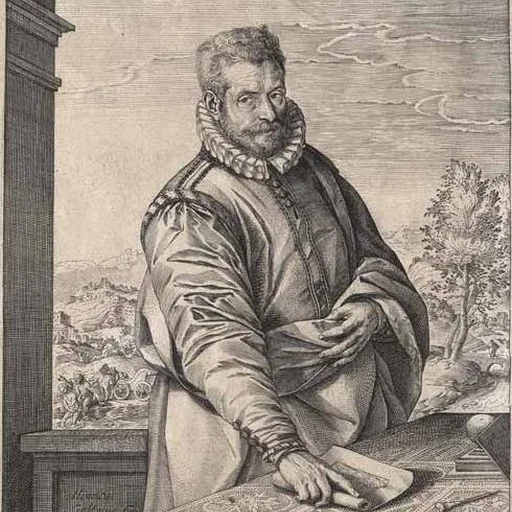
Philip (or Philips) Galle (1537 – March 1612) was a Dutch publisher, best known for publishing old master prints, which he also produced as designer and engraver. He is especially known for his reproductive engravings of paintings.

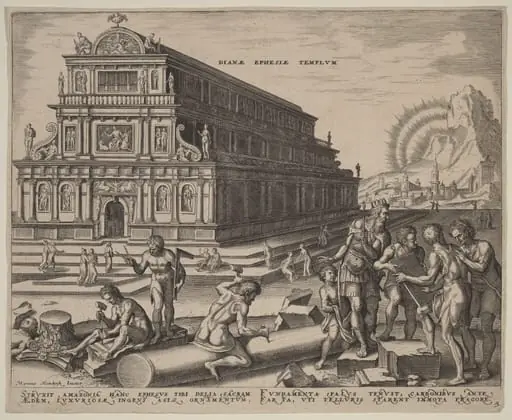 Dianae Ephesiae Templum (The Temple of Diana at Ephesus)
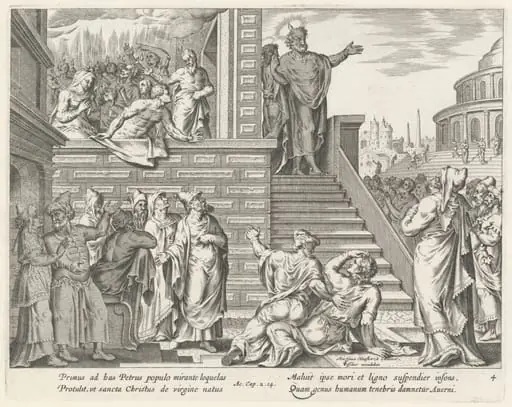 Saint Peter Speaks to the People about Christ
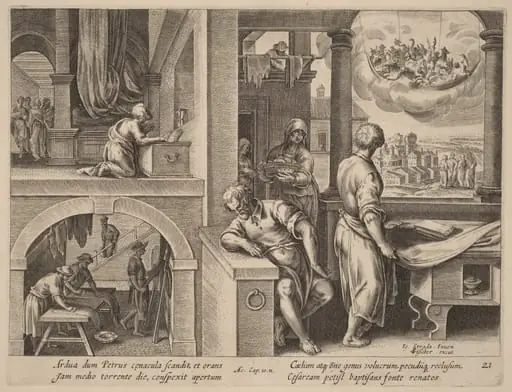 The Vision of Saint Peter
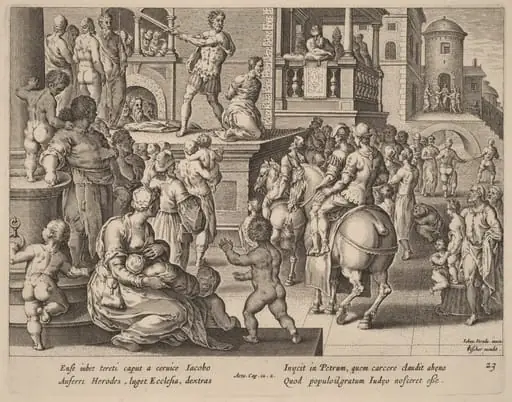 Beheading of Saint James
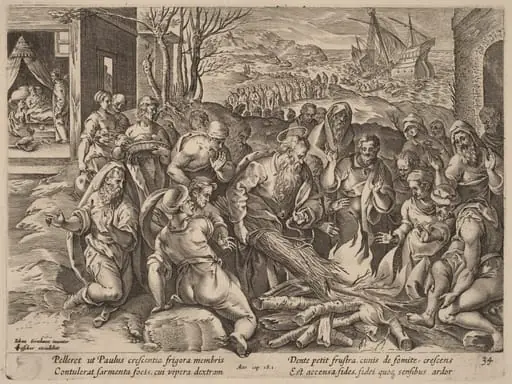 Saint Paul Shipwrecked on the Island of Melita
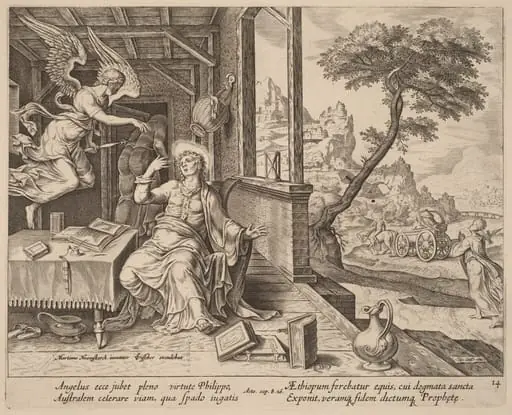 The Angel Orders Saint Philip to Accompany the Ethiopian Eunuch
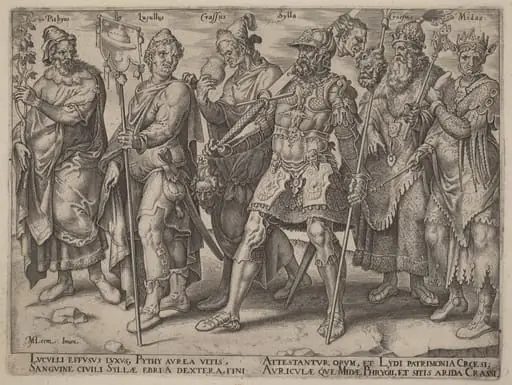 Notorious Examples of Wealth from Antiquity
 The Parable of the Wise and Foolish Virgins