Artwork
The Rape of Europa (L'enlevement d'Europe)
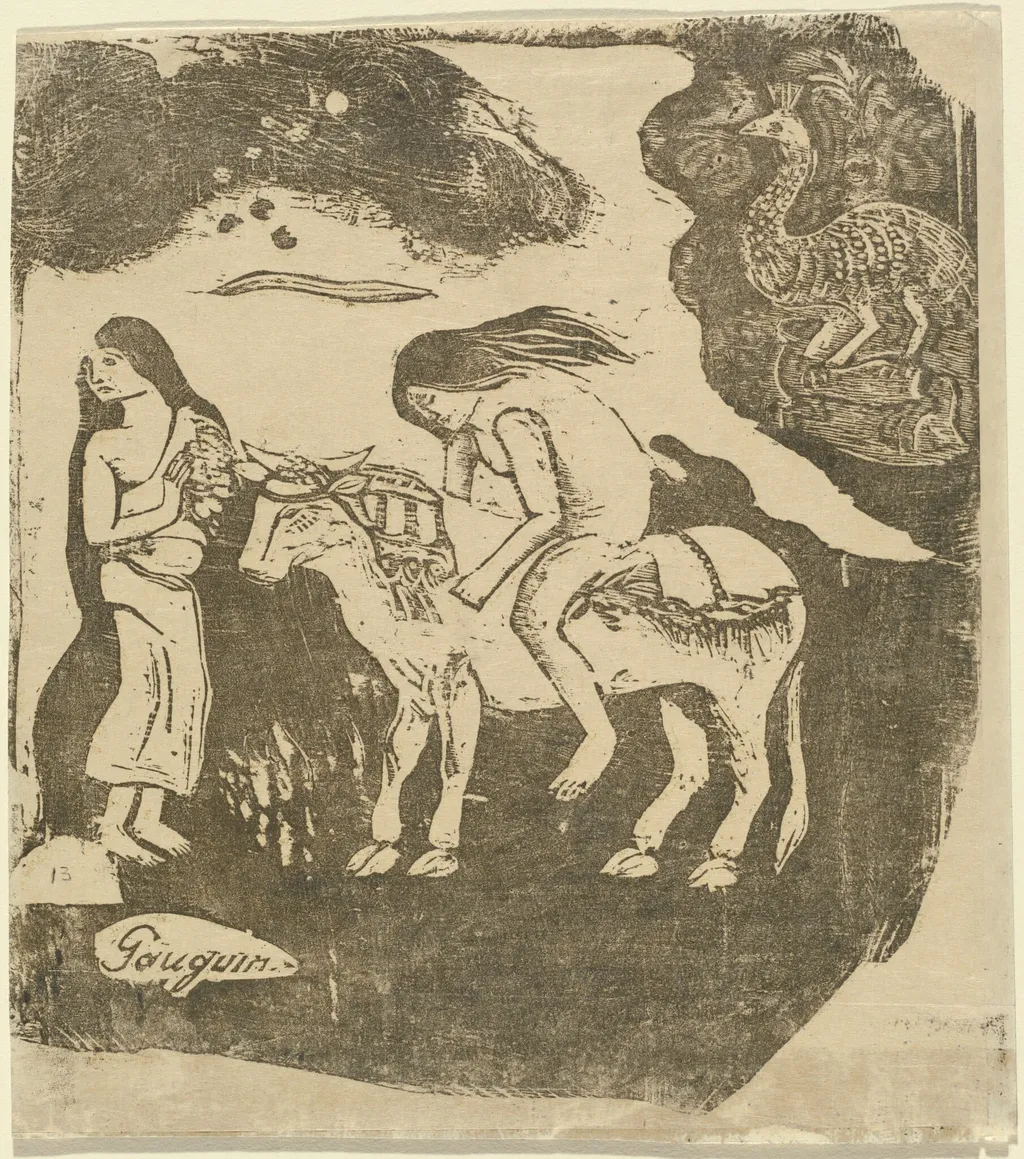
The Rape of Europa (L'enlevement d'Europe) is an ink print by the Impressionist artist Paul Gauguin. It dates from 1898 and is held in the collection of the National Gallery of Art.
About this work
Overview
The work belongs to a series of prints he produced during his time in Tahiti, where he increasingly turned to graphic arts as a complement to his paintings.
Created in 1898, *The Rape of Europa* is a woodcut printed on chine collé, with a fragment of another print affixed to the reverse of the mount. Gauguin used this experimental printmaking method to merge texture and layering, reflecting his broader interest in non-traditional materials. The work belongs to a series of prints he produced during his time in Tahiti, where he increasingly turned to graphic arts as a complement to his paintings.
Subject & Meaning
The scene depicts the mythological abduction of Europa by Zeus, who took the form of a bull. Gauguin reimagines the moment with a hybrid creature—part bull, part human-faced—carrying two women. One woman is seated, the other kneels, both caught in sudden motion. The inclusion of a small object in Europa’s hand suggests a moment of interruption or loss. The narrative is rendered not as a classical ideal but as a raw, psychological encounter, aligned with Symbolist themes of myth as inner truth.
Technique & Style
Gauguin employed wood engraving with bold, simplified lines to create strong contrasts and rhythmic movement. The chine collé technique allowed him to layer thin paper for subtle tonal variation, while the textured background evokes the roughness of carved wood. He abandoned naturalistic detail in favor of flattened forms and symbolic gestures, emphasizing emotional intensity over realism. The human-faced bull and distorted figures reflect his move away from Western conventions toward a more primal visual language.
History & Provenance
This print was made during Gauguin’s second stay in Tahiti, a period marked by financial hardship and artistic experimentation. He produced limited editions of woodcuts, often reusing materials and incorporating fragments of other prints, as seen in the backing of this work. The reverse fragment suggests a resourceful, improvisational approach to printmaking. Its survival in this condition offers insight into his working methods and the ephemeral nature of his print output.
Context
In the late 1890s, Gauguin sought to distance himself from European artistic norms, embracing what he perceived as more authentic, non-Western forms of expression. His use of myth was not classical revival but a tool to explore universal themes of power, desire, and displacement. The print reflects his engagement with Oceanic aesthetics and his rejection of academic tradition, aligning with broader Symbolist interests in myth, spirituality, and the subconscious.
Legacy
Though less known than his paintings, Gauguin’s woodcuts like this one influenced later printmakers seeking expressive, non-representational forms. His integration of material experimentation—such as chine collé and reused fragments—expanded the possibilities of printmaking as a medium for personal vision. The work remains a testament to his commitment to redefining artistic language beyond the boundaries of European modernism.
Artist & collection
Artist
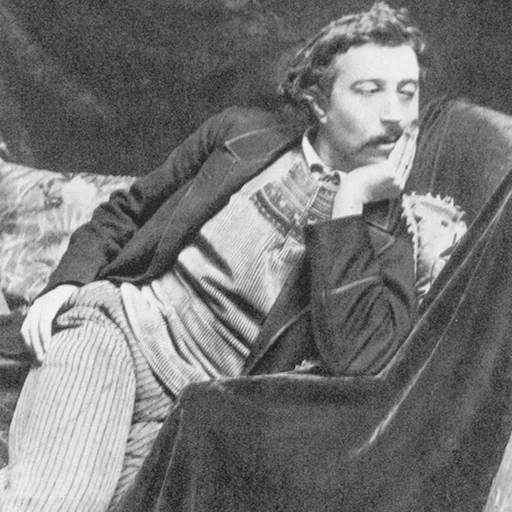
Eugène Henri Paul Gauguin (; French: ; 7 June 1848 – 8 May 1903) was a French painter, sculptor, printmaker, ceramist, and writer, whose work has been primarily associated with the Post-Impressionist and Symbolist movements.

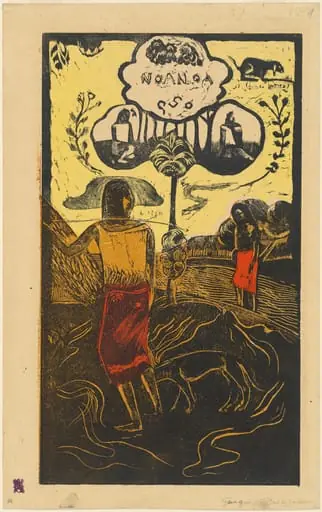 Noa Noa (Fragrant, Fragrant)
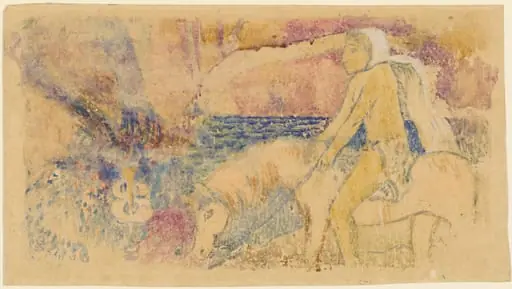 The Rider
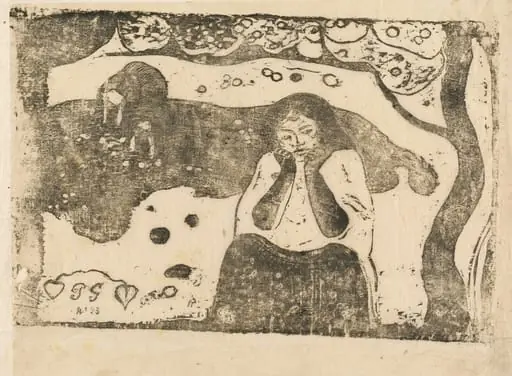 Human Misery (Misères humaines)
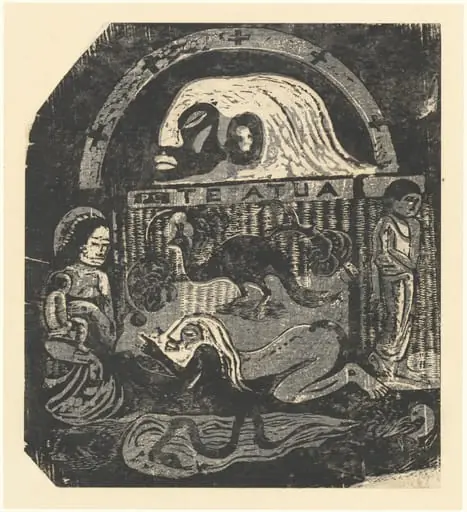 Te Atua (The Gods) Small Plate
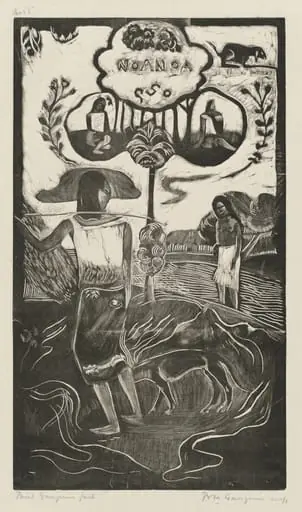 Noa Noa (Fragrant, Fragrant)
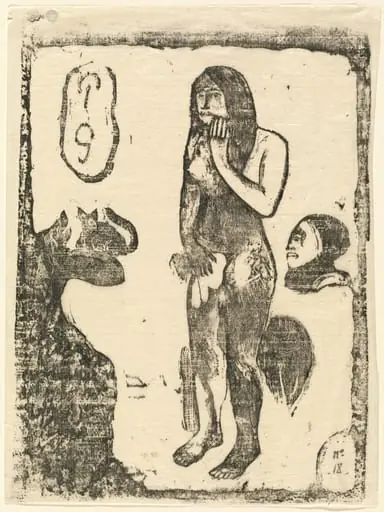 Eve
Eve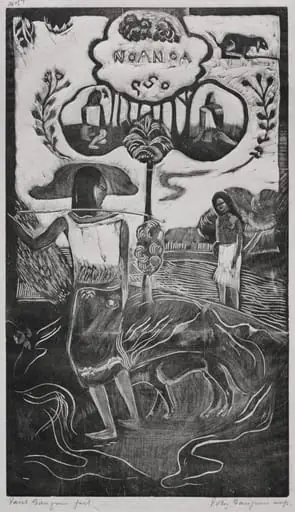 Noa Noa: Noa Noa (Fragrant Scent)
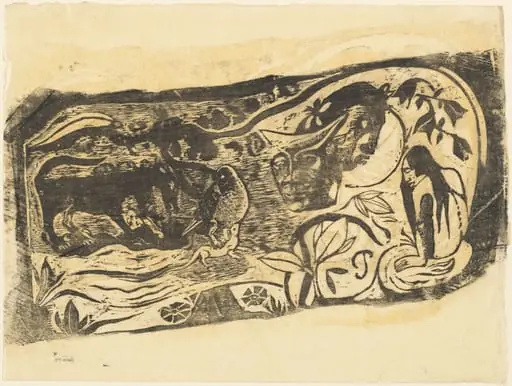 Plate with the Head of a Horned Devil (Planche au diable cornu)
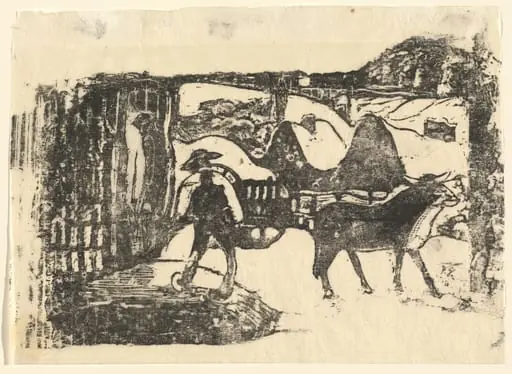 The Ox Cart (Le char a boeufs)
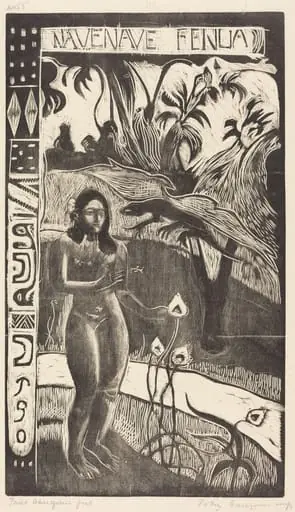 Nave Nave Fenua (Delightful Land)
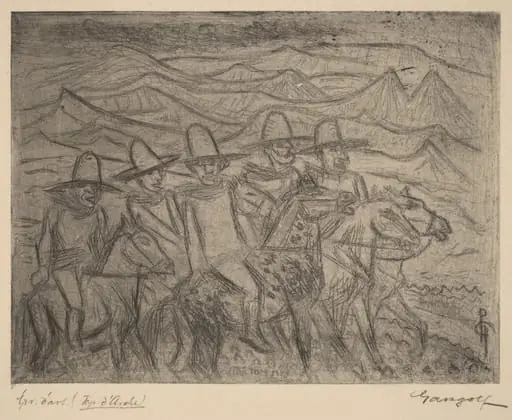 Tom Mix I
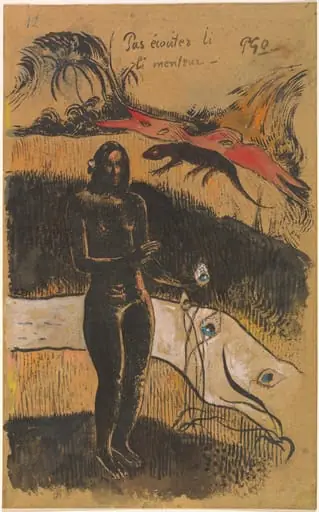 Nave Nave Fenua