Artwork
Baptism
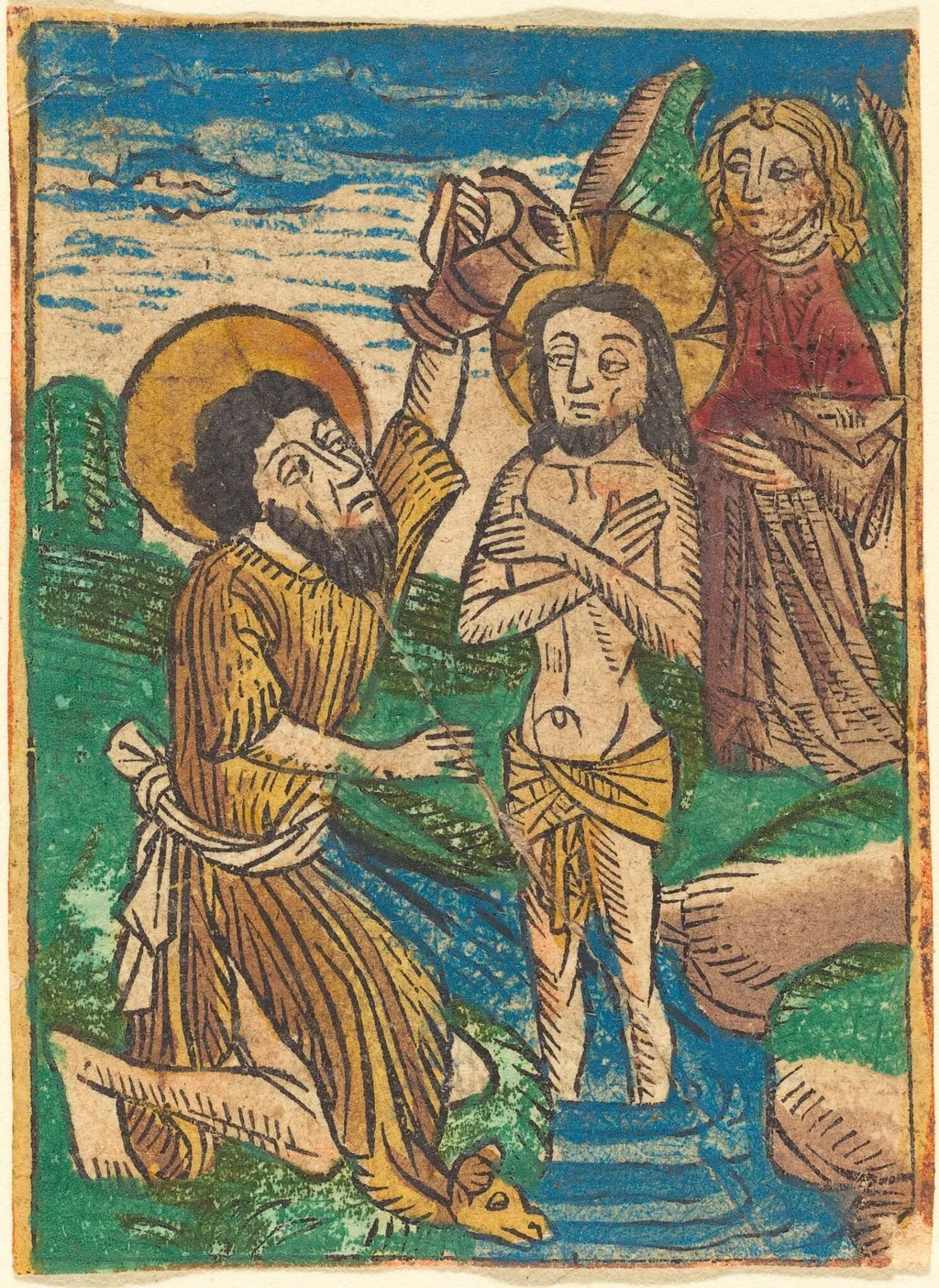
Baptism is an ink print by the Renaissance artist German 15th Century. It dates from 1490 and is held in the collection of the National Gallery of Art.
About this work
It’s one of the first religious prints meant for ordinary people, not just churches.
A priest in a white robe pours water over a man’s head in a river.
The print is hand-colored, so each copy looks a little different.
This German woodcut from around 1490 shows baptism as a quiet, everyday moment.
Before photo-mechanical printing, artists carved images on wood blocks.
Printing houses sold these sheets everywhere—cheap enough for many homes.
It’s one of the first religious prints meant for ordinary people, not just churches.
Look for the same sharp outlines and bold shadows in Albrecht Dürer’s woodcuts.
Overview
This German hand-colored woodcut, dated around 1490, depicts a baptismal scene in a river, with a priest pouring water over a man’s head. Produced using carved wooden blocks, it was printed in multiple copies and then colored by hand, resulting in subtle variations between each impression. Its modest scale and accessible price made it suitable for domestic use, distinguishing it from larger ecclesiastical artworks.
Subject & Meaning
The scene portrays baptism as a private, unadorned ritual rather than a ceremonial spectacle. The quiet intimacy of the moment—set in a natural riverbank—suggests a focus on personal faith and spiritual renewal. This approach reflects a growing trend in late 15th-century Germany to make religious experiences tangible and immediate for laypeople outside church settings.
Technique & Style
The image relies on strong, clean outlines and bold contrasts of light and shadow, characteristic of early German woodcut printing. Hand-coloring added subtle individuality to each print, enhancing emotional resonance without altering the composition. These visual strategies, emphasizing clarity and emotional directness, anticipate the more refined woodcuts of Albrecht Dürer and his contemporaries.
History & Provenance
Created in the decades before the Reformation, this print circulated widely through commercial print shops, reaching households across German-speaking regions. Its survival in multiple examples indicates broad distribution and domestic use. Unlike altarpieces or illuminated manuscripts, it was not commissioned by the church but produced for the open market, reflecting a shift in religious patronage.
Context
In the late 15th century, woodcuts became a primary medium for disseminating religious imagery beyond cathedrals and monasteries. As literacy rose and printing technology expanded, affordable prints like this one allowed ordinary families to engage with sacred narratives in their homes, fostering personal devotion and shaping popular piety in pre-Reformation Europe.
Legacy
This print exemplifies the transition from sacred art as exclusive ecclesiastical property to a democratized visual culture. Its compositional clarity and accessibility influenced later Protestant devotional imagery. Though unsigned, its stylistic traits align with the broader Northern European woodcut tradition that would evolve into the detailed, narrative-driven prints of the early 16th century.
Artist & collection

Artist
This 15th-century German artist carved vivid religious scenes into metal and wood, then hand-painted them in bright, symbolic colors.

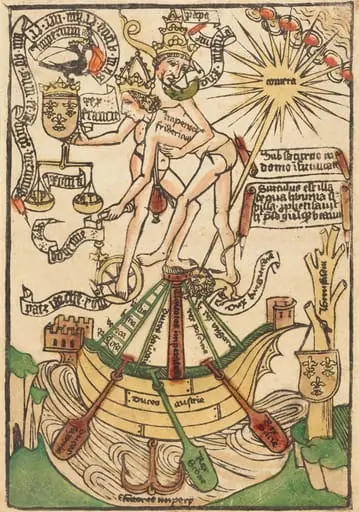 Allegory of the Meeting of Pope Paul II and Emperor Frederick III
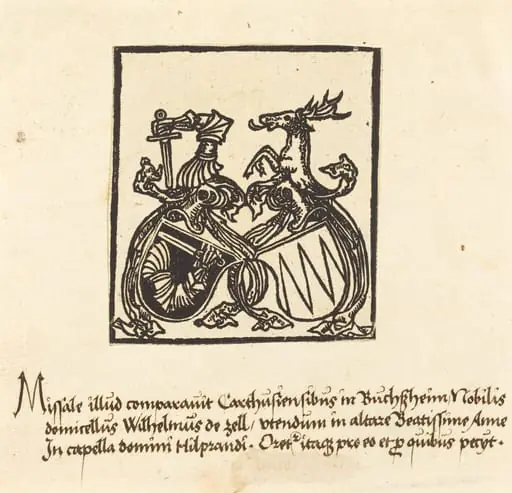 Bookplate of Wilhelm von Zell
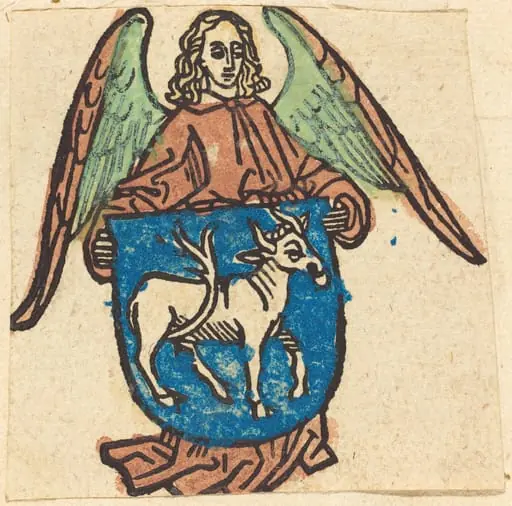 Bookplate of Hilprand Brandenburg of Bibrach
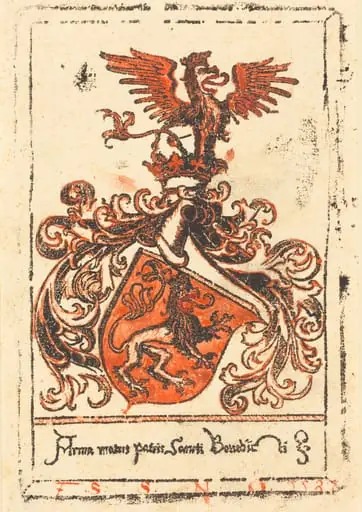 Bookplate of the Abbey of Ottobeuren
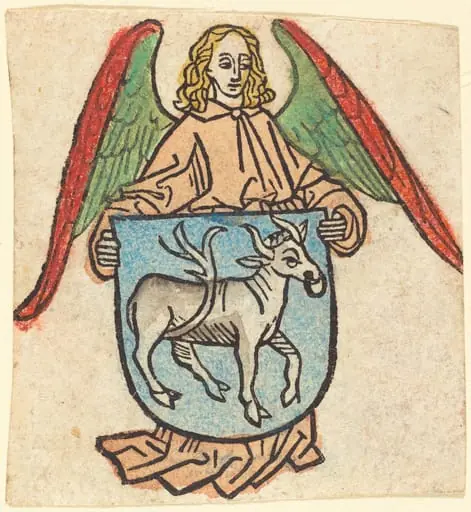 Bookplate of Hilprand Brandenburg of Bibrach
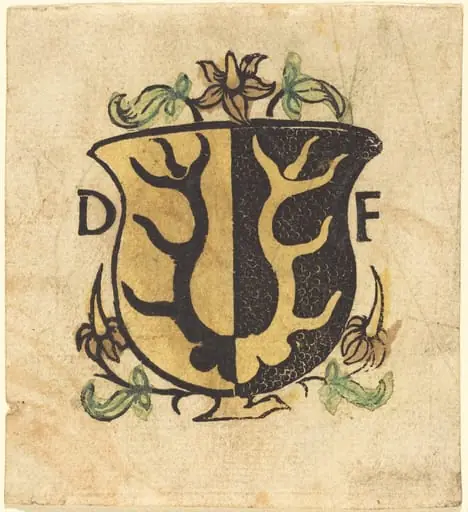 Bookplate of Dominicus Frauenfelder
![Studies for Six Figures (sheet from a model book) [recto], by German 15th Century](https://artifactworldgallery.com/img/german-15th-century--studies-for-six-figures-sheet-from-a-model-book-recto--4837429e0755bc3f-w320.webp) Studies for Six Figures (sheet from a model book) [recto]
Studies for Six Figures (sheet from a model book) [recto]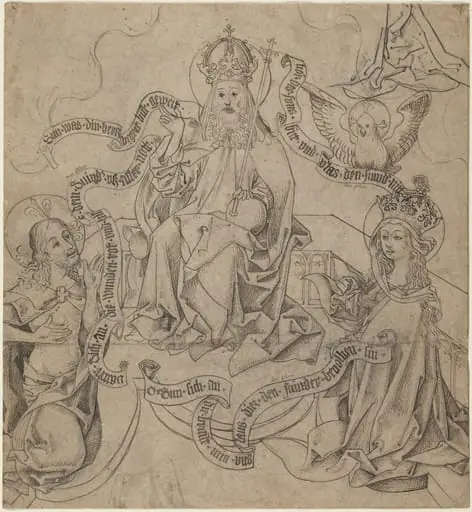 Christ and Mary Interceding with God the Father
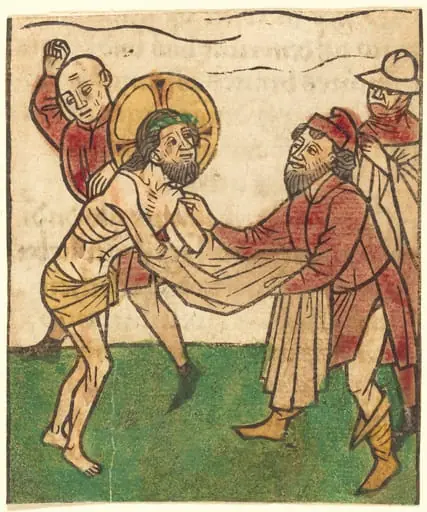
![Ecce Homo [verso], by German 15th Century](https://artifactworldgallery.com/img/german-15th-century--ecce-homo-verso--355663726e7bd572-w320.webp)