Artwork
Madonna as a Protectress
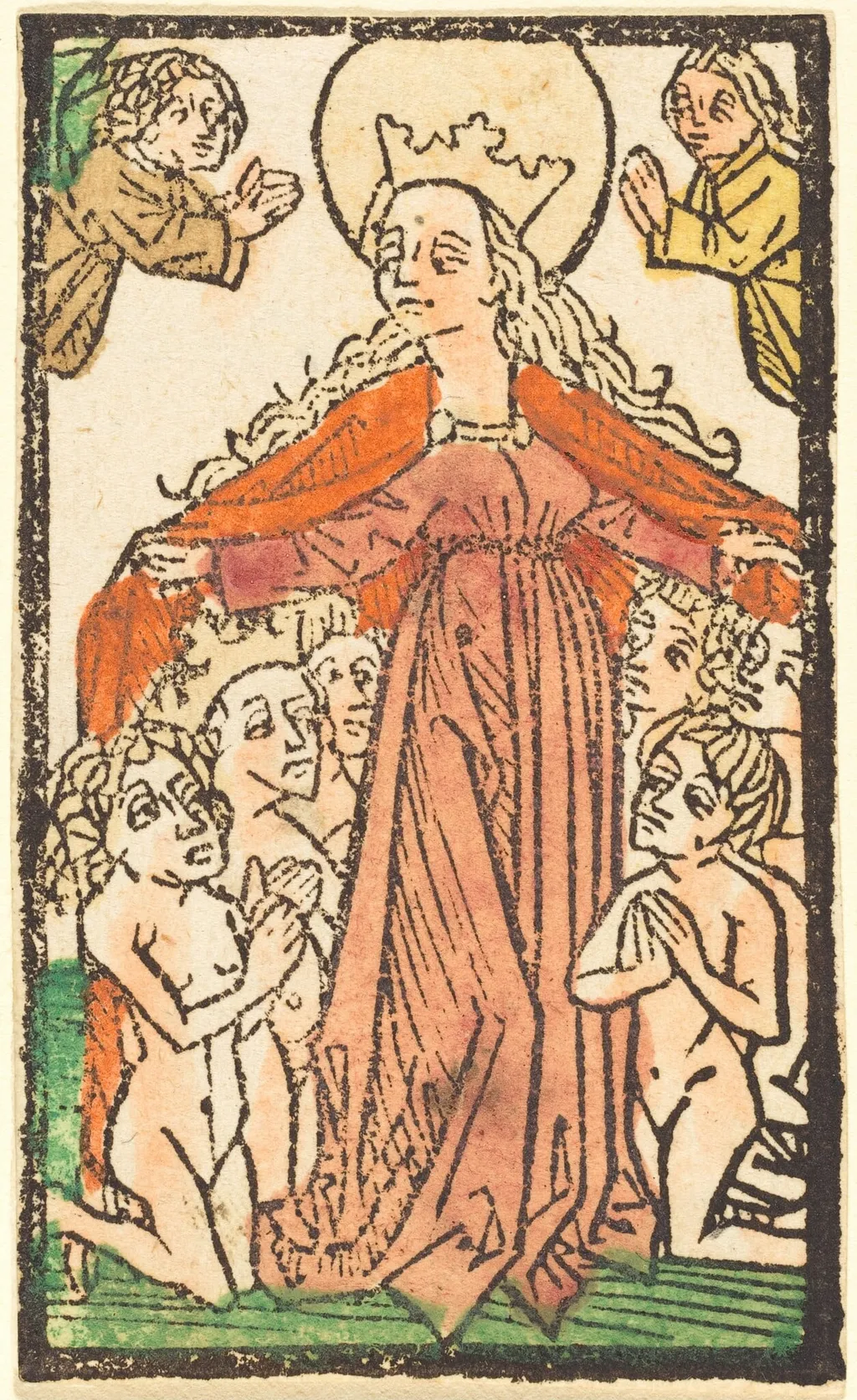
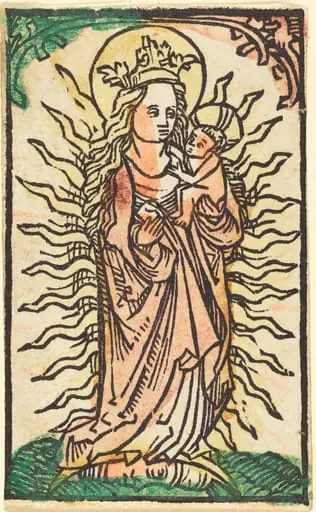
Madonna as a Protectress is an ink print by the Renaissance artist German 15th Century. It dates from 1475 and is held in the collection of the National Gallery of Art. This woodcut, hand-colored in rose carmine, green, and yellow, portrays the Virgin Mary as a protective figure.
About this work
Overview
This woodcut, hand-colored in rose carmine, green, and yellow, portrays the Virgin Mary as a protective figure.
This woodcut, hand-colored in rose carmine, green, and yellow, portrays the Virgin Mary as a protective figure. She stands centrally, arms outstretched, encircling a group of devotees who gaze upward in reverence. The plain white background isolates the figures, emphasizing their spiritual focus. Though labeled a painting in some notes, the medium is a printed impression, enhanced by manual coloring.
Subject & Meaning
The Virgin is depicted not as an intercessor in prayer but as an active guardian, her outstretched arms forming a symbolic shelter. The figures surrounding her—kneeling, standing, and attentive—represent the faithful under her care. The crown signifies her heavenly status, while the red robe evokes both divine authority and maternal warmth, reinforcing her role as protector of the community.
Technique & Style
The composition relies on bold, simplified lines typical of woodcut printing, with color applied by hand in limited hues. The flatness of the forms and lack of perspective reflect devotional rather than naturalistic aims. The restrained palette directs focus to the figures’ gestures and spatial arrangement, enhancing the image’s solemn, contemplative tone.
History & Provenance
The work likely originated in late medieval or early Renaissance Europe, where devotional prints were widely distributed for private worship. Its hand-coloring suggests it was produced for a specific patron or devotional context, possibly a chapel or household altar. Exact origin and early ownership remain undocumented, though similar prints circulated in German and Netherlandish regions.
Context
In the late Middle Ages, images of the Madonna as Protectress responded to widespread fears of plague, war, and divine judgment. Such depictions offered reassurance through visual symbolism: the Virgin as a maternal shield. This print aligns with a broader tradition of Marian devotion that emphasized her intercessory power, especially among lay communities with limited access to clergy.
Legacy
Though not attributed to a known artist, the print exemplifies how mass-produced imagery sustained religious practice outside ecclesiastical institutions. Its simplicity and emotional clarity influenced later devotional prints and contributed to the enduring visual language of Marian protection in European religious art.
Artist & collection

Artist
This 15th-century German artist carved vivid religious scenes into metal and wood, then hand-painted them in bright, symbolic colors.

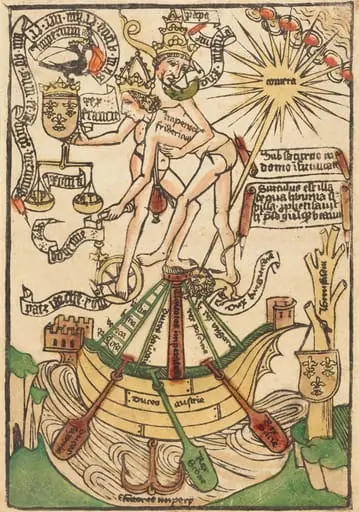 Allegory of the Meeting of Pope Paul II and Emperor Frederick III
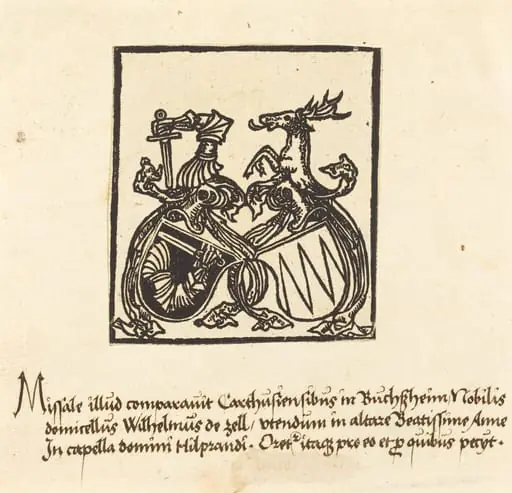 Bookplate of Wilhelm von Zell
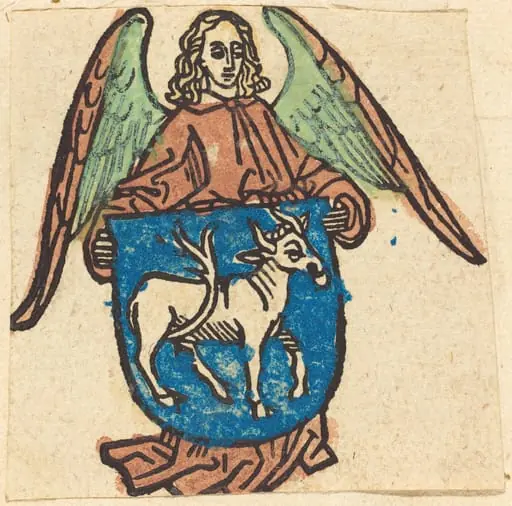 Bookplate of Hilprand Brandenburg of Bibrach
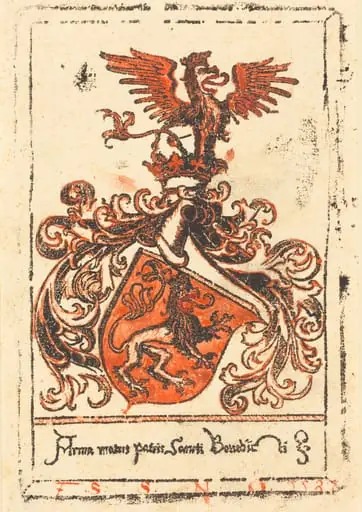 Bookplate of the Abbey of Ottobeuren
 Bookplate of Hilprand Brandenburg of Bibrach
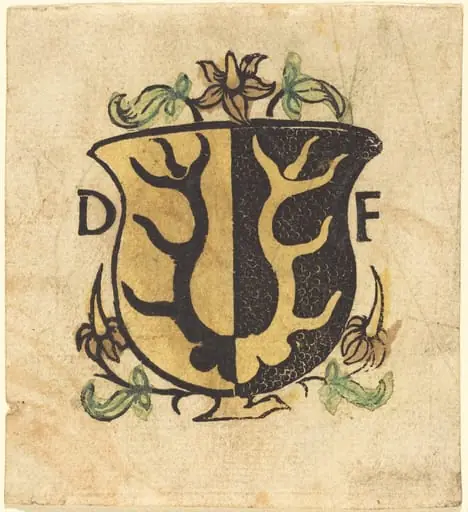 Bookplate of Dominicus Frauenfelder
![Studies for Six Figures (sheet from a model book) [recto], by German 15th Century](https://artifactworldgallery.com/img/german-15th-century--studies-for-six-figures-sheet-from-a-model-book-recto--4837429e0755bc3f-w320.webp) Studies for Six Figures (sheet from a model book) [recto]
Studies for Six Figures (sheet from a model book) [recto]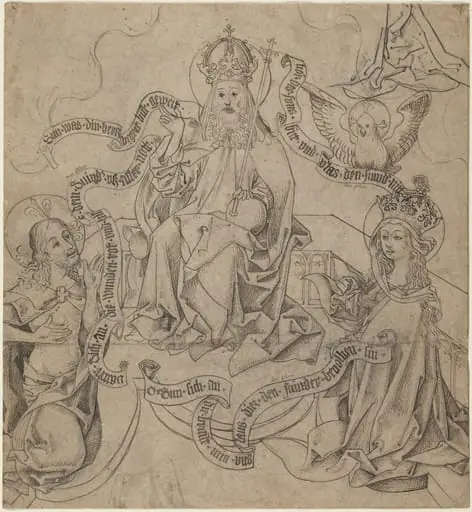 Christ and Mary Interceding with God the Father