Artwork
Saint Anne, The Madonna and Child, and a Franciscan Monk
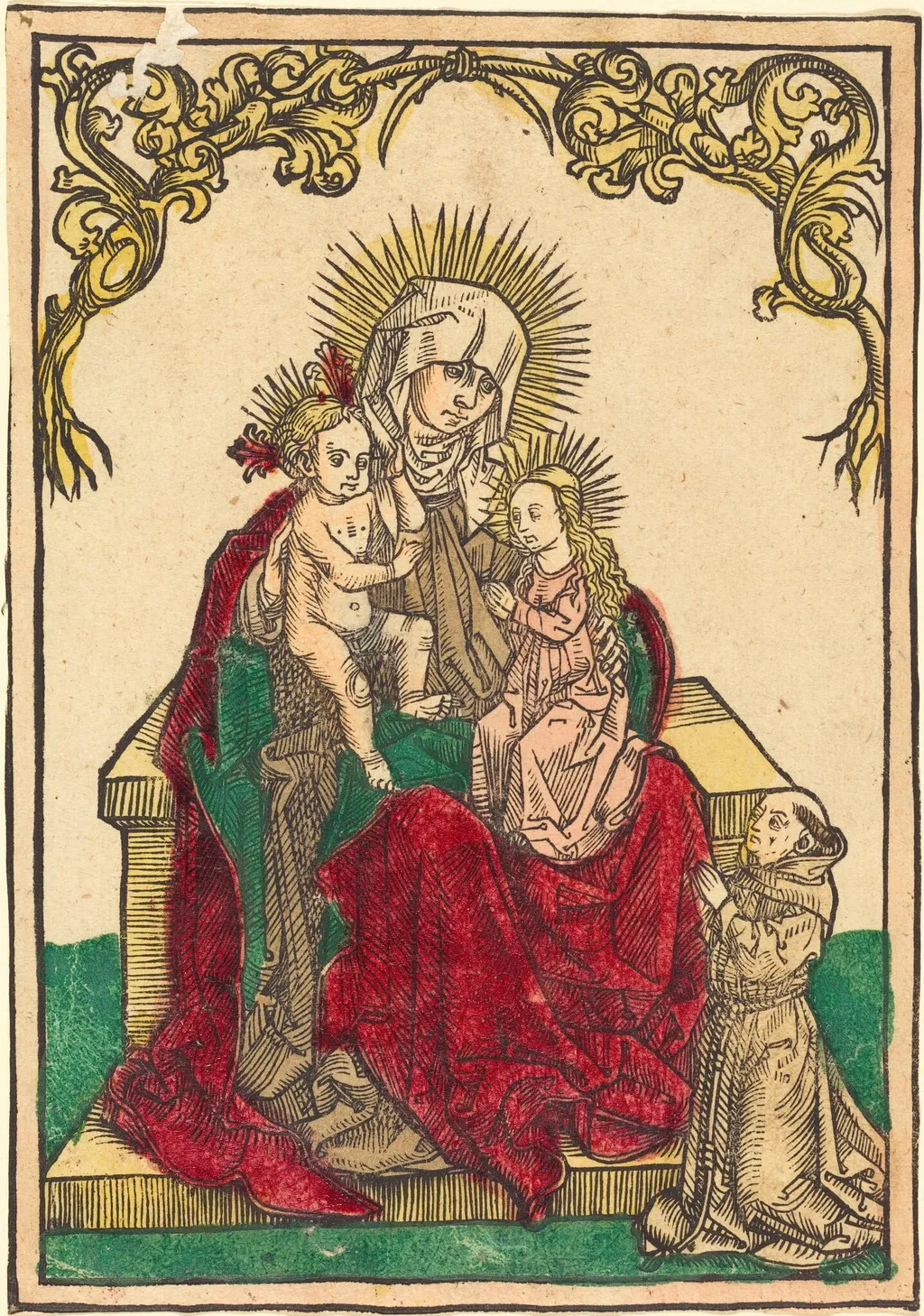
Saint Anne, The Madonna and Child, and a Franciscan Monk is an ink print by the Renaissance artist German 15th Century. It dates from 1500 and is held in the collection of the National Gallery of Art.
About this work
Overview
This early Renaissance woodcut presents a devotional grouping: Saint Anne seated on a throne, the Virgin Mary with the infant Christ, and a kneeling Franciscan monk. The image is executed as a black‑line woodcut that has been hand‑colored with red lake, green, rose, yellow and gray pigments, giving it a modestly vivid surface against a light background.
Subject & Meaning
Saint Anne, identified by her red mantle and crown of thorns, holds the infant Christ, who also bears a small crown, symbolising his future suffering. The Virgin Mary, dressed in pink, kneels in reverence before her mother, while the Franciscan monk, in a brown habit, offers a gesture of prayer, reflecting the order’s particular devotion to the Holy Family.
Technique & Style
The work employs the woodcut process, in which the artist carved the design into a wooden block, printed it in black ink, and then applied selective color by hand. The limited palette of red lake and other earth tones highlights key details—crowns, garments, and decorative border motifs—while preserving the linear clarity typical of early printmaking.
History & Provenance
Printed in the early sixteenth century, the piece belongs to a series of devotional prints that circulated widely among lay and monastic audiences. Surviving copies are found in several European collections, indicating that the image was reproduced and distributed for private contemplation and Franciscan devotional practice.
Context
During the Renaissance, the cult of Saint Anne grew in popularity, especially within Franciscan circles that emphasized the sanctity of the Holy Family. Prints such as this provided an affordable visual aid for meditation, complementing larger painted altarpieces and manuscript illuminations.
Legacy
The woodcut exemplifies the transition from manuscript illumination to mass‑produced religious imagery, influencing later printmakers who adopted hand‑coloring to enhance narrative detail. Its composition continues to be referenced in studies of early print culture and the visual propagation of saintly intercession.
Artist & collection

Artist
This 15th-century German artist carved vivid religious scenes into metal and wood, then hand-painted them in bright, symbolic colors.

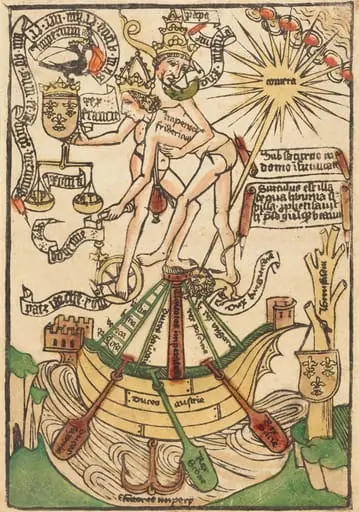 Allegory of the Meeting of Pope Paul II and Emperor Frederick III
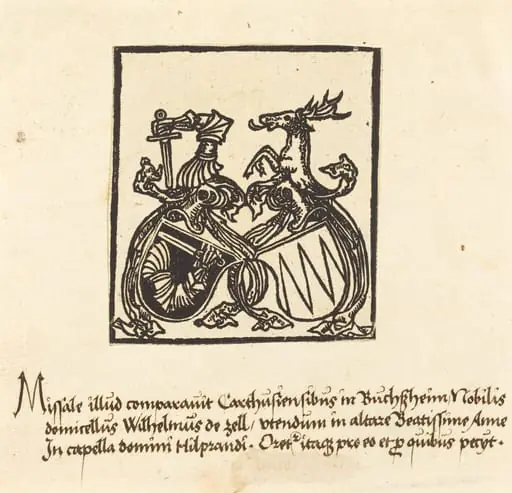 Bookplate of Wilhelm von Zell
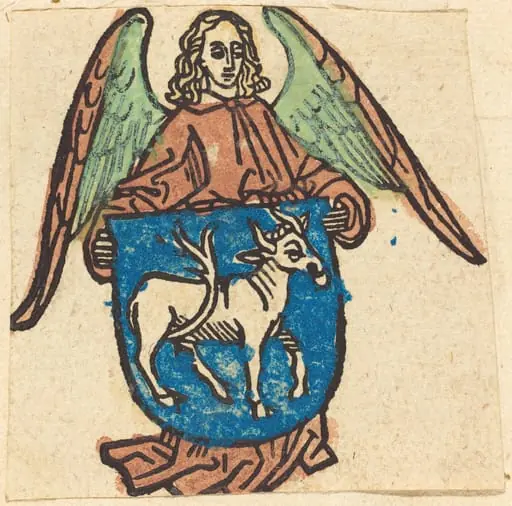 Bookplate of Hilprand Brandenburg of Bibrach
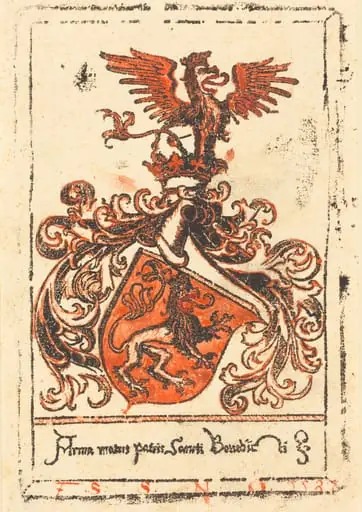 Bookplate of the Abbey of Ottobeuren
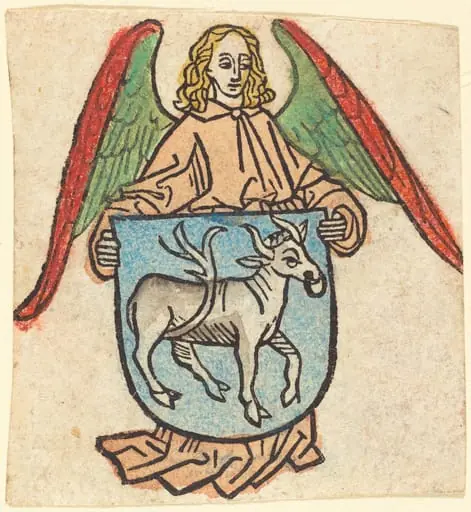 Bookplate of Hilprand Brandenburg of Bibrach
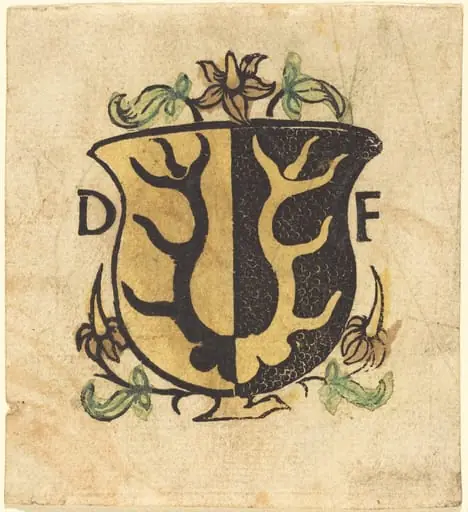 Bookplate of Dominicus Frauenfelder
![Studies for Six Figures (sheet from a model book) [recto], by German 15th Century](https://artifactworldgallery.com/img/german-15th-century--studies-for-six-figures-sheet-from-a-model-book-recto--4837429e0755bc3f-w320.webp) Studies for Six Figures (sheet from a model book) [recto]
Studies for Six Figures (sheet from a model book) [recto]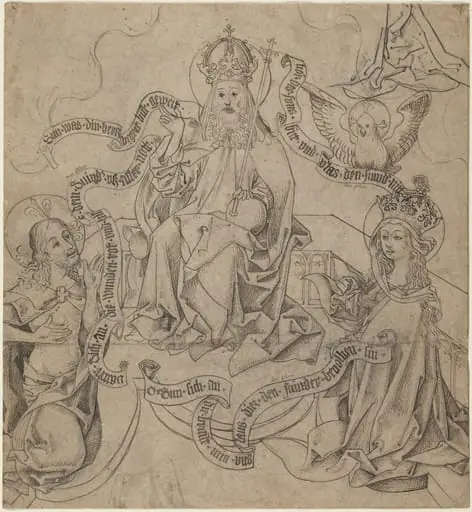 Christ and Mary Interceding with God the Father
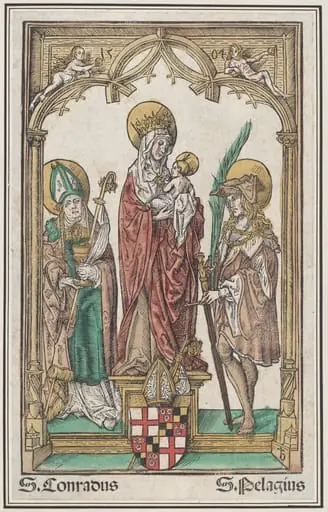 The Virgin and Child with Saint Conrad and Saint Pelagius
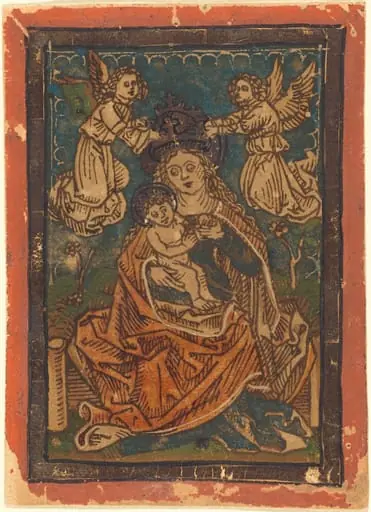 Madonna and Child Seated on a Grassy Bank with Angels
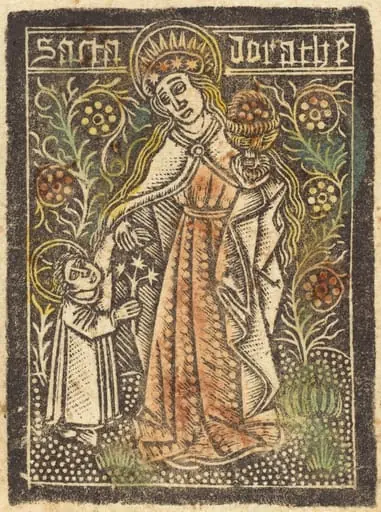 Saint Dorothy
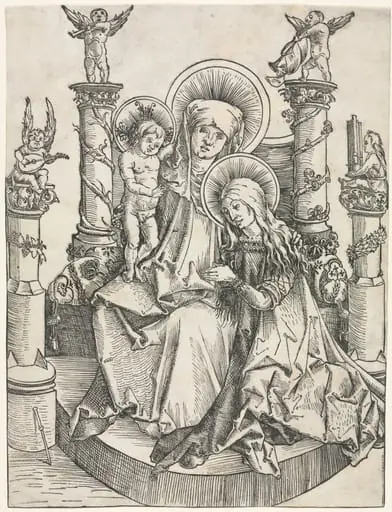 St. Anne, the Virgin and Christ Child
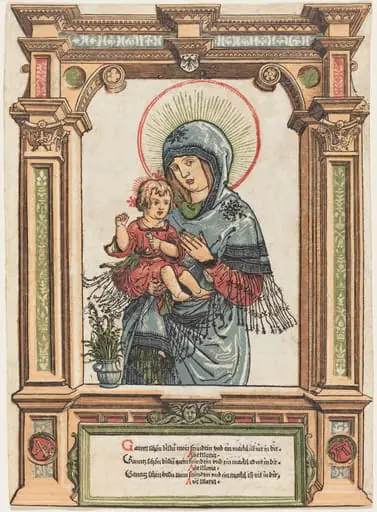 The Beautiful Virgin of Regensburg
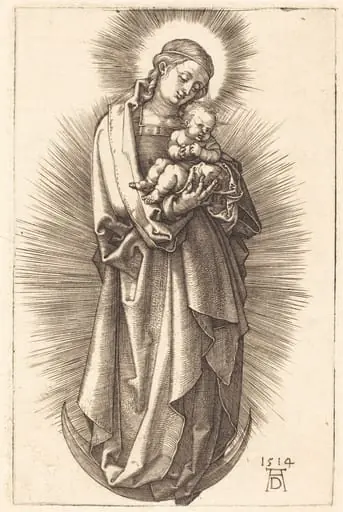 The Virgin and Child on a Crescent with a Diadem
![The Madonna with Saint Ulrich and Saint Afra [recto], by Urs Graf I](https://artifactworldgallery.com/img/urs-graf-i--the-madonna-with-saint-ulrich-and-saint-afra-recto--563a13dc2b4b63a3-w320.webp) The Madonna with Saint Ulrich and Saint Afra [recto]
The Madonna with Saint Ulrich and Saint Afra [recto]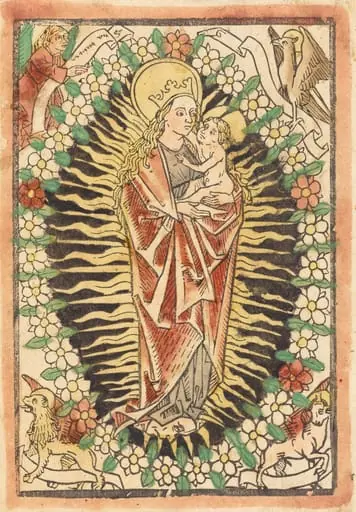 Madonna and Child in a Rosary
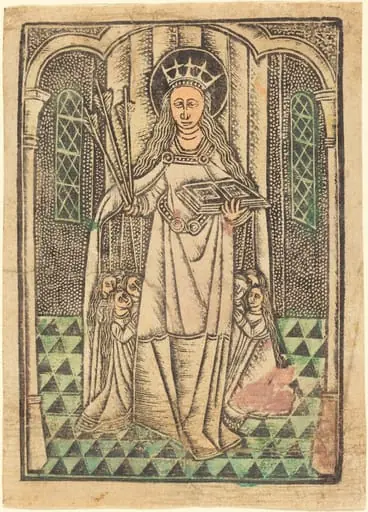 Saint Ursula as Protectress
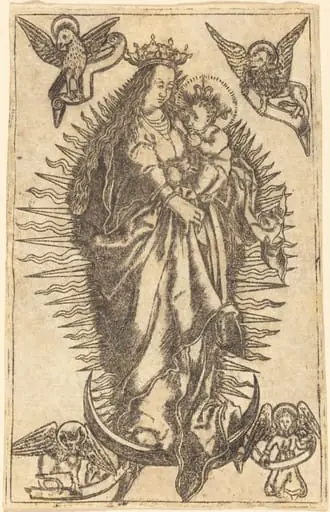 Madonna and Child