Artwork
Saint Sebastian
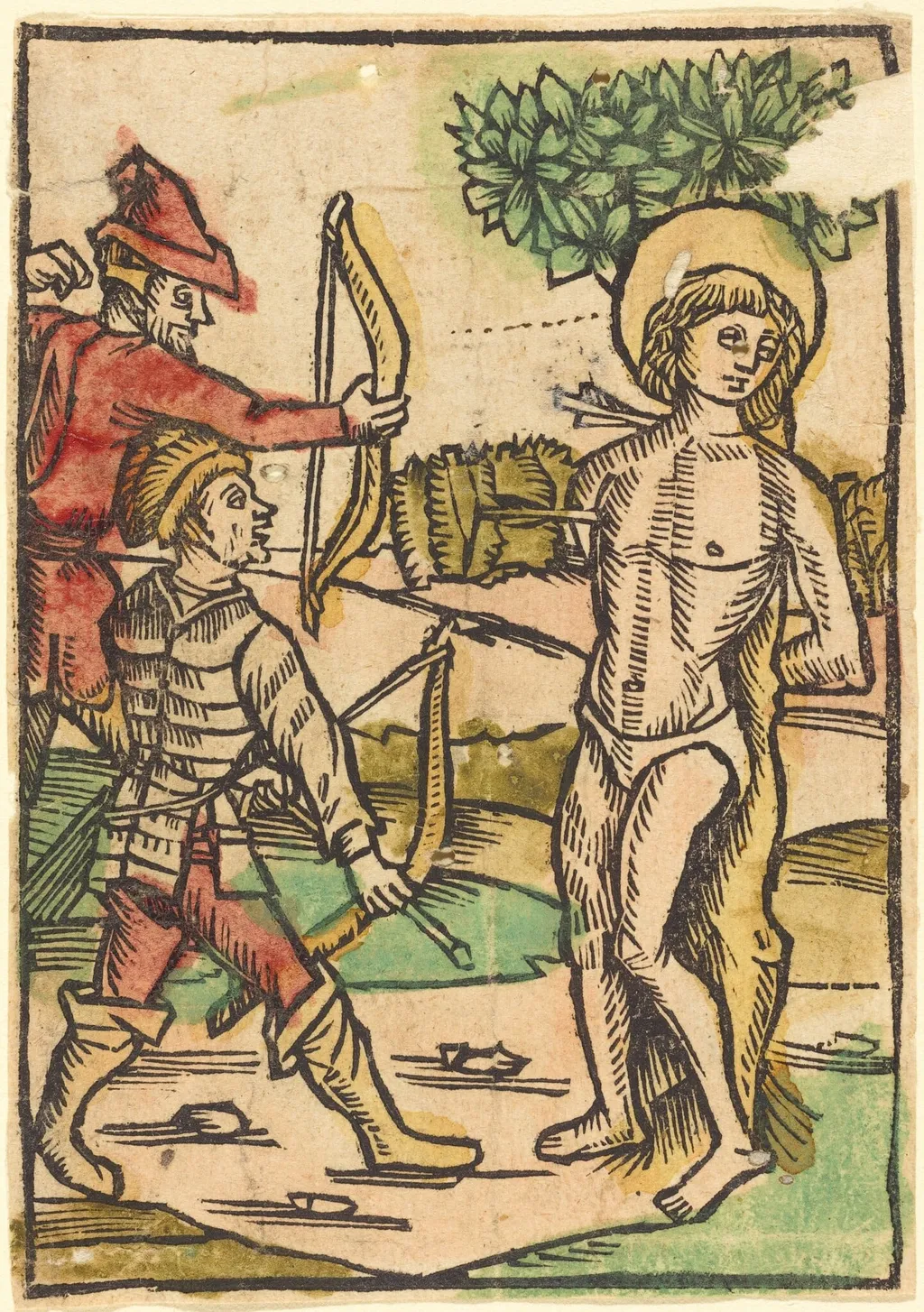
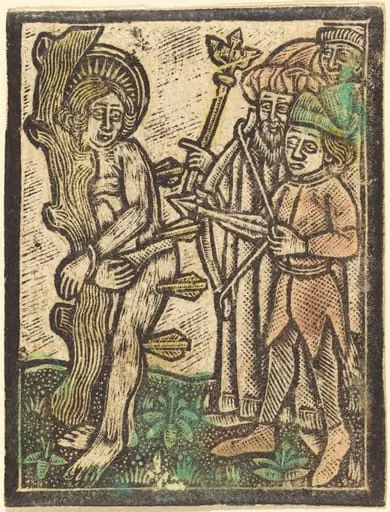
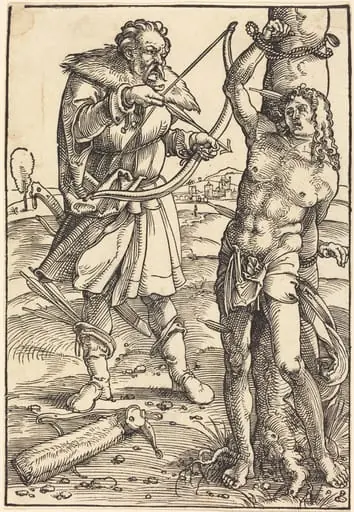
Saint Sebastian is an ink print by the Renaissance artist German 15th Century. It dates from 1490 and is held in the collection of the National Gallery of Art.
About this work
Overview
This woodcut print portrays the martyr Saint Sebastian, depicted nude with a halo, standing amid a natural landscape of trees and hills. Two figures accompany him; one is shown drawing a bow and releasing an arrow toward the saint, emphasizing the moment of his attempted execution.
Subject & Meaning
The image captures the traditional Christian narrative of Saint Sebastian, a soldier‑saint who endured torture by arrows. The presence of the halo identifies him as holy, while his vulnerable, unclothed form underscores the saint’s physical suffering and spiritual steadfastness.
Technique & Style
Executed as a hand‑colored woodcut, the work employs carved wooden blocks to transfer ink onto paper, a method prevalent in the Renaissance for its capacity to render fine lines. After printing, the image was enriched with pigments of green, red lake, olive, and yellow, adding tonal depth and a lively surface.
History & Provenance
Woodcut printing flourished during the Renaissance, offering a reproducible medium for religious imagery. While the specific creator and date are not provided, the piece reflects the period’s interest in disseminating devotional subjects through affordable, yet detailed, prints.
Context
The depiction aligns with the era’s broader artistic focus on martyrdom and the human body as a vehicle for expressing spiritual endurance. The natural backdrop situates the saint within an earthly realm, contrasting the divine halo with the surrounding landscape.
Artist & collection

Artist
This 15th-century German artist carved vivid religious scenes into metal and wood, then hand-painted them in bright, symbolic colors.

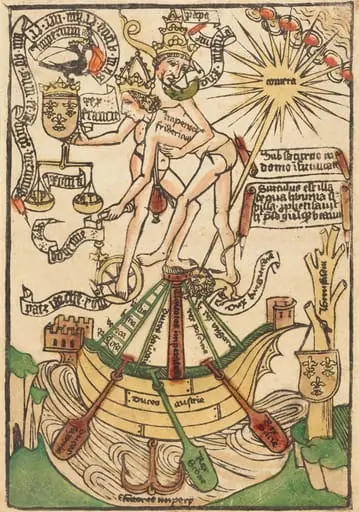 Allegory of the Meeting of Pope Paul II and Emperor Frederick III
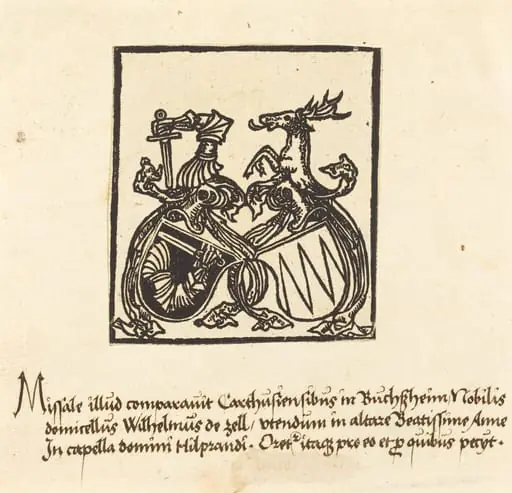 Bookplate of Wilhelm von Zell
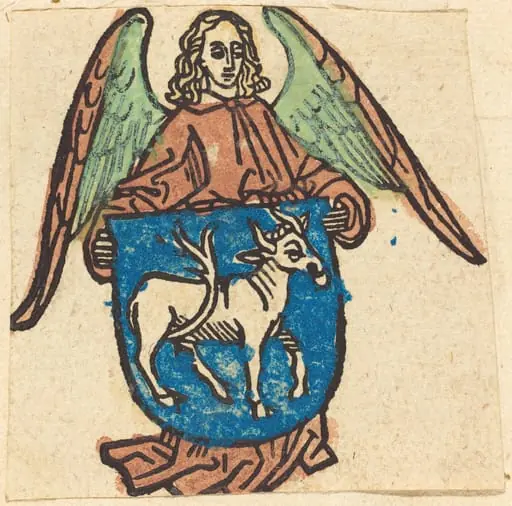 Bookplate of Hilprand Brandenburg of Bibrach
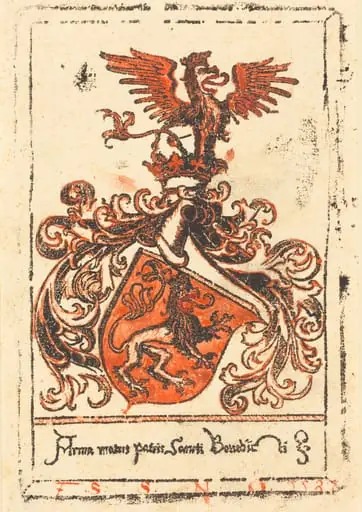 Bookplate of the Abbey of Ottobeuren
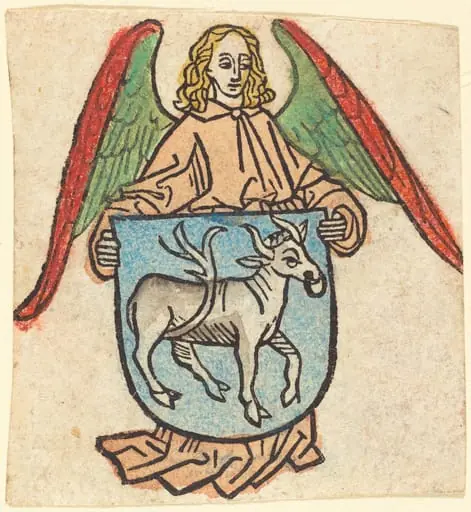 Bookplate of Hilprand Brandenburg of Bibrach
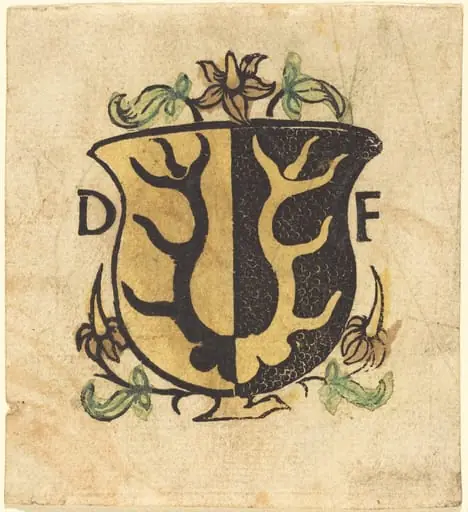 Bookplate of Dominicus Frauenfelder
![Studies for Six Figures (sheet from a model book) [recto], by German 15th Century](https://artifactworldgallery.com/img/german-15th-century--studies-for-six-figures-sheet-from-a-model-book-recto--4837429e0755bc3f-w320.webp) Studies for Six Figures (sheet from a model book) [recto]
Studies for Six Figures (sheet from a model book) [recto]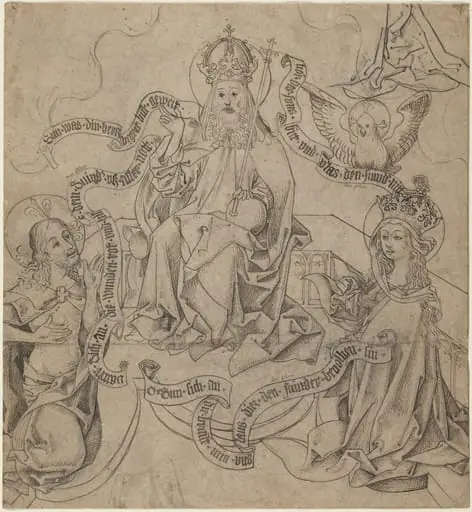 Christ and Mary Interceding with God the Father