Artwork
The Trinity
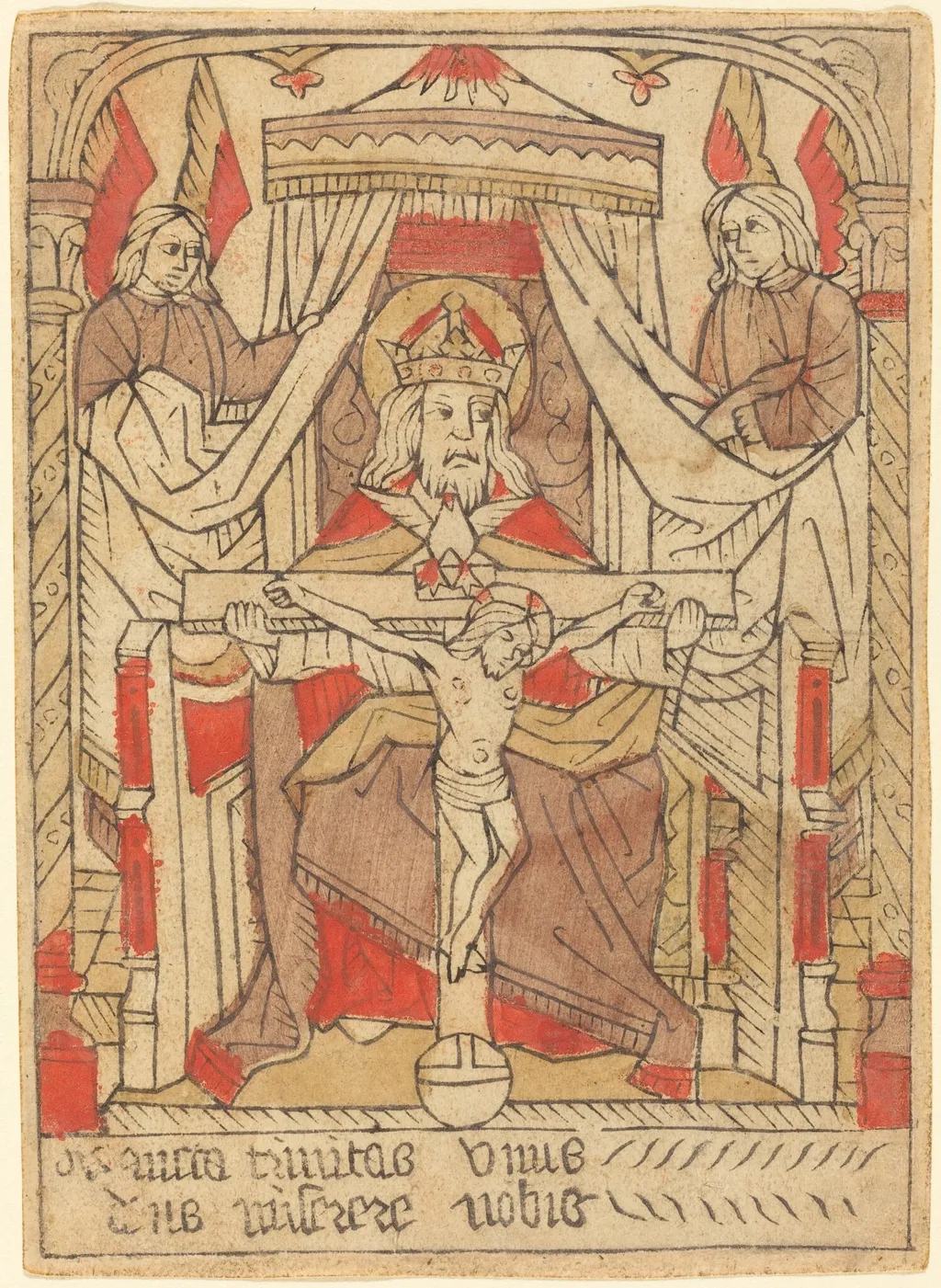
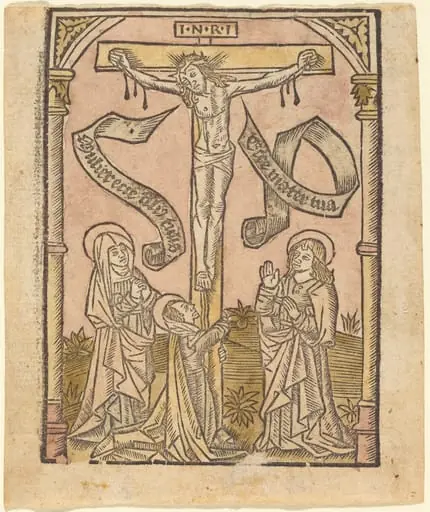
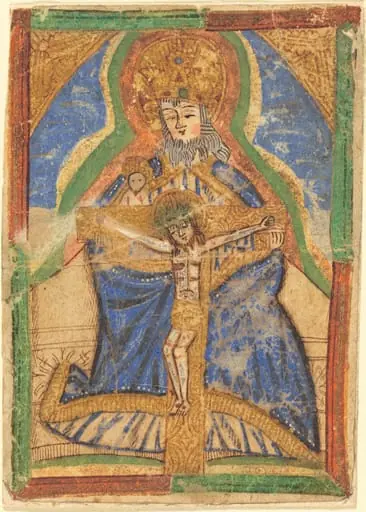
The Trinity is an ink print by the Renaissance artist French 15th Century. It dates from 1470 and is held in the collection of the National Gallery of Art.
About this work
Overview
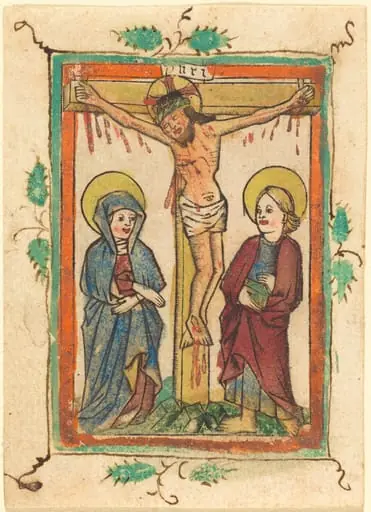
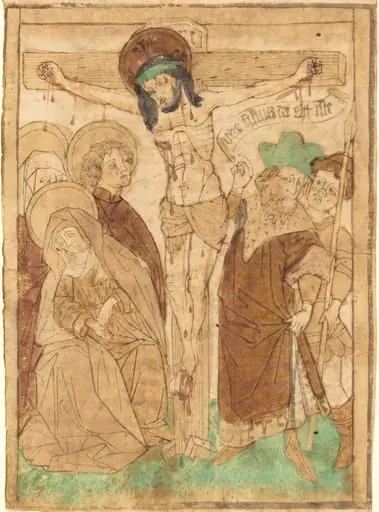
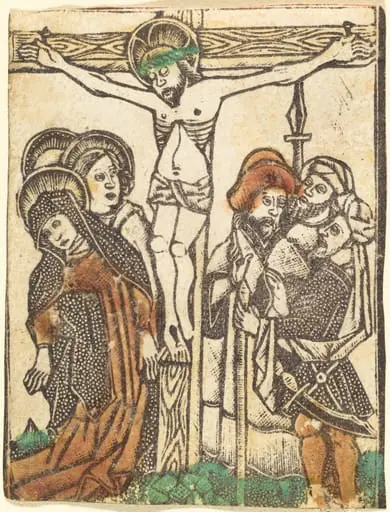
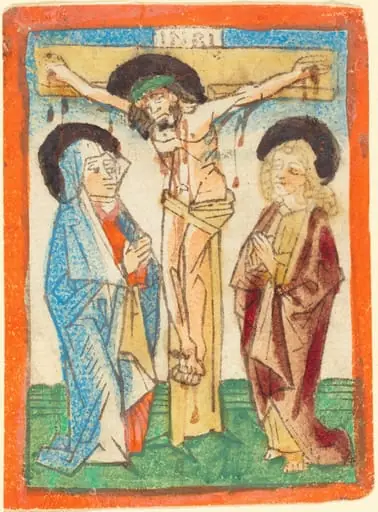
The Trinity is a hand-colored woodcut on laid paper, depicting a crucifixion scene with a crowned figure, symbolic elements, and Latin text, rendered in a predominantly earthy palette with accents of vermilion, lilac, and ochre.
Subject & Meaning
The print illustrates a religious narrative featuring a man on a cross (likely Christ) beneath a crowned figure (possibly God the Father) holding a star-shaped symbol, flanked by two robed individuals, set within an arched architectural frame.
Technique & Style
Executed as a woodcut, the piece showcases the medium's characteristic bold lines and flat forms. Hand-coloring in vermilion, lilac, and ochre adds depth, with lighter lines providing subtle texture against the predominantly brown and red earthy tones.
History & Provenance
No specific historical or provenance details are provided for this work, highlighting the need for further research to contextualize its creation and ownership history.
Context
Given its subject and medium, The Trinity likely originated from a religious or devotional context, possibly European, considering the use of Latin text and traditional Christian iconography.
Legacy
The work's impact or influence on subsequent art is not detailed, suggesting a need for additional analysis to assess its contribution to the broader landscape of religious printmaking.
Artist & collection

Artist
This artist hid their best work inside old travel trunks. They glued vivid woodcuts into the lids of wooden boxes meant to be carried on horseback, like secret postcards from God. If you’ve ever pried open a cracked lid…