Artwork
Ulrich Schwaiger
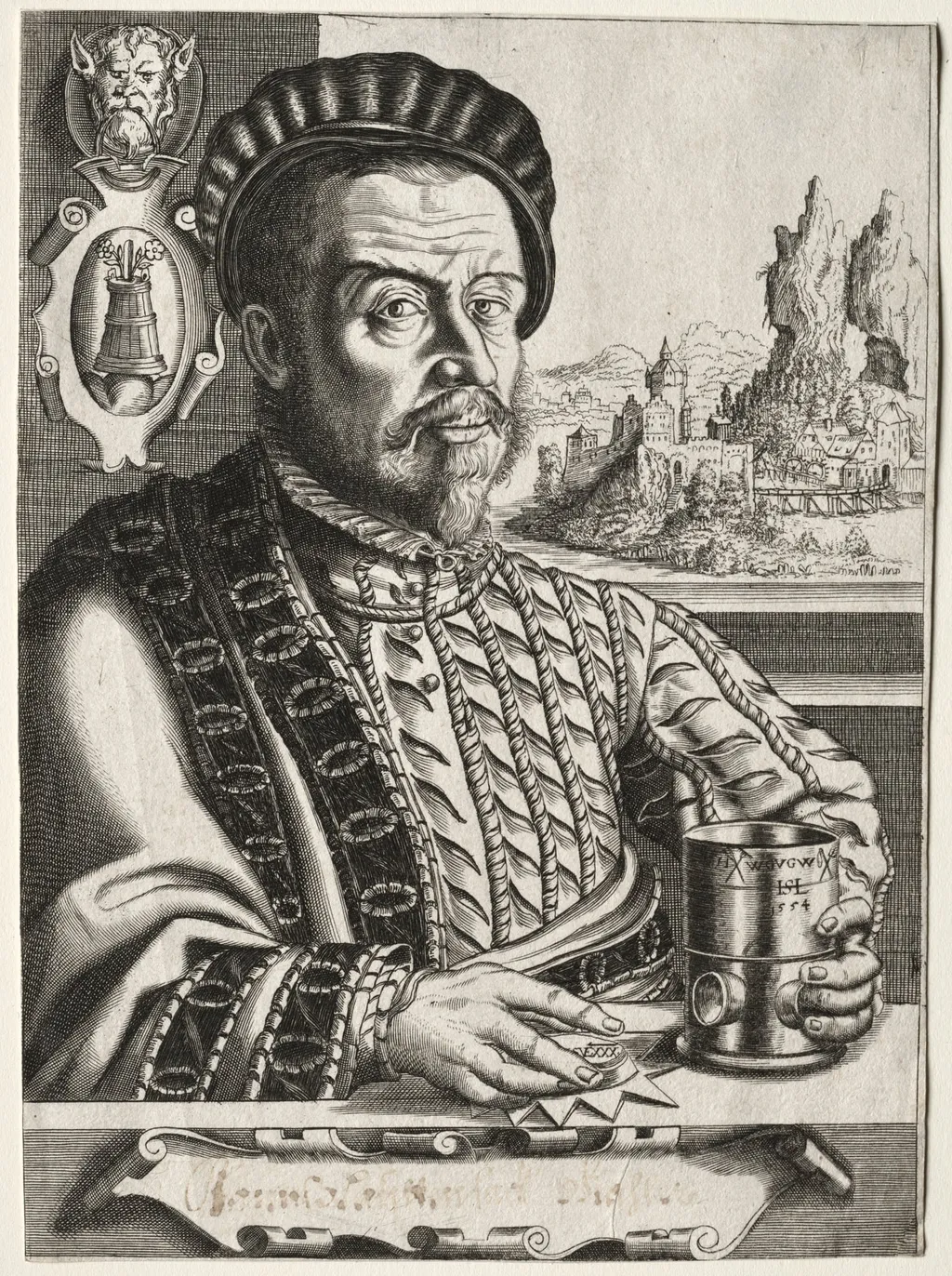
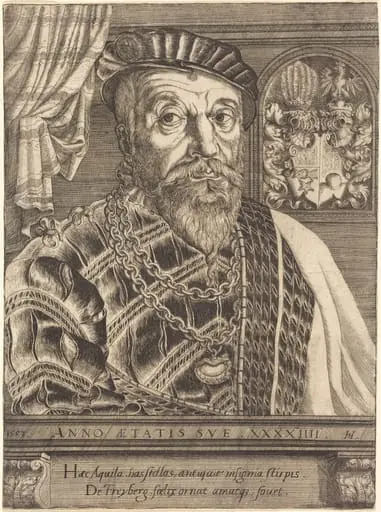
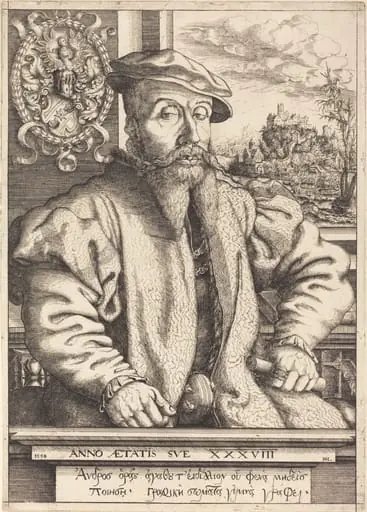
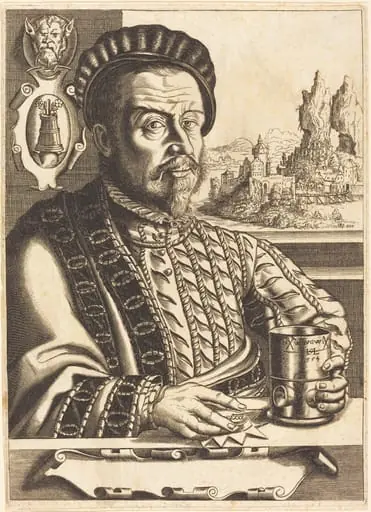
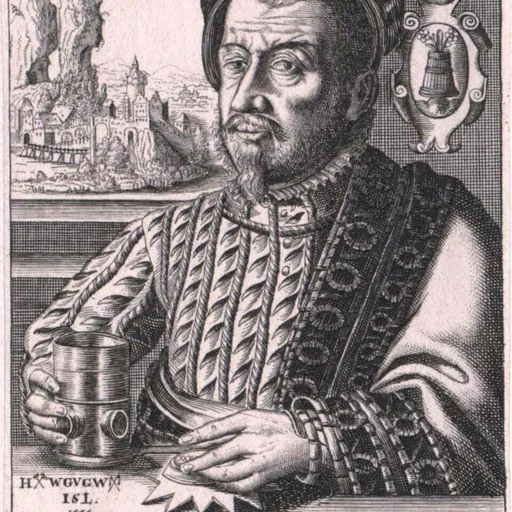
Ulrich Schwaiger is a print by Hanns Lautensack. It dates from 1555 and is held in the collection of the Cleveland Museum of Art.
About this work
Overview
Created around 1555 by Hanns Lautensack, this etching portrays Ulrich Schwaiger, a figure likely connected to Nuremberg’s artistic or civic circles.
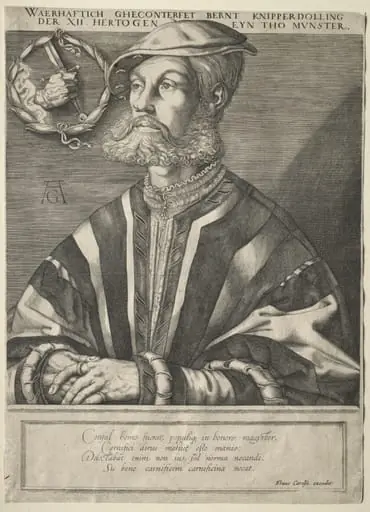
Created around 1555 by Hanns Lautensack, this etching portrays Ulrich Schwaiger, a figure likely connected to Nuremberg’s artistic or civic circles. Executed in fine linear detail, the portrait combines precise rendering of facial features and attire with an intricate urban backdrop. Lautensack’s signature monogram appears on the work, consistent with his practice. The piece resides in The Cleveland Museum of Art’s print collection, representing mid-16th-century German graphic art.
Subject & Meaning
The sitter, Ulrich Schwaiger, is depicted with a full beard and a dark, ornate hat, suggesting civic or professional status. His grip on a small, ambiguous object invites speculation about his role—perhaps a tool of trade or symbolic item. Behind him, a detailed cityscape may reference his origins or workplace. Two enigmatic symbols near his head—a lantern and a demonic face—could allude to his character, profession, or contemporary beliefs about vigilance and moral duality.
Technique & Style
Lautensack employed etching to achieve fine, controlled lines and nuanced tonal gradations. The portrait uses chiaroscuro to model the face and fabric, lending volume and texture through subtle shifts in ink density. The background cityscape is rendered with meticulous architectural detail, contrasting with the intimate focus on the figure. The sharpness of the lines and layered shading reflect the technical sophistication of German printmakers of the period.
History & Provenance
Hanns Lautensack, son of painter Paul Lautensack, worked primarily in Nuremberg before relocating to Vienna around 1556, possibly under imperial patronage. This portrait likely dates to his Nuremberg years. The print’s survival and eventual acquisition by The Cleveland Museum of Art reflect its endurance as a rare example of mid-century German portraiture. Its provenance before the 20th century remains undocumented, though its craftsmanship ensured its preservation among collectors.
Context
In mid-16th-century Germany, portraiture in print flourished alongside humanist ideals and the rise of individual identity. Artists like Lautensack responded to demand for likenesses of civic figures, often embedding symbolic elements to convey status or moral character. The inclusion of a detailed cityscape and cryptic icons aligns with broader trends in Northern European prints, where background and detail served narrative or allegorical functions beyond mere decoration.
Legacy
Lautensack’s etching contributes to the corpus of German Renaissance graphic art, illustrating the era’s fusion of technical precision and psychological nuance. While not widely reproduced, the work exemplifies how printmakers translated portraiture into intimate, enduring forms. Its preservation in a major museum underscores its value as a document of both artistic skill and social representation in 16th-century Central Europe.
Artist & collection
Artist
Hanns Lautensack (sometimes erroneously referred to as Hans Sebald Lautensack) (1524 – c.

![View of Nuremberg from the West [center section], by Hanns Lautensack](https://artifactworldgallery.com/img/hanns-lautensack--view-of-nuremberg-from-the-west-center-section--12422dca269411c0-w320.webp)